



The Indo-Pacific Vision in Strategic Limbo: A Foreign Policy Case Study for the Trump Era
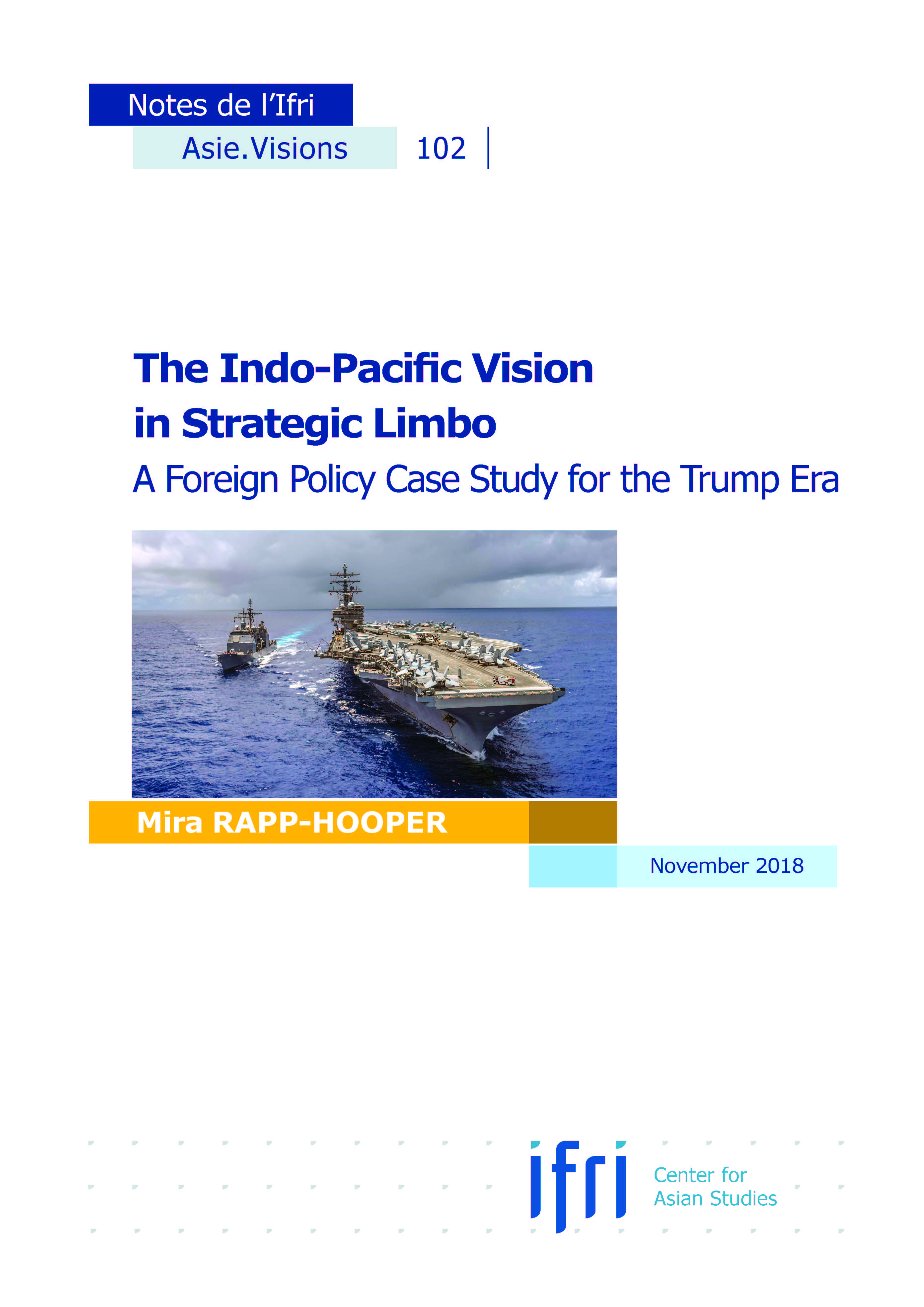
The Trump Administration’s Indo-Pacific security strategy is a case study in foreign policymaking under a non-unitary executive.
Having identified competition with China as a leading national security priority in its early months, disposed of the Obama Administration’s Rebalance to Asia, and begun the process of defining its ‘free and open Indo-Pacific’ approach, the administration has made little subsequent progress towards developing it into a concrete strategy. While some modest efforts have been made to develop policy at the working level, the President himself has pursued a much narrower China approach, focused almost exclusively on punitive trade measures and North Korea. Moreover, the basic principles that motivate Indo-Pacific concept are clearly at odds with the President’s own instincts. As a result, two largely independent streams of China policy have emerged and are highly unlikely to be rationalized in the next two years.
This current disjuncture does not, however, doom the Indo-Pacific security strategy to history’s dustbin. Whether or not the moniker persists, the basic contours of the approach are likely to be adopted by a new administration and are largely consistent with broader U.S. objectives in the region. Far beyond the White House, a consensus has emerged in Washington that the United States and China will be increasingly competitive, and that a holistic American strategy is necessary. Any future strategy is likely to rely on allies and partners, emphasize democracies, seek to secure the First Island Chain and maritime Asia, and have ample room for participation by European partners. There will, however, remain many hurdles to full and successful implementation, including perennial American over-optimism about regional states’ alignment decisions and ability to commit resources, as well as the profound distrust that is likely to enshroud U.S. strategic leadership after Trump. Nonetheless, American allies and partners may think of the Indo-Pacific approach as one whose time is still likely to come; they should seek to develop it themselves until the United States is capable of resuming some form of regional leadership.
This page contains only a summary of our work. If you would like to have access to all the information from our research on the subject, you can download the full version in PDF format.
The Indo-Pacific Vision in Strategic Limbo: A Foreign Policy Case Study for the Trump Era


Center for Asian Studies
Asia is a nerve center for multiple global economic, political and security challenges. The Center for Asian Studies provides documented expertise and a platform for discussion on Asian issues to accompany decision makers and explain and contextualize developments in the region for the sake of a larger public dialogue.
The Center's research is organized along two major axes: relations between Asia's major powers and the rest of the world; and internal economic and social dynamics of Asian countries. The Center's research focuses primarily on China, Japan, India, Taiwan and the Indo-Pacific, but also covers Southeast Asia, the Korean peninsula and the Pacific Islands.
The Centre for Asian Studies maintains close institutional links with counterpart research institutes in Europe and Asia, and its researchers regularly carry out fieldwork in the region.
The Center organizes closed-door roundtables, expert-level seminars and a number of public events, including an Annual Conference, that welcome experts from Asia, Europe and the United States. The work of Center’s researchers, as well as that of their partners, is regularly published in the Center’s electronic journal Asie.Visions.

Pakistan and the Israel-Palestine Conflict: Transformation in Pakistan’s Approach After the War in Gaza
Pakistan has long combined vocal support for the Palestinian cause with covert engagement with Israel. Since the war in Gaza, this balance has become untenable: public opinion is united against Israel, joining Trump’s Board of Peace has drawn rare cross-party criticism, and new regional alignments put normalization out of reach.
The Oceania Factor in France’s Evolving Indo-Pacific Strategy
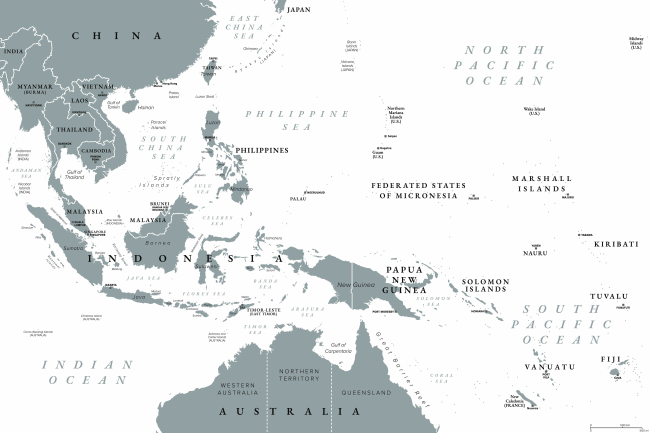
This paper examines the two-way relationship between France’s Indo-Pacific strategy and developments in Oceania. Oceania was not a priority in the initial years of France’s Indo-Pacific strategy, as the region was largely treated as secondary to major strategic hotspots and key partnerships, while overseas territories were primarily handled as domestic issues and recipients of a top-down strategy.

France’s View: From Diplomacy to Public-Private Action
France has emerged as the EU’s IMEC forerunner, combining port infrastructure, diplomatic alliances and public-private cooperation. With Marseille Fos at its core, the country brings a strategic hub for logistics, energy and digital connectivity to the corridor.
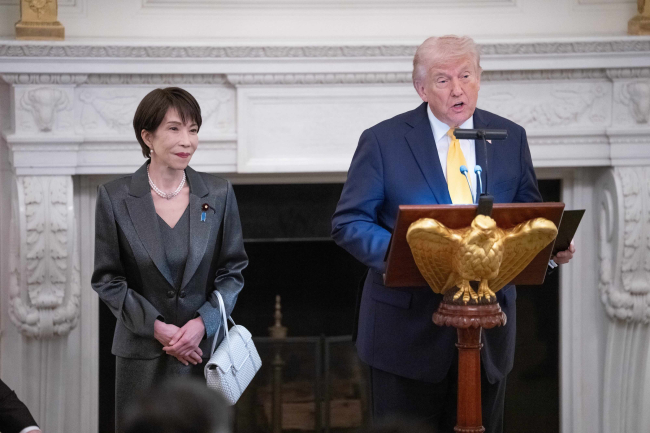
Trump II, the Crisis of the Rules-Based Order and Europe’s Indo-Pacific Strategy
This article examines the implications of Trump II for Europe’s engagement in the Indo-Pacific. The piece contends that Trump II is accelerating the erosion of the rules-based order and undermining the relevance of the Free and Open Indo-Pacific (FOIP) concept, while forcing Europe to refocus on its own continental security amid US retrenchment. Paradoxically, these very constraints create conditions for a more autonomous, pragmatic, and explicitly interest-driven European engagement in the Indo-Pacific, rather than outright withdrawal.