







Reflections on A Darkening World
The system that emerged after the Second World War to regulate international relations is now moribund. Russia and China may have weakened it, but it seems that Donald Trump’s United States may deliver the fatal blow. The prevailing atmosphere is one of power struggles, and the rise of nationalisms is fraught with danger. The artificial intelligence revolution also needs to be factored into this equation, as it has a strong bearing on how much power different players can exert. In this respect, Europe must ensure it does not get left behind.
How Technology Is Reshaping the World Order
The central role of technology in the competition between the major powers is fueling an ever-more intense rivalry. Artificial intelligence is enabling large corporations to accrue unprecedented power, with consequences for states and even for international conflict. However, states do have tools at their disposal to regulate these developments. In this international competition, Europe has a strong hand, but must be prepared to play its cards in order to create a new kind of international cooperation.

China’s Strategy Toward Pacific Island countries: Countering Taiwan and Western Influence
Over the past decade, China has deployed a diplomatic strategy toward the Pacific Island Countries (PICs). This strategy pursues two main objectives: countering Taiwan's diplomatic influence in the region and countering the influence of liberal democracies in what Beijing refers to as the "Global South."

Europe Tempted by Closer Relations With China Following Trump’s Hostility, but Barriers to Cooperation Persist
While U.S. Vice President JD Vance left Europe reeling at the Munich Security Conference last month, Chinese Foreign Minister Wang Yi (王毅) met with several European officials on the sidelines. At the U.N. Security Council a few days later, China pushed for greater European involvement in peace negotiations in the Russia-Ukraine war.
The China-Russia Partnership and the Ukraine War: Aligned but not allied
China and Russia maintain a strategic partnership rooted in shared opposition to the U.S. and liberal democracies, but their relationship is shaped more by pragmatism than trust.
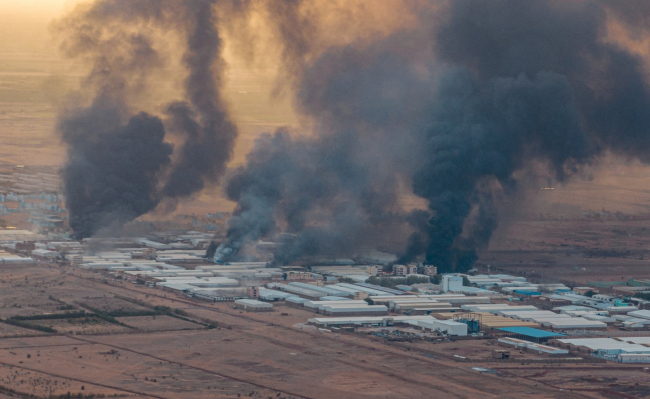
Gulf States: A Paradoxical Economic Lifeline for Sudan
For decades, Gulf states have provided crucial financial assistance to Sudan. Gulf interest in Sudan is driven by economic benefits and geopolitical competition, though each country has its own interests and approach.

Sudan in Turkey’s African Geopolitics: A Sotto Voce Experience in a Coveted Region
Since the launch of the Opening Plan to Africa in 2003, Turkey's African policy has spread to the whole of the African continent, where its involvement is distinguished by its scope and diversity.
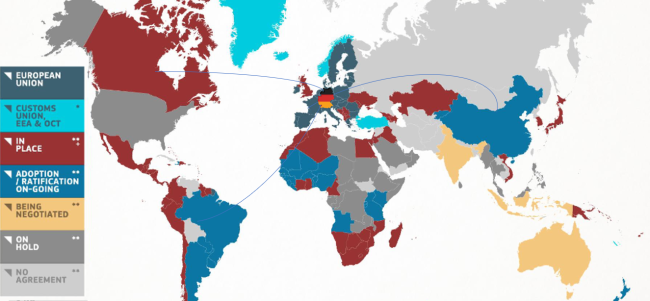
Towards a New European Trade Strategy in Times of Geopolitical Upheaval: The German Perspective
As one of the most successful trading blocs, the EU sees itself confronted with the erosion of the global rules-based trading system and trade becoming increasingly weaponized.
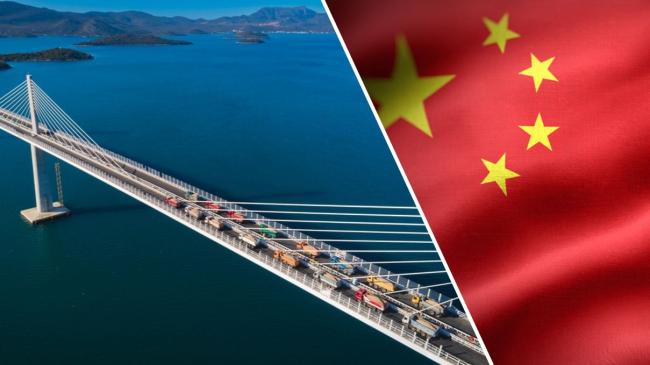
Can Europe do Without a Geologistical Strategy to Face China?
During the economic and financial crisis in 2008, during which the West was severely weakened, the ties between the Western Balkans and China were particularly close. For these countries, turning to China meant to secure new destination markets for their exports and to guarantee new investments.

Schisms in research collaboration risk worsening global crises
Barriers being put up by the US, China and the EU could hinder scientific progress at a time when it is most urgently needed, according to OECD’s latest report on the global R&D outlook.

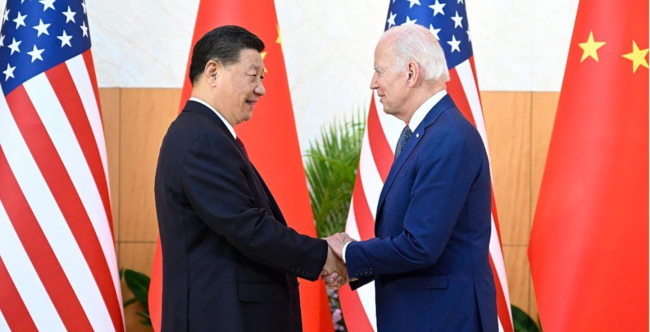
The world’s powers are engaged in a fierce technological race. This is the balance of forces
The US struggles to retain its supremacy, China catches up and overtakes the leader in many areas while the EU is falling behind.
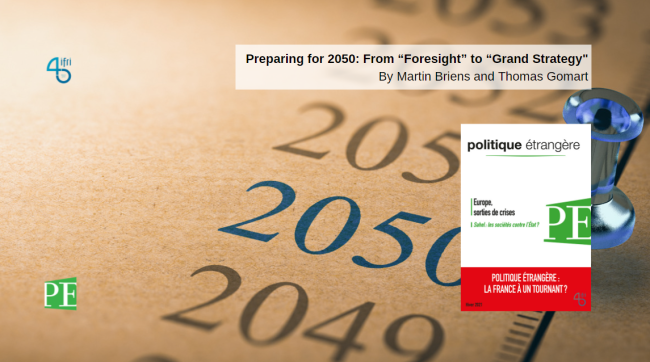
Preparing for 2050: From “Foresight” to “Grand Strategy”
China and the United States both have a “grand strategy”: Beijing aspires to be the world’s leading power in 2049, while Washington plans to remain primus inter pares.
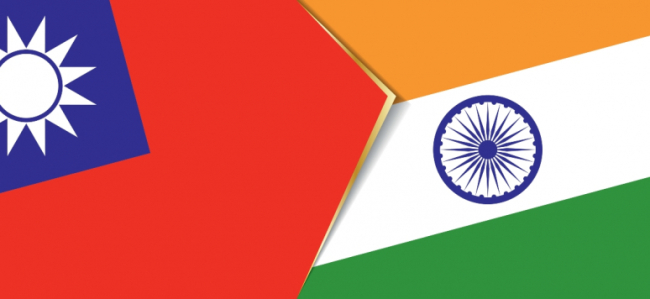
India-Taiwan Ties: A Case for Stronger Partnership
The links between India and Taiwan have gathered unprecedented momentum in recent years. This has largely come about due to growing support for Taiwan at civil society level in India.
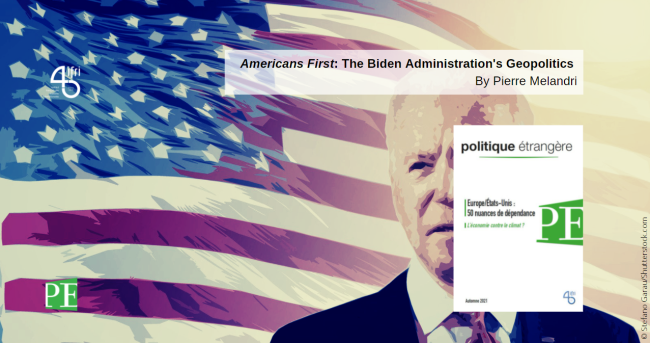
Americans First: The Biden Administration’s Geopolitics
The Biden administration’s geopolitics is beginning to be noticed. It aims to build on a reconciled nation willing to see its foreign policy objectives as a defense of its own interests.

Health Data Governance: Lessons Learned from the COVID-19 Pandemic in Europe, China, and the United States
The health crisis has triggered a tectonic movement in the recomposition of health data governance and protection models around the world, while accelerating the investment of large digital companies in the field of e-health.

COVID-19: The Geopolitics of Herd Immunity
Mass vaccination against COVID-19 identifies several groups of countries: rich countries with rapid vaccination; countries that develop and produce vaccines, but do not prioritize vaccination of their own population; and poorer countries that will only achieve herd immunity by 2022 or 2023.
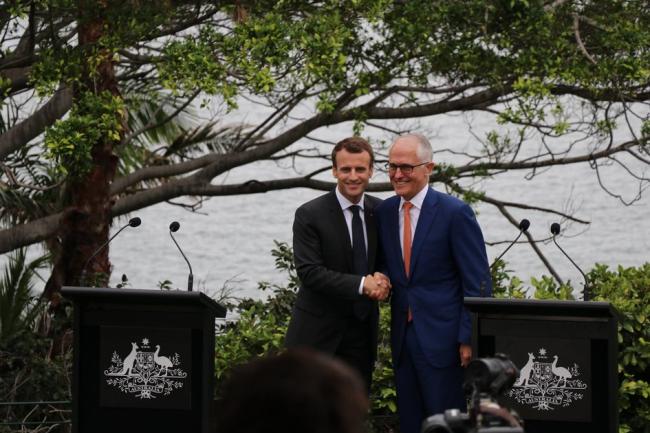
France’s strategic engagement in the Indo-Pacific makes a difference: Here is why
Let’s face it: while there are growing expectations for a French and European enhanced engagement in the Indo-Pacific, when Europeans step up their commitment, or express their willingness to do so, they are often met with disdain, on the ground that they would not make a big difference in front of China. Is that really so?
France’s Indo-Pacific Strategy and the Quad Plus
In France, the launch of the Quad Plus raised little attention.

Guerres invisibles - Nos prochains défis géopolitiques
What are the next geopolitical challenges of the century? The global pandemic has altered the equilibrium between Asia and the West and sealed the rift between China and the United States, accentuating the world’s shift towards the East. On this polarized chessboard, two fault lines converge: environmental degradation and technological propagation where the main strategic and economic rivalries are now being played out.
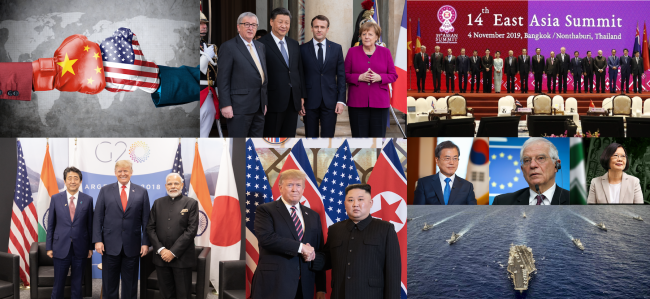
East Asia Security in Flux. What Regional Order Ahead?
In February 2020, the Ifri Center for Asian Studies and the Research Institute for Peace and Security (RIPS) held a conference on the Asian security environment.
How Technology Is Reshaping the World Order
The central role of technology in the competition between the major powers is fueling an ever-more intense rivalry. Artificial intelligence is enabling large corporations to accrue unprecedented power, with consequences for states and even for international conflict. However, states do have tools at their disposal to regulate these developments. In this international competition, Europe has a strong hand, but must be prepared to play its cards in order to create a new kind of international cooperation.
Reflections on A Darkening World
The system that emerged after the Second World War to regulate international relations is now moribund. Russia and China may have weakened it, but it seems that Donald Trump’s United States may deliver the fatal blow. The prevailing atmosphere is one of power struggles, and the rise of nationalisms is fraught with danger. The artificial intelligence revolution also needs to be factored into this equation, as it has a strong bearing on how much power different players can exert. In this respect, Europe must ensure it does not get left behind.
China’s Strategy Toward Pacific Island countries: Countering Taiwan and Western Influence
Over the past decade, China has deployed a diplomatic strategy toward the Pacific Island Countries (PICs). This strategy pursues two main objectives: countering Taiwan's diplomatic influence in the region and countering the influence of liberal democracies in what Beijing refers to as the "Global South."
The China-Russia Partnership and the Ukraine War: Aligned but not allied
China and Russia maintain a strategic partnership rooted in shared opposition to the U.S. and liberal democracies, but their relationship is shaped more by pragmatism than trust.
Gulf States: A Paradoxical Economic Lifeline for Sudan
For decades, Gulf states have provided crucial financial assistance to Sudan. Gulf interest in Sudan is driven by economic benefits and geopolitical competition, though each country has its own interests and approach.
Sudan in Turkey’s African Geopolitics: A Sotto Voce Experience in a Coveted Region
Since the launch of the Opening Plan to Africa in 2003, Turkey's African policy has spread to the whole of the African continent, where its involvement is distinguished by its scope and diversity.
Towards a New European Trade Strategy in Times of Geopolitical Upheaval: The German Perspective
As one of the most successful trading blocs, the EU sees itself confronted with the erosion of the global rules-based trading system and trade becoming increasingly weaponized.
India-Taiwan Ties: A Case for Stronger Partnership
The links between India and Taiwan have gathered unprecedented momentum in recent years. This has largely come about due to growing support for Taiwan at civil society level in India.
France’s Indo-Pacific Strategy and the Quad Plus
In France, the launch of the Quad Plus raised little attention.
Foreword
In this special issue of Politique étrangère devoted to the proceedings of the conference organized by Ifri on April 10, 2019, in the Grand Amphitheater of the Sorbonne, on the occasion of its fortieth anniversary, read the foreword by Thierry de Montbrial, founder and president of Ifri.
Japan’s Indo-Pacific Strategy: Shaping a Hybrid Regional Order
What does Japan want in the Indo-Pacific? It can be tough to tell, because at the moment, Tokyo seems to be pursuing incompatible aims.
France’s Indo-Pacific strategy: inclusive and principled
France’s recently launched Indo-Pacific strategy has attracted many critical and sarcastic comments.
Japan in South East Asia: Looking for a Balanced Indo-Pacific
South East Asia is an area of utmost importance for Japan’s economic, political and security interests, amounting to “a core strategic interest” for Tokyo.
Prospects for the New EU Strategy on India: Game Changer or Business as Usual?
The new European Union (EU) strategy on India marks a major moment of departure in EU-India relations.
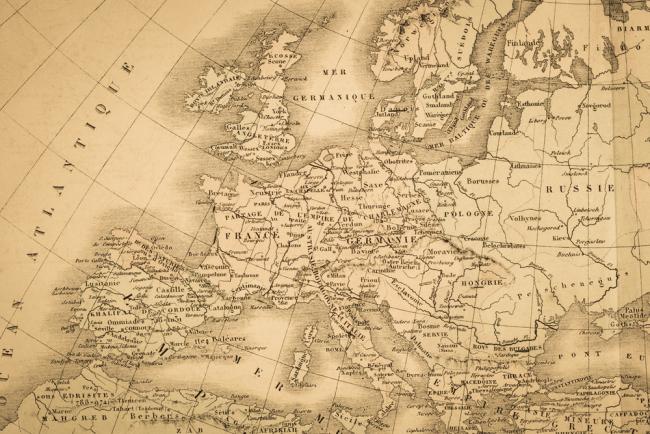
Imagined Geographies of Central and Eastern Europe: The Concept of Intermarium
Like the proverbial cat, some concepts have several lives. Or, like the mythological phoenix, they can be reborn from the ashes. This is certainly the case of the Intermarium, a geopolitical concept that envisaged an alliance of countries reaching from the Baltic Sea over the Black Sea to the Aegean Sea that would serve as a third power bloc between Germany and Russia.
The Indo-Pacific Vision in Strategic Limbo: A Foreign Policy Case Study for the Trump Era
The Trump Administration’s Indo-Pacific security strategy is a case study in foreign policymaking under a non-unitary executive.
Russia's Asia Strategy: Bolstering the Eagle's Eastern Wing
Among Russia’s strategic priorities, Asia traditionally played a secondary role compared to the West. In the mid-1990s, then Foreign Minister Yevgeny Primakov initiated a rapprochement with China and India. Then, in 2014, deteriorating relations between Russia and the West prompted Moscow to begin its “great pivot to the East”.
Russia’s Asia Strategy: Bolstering the Eagle’s Eastern Wing
Among Russia’s strategic priorities, Asia traditionally played a secondary role compared to the West. In the mid-1990s, then Foreign Minister Yevgeny Primakov initiated a rapprochement with China and India. Then, in 2014, deteriorating relations between Russia and the West prompted Moscow to begin its “great pivot to the East”.

The Return of Geopolitical Risk - Russia, China and the United States
The year 2014 was defined by the conflict in Ukraine, the emergence of Daesh, and tensions between China and Japan. As for 2015, it has witnessed the spread of Daesh, the conflict in Yemen, the Greek crisis, revelations about the activity of the National Security Agency (NSA), the migrant crisis, and a ramping-up of terrorist attacks.
China vs. USA: After South China Sea, the Arctic as a Second Act
The focus on the power confrontation between China and the U.S. has for a while been directed towards the South China Sea, but a focus should be given to the Arctic region, where the second act is already ongoing.
Europe Tempted by Closer Relations With China Following Trump’s Hostility, but Barriers to Cooperation Persist
While U.S. Vice President JD Vance left Europe reeling at the Munich Security Conference last month, Chinese Foreign Minister Wang Yi (王毅) met with several European officials on the sidelines. At the U.N. Security Council a few days later, China pushed for greater European involvement in peace negotiations in the Russia-Ukraine war.

China or the US? Europe’s ‘impossible choice’ in the trade war
Growing tensions between China and the United States over the escalating trade dispute – and the resulting global uncertainty – are forcing other countries to choose between the two economic superpowers.
Japan’s Own Belt and Road
Tokyo is ramping up international partnerships and investments to offer an alternative to Beijing’s signature foreign-policy project. For the first time in 15 years, Japan’s foreign minister last month paid a visit to the tiny island nation of Sri Lanka, shepherding a dozens-strong delegation of business leaders eager to deepen economic ties between the two countries after a year of increasing security cooperation.
Ifri, a foundation recognized as being of public utility, relies largely on private donors – companies and individuals – to guarantee its sustainability and intellectual independence. Through their funding, donors help maintain the Institute's position among the world's leading think tanks. By benefiting from an internationally recognized network and expertise, donors refine their understanding of geopolitical risk and its consequences on global politics and the economy. In 2026, Ifri partners with over 90 French and international companies and organizations.
