



Le programme économique des Républicains, quelles idées pour 2016 ?
Republican candidates in the 2016 primaries have trouble standing out on economic issues. Indeed, they all embrace the same conservative tenets, namely the reduction (at all costs) of federal power in the name of liberty ; and tax cuts for the wealthy in the name of "trickle-down economics", a theory already put forward by the Reagan administration.
Even though Jeb Bush's very detailed program shows an effort towards the middle-class, the candidates’ programs focus mostly on lower taxes for the wealthy and for private companies.
A number of new ideas have recently emerged amongst GOP-related circles, however, recognizing the need for a future Republican president to try and reduce social inequalities. Their proposals include measures to ensure America's middle-class access to both healthcare and higher education, as well as to make sure that it can get on the property ladder - without, of course, reinforcing federal prerogatives.
In the context of a highly polarized primary election, these ideas are not being translated into formal proposals by GOP candidates, who for instance stand in unison against a raise of the minimum wage. Most progressive of all, Jeb Bush and Marco Rubio offer a number of training and education measures, however.
Finally, GOP candidates are reluctant to discuss both immigration and environment issues. Given the necessity for the next Republican nominee to obtain the Latino vote, immigration reform should be at the center of the Republican debate. Furthermore, many U.S. companies now acknowledge the fact that they rely on work immigration and take into account climate change-related issues.
The candidates' lack of bravery in tackling economic issues may very well put them at a disadvantage in the general election.
This content is available in French: "Le programme économique des Républicains, quelles idées pour 2016 ?"


Americas Program
Ifri's work on the Americas region focuses mainly on the United States. Indeed, for more than 20 years, Ifri's Americas Program has provided keys to understanding American society and domestic policy while shedding light on developments in the country's foreign policy, including transatlantic relations and trade issues.
Since 2023, a specific axis on Latin America structures more actively Ifri's research on this region.
Ifri's Canada program was active in 2015 and 2016.
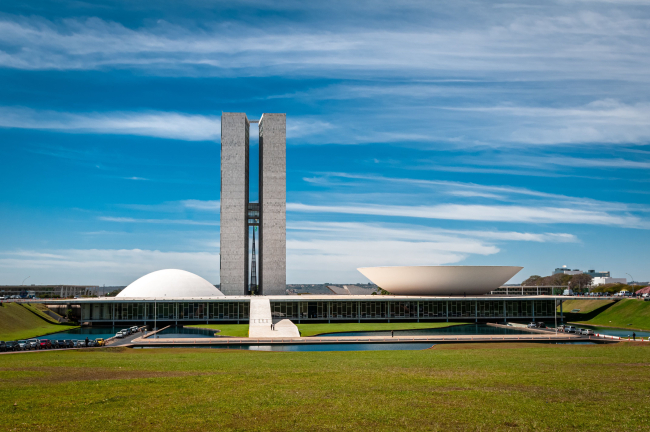
Brazil One Year Away from the October 2026 General Elections
Brazil’s general elections will be held on October 4, 2026, to elect the president, vice-president, members of the National Congress, governors, deputy governors and state legislative assemblies. For the presidential and gubernatorial elections, a second round will be held on October 25 if no candidate obtains a majority of the votes in the first round.
Trump II: The Clash of Ideologies
The second Trump administration brings together a number of very different, even opposing, ideologies: far-right populism, the reactionary Christian right, paleolibertarianism, and technolibertarianism. The most visible measures taken since Donald Trump's return to the White House have been populist in nature, with the president's authority strengthened, checks and balances weakened, a form of identity politics embraced, and economic nationalism implemented.
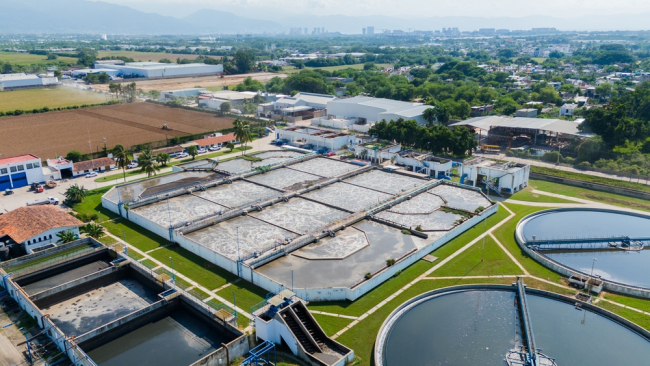
Water in Mexico: an Emergency that Will Wait
Access to water is already and will become increasingly problematic for Mexican economic actors due to the progressive scarcity of the resource resulting from climate change, a geographical distribution that does not coincide with that of the population or economic activity, and management that has so far been far too lax.
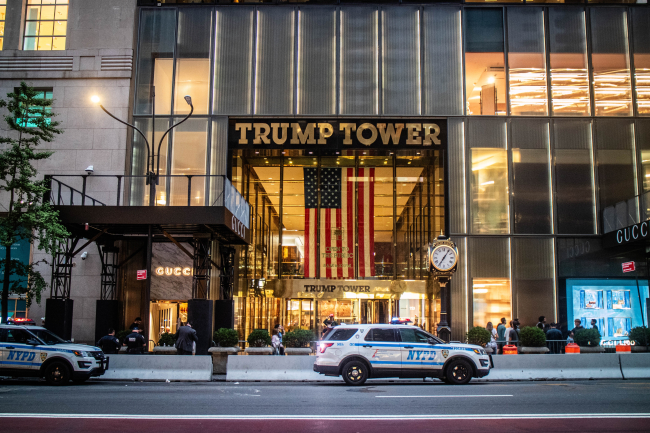
Donald Trump v. the States: the Case of New York
While the disruptive policies of the second Trump administration are being implemented at the federal level and on the international stage, they are also being felt in the federal states and major cities across the country. In the spring of 2025, several cases involving the state and city of New York demonstrate that the president’s attacks on environmental protection, the separation of powers, freedom of speech, etc., are also being carried out at the local level.