



Tokyo face aux désastres naturels : leçons, enjeux et défis
While Tokyo prepares to welcome the 2020 Summer Olympic Games, the likelihood that a massive earthquake will occur in the capital city within the next thirty years is estimated at 70 %. This fact alone reflects the challenges that Japan must face in managing the risk of natural disasters.
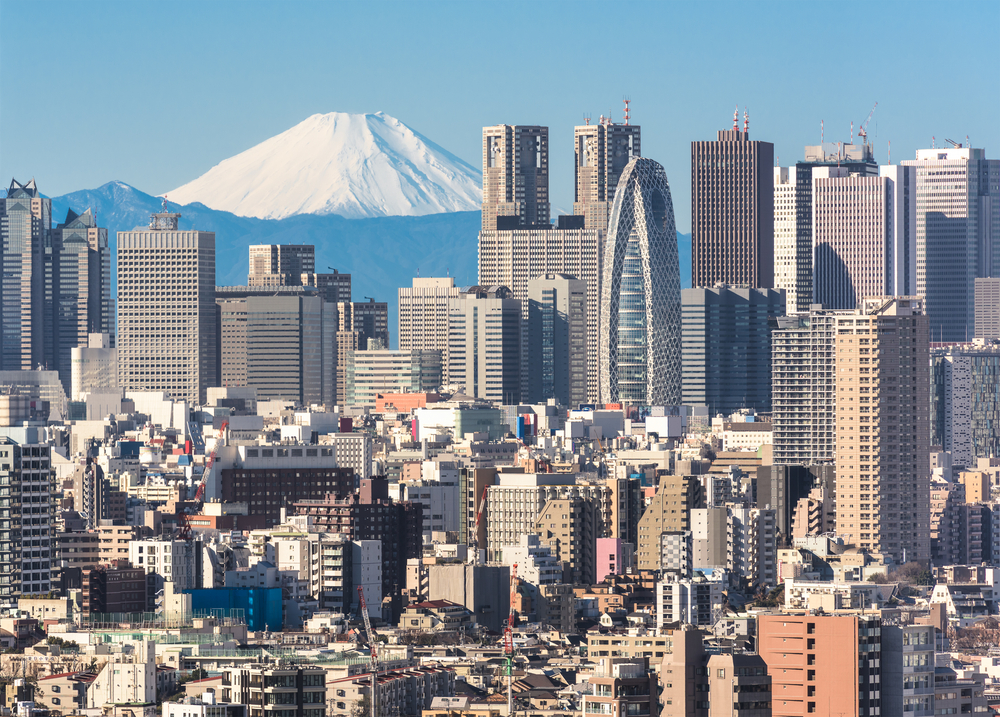
The economic heart of Japan with a population of 13.5 million, Tokyo is particularly vulnerable to violent earthquakes and storms. In order to prevent these natural risks from turning into disasters, Japan relies on lessons learned from past disasters, and in particular past failures, in order to improve its risk prevention and management systems.
Following earthquakes in 1923 in Tokyo, 1995 in Kobe and 2011 in the Tohoku, weaknesses were found at various levels: insufficiently resistant infrastructure, ineffective rescue services, inadequate public information and weak social ties.
The country, and collectivities such as Tokyo, bounced back by strengthening their legal arsenals and increasing budgets for disaster prevention. Monitoring and forecasting systems have been improved and buildings strengthened. Rescue services have been upgraded and public information has been intensified. Consequently, Japan is now internationally recognized as a model in terms of prevention and disaster response capacities.
Nonetheless, in the short and medium terms, authorities in Tokyo and elsewhere in Japan must still overcome a number of challenges. A first set relates to infrastructure: the proportion of vulnerable buildings needs to be decreased and fail safes to cut electricity generalized in order to avoid widespread fires following major earthquakes. Additionally, escape plans and public awareness systems need to be improved, which would reduce the number of potential victims in case of flood. A comprehensive approach is also essential, one that integrates more vulnerable populations such as seniors or disabled persons (who respectively account for 22 % and 4.5 % of Tokyo’s population), but also foreign residents, tourists and the homeless. Furthermore, some dangers (high winds, volcanic eruptions, and heat waves) are not always addressed because of their low likelihood or a lack of appropriate means, whereas their impact on society could be significant. Finally, in view of problems observed during the reconstruction phase after the earthquakes in 1995 and 2011 (precarious living conditions, case of solitary deaths), it is necessary to better anticipate post-disaster challenges in order to limit secondary victims.
The scale of future disasters will in part depend on the anticipation of authorities as well as citizens and on their ability to pursue and intensify their preparation efforts before disaster strikes.

Center for Asian Studies
Asia is a nerve center for multiple global economic, political and security challenges. The Center for Asian Studies provides documented expertise and a platform for discussion on Asian issues to accompany decision makers and explain and contextualize developments in the region for the sake of a larger public dialogue.
The Center's research is organized along two major axes: relations between Asia's major powers and the rest of the world; and internal economic and social dynamics of Asian countries. The Center's research focuses primarily on China, Japan, India, Taiwan and the Indo-Pacific, but also covers Southeast Asia, the Korean peninsula and the Pacific Islands.
The Centre for Asian Studies maintains close institutional links with counterpart research institutes in Europe and Asia, and its researchers regularly carry out fieldwork in the region.
The Center organizes closed-door roundtables, expert-level seminars and a number of public events, including an Annual Conference, that welcome experts from Asia, Europe and the United States. The work of Center’s researchers, as well as that of their partners, is regularly published in the Center’s electronic journal Asie.Visions.

Pakistan and the Israel-Palestine Conflict: Transformation in Pakistan’s Approach After the War in Gaza
Pakistan has long combined vocal support for the Palestinian cause with covert engagement with Israel. Since the war in Gaza, this balance has become untenable: public opinion is united against Israel, joining Trump’s Board of Peace has drawn rare cross-party criticism, and new regional alignments put normalization out of reach.
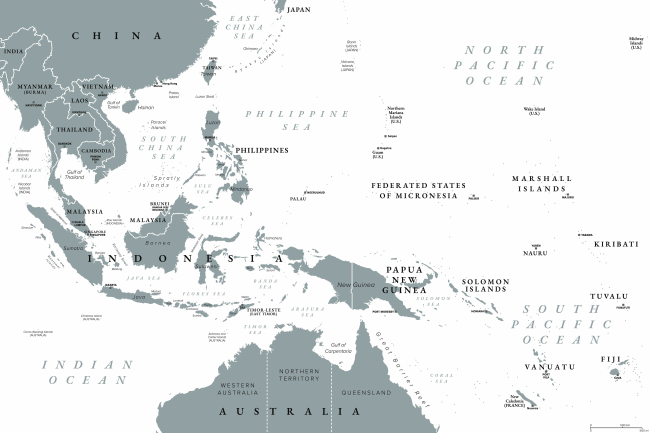
The Oceania Factor in France’s Evolving Indo-Pacific Strategy
This paper examines the two-way relationship between France’s Indo-Pacific strategy and developments in Oceania. Oceania was not a priority in the initial years of France’s Indo-Pacific strategy, as the region was largely treated as secondary to major strategic hotspots and key partnerships, while overseas territories were primarily handled as domestic issues and recipients of a top-down strategy.

France’s View: From Diplomacy to Public-Private Action
France has emerged as the EU’s IMEC forerunner, combining port infrastructure, diplomatic alliances and public-private cooperation. With Marseille Fos at its core, the country brings a strategic hub for logistics, energy and digital connectivity to the corridor.
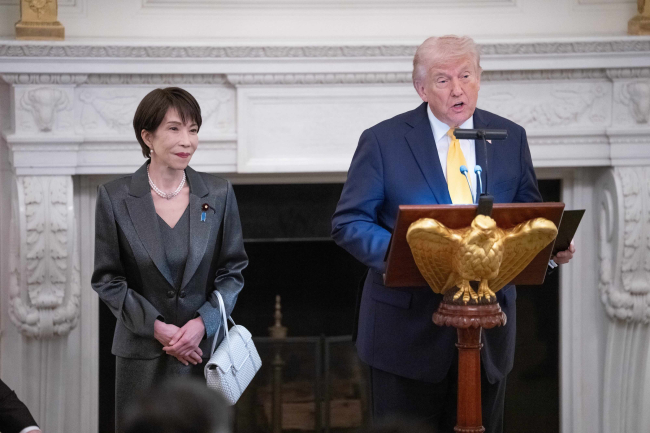
Trump II, the Crisis of the Rules-Based Order and Europe’s Indo-Pacific Strategy
This article examines the implications of Trump II for Europe’s engagement in the Indo-Pacific. The piece contends that Trump II is accelerating the erosion of the rules-based order and undermining the relevance of the Free and Open Indo-Pacific (FOIP) concept, while forcing Europe to refocus on its own continental security amid US retrenchment. Paradoxically, these very constraints create conditions for a more autonomous, pragmatic, and explicitly interest-driven European engagement in the Indo-Pacific, rather than outright withdrawal.