





Trump and the Republican Party: electoral defeat, ideological victory?

During Donald Trump’s four-year term, many new Republican candidates have been elected to Congress. Often backed by the former president from the GOP’s primaries, they were chosen for their devotion towards him and their support for his policies : moral conservatism and laissez-faire attitudes towards fiscal and environmental issues are old Republican tenets taken over by Trump, while nativist and economic nationalism (based on anti-immigration and protectionist policies respectively), as well as the portrayal of White people without college degree as an oppressed minority are fresh precepts brought forward by the former populist President.

The November 2020 election results illustrate the echo met by this ideological transformation. Though Joe Biden won 7 million more votes than his opponent, said votes were unequally distributed between states just as in 2016, and the Republican candidate only lost by a tiny margin in the Electoral College. Moreover, pollsters were once again seriously mistaken in their prediction of a much larger lead by the Democratic candidate.
Trump’s defeat is due to his electoral base consisting mainly of non-college Whites, who were proportionately less numerous in the electorate than in 2016. Those voters are not necessarily amongst the poorest (which leads to a continuing debate over a precise definition of the American “working class”). At the end of the day, lack of a college degree and an anti-elitist stance constitute the key markers of the Trump vote. This is probably why a rise of Trump voters among non-college Hispanics has also been observed.
Despite predictions of a demographic weakening of this electorate, the Republican Party persists in this ideological turnover as it prepares for the 2022 mid-term elections. Republican candidates, including potentials Trump substitutes such as Senators Ted Cruz (Texas) or Marco Rubio (Florida), have to both embrace the thesis of the massive voter fraud in Biden’s 2020 victory, and refuse any conviction for Trump’s call for insurrection leading to the January 6 events – two major elements of the Party’s new creed.
More generally, the Republican goal continues to be the implementation of increasingly favorable rules for the country’s richest, relying on a double tactical move: first, the deployment of a nativist rhetoric intended to mobilize the non-college White American vote; second, a vast voter suppression effort in Republican legislatures across the country, aimed primarily at minorities.
This content is available in French: Trump et le Parti républicain : défaite électorale, victoire idéologique ?


Americas Program
Ifri's work on the Americas region focuses mainly on the United States. Indeed, for more than 20 years, Ifri's Americas Program has provided keys to understanding American society and domestic policy while shedding light on developments in the country's foreign policy, including transatlantic relations and trade issues.
Since 2023, a specific axis on Latin America structures more actively Ifri's research on this region.
Ifri's Canada program was active in 2015 and 2016.
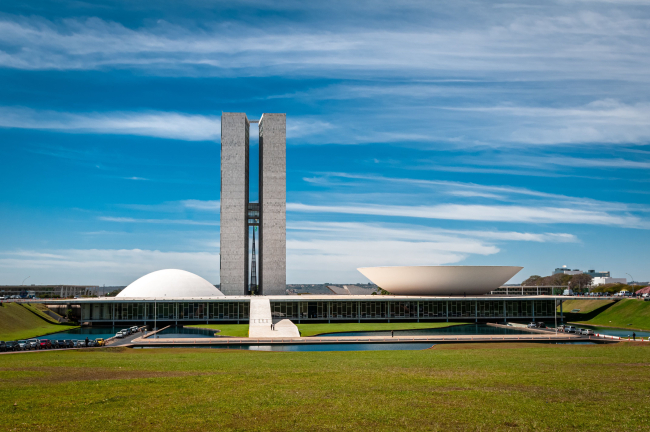
Brazil One Year Away from the October 2026 General Elections
Brazil’s general elections will be held on October 4, 2026, to elect the president, vice-president, members of the National Congress, governors, deputy governors and state legislative assemblies. For the presidential and gubernatorial elections, a second round will be held on October 25 if no candidate obtains a majority of the votes in the first round.
Trump II: The Clash of Ideologies
The second Trump administration brings together a number of very different, even opposing, ideologies: far-right populism, the reactionary Christian right, paleolibertarianism, and technolibertarianism. The most visible measures taken since Donald Trump's return to the White House have been populist in nature, with the president's authority strengthened, checks and balances weakened, a form of identity politics embraced, and economic nationalism implemented.

Water in Mexico: an Emergency that Will Wait
Access to water is already and will become increasingly problematic for Mexican economic actors due to the progressive scarcity of the resource resulting from climate change, a geographical distribution that does not coincide with that of the population or economic activity, and management that has so far been far too lax.
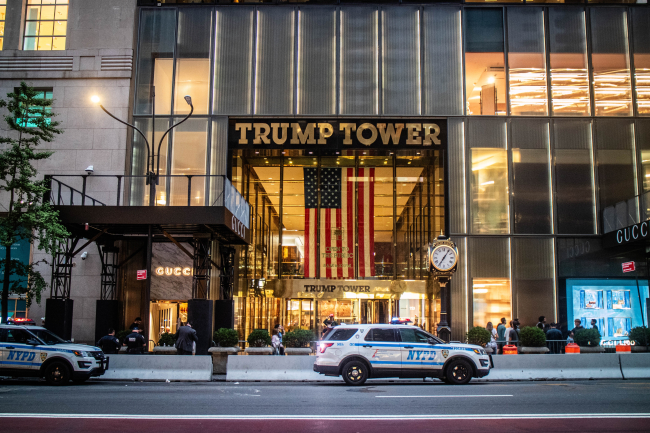
Donald Trump v. the States: the Case of New York
While the disruptive policies of the second Trump administration are being implemented at the federal level and on the international stage, they are also being felt in the federal states and major cities across the country. In the spring of 2025, several cases involving the state and city of New York demonstrate that the president’s attacks on environmental protection, the separation of powers, freedom of speech, etc., are also being carried out at the local level.