





Corée du Sud, la septième armée du monde ?
As Democratic Republic of Korea’s (DPRK) continuous development of non-conventional weapons and challenges of the international community reaches a new level, Republic of Korea (ROK) appears more than ever as the frontline state on which most of North-East Asia security depends.
The northern enemy and the closely monitored de-militarized zone, quite logically stand as the country’s strategic priority. This environment led it to develop of a massive military in order to deter or repel any invasion scheme. Overall, ROK defense policy is still determined by its longstanding alliance with the United States. However, this protection comes at the cost of a high dependence on US technology, thus stalling the development of its flourishing defense industry. Furthermore, ROK’s compulsory military conscription is the subject of much criticism as its hard conditions conflict with the aspirations of the youth. Although military reforms have been planned for years, the looming DPRK threat makes it hardly conceivable for the country to take its attention away and to embrace a defense policy more consistent with South Korean economy and society.
This content is available in French: Corée du Sud, la septième armée du monde ?

Security Studies Center
Heir to a tradition dating back to the founding of Ifri, the Security Studies Center provides public and private decision-makers as well as the general public with the keys to understanding power relations and contemporary modes of conflict as well as those to come. Through its positioning at the juncture of politics and operations, the credibility of its civil-military team and the wide distribution of its publications in French and English, the Center for Security Studies constitutes in the French landscape of think tanks a unique center of research and influence on the national and international defense debate.

Confronting Russia’s High-Velocity Arsenal: European Challenges and Solutions
Since February 2022, Russian missile and long-range drone strikes against Ukraine have served as near-daily reminders of what European states could face in a war with Russia. The same weapon systems battering Ukrainian infrastructure and population centers would be directed against European military and civilian targets in any confrontation between Russia and NATO. As Russian missile production expands and its arsenal diversifies, Europe must confront an uncomfortable question: how to deter, and if push comes to shove, fight Russia's long-range strike arsenal?

The War on Terrorism: Global Experts Reflect on Lessons Learned Twenty-Five Years After 9/11
Twenty-five years ago, the September 11 attacks prompted the invention of new security architectures that shaped the war on terrorism. Sixteen think tank experts from fifteen countries reflect on the successes, failures, and missed opportunities in the fight against terrorism—a fight that is still ongoing.
From Corsairs to Private Military Contractors. Nonmilitary Maritime Actors and the Historical Continuities of Naval Warfare
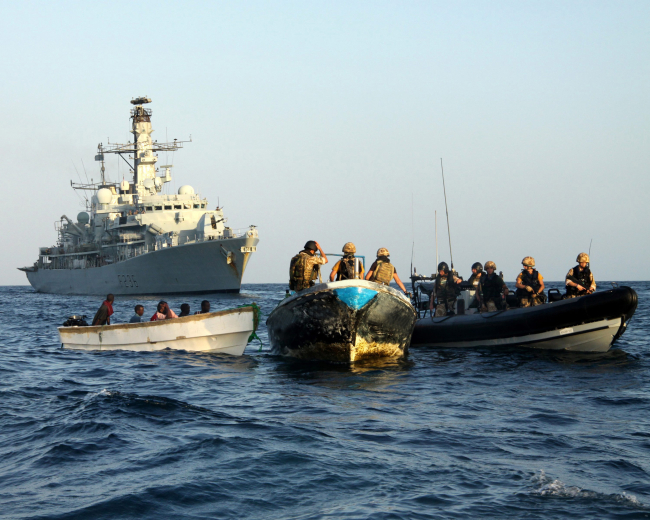
Since late 2023, several Houthi attacks on commercial shipping have involved privately contracted armed teams conducting defensive engagements and coordinating immediate response efforts, often in the relative absence of regular naval forces during the immediate hostilities at sea. These cases highlight a strategic tension that increasingly confronts modern navies. On the one hand, they are expected to conduct persistent, low-intensity maritime security tasks such as counterpiracy, maritime policing, and the protection of commercial shipping. On the other hand, they face renewed pressure to prepare for high-intensity conflict against peer and near-peer adversaries amid the return of great power competition.
Framework Nation: A European Challenge and French Ambition
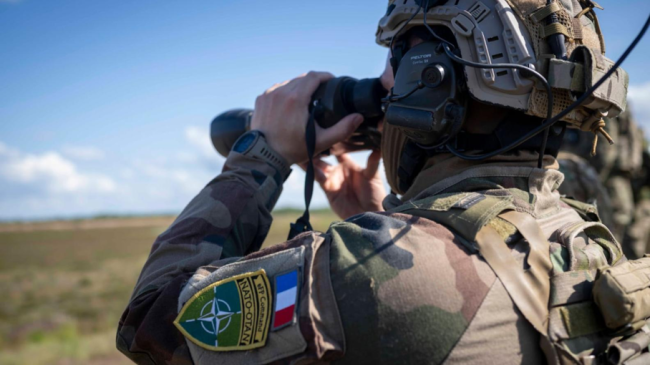
First appearing in the early 2000s, the framework nation concept follows several distinct rationales, whether it refers to a country assuming the leadership of a military operation, directing a multinational capability project, or commanding a permanent force structure. In every case, the country that takes on this role fully intends to derive from it additional politico-military influence.