


France Is Pushing Its Vital Interests Further Out
On France’s changing nuclear role in Europe, the limits of European strategic autonomy, and what a more uncertain transatlantic relationship means for the eastern flank. An interview by Linas Kojala, Editor-in-Chief of the Lithuanian Foreign Policy Review.
Europe is preparing for a security order in which the United States may do less and Europeans will have to provide more of their own deterrence. France occupies an unusual position in that debate: it is the EU’s only nuclear power, has long argued for greater European strategic autonomy and is now giving its deterrent a more explicitly European dimension. Héloïse Fayet and Élie Tenenbaum assess how far Europe can actually go without the United States – and where France fits into that transition.
Héloïse Fayet is a Research Fellow at Ifri’s Security Studies Center and Head of its Deterrence and Proliferation programme. Her work focuses on nuclear deterrence, proliferation and strategic stability. Élie Tenenbaum is Director of Ifri’s Security Studies Center. His research focuses on military strategy, European security and defence, irregular warfare and hybrid threats.
France’s “forward deterrence”
Linas Kojala: Héloïse, Macron has gone further than before in opening French nuclear deterrence to European allies – through exercises, consultations and possible deployments. What does “forward deterrence” actually change for countries on Europe’s eastern flank?
Héloïse Fayet: Forward deterrence finally gives a framework to a long-standing idea in French nuclear doctrine: France is not isolated on the European continent, and its vital interests, those defended by nuclear weapons, are interwoven with those of its allies and partners in Europe. Paris will keep sole control over the decision and will ask for no financial contribution in exchange for protection; what changes is the reach of its vital interests, which France is pushing further out. The countries taking part in the framework (ten to date) will have a specific relationship with France, built on bilateral Nuclear Steering Groups, discussions on doctrine and threat perceptions, intelligence sharing, joint exercises and more. Countries outside the initiative, such as the Baltic states, are nonetheless not set aside: President Macron made clear that the definition of French vital interests is not limited to France and its forward deterrence partners and could encompass the whole continent. For countries on Europe’s eastern flank, and particularly Poland and Finland, the two participants located there so far, forward deterrence is meant to complicate Russia’s strategic calculus by adding layers of security guarantees, at a time when U.S. extended deterrence may be seen as less credible. It also opens a privileged channel of communication with France, adds value to the bilateral relationship and fosters a shared strategic culture.
Kojala: How do you think Moscow is likely to read “forward deterrence”?
Héloïse Fayet: The Russian Ministry of Foreign Affairs issued a lengthy statement after Macron’s March 2026 speech, describing the initiative as provocative and detrimental to strategic stability. Moscow repeated these criticisms at the Non Proliferation Treaty (NPT) Review Conference in May 2026, arguing that forward deterrence amounts to nuclear sharing and to proliferation towards the European countries taking part. This reaction is much stronger than the one that followed the Northwood Declaration between France and the UK, which had already affirmed that there was “no extreme threat to Europe that would not prompt a response” from the two nations, and it suggests that Moscow considers the French initiative credible. Threats against countries that joined later, such as Finland in September 2026, point the same way: Russia is taking the consequences for its own strategy seriously. Much attention has gone to the possible deployment of nuclear capable aircraft, with or without nuclear weapons, in times of crisis, but I would argue that Russia feels more threatened by the growing conventional coordination within NATO and by the reinforcement of the French posture on the eastern flank, which forward deterrence underscores.
Élie Tenenbaum: Military experts in Russia have paid particular attention to French forward deterrence and are closely monitoring the latest developments, especially the signing of bilateral agreements with individual European states and the establishment of high-level steering groups. It is already affecting their calculations, tying down resources in their posture and planning, even in peacetime.
How dependent is Europe on the United States?
Kojala: Élie, Europe still relies heavily on the United States for capabilities such as intelligence, targeting, command and control. How much of that dependence can realistically be reduced over the next few years, given the limitations of Europe’s defence industry and the budgetary and political constraints across the continent? From Paris, how does the transatlantic relationship look today?
Tenenbaum: Dependence (or conversely, autonomy) is a layered cake. You can be dependent on an ally for a capability that you do not have, like the Precision Strike Missile (PrSM), which only the U.S. Army owns, or the Space-Based Infrared System (SBIRS), which detects intercontinental ballistic missile launches and which only the U.S. operates in the West. You can own a capability but in such small quantities that you depend on the ally for resupply and to augment it in times of high demand, as with many air-launched guided munitions, which are present only in small numbers in European stockpiles. Then you can own a capability, even in substantial numbers, but depend on the ally for maintenance and repair, like the F-35, which is present in European air forces but whose readiness depends on intensive U.S. software and hardware support. Finally, you can even produce equipment locally and still depend heavily on a complex supply chain with bottlenecks upstream, as in the case of German assembled Patriot missiles, or European-designed systems that rely on imported electronic components. True autonomy is therefore always hard to achieve and very expensive. France has made this a goal for some core military capabilities, especially those related to nuclear deterrence, but at the price of limited European integration, limited production capacity, low output and a state-controlled industry. That is one of the reasons why France’s defense industries have not benefited as much as one could have expected from the European boom in defense demand. Ideally, France would like to see the rest of Europe embark on its own vision of strategic autonomy. The EDIP and Ukraine Support Loan criteria, which require 65% European components and a design authority located in Europe, are a good example of where Paris thinks European defense should be going. But such criteria only work if European industry can deliver at scale, which remains the real test. Regarding transatlantic relations, I think the direction of travel is pretty clear, but we still do not know the speed and eventual scope of the U.S. reduction in its contribution to European conventional defense. Europeans need to plan for a scenario in which Europe is no longer the priority theater for the U.S. This does not mean that no support will arrive; rare, exquisite systems that the U.S. needs elsewhere will simply not come, or only in very limited quantities. We therefore need to wire ourselves to absorb the first shock, with stockpiles for at least six months of high-intensity fighting (today, it is more likely weeks), so that we have time to rewire to a real war economy if it comes to that. This requires a theory of attrition, which we still lack. We also need a theory of escalation in which nuclear signaling will be key, because it sits at the top of the ladder, and credibility requires that we have laid out every intermediate step; otherwise it will be seen as a bluff. If we get there, Europe may successfully deter, mostly on its own, any Russian temptation to launch an open aggression. All this shows how much dependence and autonomy also involve intangibles: the ability to command large military formations because you have the experience and the right seasoned staff officers, the ability to think for yourself with your own doctrine and theory of victory, and the ability to envision escalation dynamics in the duel of wills with your opponent. All of these are hard to objectify, but they are the real key to autonomy.
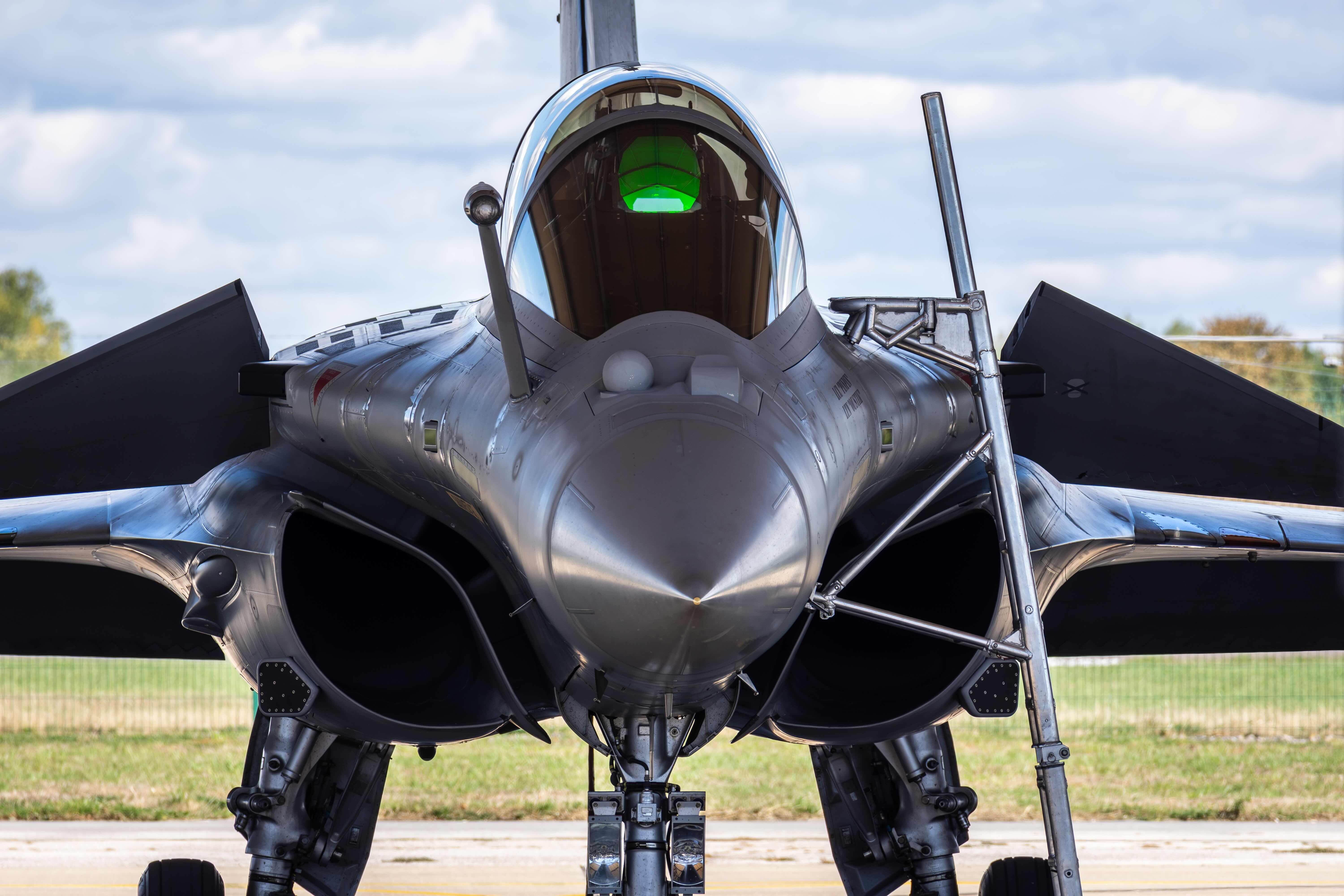
Kojala: France and Germany have moved ahead significantly on nuclear deterrence in 2026. In March they created a bilateral Nuclear Steering Group; in July French Rafale aircraft from the Strategic Air Forces deployed to Nörvenich in Germany; and German forces are due to take part in a French nuclear exercise. At the same time, the fighter component of the Franco German FCAS project has been cancelled. Are we really seeing a qualitative change in Franco German defence cooperation?
Fayet: The Franco-German relationship has always been bumpy, yet overcoming those differences is a prerequisite for a strong Europe and for a credible deterrence and defense posture. FCAS is not entirely dead: the fighter project has indeed been cancelled, but other strands, such as the collaborative combat cloud, may still materialize. In any case, FCAS was largely a political project, which the main defense companies on both sides, Dassault Aviation and Airbus, resisted from the outset, so its failure comes as little surprise. New industrial projects are emerging, among them JEWEL (a joint Franco-German early-warning project), ELSA (the European Long-Range Strike Approach) and broader European initiatives. Forward deterrence addresses more strategic questions and is meant to remain shielded from industrial setbacks, although building a joint strategic culture remains a challenge, notably regarding the relationship with NATO and the U.S. Still, Germany was the first country with which a Nuclear Steering Group met after the speech, and its forthcoming participation in a French nuclear exercise confirms a mutual interest in closer cooperation, which cannot progress as long as resentment lingers.
European Cooperation
Kojala: Élie, in your work on France’s “return to the East”, you described how profoundly French thinking about Russia, NATO and the eastern flank changed after 2022. Has the shift gone far enough that the security of Estonia, Latvia, Lithuania and Poland is now understood in Paris as a direct French strategic interest? And Héloïse, if French deterrence is becoming more European, should the Baltic region eventually have a place in French nuclear planning and exercises?
[...]
This interview was published in the Lithuanian Foreign Policy Review, Vol. 45 (2027), pp. 47–53. Read the full interview here : Lithuanian Foreign Policy Review

Available in:
Themes and regions
ISBN / ISSN
Share

Héloïse FAYET
Research Fellow and Head of the Deterrence and Proliferation program, Security Studies Center, Ifri
Élie TENENBAUM
Director of Ifri’s Security Studies Center

Deterrence and Proliferation
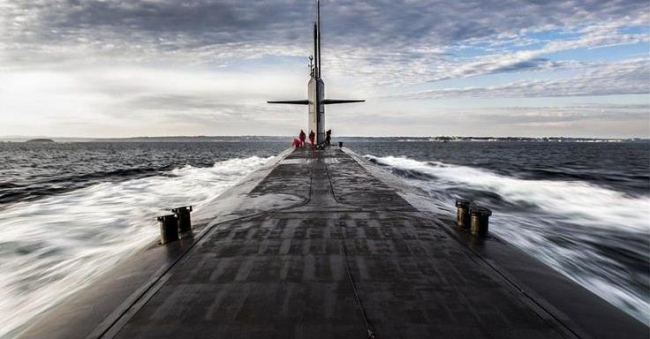
The conflicts in Europe, Asia and the Middle East demonstrate a return of nuclear power to the balance of power. Arsenals are being modernized and expanded, while arms control is collapsing. This research program aims to analyze these phenomena.
Security Studies Center
Heir to a tradition dating back to the founding of Ifri, the Security Studies Center provides public and private decision-makers as well as the general public with the keys to understanding power relations and contemporary modes of conflict as well as those to come. Through its positioning at the juncture of politics and operations, the credibility of its civil-military team and the wide distribution of its publications in French and English, the Center for Security Studies constitutes in the French landscape of think tanks a unique center of research and influence on the national and international defense debate.
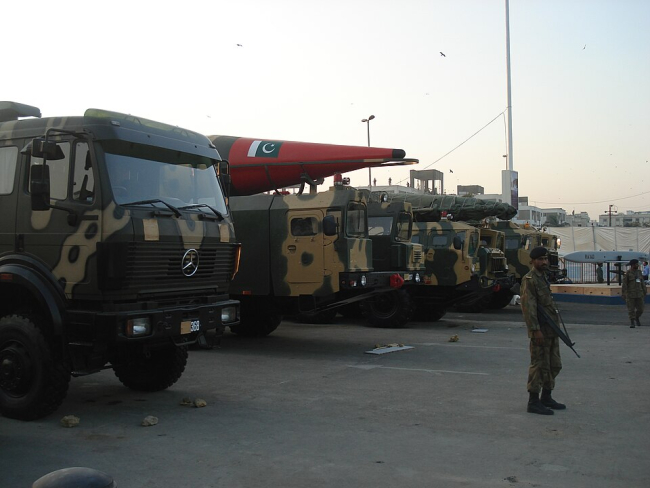
Stability under Pressure. A Pakistani View on Nuclear Deterrence after Pahalgam
The May 2025 India-Pakistan crisis after the Pahalgam attack has generated a familiar but incomplete debate: did nuclear deterrence work, or did it merely allow both sides to fight a limited war under the nuclear shadow? The better answer is that deterrence worked at the level at which it was designed to work. It prevented a general war and an uncontrolled vertical escalation, and kept nuclear weapons in the background. But it did not prevent India from attempting to carve out space for conventional action, nor did it prevent Pakistan from responding conventionally to restore deterrence credibility.
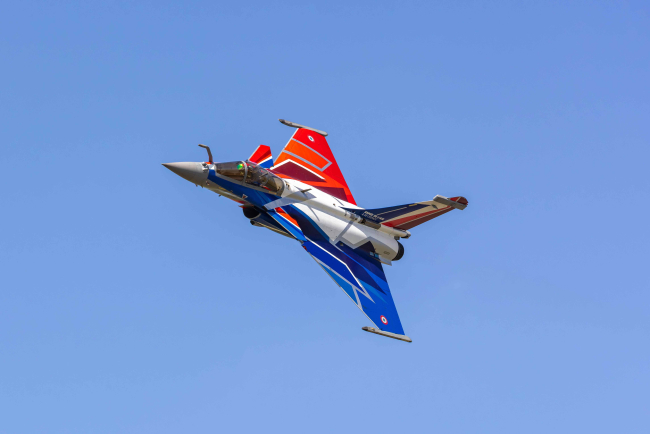
French Forward Deterrence: What Is in It for the Baltic States?
For what may be its most significant stress test since the end of the Cold War, European deterrence is under strain. Russia’s war against Ukraine has demonstrated Moscow’s willingness to use force and its ability to combine conventional operations with nuclear signalling, coercive rhetoric, and hybrid actions. At the same time, the gradual deterioration of transatlantic relations has revived concerns about the reliability of extended deterrence.
Taking the Pulse: Is France’s New Nuclear Doctrine Ambitious Enough?
French President Emmanuel Macron has unveiled his country’s new nuclear doctrine. Are the changes he has made enough to reassure France’s European partners in the current geopolitical context?
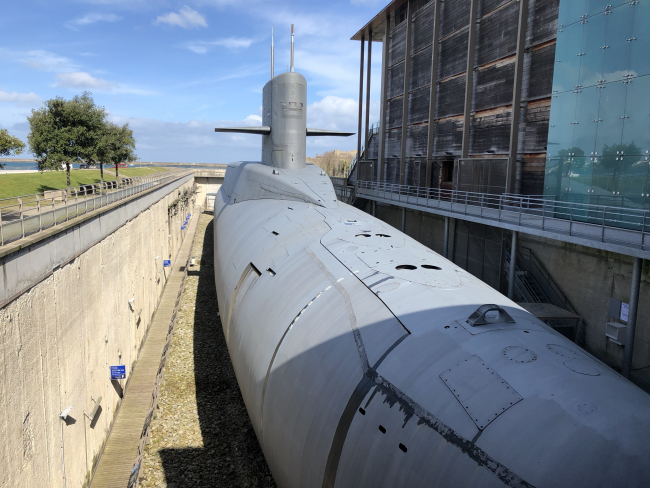
Macron Offers a Promising Vision for Nuclear Deterrence in Europe
Macron’s concept of ‘forward deterrence’ offers a distinctly European approach to nuclear deterrence.