




China
China's diplomatic, military, economic and technological assertiveness, as well as its growing rivalry with the United States, raise certain apprehensions among its neighbors and Europeans alike.
Related Subjects
Rare Earths and the WTO: Tougher case than it looks
Deepening their partnership, Ifri and the Canon Institute for Global Studies (CIGS) are launching a series of op-eds, written both by Ifri and CIGS experts. This new series aims at providing the European and Asian public with original and different visions on the rapidly evolving international affairs.




The Expanding Chinese Footprint in Latin America: New Challenges for China, and Dilemmas for the US
The physical presence of China in Latin America is entering a phase of significant expansion, as the logical consequence of the rapid growth over the past decade of its trade, investment, and infrastructure for doing business in the region.

Doors Wide Shut? An Update on FDI Regulations in China
The fears of a rise in economic nationalism in China have been fueled by a number of recent moves, such as changes in the law on indigenous innovation or the enactment of a national security review (NSR) regulation for M&As by foreign enterprises. The objective of the current paper is twofold: First is to provide an update on the investment environment in China in order to determine whether or not these provisions reflect a move in the direction of more protectionism, and second is to suggest ways for European countries to level the playing field for their firms wishing to invest in China.
Internet Companies in China: Dancing between the Party Line and the Bottom Line
With over 500 million Internet users and 900 million mobile-phone subscribers by mid-2011, the Chinese Internet is an enormous market that has produced the spectacular rise of many Chinese Internet companies and attracted substantial foreign investment. This paper argues that, despite a great degree of liberalization of its market over the past 15 years, the Chinese Internet remains authoritarian in nature. Not only did the central government actively shape the infrastructure and rules of China's information superhighways, but recently it has also vigorously built state-controlled Internet companies, including a national search engine.



Toward Higher Household Consumption? An Up-to-Date Analysis of China's Economic Transition
For more than two decades, China's economy has been growing at an average rate of close to 10 percent. As a result of this stellar performance, China ascended to the rank of the world's second largest economy in 2010, surpassing Japan.
Chinese Climate Policy: Institutions and Intent
Until the late 1990s, the balance of Chinese energy production and consumption was treated by the rest of the world as a net figure. No one knew what was going on inside the Chinese economy - it was a black box. As far as anyone was concerned, the Chinese would not soon be a major factor in world energy markets.
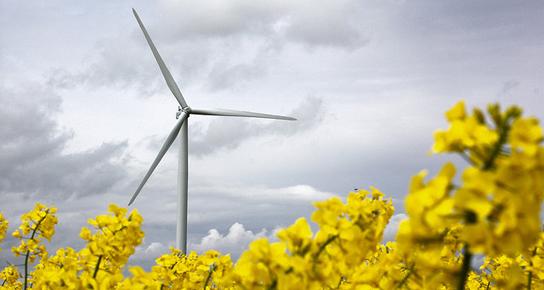
Rare Earths and Clean Energy: Analyzing China's Upper Hand
An ominous resource crunch in the so-called “rare earth elements” is now threatening the development of a number of key industries from energy to defense to consumer electronics. As key components in the latest generation of technologies, including specialized magnets for windmills and hybrid cars, lasers for range finders and “smart” munitions, and phosphors for LCD screens, demand for these rare metals is expected to grow rapidly in the years to come.

Ifri, a foundation recognized as being of public utility, relies largely on private donors – companies and individuals – to guarantee its sustainability and intellectual independence. Through their funding, donors help maintain the Institute's position among the world's leading think tanks. By benefiting from an internationally recognized network and expertise, donors refine their understanding of geopolitical risk and its consequences on global politics and the economy. In 2026, Ifri partners with over 90 French and international companies and organizations.

The European Think-tank Network on China (ETNC) is a gathering of China experts from a selection of European research institutes. It is devoted to the policy-oriented study of Chinese foreign policy and relations between China and European countries as well as China and the EU. It facilitates regular exchanges among participating researchers with a view to deepening the understanding within the European policy and research community and the broader public of how Europe, as a complex set of actors, relates with China and how China’s development and evolving global role is likely to impact the future of Europe. The network’s discussions and analyses take a decidedly ‘bottom-up’ approach, accounting for the various aspects of bilateral relations between European countries and China, and the points of convergence and divergence among EU member states in order to examine EU-China relations in a realistic and comprehensive way. The views presented in ETNC reports are the sole responsibility of the signed authors and do not in any way represent the views of all members of the ETNC, its participating institutions, nor the institutions with which the authors are affiliated.
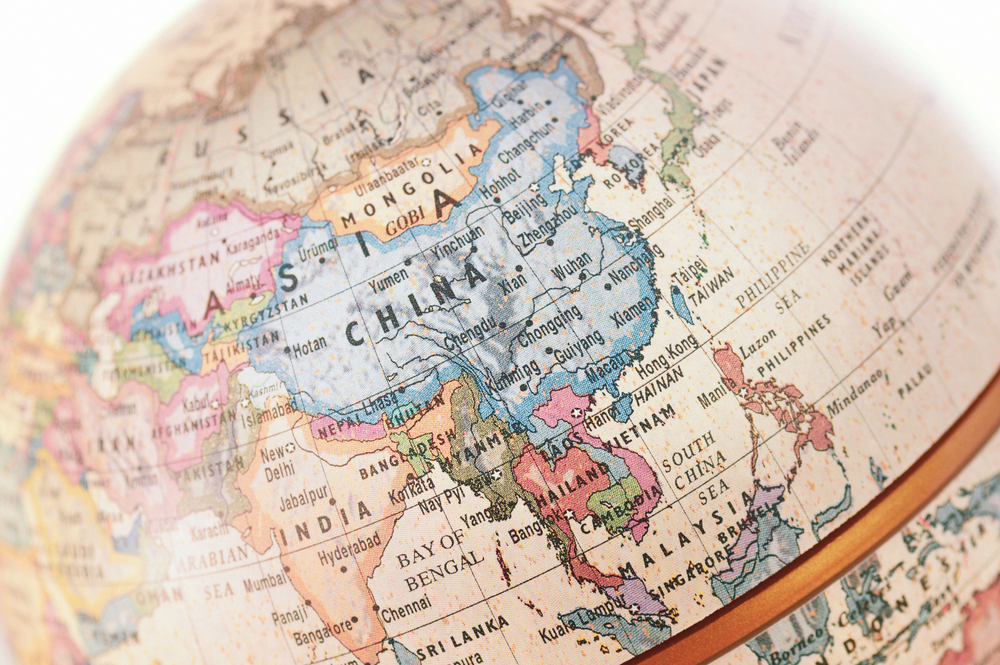
Asia is a nerve center for multiple global economic, political and security challenges. The Center for Asian Studies provides documented expertise and a platform for discussion on Asian issues to accompany decision makers and explain and contextualize developments in the region for the sake of a larger public dialogue.
The Center's research is organized along two major axes: relations between Asia's major powers and the rest of the world; and internal economic and social dynamics of Asian countries. The Center's research focuses primarily on China, Japan, India, Taiwan and the Indo-Pacific, but also covers Southeast Asia, the Korean peninsula and the Pacific Islands.
The Centre for Asian Studies maintains close institutional links with counterpart research institutes in Europe and Asia, and its researchers regularly carry out fieldwork in the region.
The Center organizes closed-door roundtables, expert-level seminars and a number of public events, including an Annual Conference, that welcome experts from Asia, Europe and the United States. The work of Center’s researchers, as well as that of their partners, is regularly published in the Center’s electronic journal Asie.Visions.