





China
China's diplomatic, military, economic and technological assertiveness, as well as its growing rivalry with the United States, raise certain apprehensions among its neighbors and Europeans alike.
Related Subjects
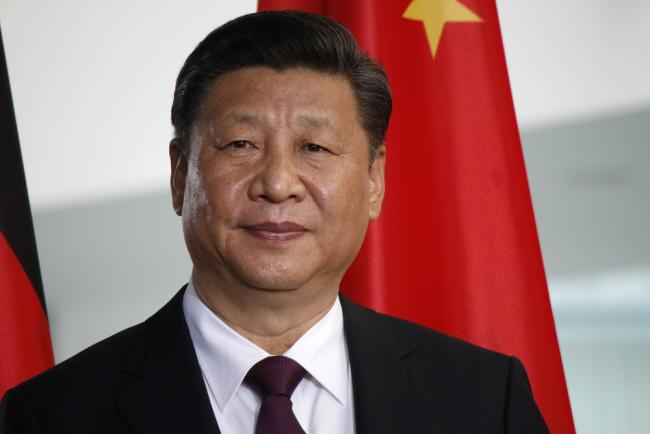
China and the “Definition Gap”: Shaping Global Governance in Words
Increasingly, China’s diplomacy is using key words commonly used by liberal democracies, but the meaning differs greatly. This evolution is changing the terms of the debate without changing a single term.

Three Years of China’s New Silk Roads: From Words to (Re)action?
More than three years have already passed since China’s new silk roads were launched by President Xi Jinping. When he first mentioned the idea in an autumn 2013 speech in Kazakhstan, questions quickly emerged on the meaning of this general concept, which soon became widely promoted through a large-scale and well-coordinated public diplomacy strategy both in and outside China.


What Does China's 'New Asian Security Concept' Mean for the US?
A closer look at China’s vision for remaking Asian security, and what the United States can do about it. In October, China hosted the seventh Xiangshan Forum in Beijing, during which Vice Foreign Minister Liu Zhenmin outlined a framework for a regional security architecture to meet the emerging challenges and opportunities of the 21st century.

Europe and China's New Silk Roads
As China elaborates on the design of its "Belt and Road Initiative" (OBOR), the place of Europe within this project is slowly but surely taking shape.
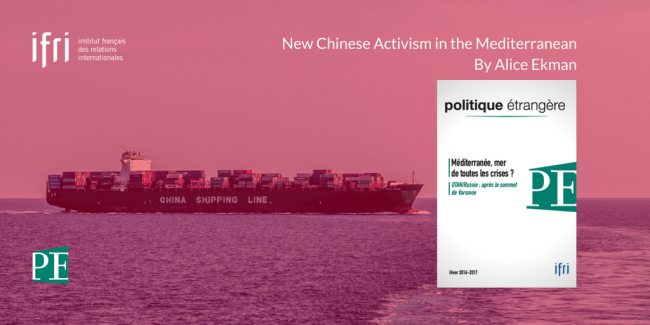
New Chinese Activism in the Mediterranean
Chinese presence in the Mediterranean is increasing: propositions for cooperation forums with various southern European countries, investment in port terminals, military maneuvering, evacuation of citizens, etc.
China and Global Economic Order: A discreet yet undeniable contestation
Having long remained a passive presence within multilateral economic organisations, China recently changed its stance when the United States was faced with a major financial crisis.
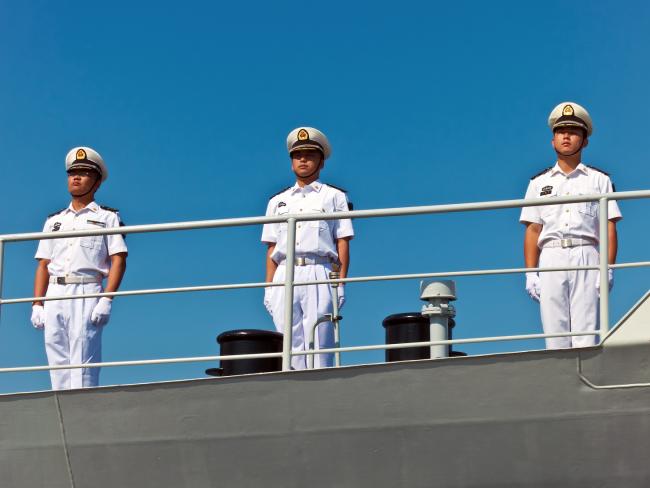
China’s Military Deployments in the Gulf of Aden: Anti-Piracy and Beyond
The reason for the deployment of a People’s Liberation Army Navy (PLAN) “anti-piracy task force” in the Gulf of Aden (GoA), a key area for the Chinese economy, was obvious in 2008. However, as the pirate activity has faded away since 2012, the objectives of the PLAN in GoA became unclear.

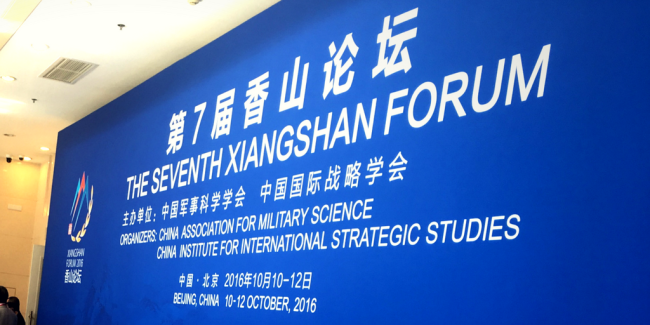
At the 2016 Xiangshan Forum, China Outlines a Vision for Regional Security Governance
Beijing has a plan for a new regional security architecture, and it’s not based around alliances.
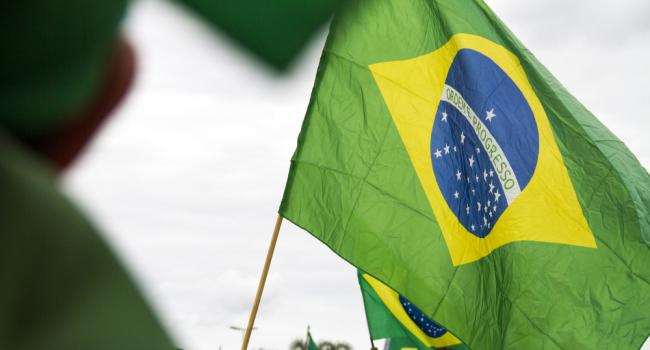
Brazil: the Harder they Fall
During the 2000s, Brazil's economy took off, with growth driven primarily by strong Chinese demand for commodities. Within a decade, the Brazilian middle class increased from 30% to 50% of the population.
Energy Relations between Russia and China: Playing Chess with the Dragon
Post-sanctions Russia-China energy relations: what expectations?
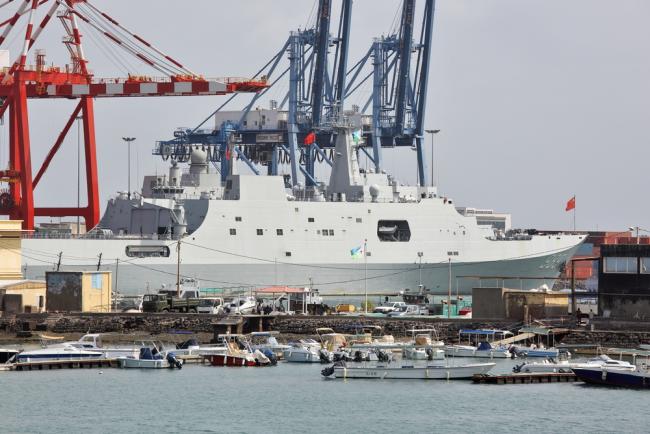
China in Djibouti: A military base with Chinese characteristics?
Last February, the Chinese Defense Ministry confirmed the launch of the construction of a Chinese military base in Djibouti. For a long time, Chinese officials had insisted that China would never build military bases or to station troops abroad.

Mapping EU-China relations from the bottom up
Mapping Europe-China Relations: A bottom-up approach -- a recent report of the European Think-tank Network on China (ETNC) to which Alice Ekman and John Seaman largely contributed -- was summarized in Politico's Pro Morning Trade newsletter.
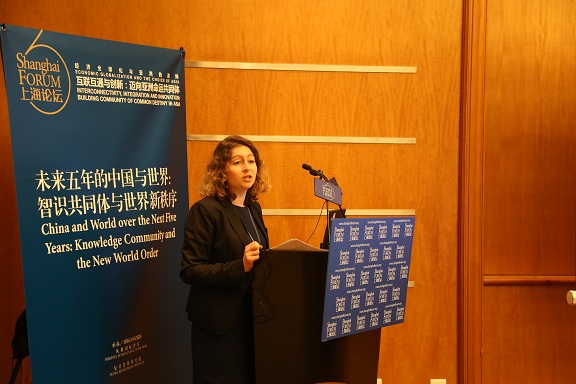
The International Development of Chinese Think Tanks
Alice Ekman gave her opinion on the international development of Chinese think tanks at a roundtable in Shanghai, organized by the Korea Foundation for Advanced Studies, Fudan University and Phoenix International Think Tank.

Beijing tightens control of foreign NGOs
The Chinese government recently passed a law to bring foreign NGOs under stricter control.

China Gets French Wine in Exchange for Chemicals on First Run by ‘New Silk Road’ Train
The first freight train from Wuhan, in China, to Lyon, in France, reached its destination Thursday, carrying a cargo of mechanical, electrical, and chemical products — goods that are generally transported between the two countries by ship.
Scientific Cooperation in the South China Sea: A vector for China's security diplomacy in Southeast Asia?
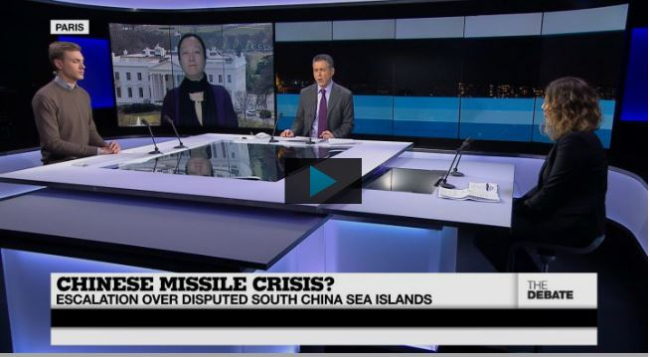
Chinese missile crisis? Escalation over disputed China Sea islands
Reports have emerged that China has set up a missile launch base on Woody Island, part of an archipelago disputed with Taiwan and Vietnam. This comes just as the US President was wrapping up an ASEAN summit to strengthen ties after the recent Trans-Pacific Partnership trade deal. How will this shape policy not only among Washington's traditional allies in the region but also in countries like Vietnam? Once again, a war-weary US is being called upon and has to look at the broader picture.
China and the UN’s Peace Keeping Operations: Defending Sovereignty
China has become one of the main personnel contributors for UN peace keeping operations, and the principal contributor among the permanent members of the Security Council.
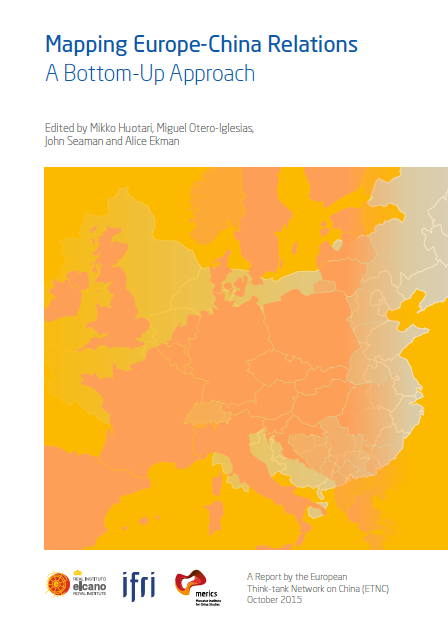
Mapping Europe-China Relations: A Bottom-Up Approach. A Report of the European Think-tank Network on China ETNC, October 2015
As China’s rise continues to shape and shake the course of international affairs, and Europe enters a new chapter in its collective history, Europe-China relations are becoming more relevant, but also much more complex.

Securing Energy and Mineral Resources for China: Debating the role of markets
This paper examines how China seeks to secure access to an ever growing level of natural resources from overseas. In its quest for resources necessary to fuel its economy, does China seek to bolster the development of international markets, or rather to procure resources in a more mercantilist fashion?
Ifri, a foundation recognized as being of public utility, relies largely on private donors – companies and individuals – to guarantee its sustainability and intellectual independence. Through their funding, donors help maintain the Institute's position among the world's leading think tanks. By benefiting from an internationally recognized network and expertise, donors refine their understanding of geopolitical risk and its consequences on global politics and the economy. In 2026, Ifri partners with over 90 French and international companies and organizations.

The European Think-tank Network on China (ETNC) is a gathering of China experts from a selection of European research institutes. It is devoted to the policy-oriented study of Chinese foreign policy and relations between China and European countries as well as China and the EU. It facilitates regular exchanges among participating researchers with a view to deepening the understanding within the European policy and research community and the broader public of how Europe, as a complex set of actors, relates with China and how China’s development and evolving global role is likely to impact the future of Europe. The network’s discussions and analyses take a decidedly ‘bottom-up’ approach, accounting for the various aspects of bilateral relations between European countries and China, and the points of convergence and divergence among EU member states in order to examine EU-China relations in a realistic and comprehensive way. The views presented in ETNC reports are the sole responsibility of the signed authors and do not in any way represent the views of all members of the ETNC, its participating institutions, nor the institutions with which the authors are affiliated.
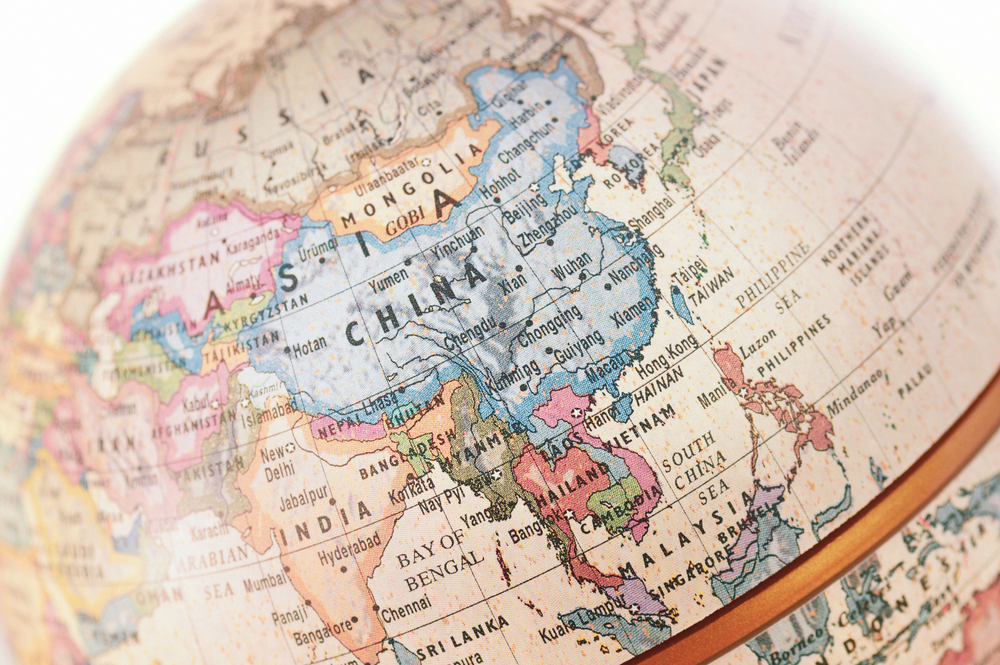
Asia is a nerve center for multiple global economic, political and security challenges. The Center for Asian Studies provides documented expertise and a platform for discussion on Asian issues to accompany decision makers and explain and contextualize developments in the region for the sake of a larger public dialogue.
The Center's research is organized along two major axes: relations between Asia's major powers and the rest of the world; and internal economic and social dynamics of Asian countries. The Center's research focuses primarily on China, Japan, India, Taiwan and the Indo-Pacific, but also covers Southeast Asia, the Korean peninsula and the Pacific Islands.
The Centre for Asian Studies maintains close institutional links with counterpart research institutes in Europe and Asia, and its researchers regularly carry out fieldwork in the region.
The Center organizes closed-door roundtables, expert-level seminars and a number of public events, including an Annual Conference, that welcome experts from Asia, Europe and the United States. The work of Center’s researchers, as well as that of their partners, is regularly published in the Center’s electronic journal Asie.Visions.