







Japan
Japan, the powerhouse of the Indo-Pacific, is an essential partner for Europe and France, against a backdrop of Sino-American rivalry and transformation of the international order.
South China Sea and the Law of the Sea: Where is China’s Power Heading?
On Tuesday July 12th, after three years of deliberations, the Permanent Court of Arbitration finally delivered its verdict on the conflict opposing the Philippines and China over status of the Spratly Islands in the South China Sea. The judgment is historic, as it goes far beyond the expectations of the involved parties and observers.

The Role of Sub-National Actors in Climate Change Policy. The Case of Tokyo
Tokyo is known as a pioneer throughout the history of Japan’s environmental policy, often being compared to California in the United States or Paris in France. Following the global trend of growing local initiatives tackling climate change, Tokyo introduced a cap-and-trade scheme in 2010 ahead of a national implementation.
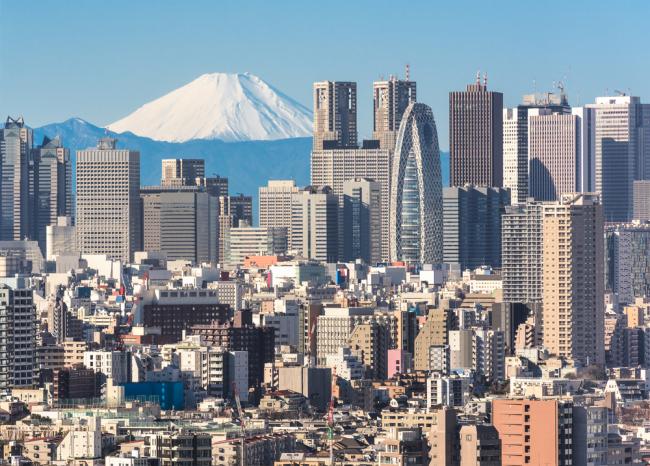
Tokyo face aux désastres naturels : leçons, enjeux et défis
While Tokyo prepares to welcome the 2020 Summer Olympic Games, the likelihood that a massive earthquake will occur in the capital city within the next thirty years is estimated at 70 %. This fact alone reflects the challenges that Japan must face in managing the risk of natural disasters.
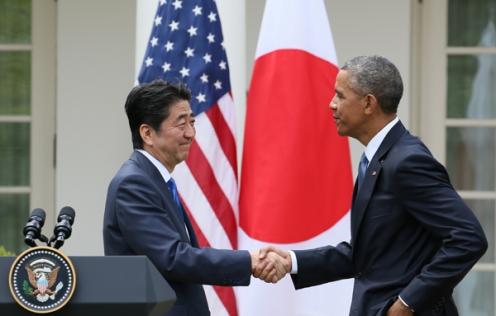
Japan and its Alliance with the US. Structure, Dynamics, Evolution to 2030
China’s rise, US rebalancing in Asia, historic defense reforms in Japan, the adoption of new Guidelines for bilateral cooperation: the Japan-US alliance has reached a turning point in its history.

Japan's Challenges in Public Diplomacy, An American Vision
Japan’s public diplomacy (PD) profile rests almost exclusively on the promotion of its cultural soft power. Today, in the complex geopolitical setting of Asia, in which national rivalries are reviving competing wartime history narratives and territorial disputes, this approach is no longer sufficient to advance Japan’s own national interests and gain favorable opinion abroad. Under the Prime Minister Abe, Japan has begun to transform and upgrade its public diplomacy. However, the country is still facing a number of challenges.


El desfile militar pone a prueba las tensas relaciones entre China y Japón
Los actos que esta semana organiza China para conmemorar el 70 aniversario de su victoria ante Japón, coronados por un desfile militar en la plaza de Tiananmen, plantean un nuevo desafío a los lazos entre Pekín y Tokio, ya dañados en los últimos años por desavenencias históricas y territoriales.
Japan's Energy and Climate Policy: Towards Dispelling the Uncertainties
Four years after the Great East Japan Earthquake and a few months before the opening of the Paris Climate Conference, Japan is about to clarify its energy and climate policy.
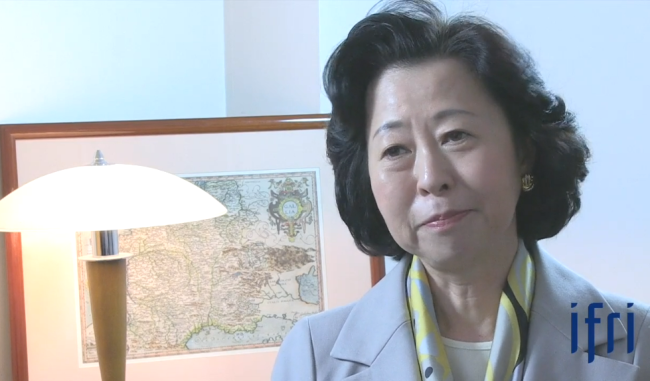
(Dis)integrating Asia? - Interview with Yukiko Fukagawa
Yukiko Fukagawa, Professor at the Graduate School of Economics, Waseda University, explained Japan's role in the regional integration process.

Nationalism in China and Japan and Implications for Bilateral Relations
Nationalism appears to be an important part of the growing frictions between China and Japan.
In Japan, the return to power of Shinzo Abe as prime minister, and the historic breakthrough of an extreme right-wing party onto the political scene reinforce the view that there has been a clear shift to the right. Public opinion is today also more realistic about direct security threats to Japan.
Volcanic Activity and Nuclear Security in Japan
At the beginning of 2014, Japan experienced the deadliest volcanic eruption on its territory in over a century. The unpredictable nature of the event reignited fears of the risks of nuclear power plants.
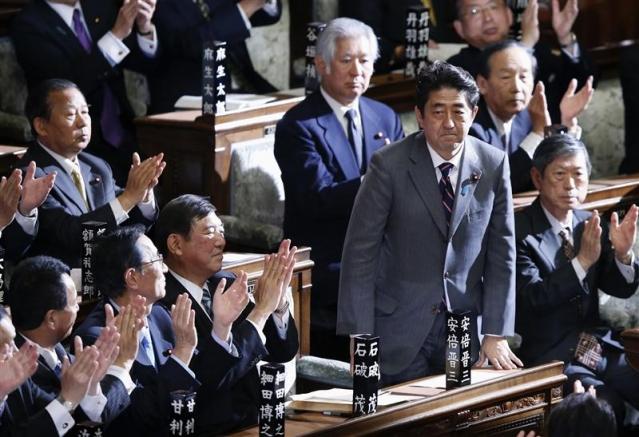
Législatives au Japon: une victoire pour les "abenomics"
Lancées début 2013 pour tirer l’Archipel de la déflation, les « Abenomics » sont d’ambitieux programme de relance du premier ministre, Shinzo Abe.
Invité: l’économiste Claude Meyer spécialiste de la zone Asie.

Japan's Energy Policy in a Post-3/11 World: Juggling Safety, Sustainability and Economics
The March 2011 accident at the Fukushima Daiichi Nuclear Power Station turned Japan’s energy policy on its head, shedding a harsh new light on Japan’s energy policy and power supply system, and throwing into relief six major problem areas that had largely escaped scrutiny before the disaster.
Abe’s Japan and Xi’s China: from Cold Peace to Hot War?
Sino-Japanese relations have deteriorated since Shinzo Abe and Xi Jinping came to power.

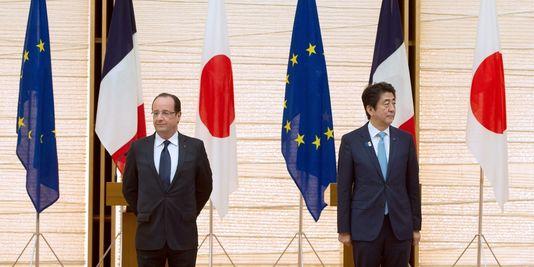

Géopolitique le débat : « Le retour du Japon »
A la tête du gouvernement depuis plus d’un an, Shinzo Abe entend redonner à son pays fierté et puissance face à la Chine. Entre politique de relance économique et regain de dynamisme diplomatique… en passant par un certain recours au nationalisme…le Japon muscle sa posture stratégique. Le pari n’est pas sans risques.

Ifri, a foundation recognized as being of public utility, relies largely on private donors – companies and individuals – to guarantee its sustainability and intellectual independence. Through their funding, donors help maintain the Institute's position among the world's leading think tanks. By benefiting from an internationally recognized network and expertise, donors refine their understanding of geopolitical risk and its consequences on global politics and the economy. In 2026, Ifri partners with over 90 French and international companies and organizations.

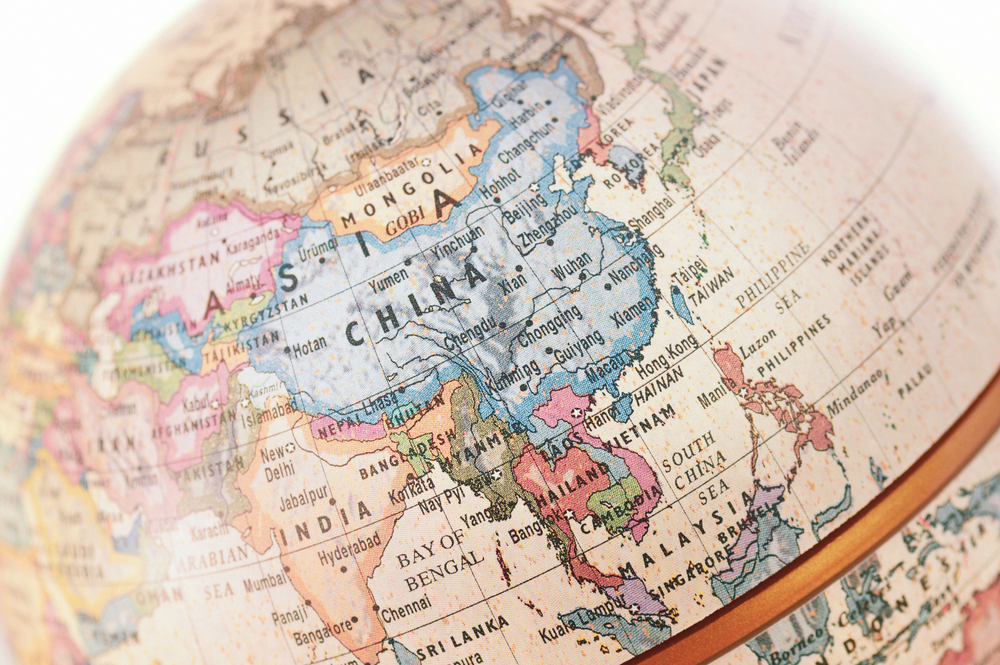
Asia is a nerve center for multiple global economic, political and security challenges. The Center for Asian Studies provides documented expertise and a platform for discussion on Asian issues to accompany decision makers and explain and contextualize developments in the region for the sake of a larger public dialogue.
The Center's research is organized along two major axes: relations between Asia's major powers and the rest of the world; and internal economic and social dynamics of Asian countries. The Center's research focuses primarily on China, Japan, India, Taiwan and the Indo-Pacific, but also covers Southeast Asia, the Korean peninsula and the Pacific Islands.
The Centre for Asian Studies maintains close institutional links with counterpart research institutes in Europe and Asia, and its researchers regularly carry out fieldwork in the region.
The Center organizes closed-door roundtables, expert-level seminars and a number of public events, including an Annual Conference, that welcome experts from Asia, Europe and the United States. The work of Center’s researchers, as well as that of their partners, is regularly published in the Center’s electronic journal Asie.Visions.