




Japan
Japan, the powerhouse of the Indo-Pacific, is an essential partner for Europe and France, against a backdrop of Sino-American rivalry and transformation of the international order.
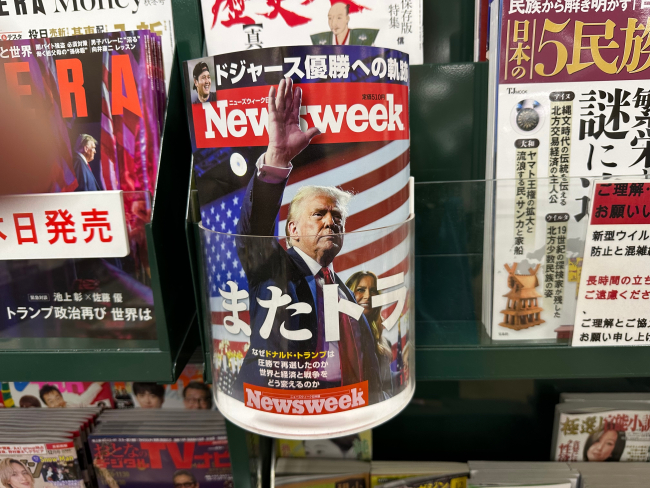
The Indo-Pacific and Trump II. In Uncle Sam’s brutal embrace
In this collective analysis, the research team of the Center for Asian Studies presents a synthetic and non-exhaustive assessment of the relations taking shape between the United States under the Trump II administration and some of the main players in the Indo-Pacific.

Japan: Deciphering Prime Minister Ishiba’s Strategic Vision. Toward an Asian version of NATO?
On Tuesday, October 1, Shigeru Ishiba was sworn in as Prime Minister of Japan. His proposal to revise the security alliance with the United States and create an Asian version of the North Atlantic Treaty Organization (NATO) attracted attention and sparked lively debate.


Japan’s New Leadership: Heralding a New Direction?
Japan’s ruling Liberal Democratic Party (LDP) chose its next leader on September 27, after in mid-August incumbent Prime Minister Kishida announced that he would not run for a second term as LDP President.

Japan’s Enhanced Security Engagement With the Pacific Islands
The expansion of security and defense cooperation stands as the most spectacular change in Japan’s contribution to the region in recent years.
Fumio Kishida's Visit to Paris. The France-Japan Relation Deserves Better
Chinese President Xi Jinping's state visit to France hit the headlines. President Macron rolled out the red carpet to welcome his guest, hoping to convince China to limit its support for Russia and respect fair trade rules.

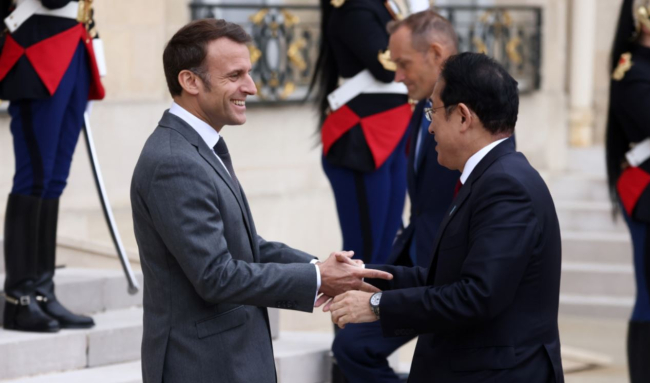
Kishida deserved the warm embrace Macron gave Xi
Japan PM's low-key visit to Paris yielded significant bilateral initiatives. French President Emmanuel Macron rolled out the red carpet to greet Chinese President Xi Jinping this week, hoping to somehow persuade him to curb his country's support for Russia's war in Ukraine and to play by international trade rules.

Japan sells itself as Global South’s China counterweight with whistle-stop tour of Africa, South Asia
- Madagascar, Ivory Coast and Nigeria were first on the itinerary for Tokyo’s top diplomat this week, with Japan’s Indo-Pacific strategy front of mind
- Foreign Minister Yoko Kamikawa‘s 10-day tour is calling at Sri Lanka and Nepal last – where the China-India rivalry is sure to be high on the agenda
After Hiroshima: The G7 Summit, Economic Security and the EU-Japan Partnership
Japan and the European Union are increasingly aligned on international economic policies, the product of a similar outlook toward China – concerned without being overtly hostile – and worried about over-reach by the United States.
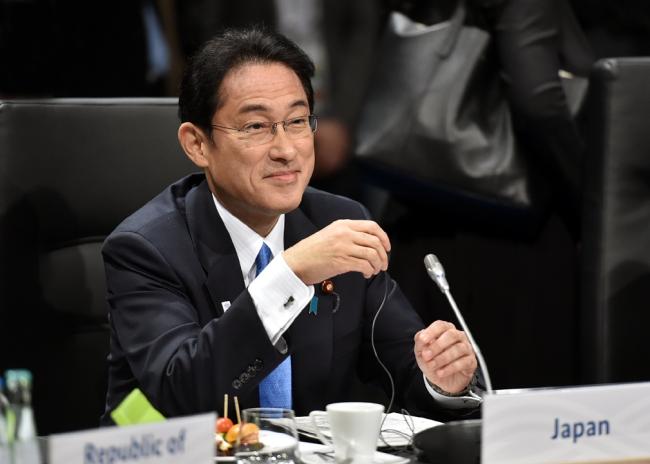
Mitigating Geopolitical Risk – Japan as a Stabilizer in Asia
In the current tumultuous geopolitical setting, Tokyo may have a very specific, stabilizing role to play.
Japan’s Africa aid rivals China in terms of ‘quality over quantity’: analysts
Japan has been investing in the continent for longer than China and applies international standards to its infrastructure financing, analysts said. Its pockets may not be as deep, but its support of good governance and democratic principles makes it a tempting development partner for African states.
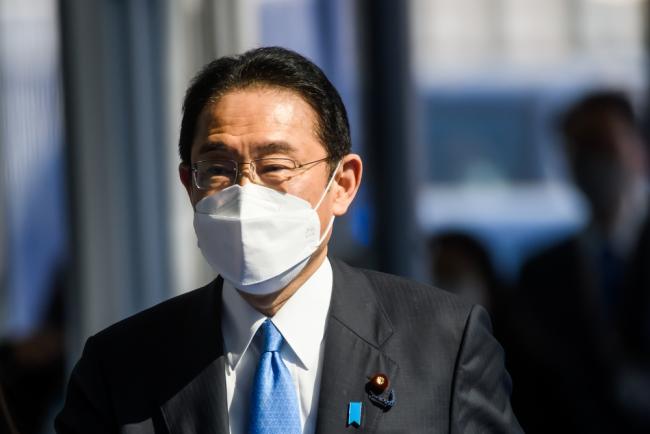
Japan’s Africa policy: Back to basics in times of crisis
Addressing remotely the 8th Japan-Africa TICAD Summit held in Tunis between August 27th and 28th, Japanese Prime Minister Fumio Kishida pledged $30 billion in public and private contributions to the African continent over the course of the next three years. This is a quite a remarkable move, as no specific amount was mentioned by the late Prime Minister, Shinzō Abe, at the previous TICAD 7 in 2019. By doing so, Japan aims at demonstrating that its commitment to Africa is solid and sustainable: its traditional approach towards a human-centered development is more relevant than ever in these times of crisis (between the pandemic, the war in Ukraine, and the adverse effects of climate change), and clearly marks a difference from China’s practices.
Japan resumes its wooing of Africa, a counter to China’s efforts
Japan, which began developmental programmes in the 1990s, has been eclipsed in recent years by China, now Africa’s leading trade partner.Pledge to invest US$30 billion on the continent includes a focus on training Africans to run their economy.

After support for Ukraine, Kishida aims for NATO unity on China
When Prime Minister Fumio Kishida becomes the first Japanese leader to attend a NATO leaders summit on Wednesday, he’ll be looking to stress the need for unity in preventing China from taking the “wrong lessons” from the Ukraine war as the bloc looks to expand its footprint in the Indo-Pacific.
Japan steps up its Africa engagement
Laying the foundation for the Eighth Tokyo International Conference on African Development (TICAD), Japanese Foreign Minister Yoshimasa Hayashi held talks on 28 March 2022 with ministers from 50 African nations. Hayashi expressed concerns that the COVID-19 pandemic and the war in Ukraine had increased the economic and social vulnerabilities of African countries — deepening their dependence on China. He subsequently committed to increase Japan’s cooperation with Africa.
Japan's upgraded economic security strategy
An interview with Kazuto SUZUKI, Professor, Graduate School of Public Policy, University of Tokyo.
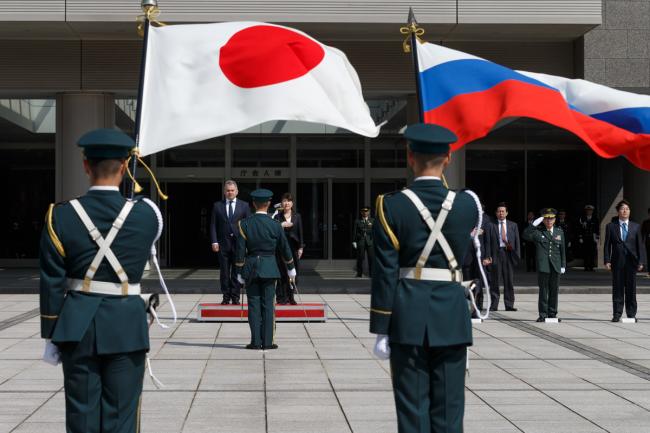
Japan-Russia: The end of delusions
The war in Ukraine has led to a major rift between Japan and Russia.
Developments in Japan’s Defense Strategies and Readiness: Is the Glass Half Full or Half Empty?
On December 18, 2018, the Japanese government issued its latest National Defense Program Guidelines (NDPG), marking another step in Japan’s defense planning and the readiness of the Japan Self-Defense Force (JSDF).
A Region of Flashpoints? Security in the Indo-Pacific
The Indo-Pacific mega-region is home to the world’s most fluid, complex, and dangerous security environment. Lingering traditional security flashpoints (Taiwan Strait, North Korea, territorial disputes) are exacerbated by the rise of China and the US–China great power competition.
France: the leading European power in the Indo-Pacific
In May 2018, French President Emmanuel Macron delivered a speech at the Garden Island Naval Base in Sydney, Australia, where he outlined a French strategy for the Indo-Pacific. With this speech, France formally positioned itself as an ‘Indo-Pacific power’ and became the first European country to adopt the concept as a regional framework. France’s approach to the region reflects unique sensitivities. It has also been the driving force for broader European engagement with the Indo-Pacific.
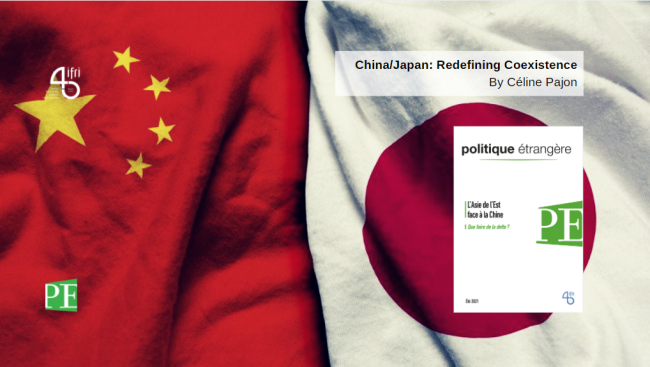
China/Japan: Redefining Coexistence
When dealing with China, Japan has assumed a position that protects its economic cooperation with Beijing, ensures Chinese aggressive strategies are deterred and guarantees its overall economic security: security of supply, autonomy in technological development, etc.
France’s Indo-Pacific Strategy and the Quad Plus
In France, the launch of the Quad Plus raised little attention.

What Would Suga’s Indo-Pacific Strategy Look Like?
With the resignation of Prime Minister Abe, the future of Japan’s Free and Open Indo-Pacific strategy has been called into question. Abe was indeed one of the key architects of this vision and he devoted enormous energy to flesh it out.

Japan’s Hydrogen Society Ambition: 2020 Status and Perspectives
Japan has been steadfastly promoting the development of its hydrogen economy at all levels: political, diplomatic, economic and industrial. It is yet to be seen if this excitement can be turned into a credible, cost-effective and large scale deployment.
Japan in the 2019 G20 and G7 Summits: A Key Partner for Europe?
This essay offers a general assessment of Japan’s performance in the 2019 G20 and G7 Summits, held respectively in Osaka, Japan and Biarritz, France and looks at how Tokyo coordinated with its European partners (The European Union (EU) institutions and the EU Member States) in these international settings.
Japan’s Indo-Pacific Strategy: Shaping a Hybrid Regional Order
What does Japan want in the Indo-Pacific? It can be tough to tell, because at the moment, Tokyo seems to be pursuing incompatible aims.
Japan in South East Asia: Looking for a Balanced Indo-Pacific
South East Asia is an area of utmost importance for Japan’s economic, political and security interests, amounting to “a core strategic interest” for Tokyo.
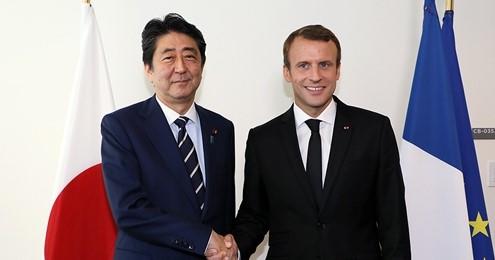
Macron in Japan: Upgrading the Franco-Japanese Strategic Partnership in the Indo-Pacific
On June 26, French President Emmanuel Macron will make his first, what is deemed to be a long overdue visit to Japan, a year after his previous travels to Asia led him to China (January 2018), India (March 2018), and Australia (May 2018).
France and Japan: The Indo-Pacific as a Springboard for a Strategic Partnership
For decades, the Franco-Japanese partnership has essentially been characterised by a vibrant cultural exchange as well as by sound economic relations. Today Japan is France’s second-largest trading partner in Asia (after China) and its leading Asian investor.
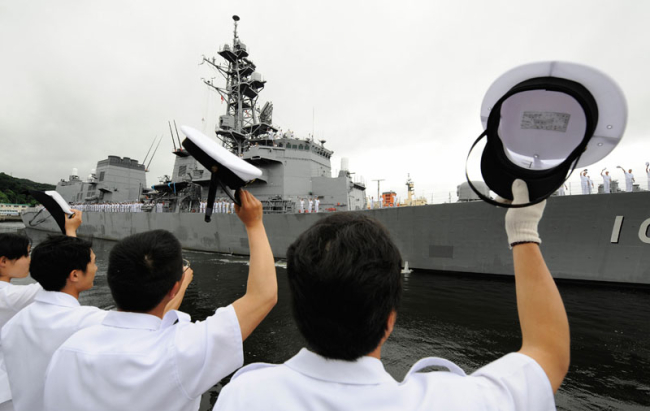
Japan’s Coast Guard and Maritime Self-Defense Force: Cooperation among Siblings
Coping with “gray zone” situations has in recent years become the core security challenge for Japan. Since September 2012, Beijing has been challenging Japan’s sovereign control of the Senkaku Islands by regularly sending law-enforcement vessels into Japanese territorial waters and contiguous zones.
Japan's New Dual-Use Space Policy: The Long Road to the 21st Century
Japan’s latest space policy is designed to support a more proactive US-Japan alliance role in containing China, and robustly defend Japan against North Korean ballistic missile threats.
Japan's Energy Policy in a Post-3/11 World: Juggling Safety, Sustainability and Economics
The March 2011 accident at the Fukushima Daiichi Nuclear Power Station turned Japan’s energy policy on its head, shedding a harsh new light on Japan’s energy policy and power supply system, and throwing into relief six major problem areas that had largely escaped scrutiny before the disaster.
China's Fortress Fleet-in-Being and its Implications for Japan's Security
This paper analyzes the rise of maritime China and its implications for Japan’s security policy.
Security Partnerships in Japan's Asia Strategy: Creating Order, Building Capacity and Sharing Burden
During the last decade, Japan has sought partnership with many Asian nations - the drive remaining strong regardless of ruling parties. Newly elected Prime Minister Shinzo Abe of the Liberal Democratic Party of Japan is to continue this trend under the name of ‘value diplomacy".
Japan and the South China Sea: Forging Strategic Partnerships in a Divided Region
In the midst of growing tensions with China, Japan is deepening its strategic engagement in Southeast Asia. Preserving stability in the South China Sea, which is threatened by renewed frictions around contested territories, is a vital interest for sea lane-dependent Japan. Moreover, Tokyo considers Southeast Asian countries as crucial partners in balancing against an increasingly powerful and more assertive China.
Ballistic Missile Defense in Japan: Deterrence and Military Transformation
In December 2003, Japan decided to be the second country in the Asia-Pacific to deploy a ballistic missile defense (BMD) system.
Crossing the line: A new status quo in the East China Sea?
The decision of the Japanese Government to purchase a number of the Senkaku/Diaoyu islands from their private owner sparked fury in Beijing. Such spikes of fever between China and Japan are not without precedent. However, the gravity of this latest episode raises the question of whether a point of no return has been reached in the Sino-Japanese relationship.
Globalization of Japanese firms: Long-run Trends, Cross-sectional Variations, and Policy Implications
Japanese firms are increasingly involved in various global business operations - not only in traditional international trade in goods, but also in offshore production and the new mode of globalization: offshore outsourcing.
Rare Earths and the East China Sea: Why hasn't China embargoed shipments to Japan?
As tensions persist between China and Japan in the East China Sea, it is interesting to note that one of the most symbolic actions of the previous crisis has yet to make an appearance this time around.
Positioning of Nuclear in the Japanese Energy Mix
Nuclear fission was discovered in the late 1930s. The first application went towards military use, and gradually expanded to civil use such as power generation. Power generation gained importance in two stages: firstly, to shift away from oil in power generation after the oil shocks in the 1970s, and second, to arrest climate change due to CO2-free nature of nuclear power more recently. This typically applies to Japan, which has become the world third largest in nuclear power generation. However, nuclear power is violent by nature, and major accidents of nuclear power plants shook the public confidence in nuclear safety. Japan has been put into such situation in a most radical way due to the Fukushima nuclear disaster of March 2011.


Ifri, a foundation recognized as being of public utility, relies largely on private donors – companies and individuals – to guarantee its sustainability and intellectual independence. Through their funding, donors help maintain the Institute's position among the world's leading think tanks. By benefiting from an internationally recognized network and expertise, donors refine their understanding of geopolitical risk and its consequences on global politics and the economy. In 2026, Ifri partners with over 90 French and international companies and organizations.

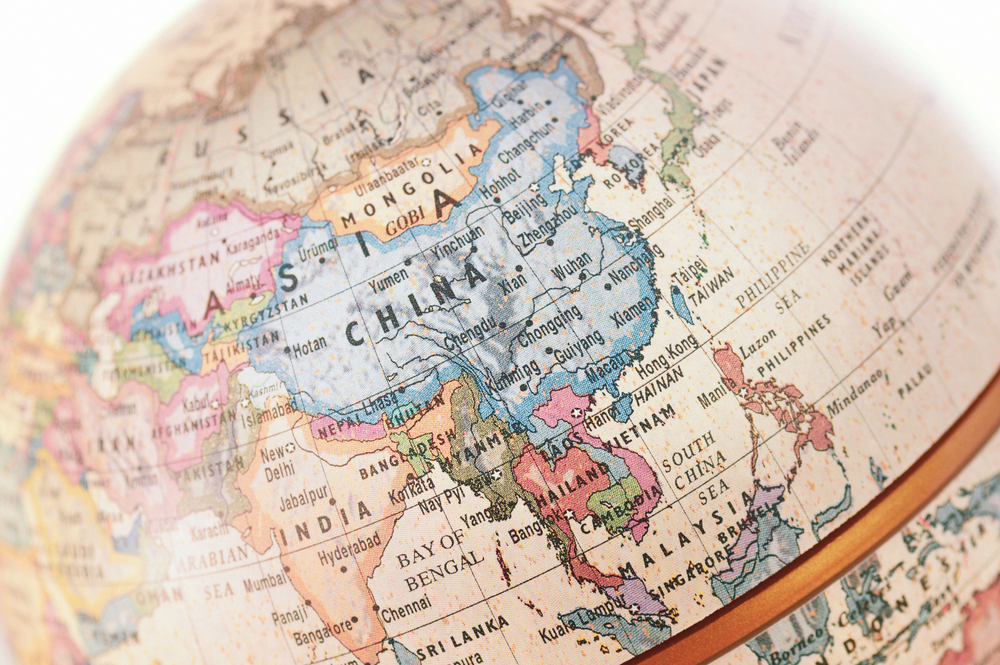
Asia is a nerve center for multiple global economic, political and security challenges. The Center for Asian Studies provides documented expertise and a platform for discussion on Asian issues to accompany decision makers and explain and contextualize developments in the region for the sake of a larger public dialogue.
The Center's research is organized along two major axes: relations between Asia's major powers and the rest of the world; and internal economic and social dynamics of Asian countries. The Center's research focuses primarily on China, Japan, India, Taiwan and the Indo-Pacific, but also covers Southeast Asia, the Korean peninsula and the Pacific Islands.
The Centre for Asian Studies maintains close institutional links with counterpart research institutes in Europe and Asia, and its researchers regularly carry out fieldwork in the region.
The Center organizes closed-door roundtables, expert-level seminars and a number of public events, including an Annual Conference, that welcome experts from Asia, Europe and the United States. The work of Center’s researchers, as well as that of their partners, is regularly published in the Center’s electronic journal Asie.Visions.