


North Africa and Middle East
Analysis of changing dynamics in the North Africa/Middle East region, against a backdrop of increasing security crises and their political, economic and energy consequences.
Related Subjects
The Gulf Search for Power(s) / Politique étrangère, Vol. 90, No. 4, 2025
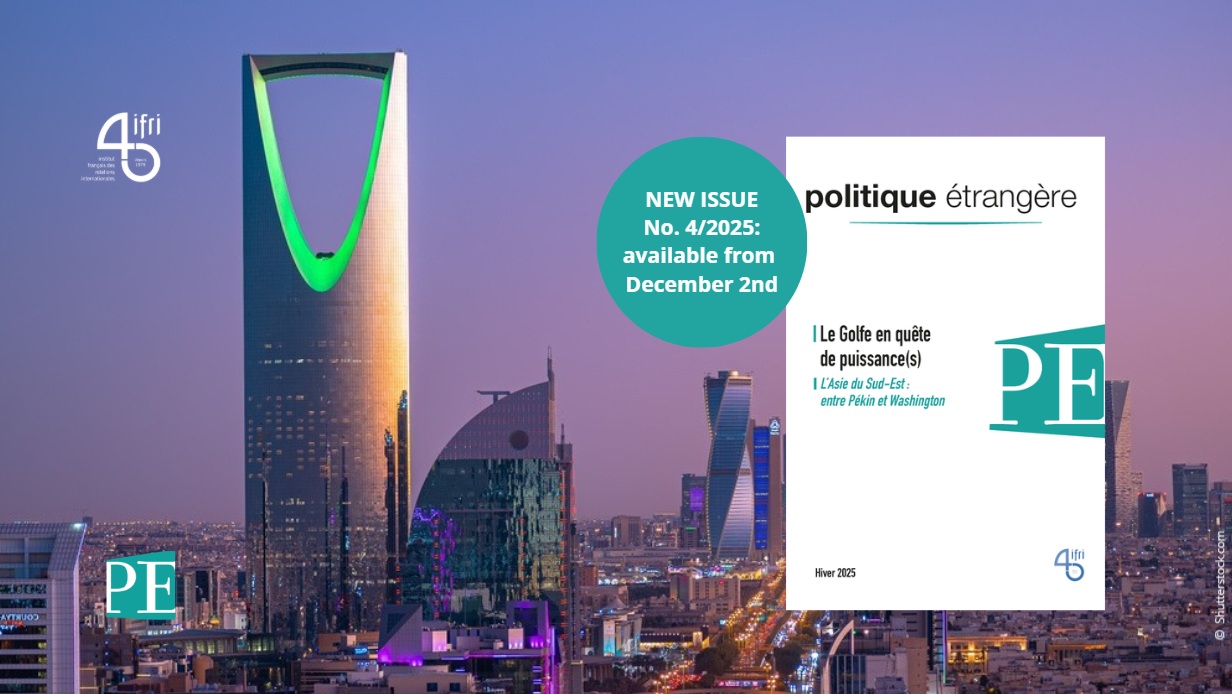
Persian Gulf countries have become heavyweights in the international arena, wielding influence both regionally and far beyond. Acting as diplomatic mediators, investors, and hosts of global events, they are attempting to move beyond their long-standing role as suppliers of energy resources and reshape their economic, social, and political foundations through ambitious national “Visions”. Their international alliances are proving increasingly flexible, broadening their diplomatic reach (even if Washington’s influence remains decisive)—with Saudi Arabia, Qatar, and the United Arab Emirates all part of a dynamic pushing many global actors toward multi-alignment.
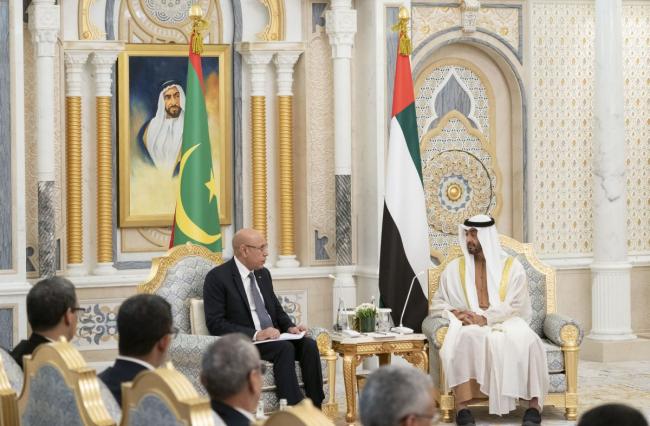
The United Arab Emirates in Africa: The Partly Thwarted Ambitions of a New Regional Player
The United Arab Emirates (UAE) has long-standing ties with African countries, but the implementation of a genuine Africa policy dates back only about 15 years.
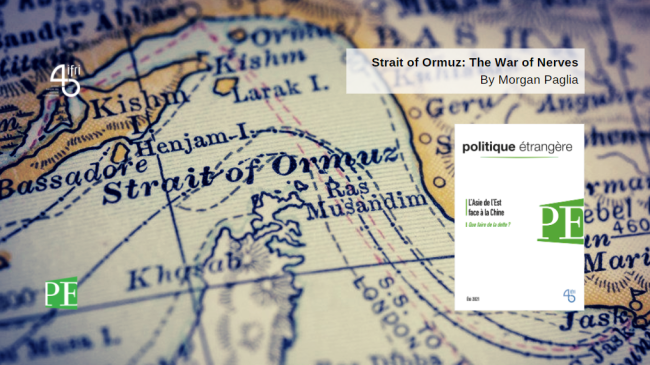
Strait of Hormuz: The War of Nerves
In the event of a major conflict, Iran could decide to close the Strait of Hormuz, which would cause a global energy crisis.
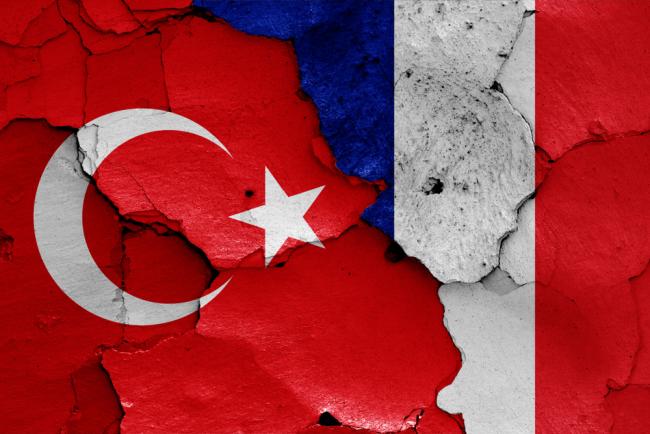
Is Escalation Between France and Turkey in the Middle East and Beyond Inescapable?
In recent years, France and Turkey have been on opposing sides relating to Middle East concerns.
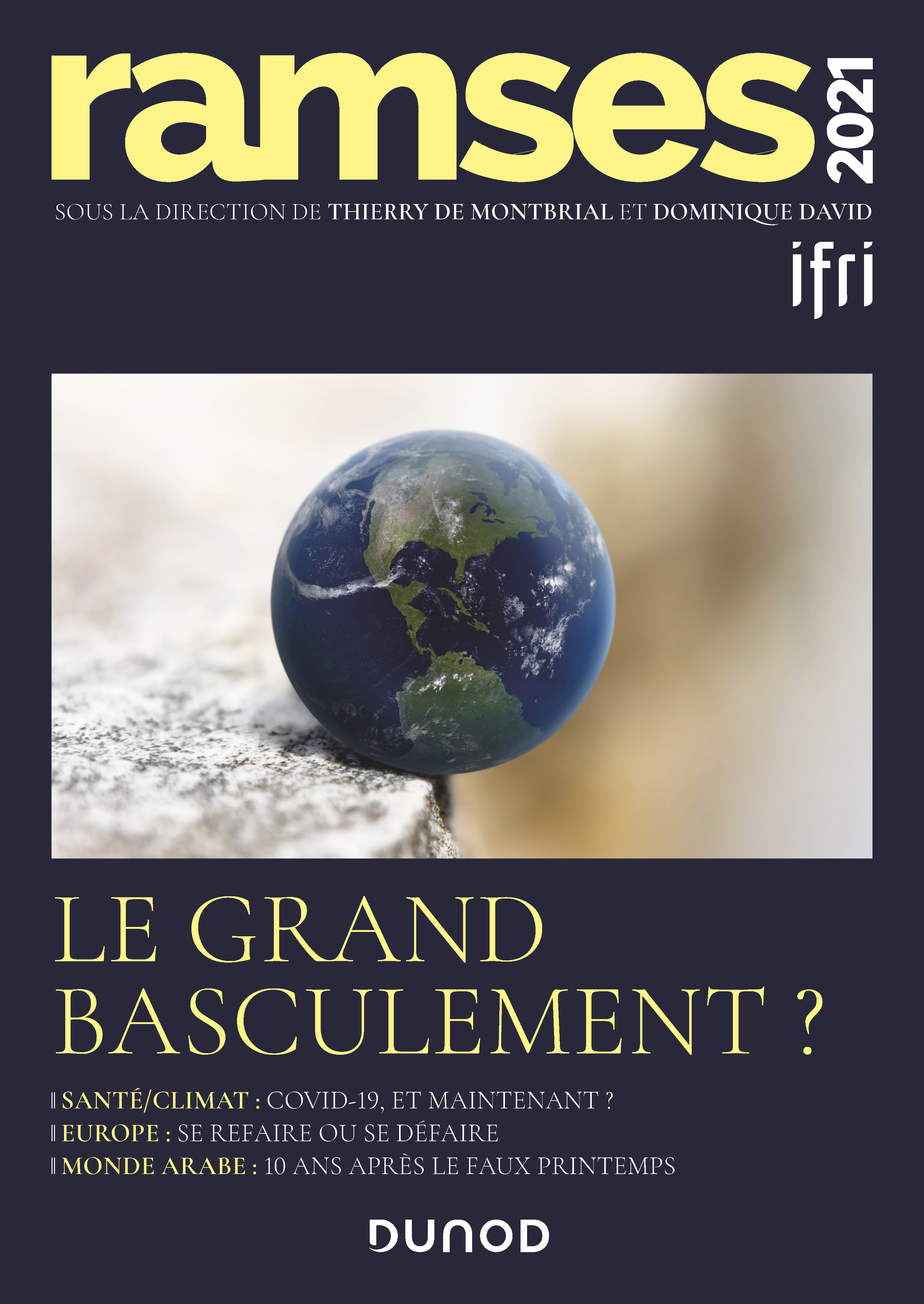
RAMSES 2021. At the Edge?
RAMSES 2021. At the Edge?, written by Ifri's research team and external experts, offers an in-depth and up-to-date analysis of geopolitics in today’s world.
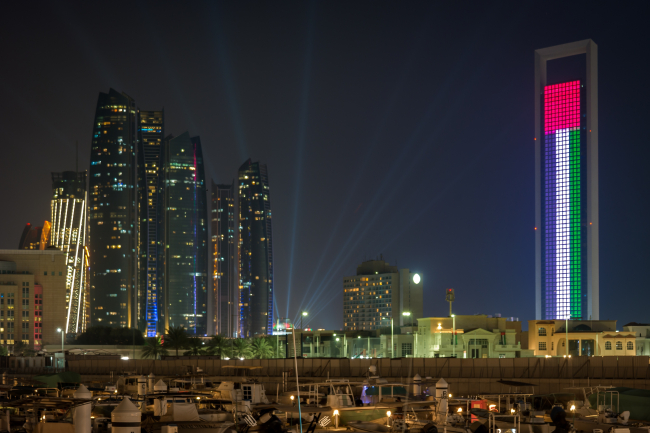
The Middle East: The Economy in The Race for Power
Middle Eastern geopolitics is currently undergoing structural changes: the regional order is in transition in the aftermath of the Arab Spring that undermined authoritarian governance, and triggered the competition for power against a backdrop of American withdrawal.
The Gulf Economies and Energy Transition
The economies of the Persian Gulf are highly dependent on their petrol exports, particularly to Asia.
The Gulf: from Geopolitics to Plain Politics
The geopolitical shadow of the Gulf now extends far beyond the Middle East as a function the external dealings of Iran and the countries of the Arabian Peninsula.
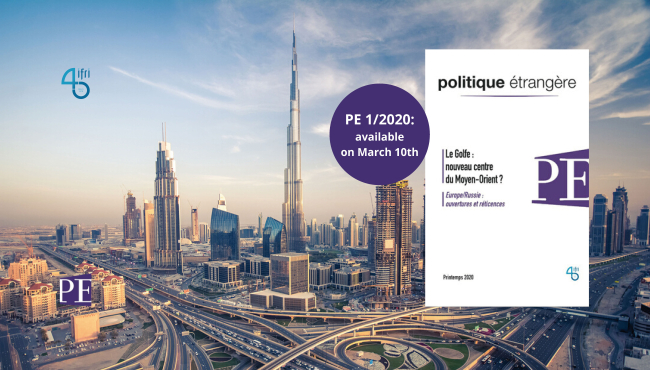
The Gulf: New Center of the Middle East?
Amid the shift in major powers, the Persian Gulf is asserting its position at the heart of the Middle East.
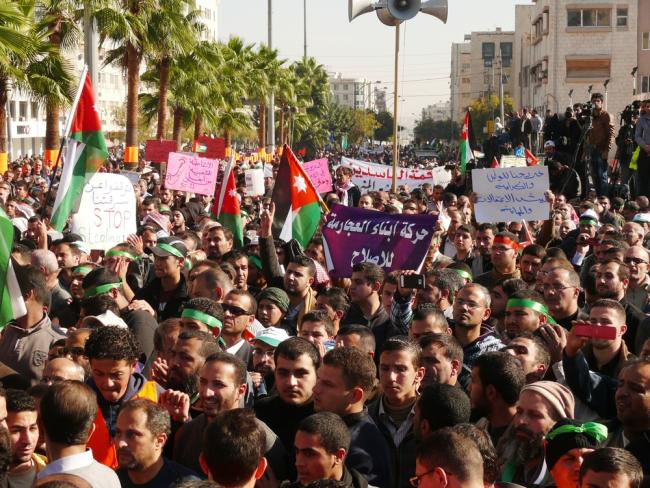
The Aborted Mobilisation of Jordan's Retired Servicemen
In the last decade, Jordan has been facing a resurgence in public discontent against harsh living conditions and the corruption of the regime.
RAMSES 2020. A World without a Compass?
RAMSES 2020. A World without a Compass?, written by Ifri's research team and external experts, offers an in-depth and up-to-date analysis of geopolitics in today’s world.
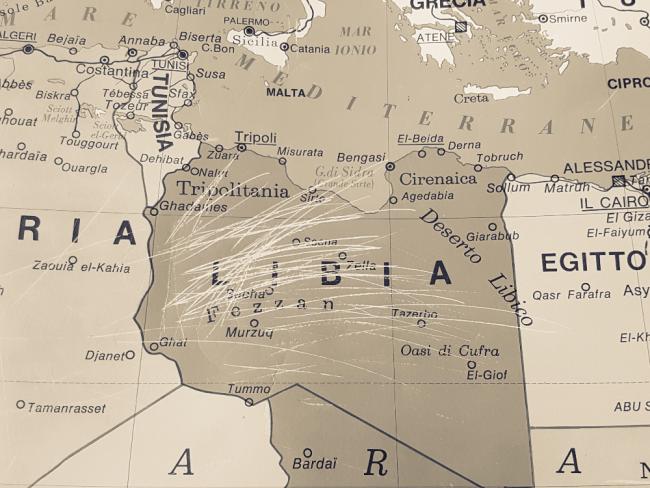
"Playing with Molecules": The Italian Approach to Libya
This paper aims to analyse the many ways in which Italy is trying to play with the many Libyan “molecules”, the different parties of a fragmented and collapsing country, and the possible implications of the strategy adopted by the Gentiloni government and its Minister of Interior, Marco Minniti, towards the country and the migratory crisis.

Middle East, the new "Great Game"
Will a divided Middle East become the center of a new “Great Game”? The world’s global powers are aligned in it: the United States, falsely tempted by retraction; Russia, establishing its position in an unexpected state of play, France, destabilized by the contradictions of its own policy… In addition are tussles for regional hegemony between Iran, Turkey, and Saudi Arabia.
Activists Without Borders
Various associations organise trips to Israel and/or to the Palestinian Territories. Someone who has no previous knowledge of the Near East and who takes part in a journey organised by a pro-Israeli group, would return to France with a very different vision of the Israeli-Palestinian conflict to that of someone who had travelled with a pro-Palestinian group.
For more information concerning the complete work, please click on this link.
Israel and Hezbollah: The New Strategic Equation
After the war between Israel and Hezbollah during the summer of 2006, a deterrence strategy was established between the two parties. Occasional subsequent crises have thereby been contained and have been prevented from escalating into extensive confrontations.
Persistence and Evolutions of the Rentier State Model in Gulf Countries
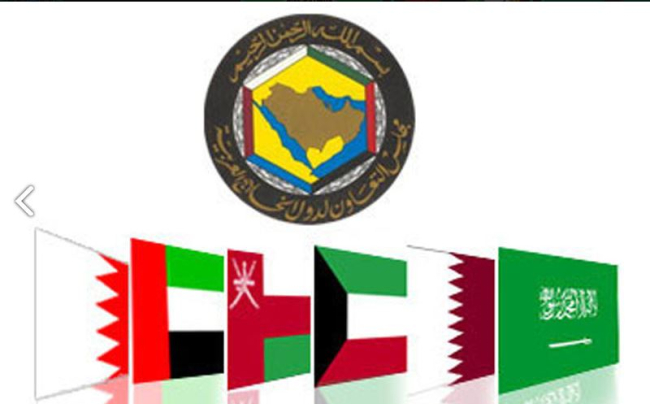
A general economic model of understanding Middle Eastern states was elaborated by political scientists around the 1980’s, based on the concept of rent as a factor of wealth around which the economic model as much as the governance of energy-rich countries was re-organized. The particular case of GCC’s countries as rentier state has been at the cornerstone of this concept since they own the most important share of energy resources in the world.
Turkey/GCC Economic Relations
Developing economic relations with GCC countries has become a consistent objective of the Turkish government since the coming in power of AKP. They have been successful in rallying part of the Turkish business community to this objective, thus building an internal social consensus towards opening to the Gulf.
John Kerry in the Middle East: from Weak to Hopeful Diplomacy?
In 2013, Barak Obama and John Kerry managed, not without difficulty, to steer Israeli and Palestinian leaders back to peace negotiations. At the same time, Washington re-established dialogue with Tehran in talks aimed at finding a solution to the Iranian nuclear problem.
The Two-State Solution is Still Possible
Many Israelis and Palestinians contest the ‘two-state solution’.
The Left in Turkey: A Fragmented History
The Gezi protest movement gripped Turkey throughout the summer of 2013 and reignited observers’ interest in Turkey’s left-wing activist groups, which participated in the protests.
Political and Economic Effects of Qaddafi's Death on Chad
On 24 August 2011, President Idriss Déby Itno of Chad recognised the National Transitional Council (NTC) as the only legitimate authority in Libya. Until then, the Chadian president had been a firm ally of the Guide of the Great Jahamiriya, President Qaddafi of Libya. Déby had sustained his long-time friend and helper with military equipment and soldiers from Chad from the beginning of the uprisings.
Support independent French research
Ifri, a foundation recognized as being of public utility, relies largely on private donors – companies and individuals – to guarantee its sustainability and intellectual independence. Through their funding, donors help maintain the Institute's position among the world's leading think tanks. By benefiting from an internationally recognized network and expertise, donors refine their understanding of geopolitical risk and its consequences on global politics and the economy. In 2025, Ifri supports more than 80 French and foreign companies and organizations.
Related centers and programs
Governing the Urban Transition in Africa
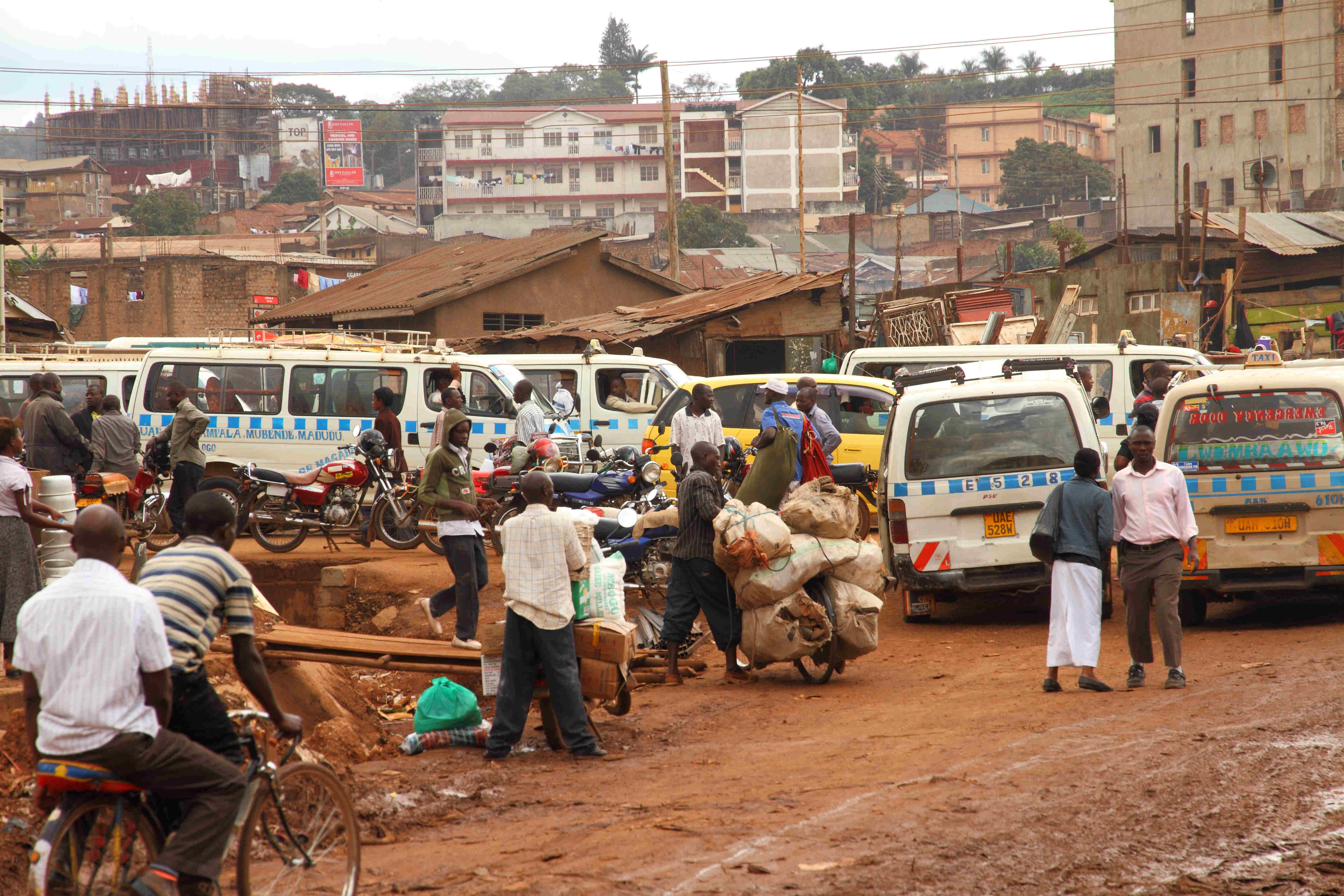
Sub-Saharan Africa's cities are experiencing the fastest growth rates in the world. By 2050, most of the countries in the region will have made an urban transition, meaning that more than 50% of their population will live in urban areas. Urban growth is often presented as a cornerstone of the continent's socio-economic development.
To assess these challenges Ifri’s Sub-Saharan Africa Center is launching, in May 2022, a research program looking into the major socio-economic and geopolitical challenges of urban dynamics on the continent.
The program deals with urban development in Africa through a sectoral and cross-cutting approach based on three key sectors:
- Land issues are the foundation of urban life. Each urban project triggers changes within the relationship between land and its inhabitants.
- Urban infrastructure is often presented as a solution to the challenges of demographic growth in cities. However, the lack of infrastructure and its financing remains a concern for specialists.
- The mobility of goods, people and financial flows is characteristic of urban life and drives the multiple links between cities and the countryside. Analyzing the urban-rural continuum is at the heart of this program's objectives.
Research will be conducted at the macro (continental), meso (country), and micro (city/neighborhood) levels and will be promoted through events and publications.
Turkey/Middle East Program
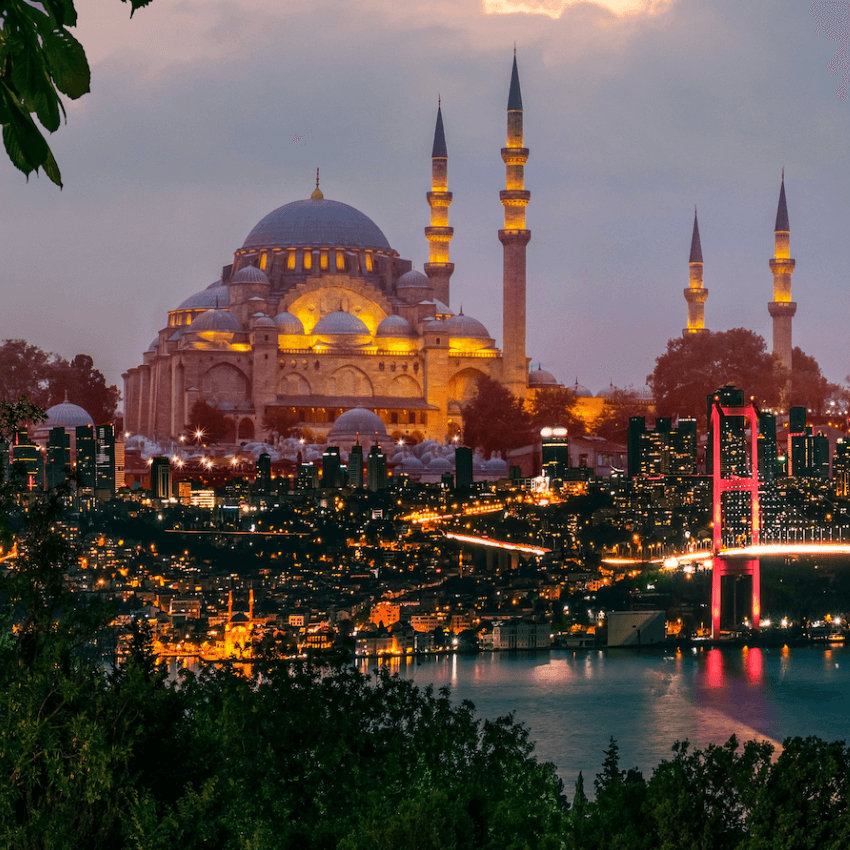
Ifri's Turkey/Middle East Program aims to provide expertise on the trends and developments in politics, societies and economies across the region.
The programme has the following objectives:
- Proposing a new approach towards the MENA region through an analysis of local, regional, and international dynamics with the potential to guide and influence new policies.
- Highlighting the role of foreign powers which have traditionally been present in the region and analyzing the new role taken on by emerging countries ;
- Anticipating new directions and outlooks in each country.
- Interpreting risks and potentials and putting forward new templates for analysis.
The programme has built a dense network of researchers and experts who provide expertise on the MENA region and working together on a range of crosscutting themes.