




Economy
The economy is an essential attribute of power and a major component of international relations. While geopolitical tensions are on the rise, economic interdependence remains strong.
Related Subjects
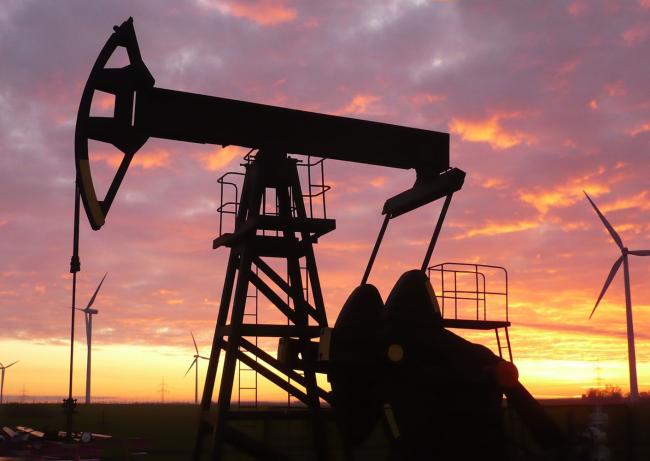
The new challenges for oil-based sovereign wealth funds
Sovereign wealth funds (SWFs) are often presented as an effective instrument for managing hydrocarbon rents, reducing the impact of the volatility of oil or gas revenues on the economy, separating expenditure from income, and promoting a more transparent management of the rent.


La Chine and the TPP
The speakers from the Annual Conference on the United States summarize their talks in short videos. Here, Françoise Nicolas considers what is at stake for Asia-Pacific countries, notably China, in the Trans-Pacific Partnership.


Asie de l’Est : la communauté économique impossible
The East Asian region has long been characterized by its informal structure. Strong economic integration, backed by dense intra-regional trade, has never been accompanied by regional institutional commitments. At the end of the 1990s, there was a vague desire to institutionalize the region, but to no avail.
Morocco’s Growth Strategy in an Evolving International Environment
Morocco’s GDP growth has increased over the past three decades, mainly as a direct consequence of the expansion of domestic demand, triggered by an increase in both government-initiated public investment and minimum wage.
The Revolution of Big Data
Big Data is changing our view of the world by changing our modes of approach, moving from analogue systems to digital-based knowledge.
Emerging Powers and Internet: Finding a Third Way?
Washington plays a leading role in Internet Governance, which is hardly surprising given the origins of the Internet and America’s technological ascendancy. However, the majority of Internet users are in non-Western countries.
Internet Governance after Snowden
The Snowden affair could bring about major changes in the structure of the Internet and its governance. Technologies should now a priori integrate standards which give citizens the capacity to keep a check on what data is available.
The Virtual Weapon: Dilemmas and Future Scenarios
Cyber technology challenges conventional mechanisms of deterrence and conflict management.
Internet Neutrality: Getting Beyond Scandals
While internet traffic is exploding and there is new costly infrastructure to be implemented, the “net neutrality” debate is raging.
The Internet and the Flaws of Multistakeholderism
The Internet Governance debate opposes multilateral thinking, favoring the role of State and interstate bodies, with a multistakeholder model, which aims to unite all concerned actors: states, business, experts, academics and internet groups, among others.
Japan's Energy Policy in a Post-3/11 World: Juggling Safety, Sustainability and Economics
The March 2011 accident at the Fukushima Daiichi Nuclear Power Station turned Japan’s energy policy on its head, shedding a harsh new light on Japan’s energy policy and power supply system, and throwing into relief six major problem areas that had largely escaped scrutiny before the disaster.
Greenland and Iceland: Meeting Place of Global Powers in the Arctic
At the crossroads of American, European and Asian interests in the Arctic, Greenland and Iceland, the importance of which had for too long been underestimated, are set to play a central role in future regional developments. In order to exploit the potential of their growing economic ties with Asia, without becoming the Arctic “weak links”, Greenland and Iceland need to secure their economy on a long-term basis.
China’s Role in Multilateral Economic Institutions, between Revisionism and Status Quo
China, now the world’s second largest economy, is going to play an increasingly substantial role in multilateral economic organizations and mechanisms.
The Nagging Problem of State Insolvency
Historically, states have indebted themselves to finance military campaigns. They do so nowadays for other reasons such as financing productive investment.
Country Risk Analysis: More than a Postmodern Discipline
Methodological debates about the stages of growth and the way in which a country goes through political modernization are long-established and manifold.

The European Union's Development Aid : from Development to Security, the Example of the European Development Fund
In the course of its institutional development and the expansion of its activities, the European Union (EU) has tended to pile up rather than to rationalize its policies, creating a financial tool per objective. As a result, the European funds have become a labyrinth, for which management costs are high.
The Distinctive Features of China's Middle Classes
This study seeks to lay the foundations for a better understanding of the Chinese middle classes. It goes beyond the traditional classification by revenue and identifies the distinctive features of China’s middle classes by taking into account relevant historical events, current sociopolitical and economic contexts, and key expectations of the population.
Quelles perspectives pour l'industrie européenne des armements terrestres ?
Over the last decade, the European land armament industry developed into a thriving market driven by growing demand from the BRICS, a new wave of emerging countries and the wars in Iraq and Afghanistan.
Ifri, a foundation recognized as being of public utility, relies largely on private donors – companies and individuals – to guarantee its sustainability and intellectual independence. Through their funding, donors help maintain the Institute's position among the world's leading think tanks. By benefiting from an internationally recognized network and expertise, donors refine their understanding of geopolitical risk and its consequences on global politics and the economy. In 2026, Ifri partners with over 90 French and international companies and organizations.

To analyze the impact of power rivalries and tensions on globalization, this initiative combines economic and political expertise. In the face of growing geopolitical risk, the goal is to decipher the dynamics of reconfiguration: protectionist pressures, sanctions, restrictions, industrial policies, and economic security concerns are redefining the rules of international trade. These tensions are also transforming international financial relations by undermining the foundations of trust and reshaping the global monetary system. They raise questions about the role of several key players: sovereign wealth funds, central banks, digital platforms, multilateral institutions, and financial infrastructure operators. In a context of profound disruption, simply refining existing approaches is no longer sufficient. The initiative is designed as a flexible model, drawing on diverse expertise to offer both broad overviews and targeted analyses. It also provides a platform for stakeholders and experts from various backgrounds to debate these issues freely.