




Economy
The economy is an essential attribute of power and a major component of international relations. While geopolitical tensions are on the rise, economic interdependence remains strong.
Related Subjects
Japan's Revived African Policy
By organising TICAD (Tokyo International Conference on African Development) for the first time in Africa in August 2016, Japan intended to accelerate and deepen its relationship with the continent.

ASEAN at 50: Half a Century of Unique Experience
In its fifty-year existence, the Association of Southeast Asian Nations (ASEAN) has developed a complex, progressive and balanced approach to regional integration. Rather than the European Union’s far-reaching statements of ever-closer union, ASEAN combines highly diverse economic and political strategies of different States whose main priority is to safeguard sovereignty.

Political Targets: Womenomics as an Economic and Foreign Relations Strategy
This paper provides an overview of the womenomics strategy launched by Japan Prime Minister Shinzo Abe, and shows how a plan designed to mitigate Japan’s demographic crises and labor shortages also evolved into a foreign relations strategy to help manage Japan’s reputation abroad on gender equality.
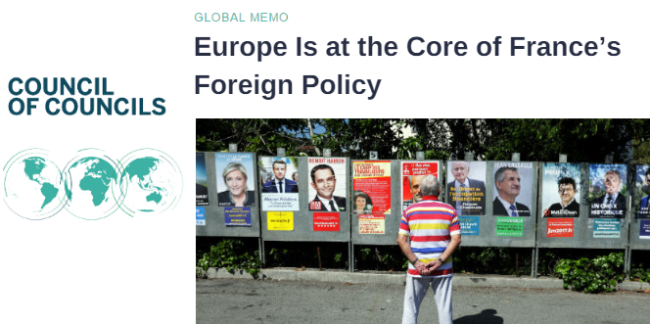
Europe Is at the Core of France’s Foreign Policy
It remains difficult to predict who will be the eventual winner of France’s upcoming presidential elections, with the first round to take place April 23 and a runoff between the top two candidates set for May 7.
Foreign Policy Challenges for the Next French President
France’s current presidential campaign has created an unprecedented situation fuelled by revelations and a total absence of restraint, but it has not truly taken account of the disruptions of the last year: Brexit, the attempted coup in Turkey, the election of Donald Trump, the recapturing of Aleppo by Bashar al-Assad, Xi Jinping’s declarations about “economic globalization”, or the behavior of North Korea. The debate, or rather its absence, can be looked at in two ways.
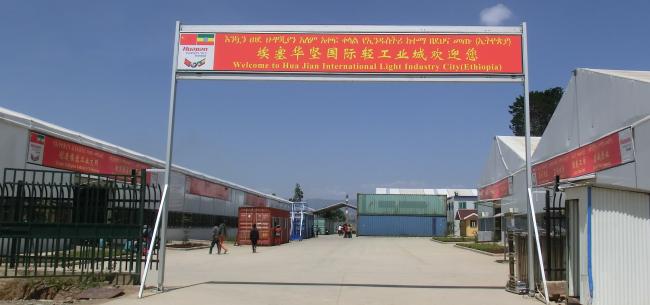
Chinese Investors in Ethiopia: The Perfect Match?
Since the fall of the Derg regime in 1991, cordial relations have developed between China and Ethiopia, forming a positive political backdrop in front of which the two countries’ interests have increasingly converged.
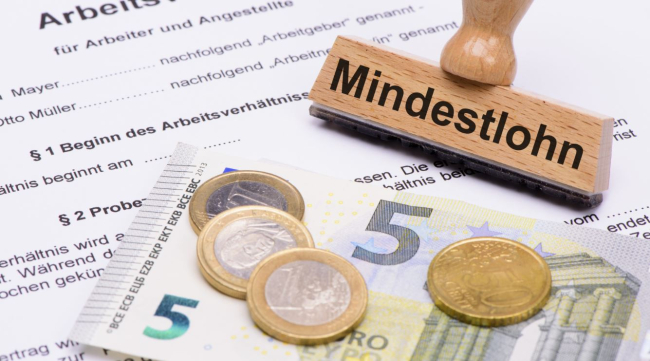
The introduction of the minimum wage in Germany: a first assessment
Germany introduced a minimum wage on January 1st, 2015 – a first in a country that had hitherto left it to the social partners to agree on salaries. This introduction came after vivid debates between those who fought against ever deeper inequalities and those who defended the nation’s competitiveness.

New Space: The Impact of the Digital Revolution on Space Actors and Policies in Europe
Like most “traditional” industries, for several years the space industry has been faced with the challenges of digital technology. So, the European space industry is dealing with new actors from digital technology, which are mainly American start-ups or Silicon Valley giants such as GAFA (Google, Amazon, Facebook and Apple)
China and Global Economic Order: A discreet yet undeniable contestation
Having long remained a passive presence within multilateral economic organisations, China recently changed its stance when the United States was faced with a major financial crisis.
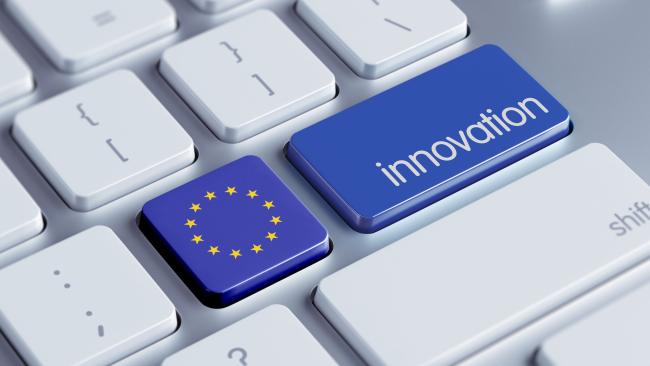
The EU and Innovation: When Business Meets Politics
Innovation, entrepreneurship, growth and competitiveness go hand in hand. This short paper looks at two areas where the EU plays a role to help drive innovation: regulation and financing.
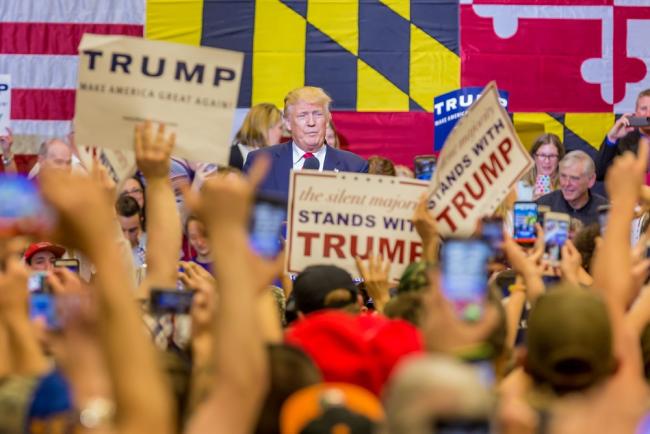
Trump et l'électorat populaire blanc
Donald Trump won the 2016 Republican primaries thanks to the mobilization of a specific part of the electorate: the white, non-college-educated, lower middle-class.
Latin America's Dashed Hopes
Only recently, Latin America seemed to embody an inexorable movement towards political democratization, towards a decrease in stark inequalities as well as greater involvement in the global economy. But the dream remains unrealized.
Middle East, the new "Great Game"
Will a divided Middle East become the center of a new “Great Game”? The world’s global powers are aligned in it: the United States, falsely tempted by retraction; Russia, establishing its position in an unexpected state of play, France, destabilized by the contradictions of its own policy… In addition are tussles for regional hegemony between Iran, Turkey, and Saudi Arabia.
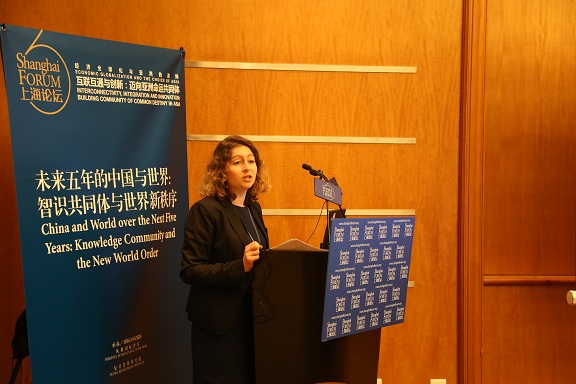
The International Development of Chinese Think Tanks
Alice Ekman gave her opinion on the international development of Chinese think tanks at a roundtable in Shanghai, organized by the Korea Foundation for Advanced Studies, Fudan University and Phoenix International Think Tank.
Le programme économique des Républicains, quelles idées pour 2016 ?
Republican candidates in the 2016 primaries have trouble standing out on economic issues. Indeed, they all embrace the same conservative tenets, namely the reduction (at all costs) of federal power in the name of liberty ; and tax cuts for the wealthy in the name of "trickle-down economics", a theory already put forward by the Reagan administration.
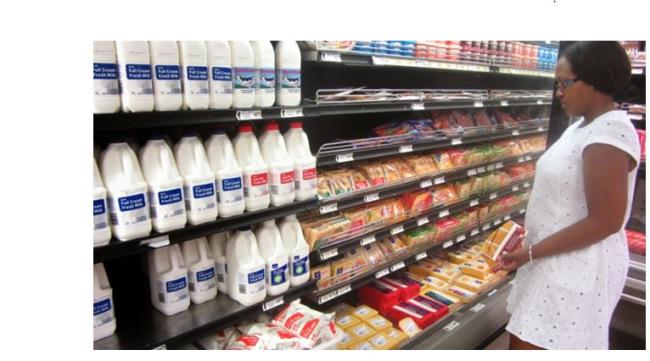
Identifying the Middle Classes: Diversity, Specificities and Consumption Practices Under Pressure
The international viewpoint on the African continent has profoundly changed in the last decade. Images advertised by the media drifted from afro-pessimism - the sad fate of Africa (wars and poverty) - to afro-optimism - a brighter future for the continent.
From Financial Diplomacy to Geopolitics of Finance
The financial system has become too complex to be controlled at state level.
Russia: Business and State
Business in Russia today is closely intertwined with the political sphere. But the forms of business’s involvement in politics have differed radically at different stages in history. Initially, business played an active role, displacing the government from its position due to its vigorous expansion. Subsequently, the state began to regroup, reinforcing its positions not just in politics but in the market too. Despite increased economic uncertainty and enormous changes in Russia’s foreign policy positions, the government currently remains the central actor in both Russian politics and the economy.

The TPP and its consequences for China, and Europe
John Seaman answers questions from the China Daily on the recently concluded negotiations of the Trans-Pacific Partnership (TPP) and their consequences for China and for Europe.
Read the interview, in Chinese
The “One Belt, One Road” – Strategic Implications of a Chinese Infrastructure Network in Eurasia
China’s “One Belt, One Road” project, also known as the “New Silk Road”, aims to create a vast infrastructure network connecting three continents, with China playing the central role.
The G20 and the Challenge of International Financial Re-regulation
The crisis, it is now widely accepted, means that markets failed. Meeting for the first time in Washington in November 2008, the G20 embarked in a ride of re-regulation. Months of negotiations later, it dramatically appears different to agree on principles and broad objectives, and to write and enforce rules and commitments.
Will We Drive Electric on Asian Batteries?
The development of the electric car market, supported by public funding, needs to be monitored closely. Currently, except for Renault benefiting from its electric partnership with Nissan, batteries for electric vehicles will most likely be outsourced. A lot of joint ventures are being signed with Asian battery companies and automotive suppliers. As a consequence, some argue that there is no rational to develop further and fund the European battery industry: batteries are already made more cheaply elsewhere.
European Defence Economy Afflicted by the Crisis
The European defence sector generates €86 billion annually - and that is only taking into account the 2009 turnover of the European defence industry for the three areas - aeronautics, land forces and naval forces.
Electric Cars: the Orient and the Occident
China is looking ahead and thinking electric. The Chinese government recently announced the release of $15 billion in a “Manhattan-style” venture to support electric vehicle (EV) research, standardization and development as part of its five-year plan and to meet its seemingly unattainable objective of introducing 500 000 “clean” vehicles per year by 2011.
Rare Earths and Clean Energy: Analyzing China's Upper Hand
An ominous resource crunch in the so-called “rare earth elements” is now threatening the development of a number of key industries from energy to defense to consumer electronics. As key components in the latest generation of technologies, including specialized magnets for windmills and hybrid cars, lasers for range finders and “smart” munitions, and phosphors for LCD screens, demand for these rare metals is expected to grow rapidly in the years to come.
An Analysis of North Korea's Principal Trade Relations
The Direction of Trade Statistics by IMF is the most representative statistical data for bilateral trade with North Korea. However, IMF statistics underestimate North Korea's international trade since they do not classify inter-Korean trade as international trade. Therefore, this study restructures statistics on North Korea by combining the IMF and inter-Korean trade data, and it analyzes the structure of North Korea's international trade. In addition, it conducts a unique analysis of trade structures, since other studies have not analyzed production processes in North Korean trade.
This analysis identifies six main characteristics of North Korea's trade:
Fiscal Deficit, Crowding Out, and the Sustainability of Economic Growth: The Case of the Indian Economy
This study examines the long-run relationship between the fiscal deficit, the crowding out of private capital formation and net exports for the Indian economy during the period from 1980-81 to 2008-09.
The Financial Challenges of the Sub-Saharan Africa Telecoms Boom
Telecom industry has taken a significant place within of the economy of most African countries. In this aspect, it is an undeniable source of economic growth and development. It impacts on the financial sphere at three levels.
Coming in from the Cold? An Update on North Korea's External Economic Relations
This brief analysis of the current external economic relations of the Democratic People’s Republic of Korea (DPRK) leads to a number of conclusions.
Ifri, a foundation recognized as being of public utility, relies largely on private donors – companies and individuals – to guarantee its sustainability and intellectual independence. Through their funding, donors help maintain the Institute's position among the world's leading think tanks. By benefiting from an internationally recognized network and expertise, donors refine their understanding of geopolitical risk and its consequences on global politics and the economy. In 2026, Ifri partners with over 90 French and international companies and organizations.

To analyze the impact of power rivalries and tensions on globalization, this initiative combines economic and political expertise. In the face of growing geopolitical risk, the goal is to decipher the dynamics of reconfiguration: protectionist pressures, sanctions, restrictions, industrial policies, and economic security concerns are redefining the rules of international trade. These tensions are also transforming international financial relations by undermining the foundations of trust and reshaping the global monetary system. They raise questions about the role of several key players: sovereign wealth funds, central banks, digital platforms, multilateral institutions, and financial infrastructure operators. In a context of profound disruption, simply refining existing approaches is no longer sufficient. The initiative is designed as a flexible model, drawing on diverse expertise to offer both broad overviews and targeted analyses. It also provides a platform for stakeholders and experts from various backgrounds to debate these issues freely.