




Economy
The economy is an essential attribute of power and a major component of international relations. While geopolitical tensions are on the rise, economic interdependence remains strong.
Related Subjects
The EU Battery Alliance. Can Europe Avoid Technological Dependence?
With the launch of its “battery alliance”, the European Union is finally taking up the industrial battle with Asia and hopes to meet a large share of the surging demand for electrical batteries. Yet, the clock is ticking and the future of battery manufacturing in Europe depends primarily on the strategies that automakers will adopt.
Mixing Business with Europe: What Role for Companies on the Future of the EU?
The European Union (EU) is facing what the European Commission President, Jean-Claude Juncker, calls a ‘polycrisis’. The EU is under increasing pressure to deliver and address citizens’ concerns.
A Brave New World for Trade
The global environment for trade is undergoing significant changes. New emerging players such as China are aiming to adapt the rules and institutions inherited from the postwar Bretton Woods system.
Chinese Think Tanks: Ambitions and Contradictions
Since Xi Jinping became president of China, the number of think tanks has considerably increased.
Karlyn BOWMAN - Trump: One Year After The Election
3 questions to Karlyn BOWMAN, Senior Fellow, American Entreprise Institute
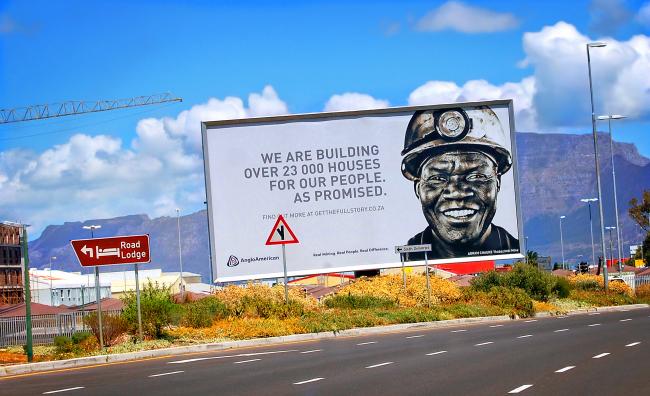
Is South Africa at Risk? A Political Economy Analysis
The President, Jacob Zuma, replaced his respected Minister of Finance, Pravin Gordhan, on the 30th March 2017. It was the second attempt in two years (this time successful) to put an official in this key position who is "acquiescent" to the president's projects.
Michala MARCUSSEN - Trump: One Year After The Election
Is the American economy doing well? Will the Tax Reform change this? How could the bond markets evolve in 2018?
Chinese Investment in Europe. A Country-Level Approach
Chinese investments in Europe have surged in recent years, becoming both a source of hope and growing concern across the continent.
France and Japan in Africa: a Promising Partnership
If some African countries are on their way to achieving dynamic economic growth, many are also still struggling with a lack of economic and social infrastructure, latent governance issues and often complex and risky security environments. In this context, both Japan and European countries, especially France, are making efforts to increase not only their development assistance, but also private investments and security cooperation in Sub-Saharan Africa.
The German landscape of foundations and think tanks.
The number of crises we face is rising, due to failing states, wars and armed conflicts, poverty and lack of good governance in many countries. State and society are constantly confronted with new challenges. These crises occur simultaneously and at an ever faster pace.

Hong Kong, 20 ans years after the retrocession
20 years after its retrocession to China, the 1st July 1997, what are the political and institutionnal autonomy guaranties for Hong Kong, while Carrie Lam is about to take its lead? How long will Hong Kong youth claim its own identity? What challenges for the World City?
The China-Pakistan Economic Corridor and the New Regional Geopolitics
The China-Pakistan Economic Corridor (CPEC) brings a dimensional shift in the two countries' relations at a time of significant geopolitical change. But while it promises wide-ranging benefits for infrastructure development and economic growth in Pakistan, a number of important challenges remain to be overcome if the project is to be sustainable and produce long-term benefits for Pakistanis.
Japan's Revived African Policy
By organising TICAD (Tokyo International Conference on African Development) for the first time in Africa in August 2016, Japan intended to accelerate and deepen its relationship with the continent.

ASEAN at 50: Half a Century of Unique Experience
In its fifty-year existence, the Association of Southeast Asian Nations (ASEAN) has developed a complex, progressive and balanced approach to regional integration. Rather than the European Union’s far-reaching statements of ever-closer union, ASEAN combines highly diverse economic and political strategies of different States whose main priority is to safeguard sovereignty.
The ASEAN Economic Community’s Original Integration Model
When it was created 50 years ago, ASEAN's (Association of Southeast Asian Nations) economic ambitions were rather modest. However, up until 1992 it progressively integrated the economies of its member states.

Political Targets: Womenomics as an Economic and Foreign Relations Strategy
This paper provides an overview of the womenomics strategy launched by Japan Prime Minister Shinzo Abe, and shows how a plan designed to mitigate Japan’s demographic crises and labor shortages also evolved into a foreign relations strategy to help manage Japan’s reputation abroad on gender equality.
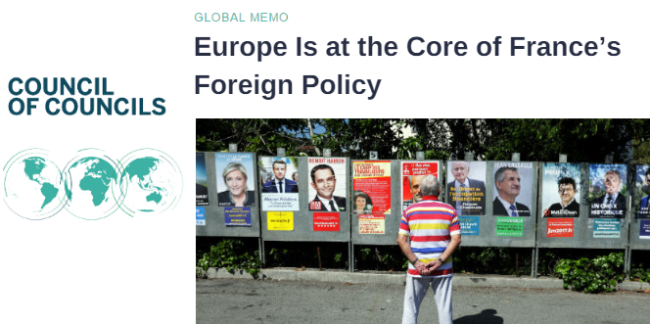
Europe Is at the Core of France’s Foreign Policy
It remains difficult to predict who will be the eventual winner of France’s upcoming presidential elections, with the first round to take place April 23 and a runoff between the top two candidates set for May 7.

Foreign Policy Challenges for the Next French President
France’s current presidential campaign has created an unprecedented situation fuelled by revelations and a total absence of restraint, but it has not truly taken account of the disruptions of the last year: Brexit, the attempted coup in Turkey, the election of Donald Trump, the recapturing of Aleppo by Bashar al-Assad, Xi Jinping’s declarations about “economic globalization”, or the behavior of North Korea. The debate, or rather its absence, can be looked at in two ways.
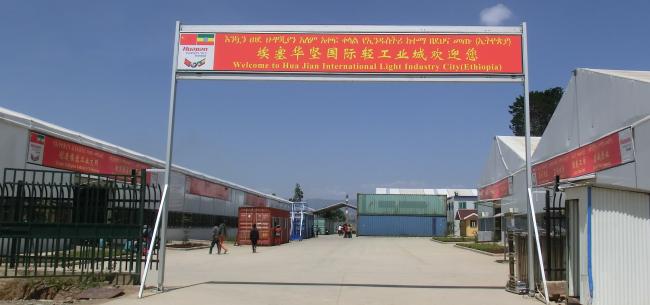
Chinese Investors in Ethiopia: The Perfect Match?
Since the fall of the Derg regime in 1991, cordial relations have developed between China and Ethiopia, forming a positive political backdrop in front of which the two countries’ interests have increasingly converged.
With Trump, Time to Reinvent the European Trade Policy
The new American administration’s protectionist tendencies need to be taken seriously.
East Asian Regional Economic Integration: A Post-Crisis Update
To the surprise of many analysts, the outbreak of the global financial crisis (GFC) in 2008 did not leave East Asian economies unscathed. The objective of the paper is to examine the implications of the GFC for the regional economic integration process in East Asia, taking into account both the de facto and the de jure dimensions.
Toward Higher Household Consumption? An Up-to-Date Analysis of China's Economic Transition
For more than two decades, China's economy has been growing at an average rate of close to 10 percent. As a result of this stellar performance, China ascended to the rank of the world's second largest economy in 2010, surpassing Japan.
The Evolving Role of Southeast Asia in Global FDI Flows
This paper traces the evolution of FDI in ASEAN and discusses future prospects for the region as a host - and increasingly home - to FDI.
No Longer the 'Reactive State': Japan's Pro-Active Free Trade Posture
In late 2010, the Kan government proclaimed a very ambitious trade agenda, leaving no doubt as to its commitment to free trade. The Basic Policy on Comprehensive Economic Partnerships aimed to promote "high-level economic partnerships with major trading powers" and to "open up the country", including collecting information on the Trans-Pacific Partnership (TPP) and consulting with the parties to it.
Decoupling the Oil and Gas Prices: Natural Gas Pricing in the Post-Financial Crisis Market
This paper looks into natural gas pricing in the post-financial crisis market and, in particular, examines the question whether the oil-linked gas pricing system has outlived its utility as global gas markets mature and converge more rapidly than expected and as large new resources of unconventional gas shift the gas terms-of-trade.
The G20 and the Challenge of International Financial Re-regulation
The crisis, it is now widely accepted, means that markets failed. Meeting for the first time in Washington in November 2008, the G20 embarked in a ride of re-regulation. Months of negotiations later, it dramatically appears different to agree on principles and broad objectives, and to write and enforce rules and commitments.
Will We Drive Electric on Asian Batteries?
The development of the electric car market, supported by public funding, needs to be monitored closely. Currently, except for Renault benefiting from its electric partnership with Nissan, batteries for electric vehicles will most likely be outsourced. A lot of joint ventures are being signed with Asian battery companies and automotive suppliers. As a consequence, some argue that there is no rational to develop further and fund the European battery industry: batteries are already made more cheaply elsewhere.
European Defence Economy Afflicted by the Crisis
The European defence sector generates €86 billion annually - and that is only taking into account the 2009 turnover of the European defence industry for the three areas - aeronautics, land forces and naval forces.
Electric Cars: the Orient and the Occident
China is looking ahead and thinking electric. The Chinese government recently announced the release of $15 billion in a “Manhattan-style” venture to support electric vehicle (EV) research, standardization and development as part of its five-year plan and to meet its seemingly unattainable objective of introducing 500 000 “clean” vehicles per year by 2011.
Rare Earths and Clean Energy: Analyzing China's Upper Hand
An ominous resource crunch in the so-called “rare earth elements” is now threatening the development of a number of key industries from energy to defense to consumer electronics. As key components in the latest generation of technologies, including specialized magnets for windmills and hybrid cars, lasers for range finders and “smart” munitions, and phosphors for LCD screens, demand for these rare metals is expected to grow rapidly in the years to come.
Ifri, a foundation recognized as being of public utility, relies largely on private donors – companies and individuals – to guarantee its sustainability and intellectual independence. Through their funding, donors help maintain the Institute's position among the world's leading think tanks. By benefiting from an internationally recognized network and expertise, donors refine their understanding of geopolitical risk and its consequences on global politics and the economy. In 2026, Ifri partners with over 90 French and international companies and organizations.


To analyze the impact of power rivalries and tensions on globalization, this initiative combines economic and political expertise. In the face of growing geopolitical risk, the goal is to decipher the dynamics of reconfiguration: protectionist pressures, sanctions, restrictions, industrial policies, and economic security concerns are redefining the rules of international trade. These tensions are also transforming international financial relations by undermining the foundations of trust and reshaping the global monetary system. They raise questions about the role of several key players: sovereign wealth funds, central banks, digital platforms, multilateral institutions, and financial infrastructure operators. In a context of profound disruption, simply refining existing approaches is no longer sufficient. The initiative is designed as a flexible model, drawing on diverse expertise to offer both broad overviews and targeted analyses. It also provides a platform for stakeholders and experts from various backgrounds to debate these issues freely.