




Fossil Energies
The geopolitics of hydrocarbons - how are global balances changing, and what are the implications for Europe, emerging and rentier states, as well as for energy transitions?
Related Subjects
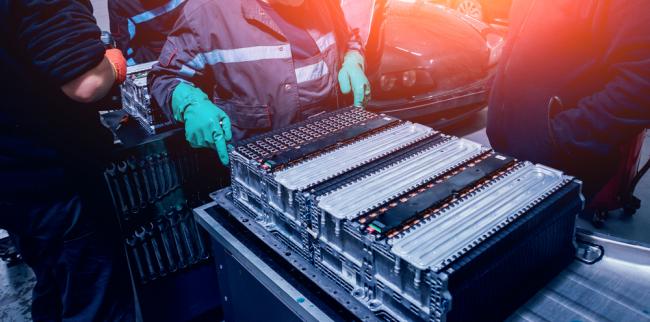
The Recycling of Lithium-Ion Batteries: A Strategic Pillar for the European Battery Alliance
Although it is still marginal, the market for electric vehicles (EVs) is growing. According to the French Institute of Petroleum and Renewable Energies (IFPEN, Institut Français du Pétrole et des Énergies Renouvelables), EVs accounted for a little more than 2% of the light vehicle market in 2019. This was up by 54% compared to 2018, but EVs still only represent 0.8% of the global car fleet. That said, the International Energy Agency (IEA) estimates EVs could make up between 15% and 30% of vehicle sales in 2030.
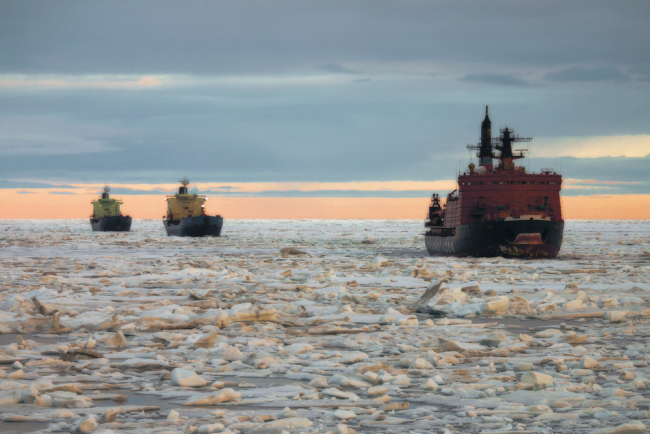
Russia’s Arctic Policy: A Power Strategy and Its Limits
Despite the deterioration of its relations with the West and economic stagnation limiting its room for maneuver, Russia continues to have an ambitious policy for the Arctic region.
Industry Response to New Protectionism
In this special issue of Politique étrangère devoted to the proceedings of the conference organized by Ifri on April 10, 2019, in the Grand Amphitheater of the Sorbonne, on the occasion of its fortieth anniversary, discover the debate moderated by Thierry de Montbrial between Jean-Paul Agon and Patrick Pouyané.
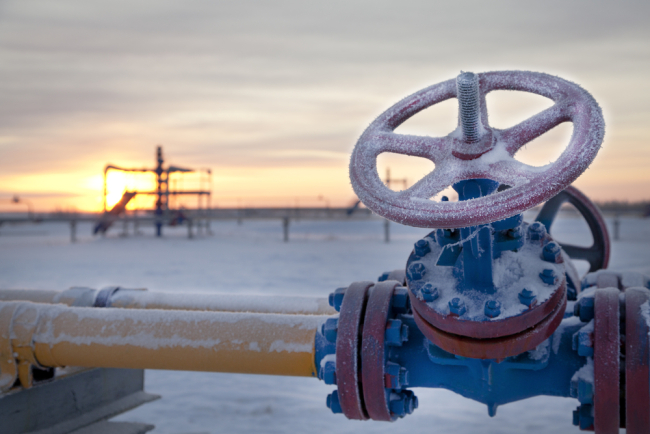
Russia’s Energy Strategy-2035: Struggling to Remain Relevant
Russia’s Energy Strategy to 2035 (ES-2035) enters, finally, the home stretch. The Ministry of Energy submitted its version of the document to the Russian Government in early October 2019.
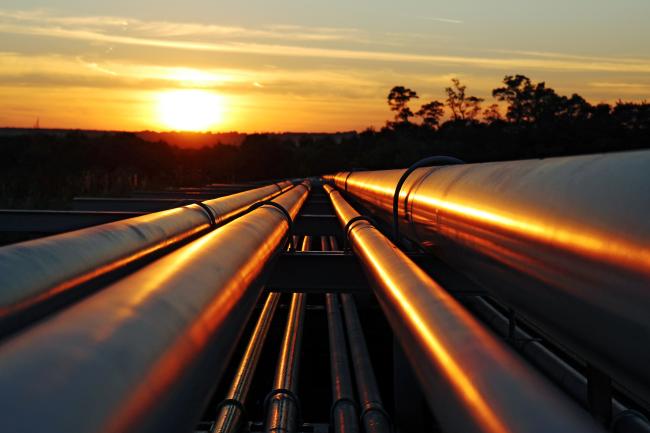
The Development of Hydrocarbons in East Africa: Political and Security Challenges
East Africa has the potential to experience a gas and liquefied natural gas (LNG) export boom in the coming years due to several projects that have been released.

(De)globalization of International Plastic Waste Trade: Stakes at Play and Perspectives
The world plastic production has been multiplied by 23 since 1964 to reach 348 million tonnes (mt) in 2017. This production level is expected to double in the next 20 years, largely because of the significant growth in plastic consumption in developing countries. Today, China is the largest producer of plastics (representing nearly 30% of global production) and the European Union (EU) comes second (18.5%) with 64 mt.
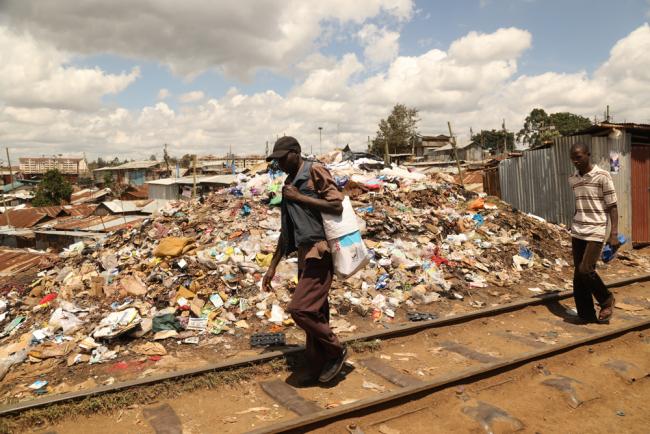
Waste Management and Electricity Generation in Africa: Developing Waste-to-Energy to the Benefit of Sustainable Cities?
With the expansion of modern production and consumption patterns to large African cities, population growth and urbanization, production of municipal waste has risen sharply. Unregulated dumps are becoming numerous and have strong negative health effects by polluting the local environment.
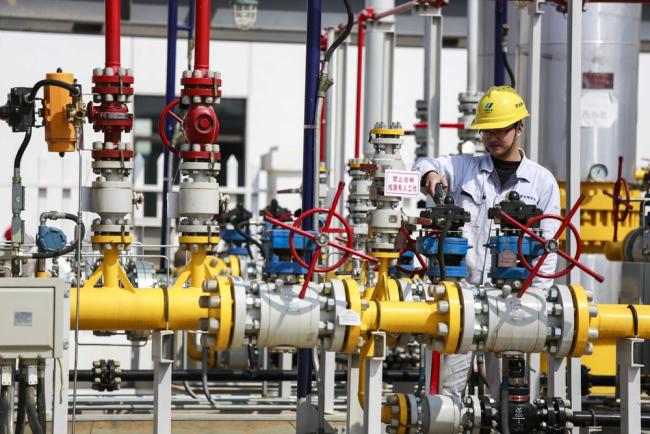
China’s Quest for Blue Skies: The Astonishing Transformation of the Domestic Gas Market
China’s gas industry has been moving into a new era. China’s natural gas demand has skyrocketed amid a state campaign that encourages coal-to-gas switching. In just two years, China added 75 billion cubic meters (bcm) to global gas demand, the equivalent of the UK gas market, the second largest European market. Despite steadily rising, Chinese gas production has not been able to cope with such a huge increase in demand and gas imports have also surged.
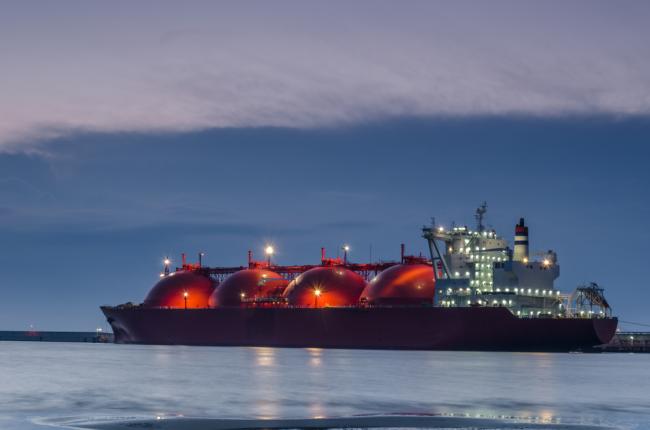
China’s Quest for Gas Supply Security: The Global Implications
The major transformations that are occurring on the Chinese gas market have profound repercussions on the global gas and LNG markets, especially on trade, investment and prices. In just two years, China has become the world’s first gas importer and is on track to become the largest importer of Liquefied natural gas (LNG).
The European Battery Alliance is Moving up a Gear
French battery cell manufacturer Saft and Opel, the German subsidiary of automaker PSA Group, are finalising the details of a major investment project in battery cell manufacturing. Is the European Union (EU) finally challenging Asia’s dominance on battery cells production? What chances of success for the European Battery Alliance (EBA) and what implications for the EU industrial policy?
Possible Energy Transitions through 2029
Renewable energies are experiencing rapid growth, due not only to their limited impact on the environment but also to shrinking costs. To fight climate change, new investments in low carbon technologies are necessary. Apart from its positive aspects, the energy transition carries risks, notably geopolitical. The notion of energy security will be profoundly modified. These risks can be anticipated and managed.
The EU Battery Alliance. Can Europe Avoid Technological Dependence?
With the launch of its “battery alliance”, the European Union is finally taking up the industrial battle with Asia and hopes to meet a large share of the surging demand for electrical batteries. Yet, the clock is ticking and the future of battery manufacturing in Europe depends primarily on the strategies that automakers will adopt.

Europe in the Global Race for Electrical batteries
This study weighs up the different strategic approaches that Europe may adopt in the industrial race for electrical batteries, taking into account the demand potential for e-mobility and stationary storage, the global competitive landscape and the policy support for local players in Asia and the U.S.


From Russia, with love
Russia is trying to “sow chaos” in Europe by betting big on Marine Le Pen and France's far right.
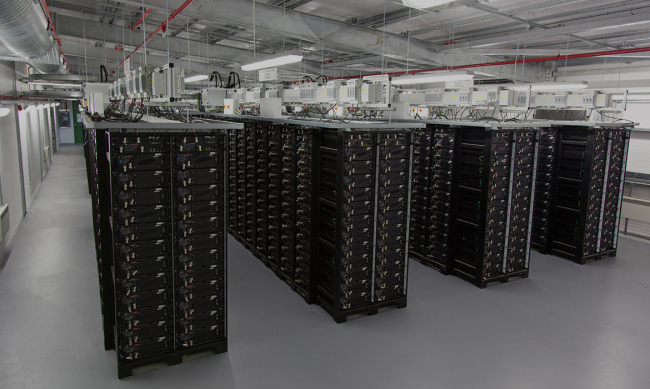
Electricity storage in a redesigned market
Storage technologies have the potential to significantly support the EU’s electricity system, bringing a number of flexibility services. There are numerous electric energy storage (EES) technologies, tackling different magnitudes in terms of quantity of energy, ramp-up time, duration of discharge, costs, and lifetime.
The Energy Transition in a Scenario of Sustained Low Fossil Fuel Prices
This HET report assesses the impact of sustained low fossil fuel prices on the transition to a low carbon energy system.
Russia and Central and Eastern Europe: between Confrontation and Collusion
Since the start of the Ukraine crisis in early 2014, the states of East Central Europe have become increasingly important targets of Russian economic, political and military pressure. Russia finds itself in the trajectory of geopolitical retreat on the Western “front”, and seeks to slow down this process by mobilizing every economic, political and military asset in East Central Europe, where various weak points in the European and Atlantic unity exist—and are typically overestimated by Moscow.

Challenge of Making Smart Cities in India
The Indian government has launched the Smart Cities Mission in June 2015 with the aim of providing a better quality of life to the citizens in 100 cities of the country. This paper describes the main features of the Mission and attempts to explain the challenges in the way forward.
Energy Relations between Russia and China: Playing Chess with the Dragon
Post-sanctions Russia-China energy relations: what expectations?
Business Models for Flexible Production and Storage
This report explores business models for storage solutions that may help the European energy system adapt to new challenges.
Possible Energy Transitions through 2029
Renewable energies are experiencing rapid growth, due not only to their limited impact on the environment but also to shrinking costs. To fight climate change, new investments in low carbon technologies are necessary. Apart from its positive aspects, the energy transition carries risks, notably geopolitical. The notion of energy security will be profoundly modified. These risks can be anticipated and managed.
Electricity storage in a redesigned market
Storage technologies have the potential to significantly support the EU’s electricity system, bringing a number of flexibility services. There are numerous electric energy storage (EES) technologies, tackling different magnitudes in terms of quantity of energy, ramp-up time, duration of discharge, costs, and lifetime.
Challenge of Making Smart Cities in India
The Indian government has launched the Smart Cities Mission in June 2015 with the aim of providing a better quality of life to the citizens in 100 cities of the country. This paper describes the main features of the Mission and attempts to explain the challenges in the way forward.
Energy Relations between Russia and China: Playing Chess with the Dragon
Post-sanctions Russia-China energy relations: what expectations?
Shifting Political Economy of Russian Oil and Gas
Dramatic changes in the Russian energy strategy and energy-based political alliances are to be expected due to the evolution of the domestic oil and gas market resulting from the economic crisis and sanctions linked to the annexation of Crimea.
Water and Energy in the GCC: Securing Scarce Water in Oil-Rich Countries
Water scarcity in the Gulf Cooperation Council (GCC) states has traditionally been addressed by finding new ways of producing water. The high costs of desalinated water production are borne by the State through subsidies. As this trend is not environmentally or economically sustainable, new strategies are now giving priority to cost recovery and efficient resource management.
The Political and Commercial Dynamics of Russia's Gas Export Strategy
A wide-ranging look at the way Gazprom interacts with an increasingly challenging global gas market for Russia.
Gazprom in Europe: a Business Doomed to Fail?
The construction of what is nowadays called European energy policy is an ongoing process that officially started with the creation of the European Coal and Steel Community in 1951, and has not yet been entirely finalized. It took several decades to move from a Community composed of six countries to a policy – not fully fledged – intended to strengthen as much as possible cohesion between 28 EU member states in the energy sector.
Russian LNG: The Long Road to Export
On 1 December 2013 a law on the export liberalization of liquefied natural gas (LNG) came into legal force in Russia. The law allows some categories of companies other than Russia's state gas giant Gazprom and its subsidiary companies to have LNG export rights.
Trans Caspian Gas: A Worthy Teething Ring for Europe's Energy Diplomats
As an early task in its efforts to build a common external energy policy, the Commission has announced it will turn its attention to bringing the vast gas resources of Turkmenistan to European consumers. This will be an excellent place for the Commission to test its ability to speak with one voice for its polyglot constituency. First, their task may be facilitated by the fact that on this topic, no European voices are yet particularly audible.
Ifri, a foundation recognized as being of public utility, relies largely on private donors – companies and individuals – to guarantee its sustainability and intellectual independence. Through their funding, donors help maintain the Institute's position among the world's leading think tanks. By benefiting from an internationally recognized network and expertise, donors refine their understanding of geopolitical risk and its consequences on global politics and the economy. In 2026, Ifri partners with over 90 French and international companies and organizations.
