






Societies
The existence of an international civil society is the subject of theoretical debate. But beyond these debates, the study of societies remains essential to understanding how the world works.



It’s not just TikTok: French also warn against WhatsApp, Instagram
In a typically French move, France's top lawmakers are refusing to side with the United States and single out China's TikTok.
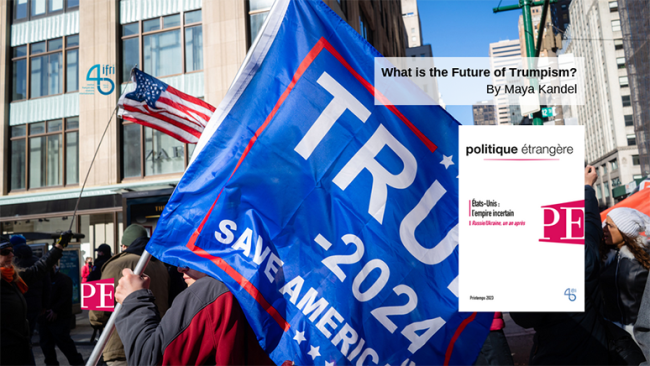
What Is the Future of Trumpism?
Donald Trump's presidency allowed the most radical wing of the Republicans to seize hold of the party.

Self-defense Groups, the Pyromaniac Firefighters of Sahel
Since 2012, the proliferation of jihadist groups across the Sahel has monopolized the attention of the authorities.forced by the threats they represent and the weakening of their regal power, states are gradually withdrawing from their peripheral rural territories. As a result, populations have organized themselves to become local security providers.
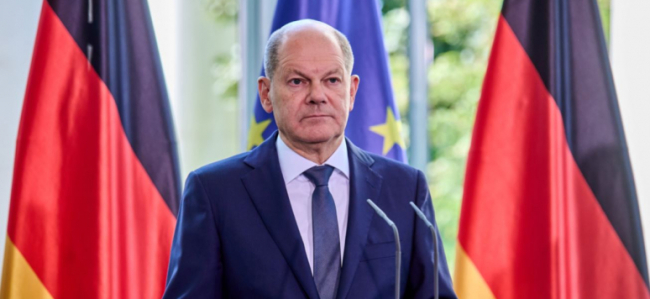
The German Government's Support Plan for Households and Businesses: How to Compensate for the Double Energy and Economic Shock?
In response to Russia's illegal attack on Ukraine, EU member states have issued a series of economic sanctions against Russia. This also includes moratoria on certain products, e.g., in the energy sector.

'Xi Jinping's religious crackdown signals the party's inability to control people's minds'
The decline of the Marxist utopia and the collapse of traditional ethics have created a moral and spiritual vacuum, forging a path for religions, notes Asia specialist Claude Meyer.
War in Ukraine: A New World?
Beyond the tactical sphere, the conflict in Ukraine has already had numerous repercussions, and its conclusion will provoke many more in the global system. In this special issue, Politique étrangère explores some potential outcomes.
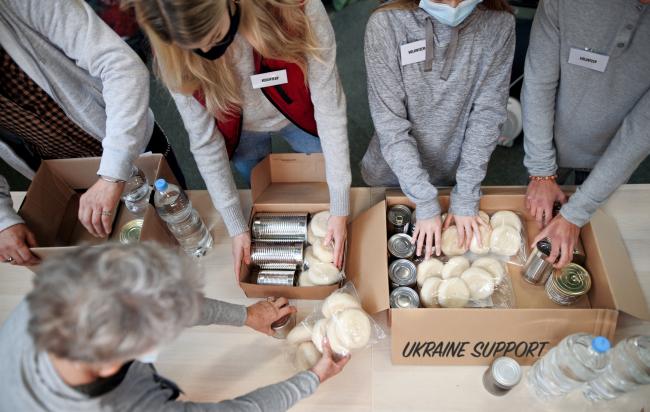
Quelle stratégie pour l’aide civile en Ukraine ?
Ukrainian institutions have overall withstood the shock of the war: the central government and local authorities benefit from a real legitimacy and a solid ability to govern.

Mbororo Fulanis in the Anglophone Crisis: From Land Disputes to a Regional Conflict
This study highlights the particular situation of the Mbororo minority, which has settled in the Northwest English-speaking province that is more conducive to livestock farming than the Southwest.
Radicalization prevention and judicial response to terrorism
An interview with Marc Hecker, Ifri's Director of Research and Communications.

Africa-France: Can Macron’s ‘new partnership’ succeed?
Africa has occupied a significant place in Emmanuel Macron’s political agenda but he will need more than fine speeches to change the longstanding paternalist image of France on the continent.
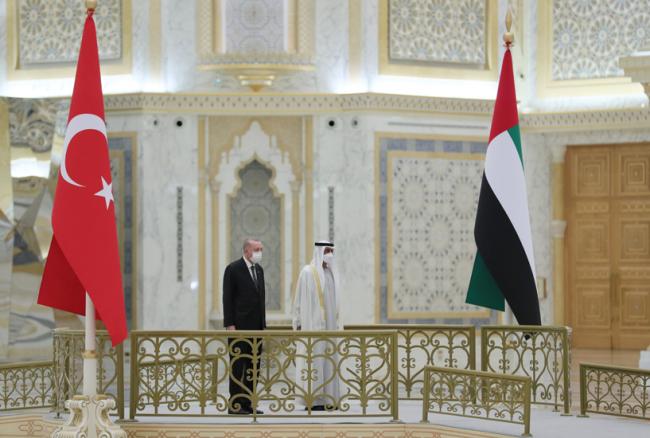
After a Divorce, a Frosty Entente: Turkey's Rapprochement with the United Arab Emirates and Saudi Arabia
After the Arab uprisings, Turkey’s relations with Saudi Arabia and the United Arab Emirates (UAE) broke down along sharp ideological lines. While Riyadh and Abu Dhabi sought to preserve the regional status quo by adopting a counter-revolutionary approach, Turkey emerged as an anti status quo, pro-revolutionary power supporting political islam.
The French Strategy of the Saarland. A German Federal State on the Way to a Living European Multilingualism
With the France Strategy, Saarland set out in 2014 to become an efficient multilingual German-French region within a generation.
Climate: Which Way Forward?
Thirty years after Rio, the case file “Climate: Which way forward?” assesses current climate commitments, which are undoubtedly less impressive and less certain than the political pronouncements and media fanfare make them seem. A number of fundamental problems remain.

After the riots, a new era in Kazakhstan?
In January 2022 Kazakhstan underwent its most serious political crisis since its independence, proclaimed on December 16, 1991. The increase in the price of fuel has set ablaze the west of the country in the grip of socio-economic marginalization, then the southern regions, traditionally more resistant to central power. What actually happened, and what consequences did these troubles have at the national and regional levels?
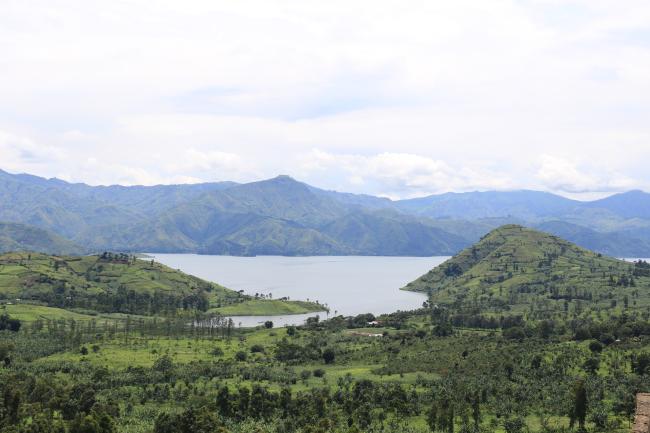
A Sino-Congolese Scandal. Illegal Exploitation of Minerals and Forests by Chinese Companies in South Kivu
Since 2020, the exploitation of gold from mining sites in the Wamuzimu chiefdom in the South Kivu province by Chinese companies has aroused great discontent among the population.

France: 'Precarious' employment conditions for refugees
Around 42% of refugees settled in France manage to find a job within a year of obtaining official status. But the jobs they find are often far below their skill levels, resulting in a "professional downgrade" that leads to discontent and exhaustion.
Russia’s Islam: Balancing Securitization and Integration
Russia’s Islam has been much more than the two Chechen wars, and regular terrorist actions that have shaken the Russian territory. Islam constitutes an integral part of Russia’s history and culture, and the Putin regime regularly celebrates Islam’s contribution to the country and its great power reassertion.
Franco-German Civil Society: Object and Actor of Bilateral Relations. Balance and Perspectives after the Signing of the Treaty of Aachen
The treaty signed by France and Germany in Aachen on January 22, 2019 highlights the role of civil society in bilateral cooperation and aims to contribute to "bringing societies [and citizens in both countries] closer together".
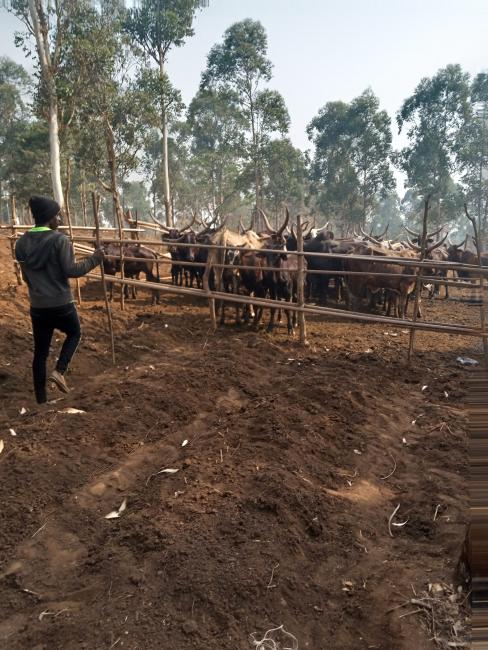
The Peuls Mbororo of North Cameroon: Insecurities of a Pastoral Society and Limits of a Hybrid Security Response
The Mbororo are Fulani who, unlike the Fulbe, have not become sedentary and have practiced nomadic herding for a long time. However, over the past several decades, they have been undergoing a sedentarization process in northern Cameroon (Septentrion), to the point that many of them have become semi-sedentary and agro-pastoralists.
This community of herders faces environmental, land, fiscal and criminal insecurities.
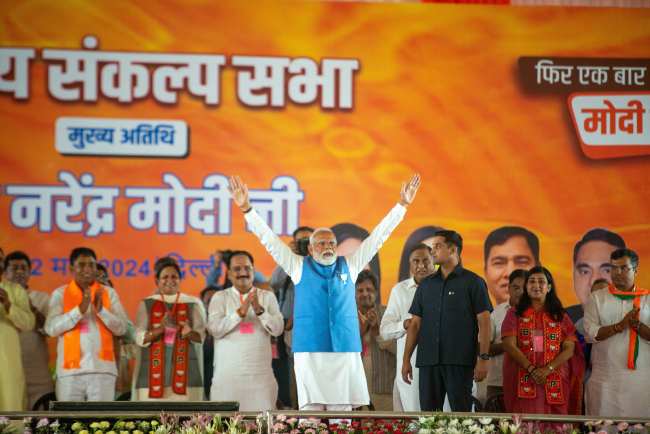
Foreign Policy Issues in the BJP 2024 Election Campaign: Boosting National Pride and Glorifying a Strong Government
While election campaigns in India traditionally focus on domestic issues above all, the Bharatiya Janata Party’s (BJP) campaign for the 2024 general elections placed a strong emphasis on foreign policy. It emphasized how, under the leadership of Prime Minister Narendra Modi, India has strengthened its diplomatic role and achieved international economic success.

The French Approach to Female Violent Extremist Offenders
How are women jihadists prosecuted and sentenced in different European countries? What happens when they are incarcerated? What reintegration programs are in place for women formerly detained for terrorism-related offenses?
After a Divorce, a Frosty Entente: Turkey's Rapprochement with the United Arab Emirates and Saudi Arabia
After the Arab uprisings, Turkey’s relations with Saudi Arabia and the United Arab Emirates (UAE) broke down along sharp ideological lines. While Riyadh and Abu Dhabi sought to preserve the regional status quo by adopting a counter-revolutionary approach, Turkey emerged as an anti status quo, pro-revolutionary power supporting political islam.
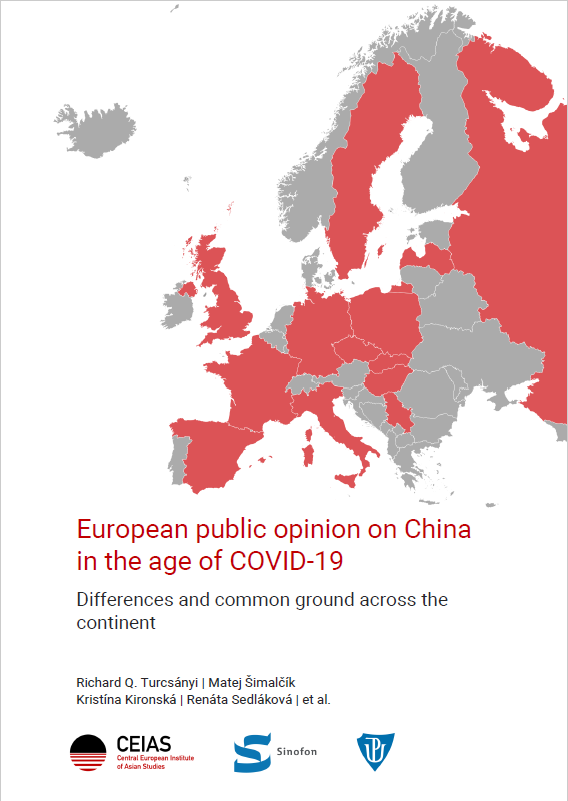
European public opinion on China in the age of COVID-19: Differences and common ground across the continent
In September and October 2020, the Sinophone Borderlands project at Palacký University Olomouc conducted a wide-scale survey of public opinion on China in 13 European countries. The polled countries include: Czechia, France, Germany, Hungary, Italy, Latvia, Poland, Russia, Serbia, Slovakia, Spain, Sweden, and the United Kingdom. Here, we present the basic findings of the survey, which are a result of a joint analysis of the survey data by the Central European Institute of Asian Studies (CEIAS) and Sinophone Borderlands.
Saudi Arabia’s Policy in Africa : Vectors and Objectives
Until recently, Saudi Arabia was the country out of the Gulf countries that had the greatest number of diplomatic missions in Africa (27[1]).
French Foreign Policy in the Age of Polycrisis
Under the presidency of Emmanuel Macron, France has set itself the goal of strengthening its international presence, being more proactive and defining the European reform agenda. However, the French room for manoeuver is limited.
The European Union in Crisis: What Challenges Lie ahead and Why It Matters for Korea
The EU is currently undergoing serious challenges from inside such as Brexit and strengthening Euroscepticism, rising populism and changing political geography, anti-immigration moods as well as retarded economic recovery.
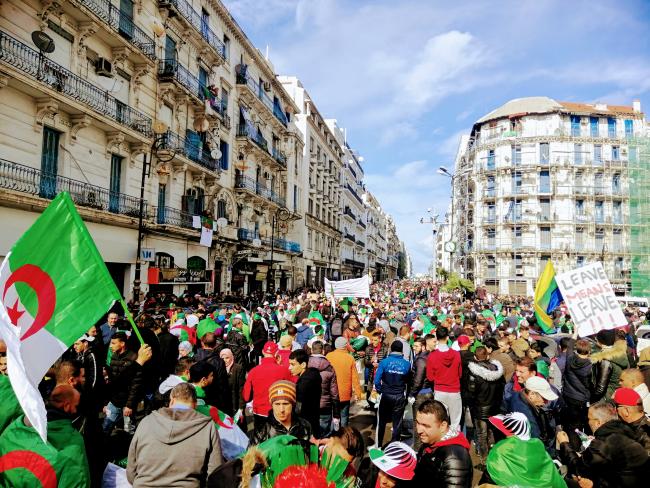
A Protest Made in Algeria
Since February 22, thousands and then millions of Algerians have taken to the streets every Friday to protest against the fifth term of their ailing eighty-two-year-old president, Abdelaziz Bouteflika.
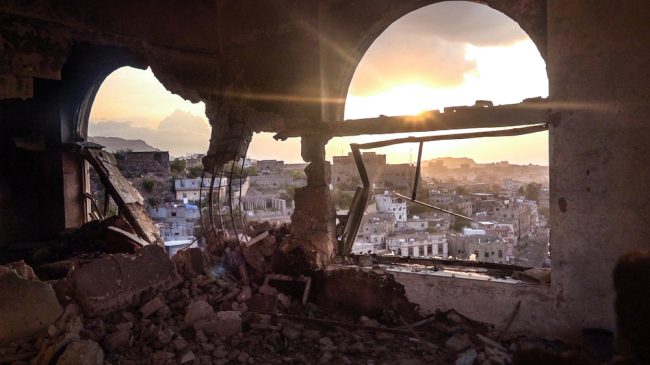
The Future of Urban Warfare in the Age of Megacities
Urbanization is a relentless trend, and as cities grow and expand, armed conflict and violence are urbanizing as well.
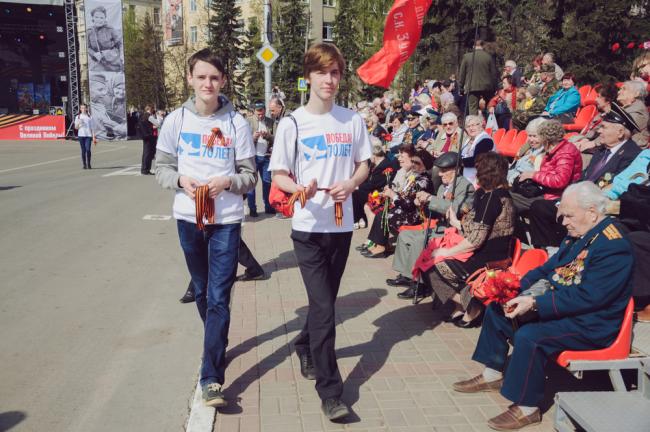
Beyond Putin: Russia’s Generations Y and Z
Of Russia’s 146 million citizens (if we include those in Crimea), 63 million—or 43 percent—are under 34 years of age. Of these, 30 million belong to Generation Y (millennials in their 20s and early 30s), 15 million belong to Gen Z (teenagers), and a further 18 million are part of the youngest generation (less than 10 years of age).
Ifri, a foundation recognized as being of public utility, relies largely on private donors – companies and individuals – to guarantee its sustainability and intellectual independence. Through their funding, donors help maintain the Institute's position among the world's leading think tanks. By benefiting from an internationally recognized network and expertise, donors refine their understanding of geopolitical risk and its consequences on global politics and the economy. In 2026, Ifri partners with over 90 French and international companies and organizations.
