




Military Alliances
While NATO remains the foundation of collective defense in the North Atlantic, the European Union is developing its common defense policy. Internationally, strategic partnerships are multiplying with great fluidity.
Related Subjects

AUKUS, a Hot Topic at Beijing Xiangshan Forum Webinar 2021
BEIJING, Oct. 28 -- The 5th session of Beijing Xiangshan Forum Webinar 2021 was held on the evening of October 26 around the topic of “Strategic Stability: Impasse and Way Out”, in which the establishment of the so-called trilateral security partnership, AUKUS, by the US, Britain and Australia and their nuclear submarine cooperation were heatedly discussed.
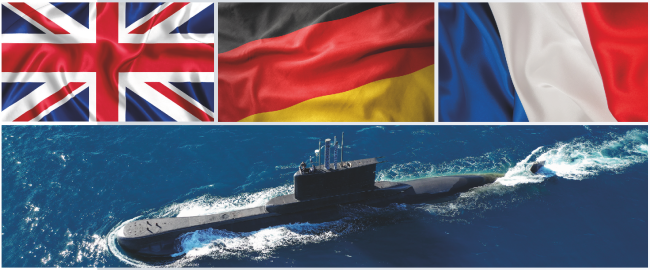
The Dilemma of Middle Powers: How AUKUS Has Reshaped the Potential for E3 Cooperation in the Indo-Pacific
The Indo-Pacific region is increasingly becoming the center of gravity of economy and geopolitics. It covers 60% of the world’s population, triggers 30% of international trade and drains 60% of global gross domestic product (GDP).

France returns its ambassador to Australia, but years of antagonism lie ahead
France is eager to prevent the crisis from spiralling further as it recognises it is in its national interest, and President Macron’s favour, to end it. But damage has been done, writes Ahmed Aboudouh.
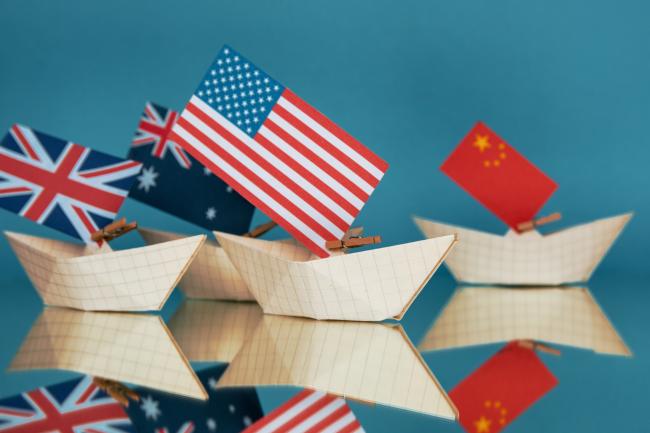
AUKUS Rocks the Boat in the Indo-Pacific, And It’s Not Good News
For anyone who still harbored doubts, Washington made crystal clear from the announcement of the new trilateral alliance with Australia and the UK (AUKUS) that countering China is its number one priority, and that it will do whatever it takes to succeed. Much has been said about the consequences of AUKUS on the French-US relations, but the strategic implications for the Indo-Pacific nations (including France), and for China especially, are also critical to consider.
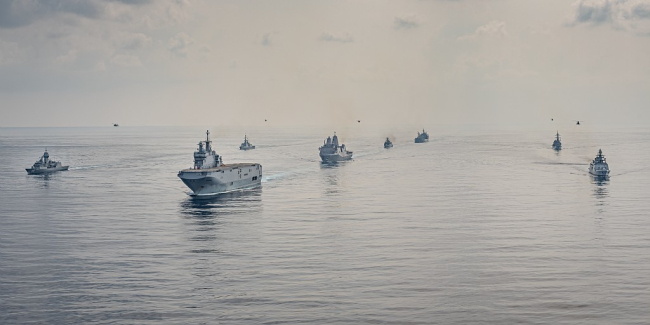
AUKUS, the Indo-Pacific, and France’s Role: Fluctuat Nec Mergitur
The announcement of the new AUKUS alliance between Australia, the UK and the U.S. came as a shock for France.
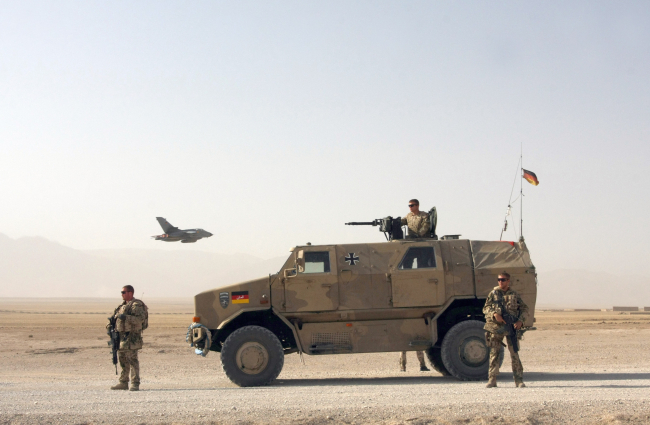
Circumstantial Pacifism: Political Parties and the Participation of the Bundeswehr in Foreign Operations
In Germany's parliamentary democracy, political parties play an important role in mandating Bundeswehr missions abroad and in overseeing their deployment. The political debate on these deployments is polarized between opponents, who are called “pacifists”, and supporters, who are called “militarists”.
Europe in the World: for a Modest and Effective Reform
This sad year ends with a pandemic that continues in full swing over a large part of the planet, especially in the United States and Europe, with no other reassuring prospect than that of one or more vaccines, which is already a lot. But that’s not the subject I want to focus on in this eighth letter, the last one for 2020. Internationally, two other facts have dominated the scene in recent months.
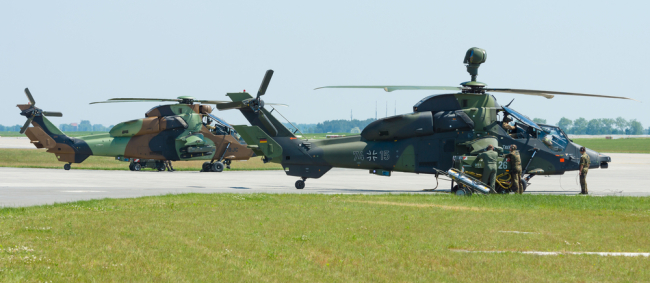
The Franco-German Armaments Cooperation. An Impossible Agreement?
In the Aachen Treaty in 2019, Germany and France agree to deepen their "common program in defense matters" and to pursue a common vision in terms of arms export. These are the preconditions that will help consolidate a culture of common armed forces, common interventions, and European defense industry.

Rivals in Arms: The Rise of UK-France Defence Relations in the Twenty-First Century
The untold story of the thriving yet complicated defense relationship of two countries caught between strategic decline and global ambitions. As the UK leaves the European Union and as the multilateral international order is increasingly under stress, bilateral security links are more important than ever. Among such relationships, the UK-France partnership has become particularly critical in the past decades.
Bavaria and France. Preparing the Future together
France and Bavaria have a longstanding close and solid partnership. However, the relationship between France and Bavaria is not only marked by a common history and by the structures created over the decades.
Breakthrough for Decentralized Franco-German cooperation? Perspectives after the Aachen Treaty
The development of Franco-German cooperation can be described as an intergovernmental process. Depending on the perspective, the capacity for innovation of the relationship lies either with central decision-makers at the state level or with decentralized actors at the local level.
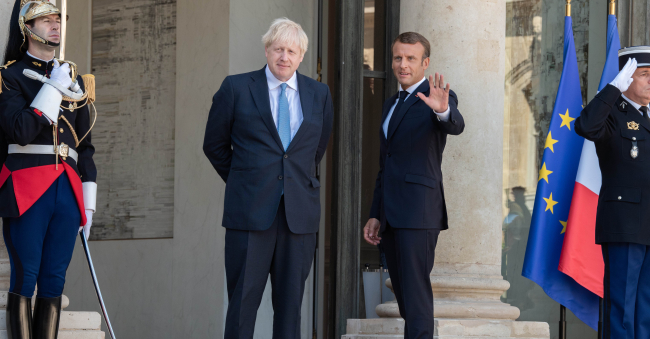
Complementarity or Competition? Franco-British Cooperation and the European Horizon of French Defense Policy
What does future hold for the Franco-British defense partnership after Brexit?
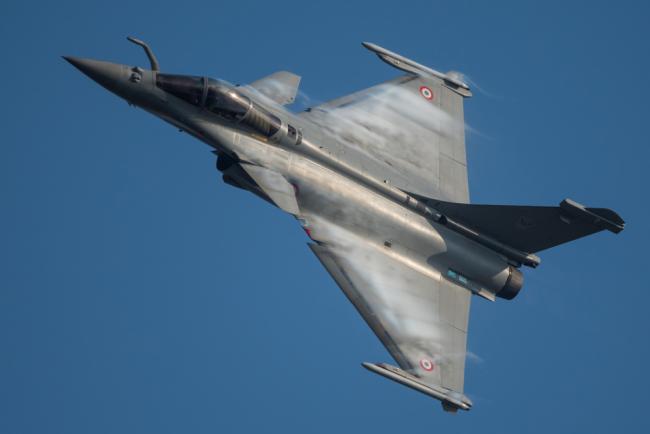
What Does It Mean to Be a European Defense Company Today?
In many ways, defense firms in Europe should be pleased with the recent uptick in defense spending.
Envisioning Opportunities for U.S.-Russia Cooperation in and with Central Asia
Central Asia is conventionally seen as a conflicting space for great powers.
The Treaty of Aachen. New Impetus for Franco-German Defense Cooperation?
On 22 January 2019, French President Emmanuel Macron and German Chancellor Angela Merkel sign the Treaty of Aachen on “Franco-German Cooperation and Integration.” The document is set to complement the original Elysée Treaty from 1963, signed by President Charles de Gaulle and Chancellor Konrad Adenauer.
France and Japan: The Indo-Pacific as a Springboard for a Strategic Partnership
For decades, the Franco-Japanese partnership has essentially been characterised by a vibrant cultural exchange as well as by sound economic relations. Today Japan is France’s second-largest trading partner in Asia (after China) and its leading Asian investor.
Asia–Africa Growth Corridor at the crossroads of business and geopolitics
The Asia–Africa Growth Corridor (AAGC) — a Japan–India initiative to promote connectivity between Asia and East Africa and encourage joint projects in Africa — is often misrepresented. All too often, the AAGC is depicted as a political move aimed exclusively at countering China’s Belt and Road Initiative (BRI).

Catching Up or Staying Ahead. Japanese Investment in the Mekong Region and the China Factor
There is no denying that the Mekong region has become an economic battleground where Japan and China are competing to gain and sustain economic influence in the region.
The “One Belt, One Road” – Strategic Implications of a Chinese Infrastructure Network in Eurasia
China’s “One Belt, One Road” project, also known as the “New Silk Road”, aims to create a vast infrastructure network connecting three continents, with China playing the central role.
Asia-Pacific: China’s Foreign Policy Priority
China is increasingly active in the Asia-Pacific region, an area that makes up the main focus of its foreign policy.
Ifri, a foundation recognized as being of public utility, relies largely on private donors – companies and individuals – to guarantee its sustainability and intellectual independence. Through their funding, donors help maintain the Institute's position among the world's leading think tanks. By benefiting from an internationally recognized network and expertise, donors refine their understanding of geopolitical risk and its consequences on global politics and the economy. In 2026, Ifri partners with over 90 French and international companies and organizations.
