Military Alliances
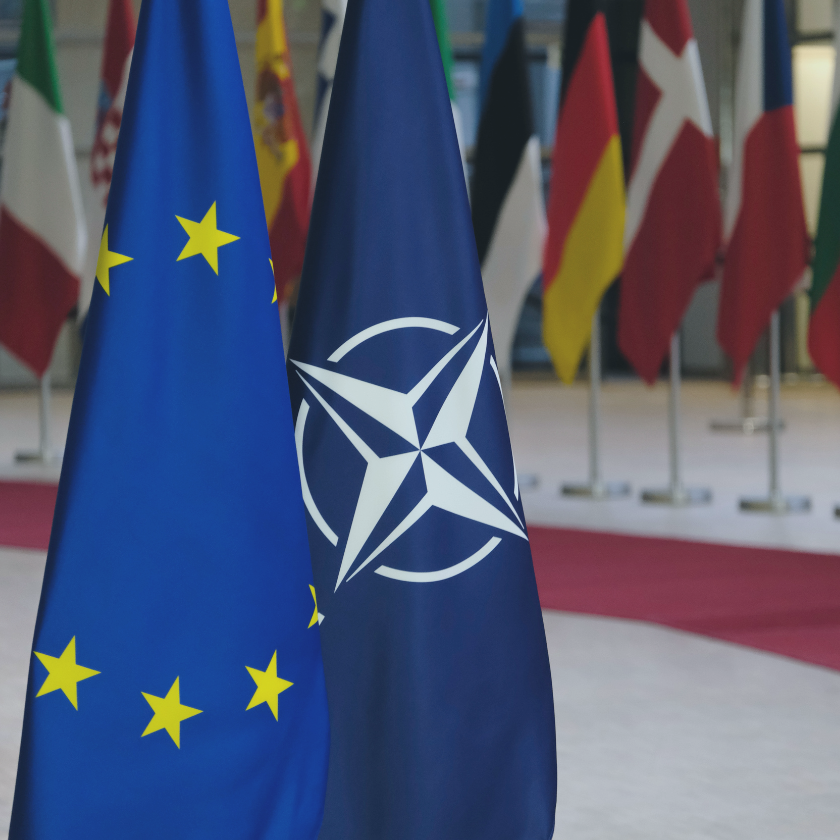
While NATO remains the foundation of collective defense in the North Atlantic, the European Union is developing its common defense policy. Internationally, strategic partnerships are multiplying with great fluidity.
Related Subjects
France and Japan: The Indo-Pacific as a Springboard for a Strategic Partnership
For decades, the Franco-Japanese partnership has essentially been characterised by a vibrant cultural exchange as well as by sound economic relations. Today Japan is France’s second-largest trading partner in Asia (after China) and its leading Asian investor.
Asia–Africa Growth Corridor at the crossroads of business and geopolitics
The Asia–Africa Growth Corridor (AAGC) — a Japan–India initiative to promote connectivity between Asia and East Africa and encourage joint projects in Africa — is often misrepresented. All too often, the AAGC is depicted as a political move aimed exclusively at countering China’s Belt and Road Initiative (BRI).
Catching Up or Staying Ahead. Japanese Investment in the Mekong Region and the China Factor
There is no denying that the Mekong region has become an economic battleground where Japan and China are competing to gain and sustain economic influence in the region.
The “One Belt, One Road” – Strategic Implications of a Chinese Infrastructure Network in Eurasia
China’s “One Belt, One Road” project, also known as the “New Silk Road”, aims to create a vast infrastructure network connecting three continents, with China playing the central role.
Asia-Pacific: China’s Foreign Policy Priority
China is increasingly active in the Asia-Pacific region, an area that makes up the main focus of its foreign policy.
Reforming NATO’s Institutions: Pressing Need, Enduring Obstacles, New Opportunities
The lessons learned from its engagement in Afghanistan, a desire to transform itself, and its current financial problems are all factors pointing to the need to reform the Alliance. Formulating a new Strategic Concept will allow institutional reform to be associated with a new sense of purpose.

Replay - Conference with Espen Barth Eide, Minister of Foreign Affairs of Norway
Since the invasion of Ukraine by Russia in 2022, Norway has become the European Union’s leading supplier of gas. This position could be further strengthened given the ongoing war in the Middle East.
Both sides of the Atlantic | Warsaw European Conversation 2026
This episode discusses the future of transatlantic relations and the evolution of security policy on both sides of the Atlantic. It examines France’s strategic stance and the implications of potential leadership change. It also looks at the dynamics of U.S. domestic politics – the role of political parties and civil society in curbing Donald Trump’s power, and the significance of the midterm elections. It considers what these processes mean for Europe, especially in the context of Article 5. Joining Marta Prochwicz-Jazowska, Deputy Head of the ECFR Warsaw office, in the discussion will be Thomas Gomart, director of the French Institute of International Relations, and Amanda Sloat, professor at the School of Politics, Economics, and Global Affairs at IE University.
Japan seeks French backing as Macron begins Asia trip in Iran war’s shadow
Emmanuel Macron touched down in Tokyo on Tuesday with a packed agenda and a receptive audience in a Japanese government anxious about a choked oil route and looking for support amid its diplomatic falling-out with Beijing.
Support independent French research
Ifri, a foundation recognized as being of public utility, relies largely on private donors – companies and individuals – to guarantee its sustainability and intellectual independence. Through their funding, donors help maintain the Institute's position among the world's leading think tanks. By benefiting from an internationally recognized network and expertise, donors refine their understanding of geopolitical risk and its consequences on global politics and the economy. In 2026, Ifri partners with over 90 French and international companies and organizations.