




Military Alliances
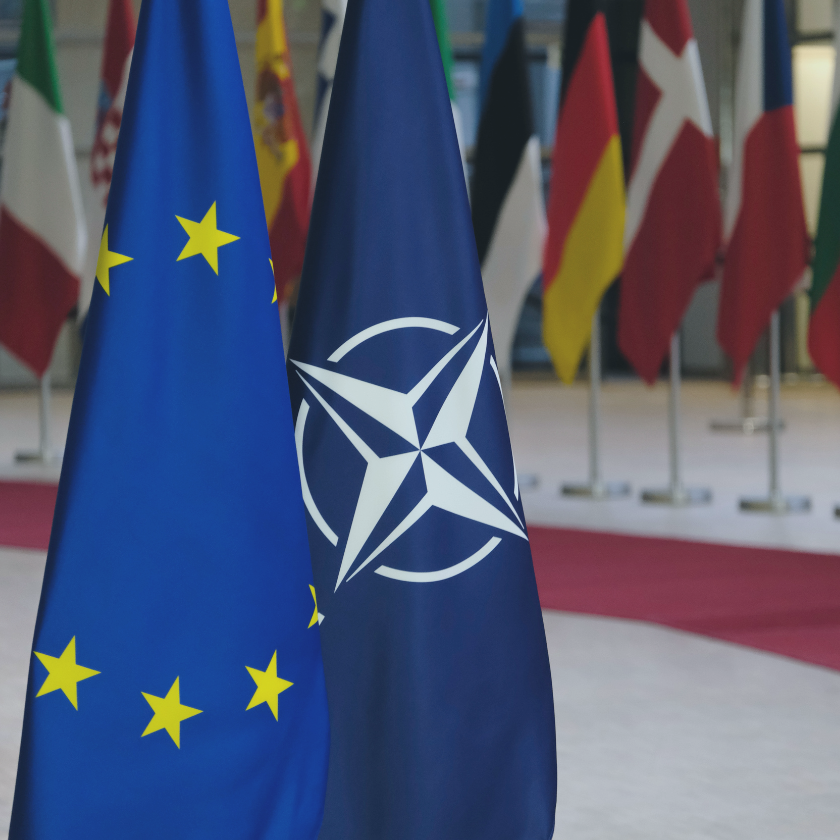
While NATO remains the foundation of collective defense in the North Atlantic, the European Union is developing its common defense policy. Internationally, strategic partnerships are multiplying with great fluidity.
Related Subjects
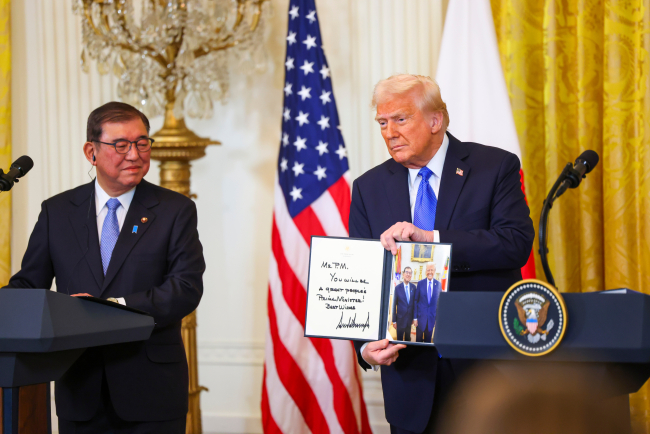
Japan Under Trump: Alliance Strains, the Push for Autonomy and Essential Partnerships
Japan is under pressure from the United States (US) on punitive tariffs and demands for increased defence spending. This has sparked deep concern over US credibility and triggered growing domestic calls for greater autonomy.

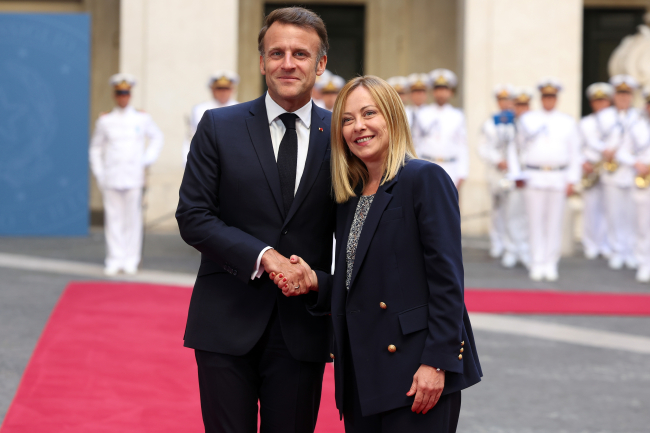
European safety guarantees for Ukraine: The torch burns between Paris and Rome
Last week, France summoned the Italian ambassador in a dispute that reveals the differences between Europeans over the security guarantees they would be prepared to provide to Ukraine in the event of a peace agreement.
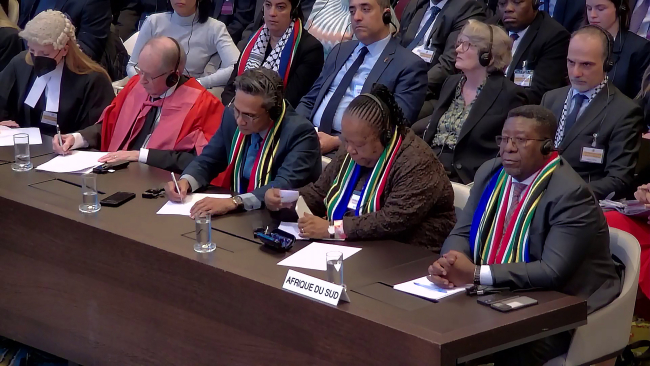
Middle Power Lawfare : South Africa, International Justice, and the Gaza Crisis
The intensification of violence in Gaza following Hamas’s 7 October 2023 Al Aqsa Flood attack and Israel’s military response prompted a broader reassessment of global diplomacy. Longstanding geopolitical alignments were disrupted, and questions about humanitarian obligations, institutional accountability, and the limits of state conduct returned to the centre of international debate.
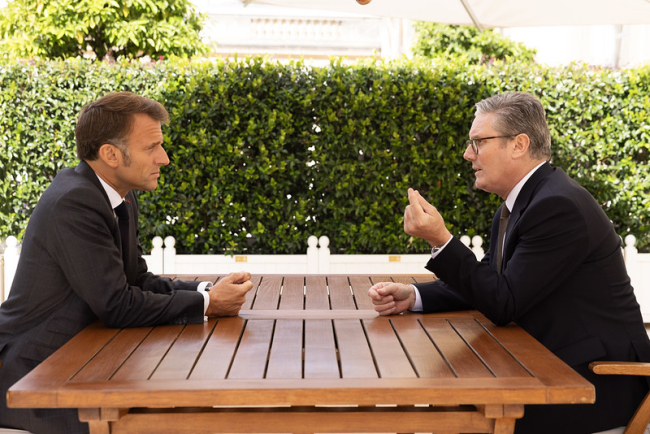
How should Britain and France cooperate to realise the Northwood Declaration?
During his state visit to the United Kingdom (UK) last week, Emmanuel Macron, President of France, signed a joint declaration with Sir Keir Starmer, Prime Minister, on nuclear cooperation between Britain and France. The Northwood Declaration highlights that while both countries’ nuclear arsenals remain sovereign, cooperation on nuclear deterrence can ‘contribute significantly’ to the security of the North Atlantic Treaty Organisation (NATO) and the Euro-Atlantic region.


Thomas Gomart, director of the French Institute of International Relations: 'Trump reasserts the US' strategic centrality'
By bombing Iran alongside Israel, Donald Trump has performed a show of force aimed at China and Russia, explains the director of the French Institute of International Relations in an interview.
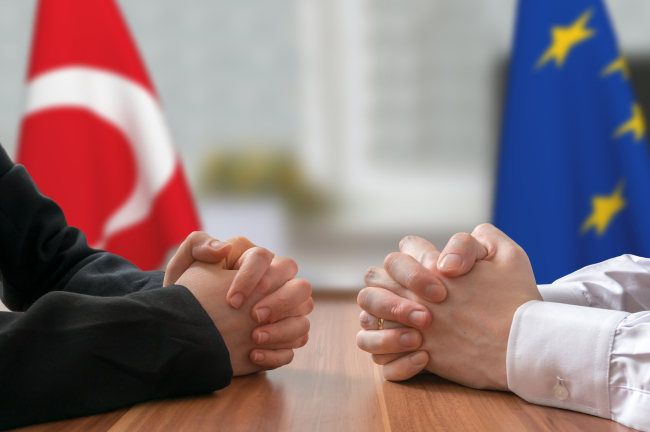
Turkey and France - Allies or Rivals: Opportunities to be Seized
As international relations have become increasingly unpredictable, the quest is to find a semblance of normality. Alliances are shifting as interests are changing. The so-called order established after the Second World War is being shattered by those who have given so much to create it. Global relations are being transformed by countries that wish to follow the rules and others that want to circumvent or ignore them. In this uncertain environment, it is therefore all the more crucial to find stable allies.
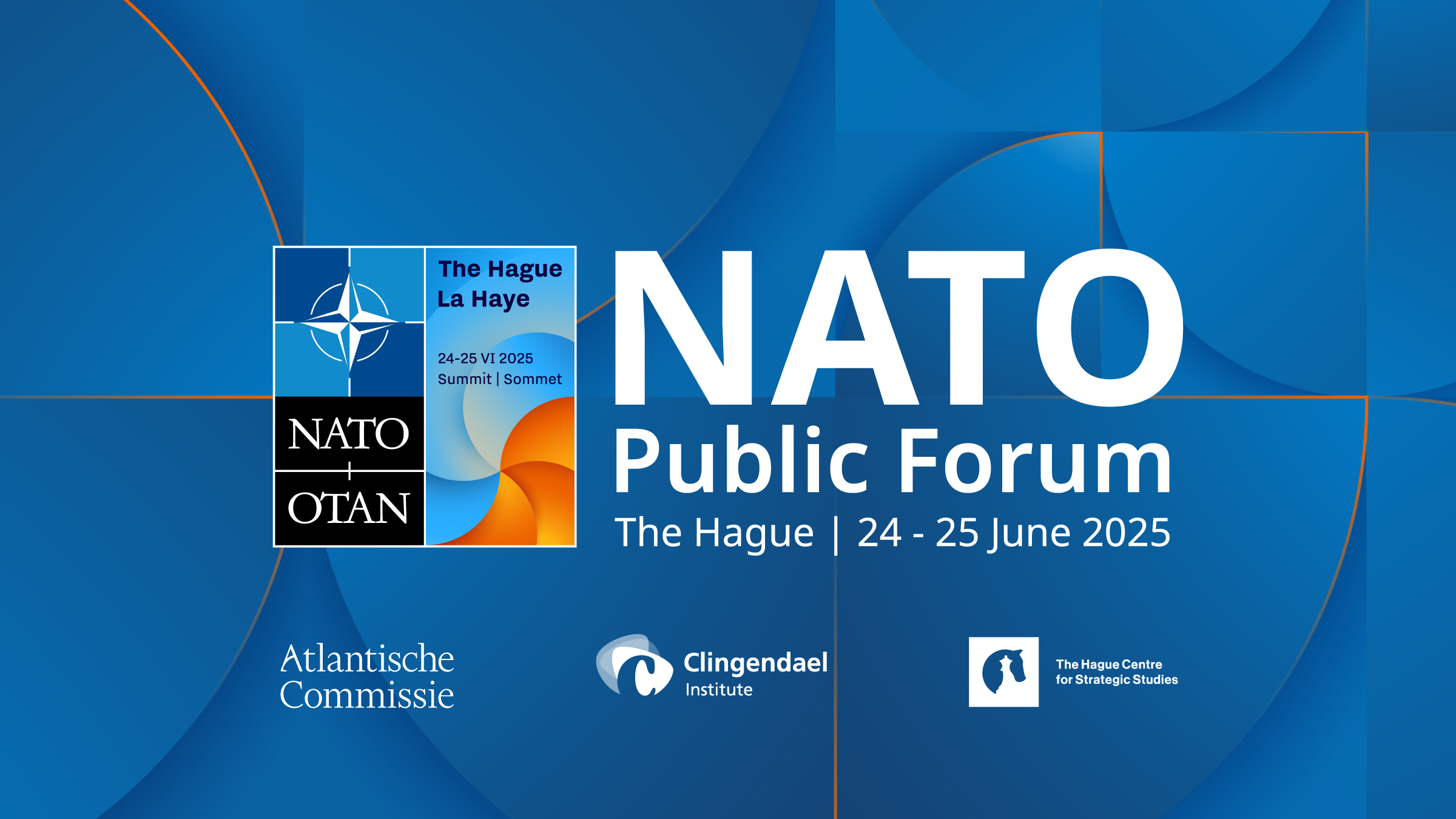
Addressing the Threat of Terrorism | NATO Public Forum 2025
NATO Public Forum 2025 LIVE | Day 1, 24 June 2025. Terrorism, instability and regional fragility continue to pose urgent challenges across the Middle East, North Africa, and the Sahel with direct implications for Allied security. How can NATO partnerships in its southern neighbourhood address the intertwined security, demographic and economic drivers behind this challenge? How to respond to the growing relevance of cyber terrorism and hybrid conflict?

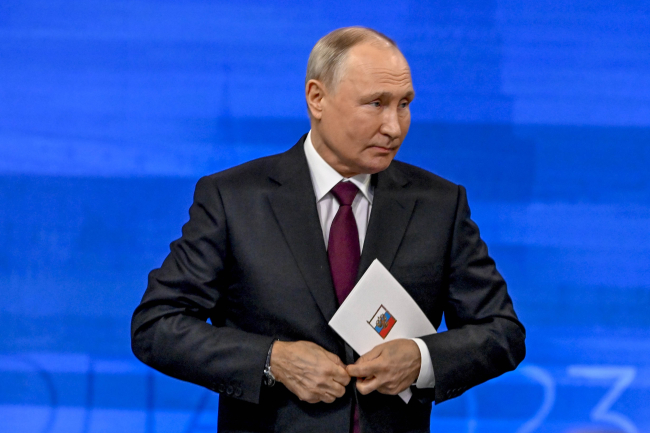
Putin Eyes Peacemaking Role In Israel-Iran Air War
Vladimir Putin is eyeing the conflict between Israel and Iran as an opportunity to thrust himself to the forefront of the international stage, more than three years into his invasion of Ukraine.

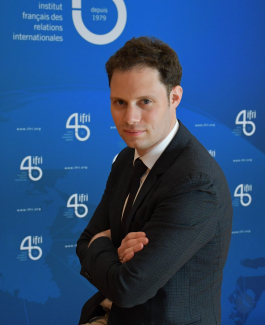
quoted by Leila Abboud in the Financial Times
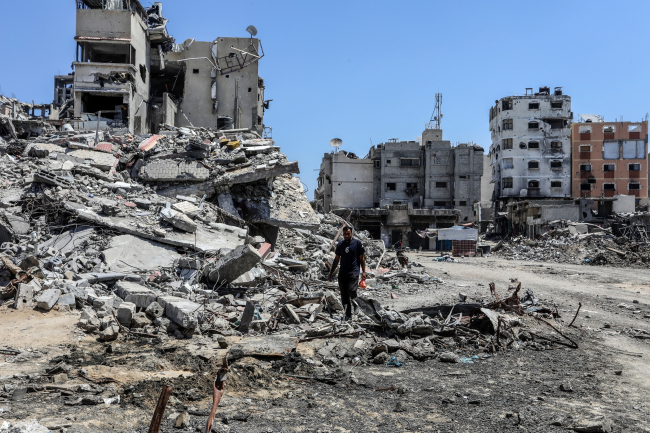
Taking the Pulse: Should the EU Suspend its Association Agreement With Israel?
Israeli leaders are clearly stating their intention to forcibly displace Gazans out of the Strip, a policy which amounts to ethnic cleansing. To uphold its commitment to human rights, should the EU suspend its association agreement with Israel?
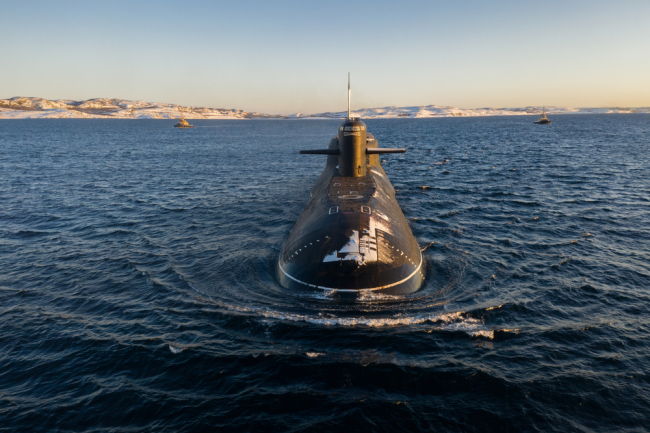
Taking the Pulse: Can Europeans Build Their Independent Extended Nuclear Deterrent?
Confronted with a U.S. disengagement and the Russian threat, Europeans are reconsidering their stance on nuclear deterrence. Given the capabilities of the French and British arsenals, can Europe develop an independent nuclear deterrent?
2nd Maritime Security Conference: Threats to Maritime Trade and Maritime Infrastructure
Guillaume Furgolle, military fellow at the Defense Research Unit of the Security Studies Center at Ifri, participated in the 2nd Maritime Security Conference held on April 2, 2025. The topic of the conference was "threats to maritime trade and maritime infrastructure". Guillaume Furgolle spoke about the French vision of maritime security.
Replay - European Security: Perspectives from Latvia. Debate with the Minister of Defense of the Republic of Latvia, Andris Sprūds
How should European security be approached in the face of the challenges posed by the war in Ukraine? Replay of the conference European Security: Perspectives From Latvia. Debate with the Minister of Defense of the Republic of Latvia, Andris Sprūds.
Arctic: A New Era of Geopolitical Tensions? The Alert from the Norwegian Intelligence Director
An interview with Nils-Andreas Stensønes, Director of the Norwegian Intelligence Service, conducted by Daphné Benoit, Head of international affairs, AFP, on the occasion of Ifri's conference "New geopolitical realities of the Arctic", 19 March 2025.
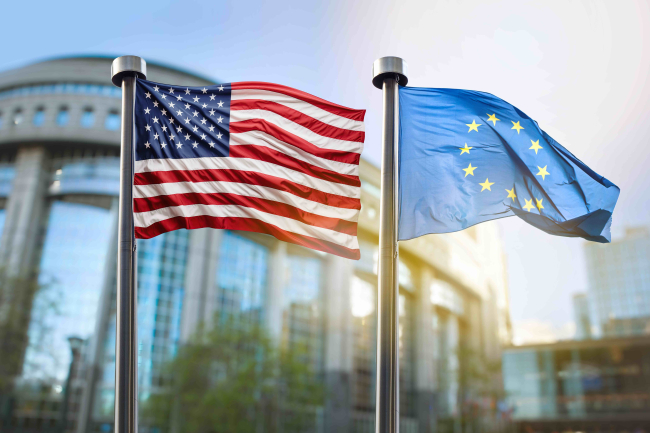
A Transatlantic Defense Industrial Base? Two Contrasting Views
The evolving landscape of global defense cooperation has brought the transatlantic relationship between the United States (US) and Europe into sharp focus. As geopolitical tensions rise and the threat environment becomes more complex, the question of how Europe can best ensure its security while navigating its relationship with the United States has become paramount. This double feature report offers two contrasting views on the dynamics of US-Europe defense industrial relations, highlighting the challenges and opportunities that lie ahead for both parties.
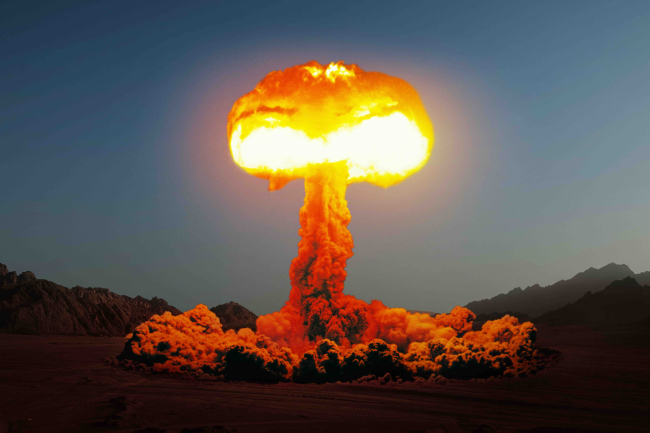
Europe thinks the unthinkable on a nuclear bomb
Poland wants co-operation with France on a nuclear deterrent. That could take many forms.
I see some degree of — I don’t want to say panic — but really alarmed Europeans who realize they need to stick together as much as possible.
If the Europeans want to step up and make up for the loss of American aid to Ukraine, it needs to happen now, they need to put the money on the table; they need to pass on the orders to the defense industry.
Europe is lacking ammunition, we’re lacking replacement parts, we’re lacking readiness.
quoted by Lisa Bryant for Voice of America.
How the US under Trump Became a Strategic and Ideological Adversary of Europe
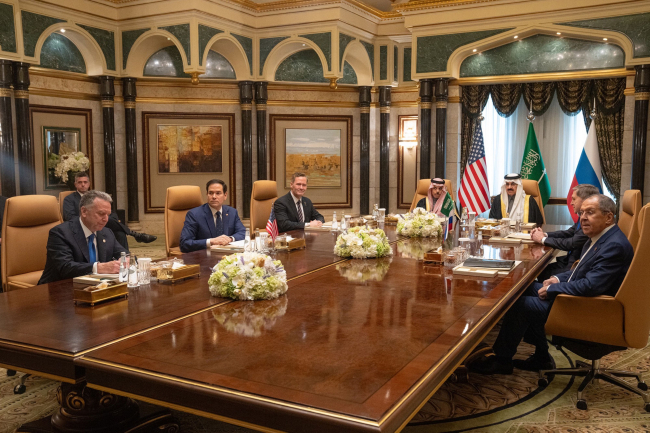
The Europeans' worst security nightmare seems to be coming true: on Tuesday, February 18, 2025, U.S. Secretary of State Marco Rubio and Russian Foreign Minister Sergey Lavrov met in Saudi Arabia to initiate the normalization of relations between their two countries. The meeting also aimed to set up peace negotiations for Ukraine. However, despite having the potential to affect the entire continent, the discussions took place without the Europeans or the Ukrainians being present.
Naval Power and Maritime Economy: Rear Admiral Olivier Berdal, Chief of the Royal Norwegian Navy
On the sidelines of the Paris Naval Conference 2025, on February 4, 2025, organized by Ifri and the French Navy (Marine nationale), Rear Admiral Olivier Berdal, Chief of the Royal Norwegian Navy, shares insights on the crucial role that naval power plays in support of maritime economy.
Naval Power and Maritime Economy: an interview with Admiral Sir Ben Key, First Sea Lord, Royal Navy
On the sidelines of the Paris Naval Conference 2025, on February 4, 2025, organized by Ifri and the French Navy (Marine nationale), Admiral Sir Ben Key, First Sea Lord, Royal Navy, shares insights on the crucial role that naval power plays in support of maritime economy.
How should Britain and France cooperate to realise the Northwood Declaration?
During his state visit to the United Kingdom (UK) last week, Emmanuel Macron, President of France, signed a joint declaration with Sir Keir Starmer, Prime Minister, on nuclear cooperation between Britain and France. The Northwood Declaration highlights that while both countries’ nuclear arsenals remain sovereign, cooperation on nuclear deterrence can ‘contribute significantly’ to the security of the North Atlantic Treaty Organisation (NATO) and the Euro-Atlantic region.
Turkey and France - Allies or Rivals: Opportunities to be Seized
As international relations have become increasingly unpredictable, the quest is to find a semblance of normality. Alliances are shifting as interests are changing. The so-called order established after the Second World War is being shattered by those who have given so much to create it. Global relations are being transformed by countries that wish to follow the rules and others that want to circumvent or ignore them. In this uncertain environment, it is therefore all the more crucial to find stable allies.
Taking the Pulse: Can Europeans Build Their Independent Extended Nuclear Deterrent?
Confronted with a U.S. disengagement and the Russian threat, Europeans are reconsidering their stance on nuclear deterrence. Given the capabilities of the French and British arsenals, can Europe develop an independent nuclear deterrent?
A Transatlantic Defense Industrial Base? Two Contrasting Views
The evolving landscape of global defense cooperation has brought the transatlantic relationship between the United States (US) and Europe into sharp focus. As geopolitical tensions rise and the threat environment becomes more complex, the question of how Europe can best ensure its security while navigating its relationship with the United States has become paramount. This double feature report offers two contrasting views on the dynamics of US-Europe defense industrial relations, highlighting the challenges and opportunities that lie ahead for both parties.
How the US under Trump Became a Strategic and Ideological Adversary of Europe
The Europeans' worst security nightmare seems to be coming true: on Tuesday, February 18, 2025, U.S. Secretary of State Marco Rubio and Russian Foreign Minister Sergey Lavrov met in Saudi Arabia to initiate the normalization of relations between their two countries. The meeting also aimed to set up peace negotiations for Ukraine. However, despite having the potential to affect the entire continent, the discussions took place without the Europeans or the Ukrainians being present.
Rebooting Italy's Africa Policy: Making the Mattei Plan Work
Against the backdrop of increasing anti-French rhetoric across parts of Francophone Africa, the relative failure of the counterinsurgency operation in the central Sahel (Operation Barkhane) and diplomatic rifts with several Sahelian countries, Paris has been rethinking its relationship with the continent for several years now. As a former imperial power that has seen its colonial domain in Africa gain independence between 1956 (Morocco-Tunisia) and 1977 (Djibouti), France has invented two successive roles for itself in Africa since 1960, particularly in French-speaking sub-Saharan Africa.
The dilemma of the Franco-African military relationship: reinvent or turn the page?
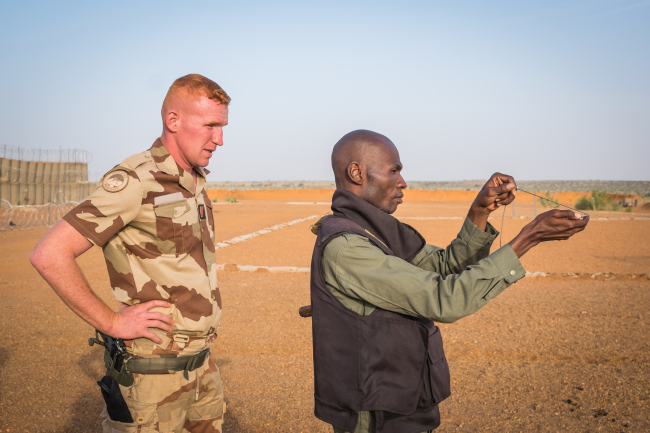
The origins of military presence and cooperation in Africa can be traced back to the tacit decolonization pact between the countries of French-speaking Africa. This cooperation led to the creation of African armies in the former colonies, as part of a project to prevent the spread of communism and maintain France's influence in the newly independent countries.

Japan: Deciphering Prime Minister Ishiba’s Strategic Vision. Toward an Asian version of NATO?
On Tuesday, October 1, Shigeru Ishiba was sworn in as Prime Minister of Japan. His proposal to revise the security alliance with the United States and create an Asian version of the North Atlantic Treaty Organization (NATO) attracted attention and sparked lively debate.
EUDIS, HEDI, DIANA: What's behind Three Defense Innovation Acronyms?
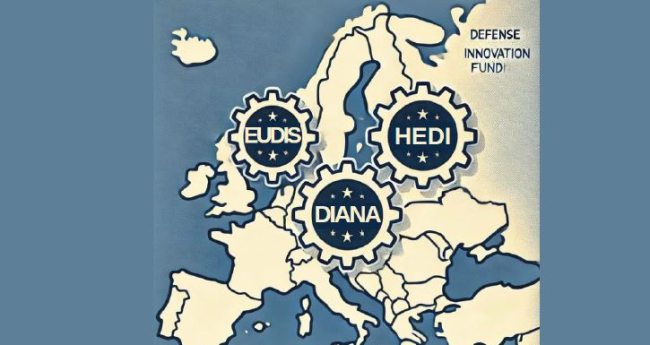
In Europe, with Russia’s war of aggression against Ukraine showing little sign of abating, a persistent gap remains between security needs and defense spending. According to a 2006 commitment enshrined at the 2014 Wales NATO summit, the North Atlantic Treaty Organization (NATO) members should disburse no less than 2% of their national gross domestic product (GDP) on defense, out of which 20% is to be spent on equipment and research and development. In 2024, only 23 Allies out of 32 are expected to meet or exceed this target, though a significant improvement from only three in 2014. This total includes the United States (US) devoting 3.38% of its GDP to defense, constituting almost 70% of all NATO member defense spending combined.
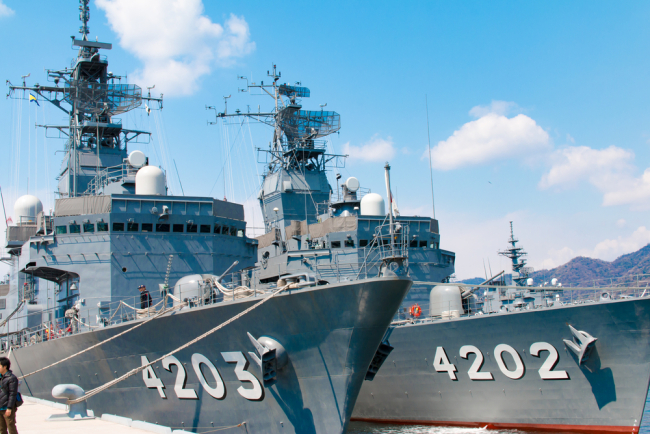
Japan’s Enhanced Security Engagement With the Pacific Islands
The expansion of security and defense cooperation stands as the most spectacular change in Japan’s contribution to the region in recent years.

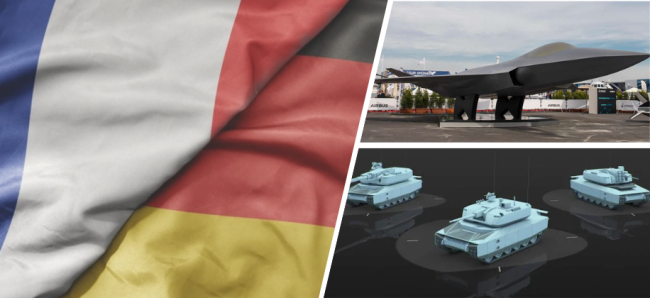
French-German future combat aircraft project on the brink of collapse
Eight years after Emmanuel Macron and Angela Merkel launched the SCAF, this symbol of European sovereignty in defense is on the verge of collapse. At issue are the demands of the project's main contractor, Dassault Aviation, which Berlin considers excessive, as well as political and strategic differences between France and Germany.
European safety guarantees for Ukraine: The torch burns between Paris and Rome
Last week, France summoned the Italian ambassador in a dispute that reveals the differences between Europeans over the security guarantees they would be prepared to provide to Ukraine in the event of a peace agreement.
Thomas Gomart, director of the French Institute of International Relations: 'Trump reasserts the US' strategic centrality'
By bombing Iran alongside Israel, Donald Trump has performed a show of force aimed at China and Russia, explains the director of the French Institute of International Relations in an interview.
Putin Eyes Peacemaking Role In Israel-Iran Air War
Vladimir Putin is eyeing the conflict between Israel and Iran as an opportunity to thrust himself to the forefront of the international stage, more than three years into his invasion of Ukraine.
quoted by Leila Abboud in the Financial Times
Taking the Pulse: Should the EU Suspend its Association Agreement With Israel?
Israeli leaders are clearly stating their intention to forcibly displace Gazans out of the Strip, a policy which amounts to ethnic cleansing. To uphold its commitment to human rights, should the EU suspend its association agreement with Israel?
Europe thinks the unthinkable on a nuclear bomb
Poland wants co-operation with France on a nuclear deterrent. That could take many forms.


Will Europe's pivot to Asia have any teeth?
Spurred by fears of a ‘new Ukraine’ in East Asia, European powers are ramping up their presence in the Indo-Pacific.


Analysis: France and Britain’s relationship built on defence co-operation
Training and equipping of Ukrainian forces is an immediate priority.

French delight as Emmanuel Macron will be first world leader to visit Biden in US
President Macron is set to become the first world leader to make a state visit to the US during the Biden presidency, to the delight of Paris. Following the announcement on Tuesday, some commentators claimed that France was being “pampered” by the US, while others drew a contrast with what they described as Britain’s loss of prestige on the global stage following Brexit.
Ifri, a foundation recognized as being of public utility, relies largely on private donors – companies and individuals – to guarantee its sustainability and intellectual independence. Through their funding, donors help maintain the Institute's position among the world's leading think tanks. By benefiting from an internationally recognized network and expertise, donors refine their understanding of geopolitical risk and its consequences on global politics and the economy. In 2026, Ifri partners with over 90 French and international companies and organizations.
