



Burdensharing in NATO. 3. The German Perception
The North Atlantic Treaty Organization (NATO) is the most successful political-military alliance in modern history. Despite doom prophecies of a superfluous NATO having lost its raison d'être, the Alliance is more active than ever before. The reason for NATO's success as the central element of peace and stability in the Euro-Atlantic region is its fundamental evolution which has taken place over the past ten years.
NATO's adaptation to new realities has almost inevitably touched the question of how to share costs and benefits among the members of the Alliance on both sides of the Atlantic. The question of burdensharing is of particular importance with regard to Germany, since unification has fundamentally changed the size, the domestic setting and the international weight of this country. This has necessitated an essential readjustment of German policies and politics in the field of international relations -a process which has still not come to an end. It also required Germany's allies and neighbors to continuously adapt or correct their judgements and misperceptions on German intentions and strategies.
Notwithstanding Germany's ongoing efforts to demonstrate continuity in the essentials of German foreign policy (i. e. Western orientation, European integration, transatlantic partnership, federalism etc.) there was always some mistrust that the new 'Berlin Republic' might return to old patterns of over-assertiveness or 'Schaukelpolitik' (seesaw policy) between East and West. This in turn had raised the question of whether Germany in future will be ready to contribute a fair share to security and stability in Europe and beyond.
This article takes up the issue of burden-sharing in NATO's post Cold War environment from a German point of view. First, it touches briefly on the history of the burden-sharing debate in NATO to prepare the ground for the description of continuity and change. A second part deals with the present discussion on burden-sharing and gives an assessment of the German contribution to the Atlantic Alliance. A third step is focused on the analysis of some future burden-sharing issues which are likely to create irritations and frictions between Germany and the United States, and in general between Europe and America, in the coming years.
Karl Heinz Kamp is Head of the Foreign and Security Policy Research Section at the Konrad Adenauer Stiftung.
Transatlantic Series:
The "Transatlantic Series" proposes concise analyses in English or in French on main Transatlantic debates and political issues in both the United States and Europe. It benefits from the support of the German Marshall Fund of the United States.

Available in:
Regions and themes
ISBN / ISSN
Share
This page contains only a summary of our work. If you would like to have access to all the information from our research on the subject, you can download the full version in PDF format.
Burdensharing in NATO. 3. The German Perception

Security Studies Center
Heir to a tradition dating back to the founding of Ifri, the Security Studies Center provides public and private decision-makers as well as the general public with the keys to understanding power relations and contemporary modes of conflict as well as those to come. Through its positioning at the juncture of politics and operations, the credibility of its civil-military team and the wide distribution of its publications in French and English, the Center for Security Studies constitutes in the French landscape of think tanks a unique center of research and influence on the national and international defense debate.

Toward Space-Based Intelligence for All? The Case of the Spring 2026 Iranian Strikes
The conflict in the Middle East has highlighted the effectiveness of Iranian strikes in identifying targets and conducting precision strikes. This raises the question: which capabilities enabled the Islamic Revolutionary Guard Corps (IRGC) to achieve these results?

Confronting Russia’s High-Velocity Arsenal: European Challenges and Solutions
Since February 2022, Russian missile and long-range drone strikes against Ukraine have served as near-daily reminders of what European states could face in a war with Russia. The same weapon systems battering Ukrainian infrastructure and population centers would be directed against European military and civilian targets in any confrontation between Russia and NATO. As Russian missile production expands and its arsenal diversifies, Europe must confront an uncomfortable question: how to deter, and if push comes to shove, fight Russia's long-range strike arsenal?
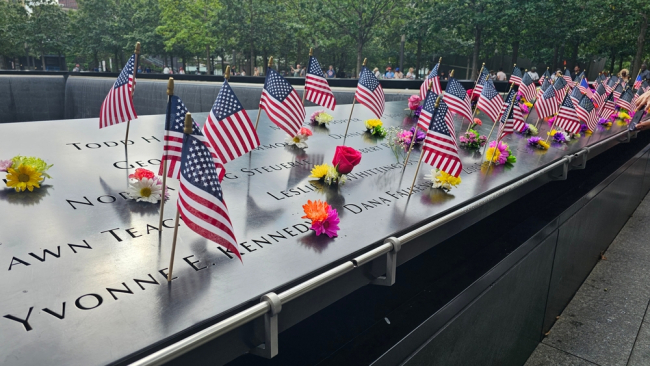
The War on Terrorism: Global Experts Reflect on Lessons Learned Twenty-Five Years After 9/11
Twenty-five years ago, the September 11 attacks prompted the invention of new security architectures that shaped the war on terrorism. Sixteen think tank experts from fifteen countries reflect on the successes, failures, and missed opportunities in the fight against terrorism—a fight that is still ongoing.
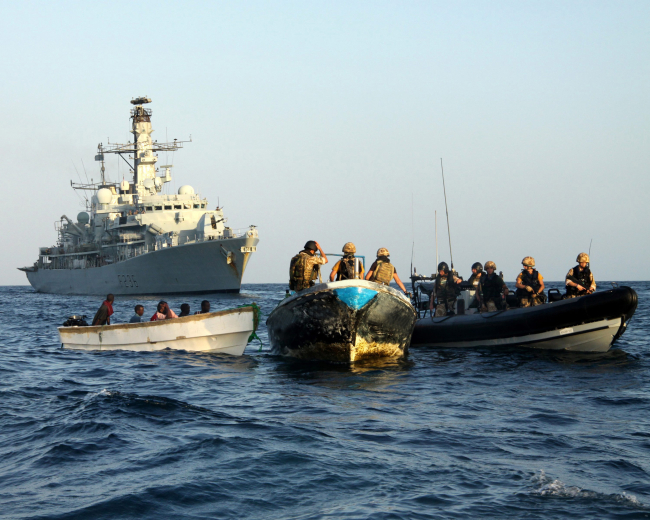
From Corsairs to Private Military Contractors. Nonmilitary Maritime Actors and the Historical Continuities of Naval Warfare
Since late 2023, several Houthi attacks on commercial shipping have involved privately contracted armed teams conducting defensive engagements and coordinating immediate response efforts, often in the relative absence of regular naval forces during the immediate hostilities at sea. These cases highlight a strategic tension that increasingly confronts modern navies. On the one hand, they are expected to conduct persistent, low-intensity maritime security tasks such as counterpiracy, maritime policing, and the protection of commercial shipping. On the other hand, they face renewed pressure to prepare for high-intensity conflict against peer and near-peer adversaries amid the return of great power competition.