



Multiple Launch Rocket Systems Europe’s Long-standing and Enduring Dependence?
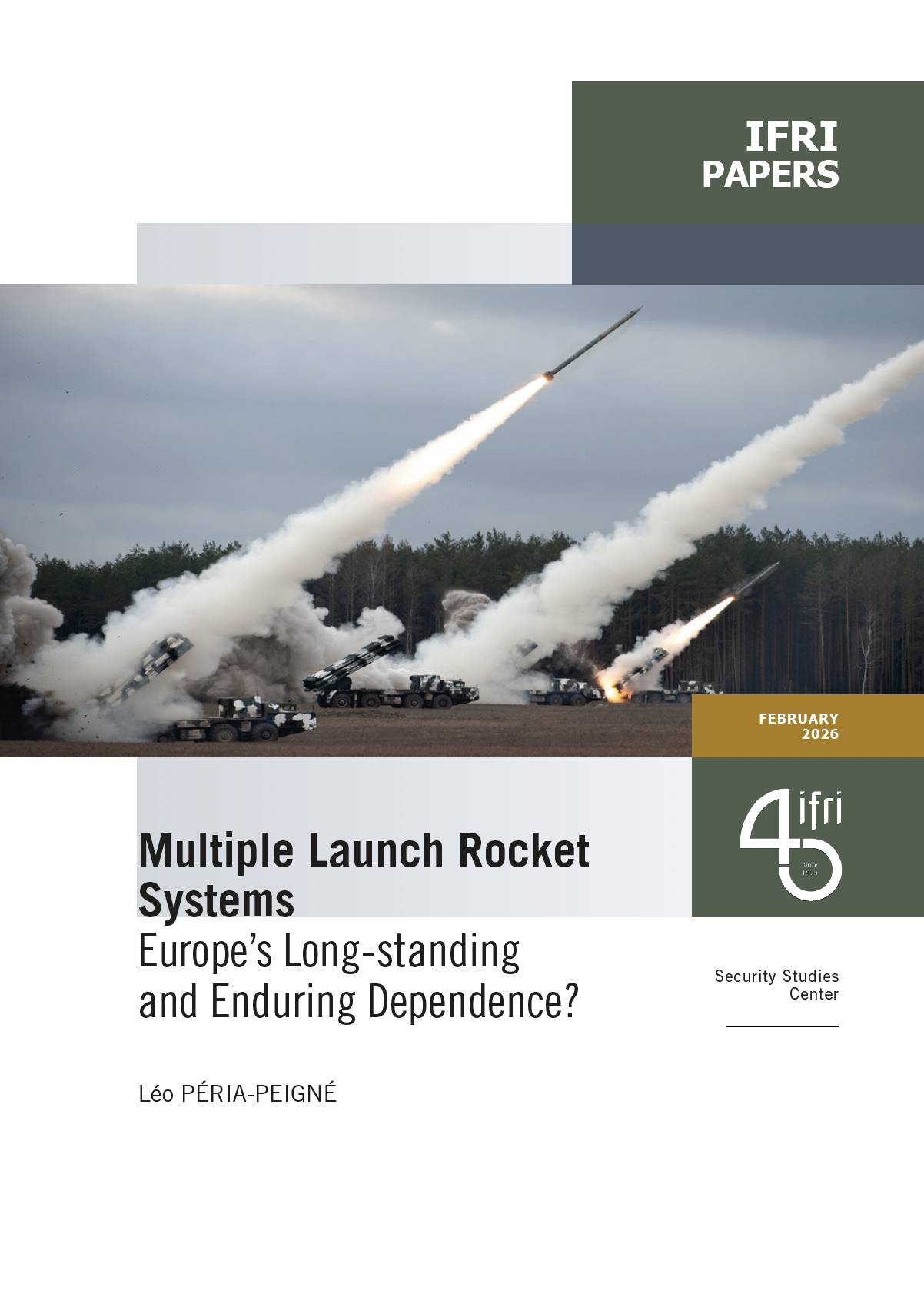
The war in Ukraine has underlined the importance of multiple launch rocket systems (MLRS) in modern conflict, especially a war without clear air superiority and hence a reduced potential for air-launched deep strike. In 2022, the European MLRS fleet was split between a variety of Western platforms developed at the end of the Cold War and specialized in precision strikes.
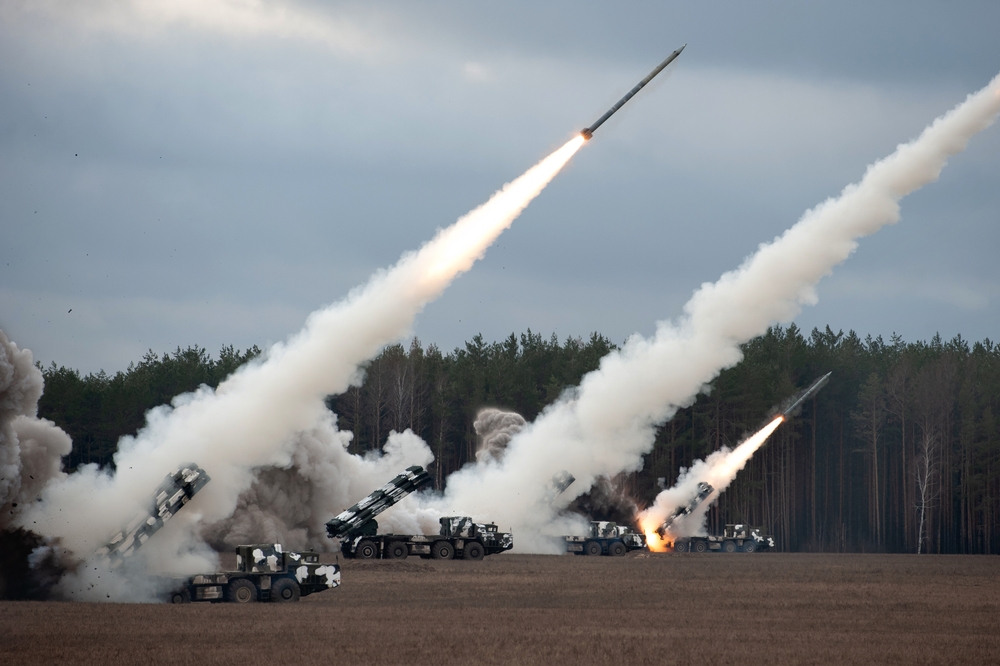
Alongside these were a larger number of Soviet-era legacy systems intended for saturation fire. As these had seen limited use over the previous thirty years of deployed and peacekeeping conflicts, European MLRS capabilities were massively reduced, with most armies keeping minimal capabilities or completely retiring the systems. Most modernization programs were intended to increase their capability, but also to extend their service life, in order to avoid a costly replacement program.
As the few modern MLRS delivered to the Ukrainian armed forces proved themselves to be highly efficient, European armies launched a major rearmament effort during the first half of 2022 in order to restore this neglected capability. As no local solution existed, most armies opted for off-the-shelf purchases of extra-European systems, with limited options: US M142 HIMARS (119 units ordered in January 2026); Israeli PULS (74 units); or South Korean K239 Chunmoo (310 units); three platforms with similar performances and costs. Germany also chose to develop two competing alternatives, in cooperation with extra-European partners: Lockheed Martin and Rheinmetall on GMARS, facing Elbit and KNDS Deutschland on EuroPuls. France chose to create its own solution in order to preserve sovereignty over the production and use of its ammunition, through the FLP-T program.
However, this latter long-term project has required an interim purchase in order to facilitate a short-term replacement of the existing MLRS, the service life of which will end by 2027. Besides the three existing options listed above, it appears that France is willing to purchase an Indian MLRS, the Pinaka, potentially introducing a fourth platform to the European market. This choice is somewhat strange, as the Pinaka is a less capable MLRS than the others in terms of range and accuracy. The French Army specifies a required strike capability of up to 150 km, while the Pinaka can barely reach 120 km with ammunition that is still under development. Besides the much-needed European/NATO interoperability aspect, such a choice would strongly undermine the French position on purchasing European weapons for European armies. Though there is yet no new fully European MLRS, introducing another wholly foreign platform with lower capability would certainly weaken French military credibility.
Western multiple launch rocket systems (MLRS) were delivered to Ukraine early in the summer of 2022. They proved decisive in the conflict, enabling Ukrainian forces to engage the Russian military apparatus during the reconquest operations of autumn 2022. These successes brought media attention to systems rarely featured in Western inventories and triggered a race among European countries to renovate and replace a capability segment that had fallen into neglect.
In 2022, Europe’s MLRS fleet consisted mainly of platforms inherited or derived from weapon systems used by Warsaw Pact armies, such as the BM-21 Grad of the 1960s (whose main 122-millimeter (mm) caliber was designed for saturation strikes), alongside a minority of systems of US origin derived from the M270 MLRS program of the 1980s. Although these platforms have now seen forty to fifty years of service and undergone several modernization cycles, European armies long ignored the question of their replacement—until the war in Ukraine brought the issue to a head. The European defense industry as a whole, however, lacks experience in this segment. Saturation systems are relatively well mastered, especially by the former Warsaw Pact countries, but long-range precision surface-to-surface munitions remain largely absent from the continent’s industrial catalogs or depend on restrictive external licenses.
France is no exception. Its MLRS capability has been reduced to a handful of aging platforms with limited availability, and whose munitions depend on US licenses. Paris recently decided to begin development of a new national system to ensure sovereign control over its ammunition supply, which is the only truly strategic component of an MLRS. Developing a national system will be a protracted process, however, and it may leave France isolated within Europe, since most other European armies have opted for quick, off-the-shelf acquisitions of extra-European platforms.
Strategic-level systems with a range exceeding 500 kilometers (km) will not be addressed in this note.

Available in:
Themes and regions
ISBN / ISSN
Share
This page contains only a summary of our work. If you would like to have access to all the information from our research on the subject, you can download the full version in PDF format.
Multiple Launch Rocket Systems Europe’s Long-standing and Enduring Dependence?


Léo PÉRIA-PEIGNÉ
Research Fellow, Security Studies Center, Head of the Defense Research Unit, Ifri

Security Studies Center
Heir to a tradition dating back to the founding of Ifri, the Security Studies Center provides public and private decision-makers as well as the general public with the keys to understanding power relations and contemporary modes of conflict as well as those to come. Through its positioning at the juncture of politics and operations, the credibility of its civil-military team and the wide distribution of its publications in French and English, the Center for Security Studies constitutes in the French landscape of think tanks a unique center of research and influence on the national and international defense debate.

Confronting Russia’s High-Velocity Arsenal: European Challenges and Solutions
Since February 2022, Russian missile and long-range drone strikes against Ukraine have served as near-daily reminders of what European states could face in a war with Russia. The same weapon systems battering Ukrainian infrastructure and population centers would be directed against European military and civilian targets in any confrontation between Russia and NATO. As Russian missile production expands and its arsenal diversifies, Europe must confront an uncomfortable question: how to deter, and if push comes to shove, fight Russia's long-range strike arsenal?

The War on Terrorism: Global Experts Reflect on Lessons Learned Twenty-Five Years After 9/11
Twenty-five years ago, the September 11 attacks prompted the invention of new security architectures that shaped the war on terrorism. Sixteen think tank experts from fifteen countries reflect on the successes, failures, and missed opportunities in the fight against terrorism—a fight that is still ongoing.
From Corsairs to Private Military Contractors. Nonmilitary Maritime Actors and the Historical Continuities of Naval Warfare
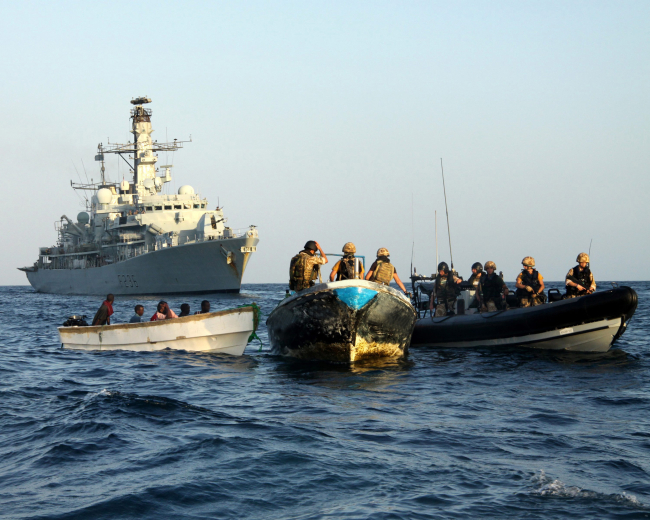
Since late 2023, several Houthi attacks on commercial shipping have involved privately contracted armed teams conducting defensive engagements and coordinating immediate response efforts, often in the relative absence of regular naval forces during the immediate hostilities at sea. These cases highlight a strategic tension that increasingly confronts modern navies. On the one hand, they are expected to conduct persistent, low-intensity maritime security tasks such as counterpiracy, maritime policing, and the protection of commercial shipping. On the other hand, they face renewed pressure to prepare for high-intensity conflict against peer and near-peer adversaries amid the return of great power competition.
Framework Nation: A European Challenge and French Ambition
First appearing in the early 2000s, the framework nation concept follows several distinct rationales, whether it refers to a country assuming the leadership of a military operation, directing a multinational capability project, or commanding a permanent force structure. In every case, the country that takes on this role fully intends to derive from it additional politico-military influence.