



Japan’s Energy Policy after Hormuz. Security, Competitiveness, and Decarbonization
The 2026 Hormuz crisis has strengthened rather than weakened the rationale for Japan’s decarbonization strategy, contrary to what might have been expected. Rather than energy policy supplanting climate policy, the two should actually be viewed as inseparable.
As Japan’s experience in the current crisis shows, energy security, industrial competitiveness, and decarbonization have become three interlocking dimensions of the same strategic challenge.
The Hormuz shock and the return of energy security
In March 2026, the Strait of Hormuz was blockaded. Such a possibility had long been acknowledged but the probability of it actually occurring was perhaps too low and preparedness likely insufficient. Nevertheless, Japan’s energy policy responded swiftly, moving quickly in the short term to secure oil, natural gas, and other supplies. A task force was established in the Prime Minister’s Office; the release of both private and national strategic reserves was decided. The use of alternative shipping routes is under review, and efforts to diversify procurement sources are underway. Measures to cushion the impact on gasoline prices have also been introduced. This reflects the fact that energy security is currently given the highest priority in Japan’s overall policy.
Japan’s dependence on Middle Eastern crude oil has proved stubbornly resistant to diversification efforts despite many policy initiatives over the years. The 2026 crisis has illustrated the tight linkage between Indo-Pacific security and energy security: the vulnerability of sea lanes through the Strait of Hormuz is not merely an economic risk but a strategic one, directly implicating Japan’s alliance relationships and its standing in the region. How Japan navigates its relations with the United States, the Middle East, and partners such as Australia shapes and is shaped by the interaction between the economic and the strategic domains.
A deeper, underlying question centers on the role of economic security in Japanese strategic thinking: to what extent should energy supply chains be treated not merely as commercial matters but as instruments and objects of national strategy?
The keyword for understanding Japan’s energy policy is “S+3E.” Japan’s energy policy has long been anchored in the “3E” framework. Following the Great East Japan Earthquake and the Fukushima Daiichi nuclear accident in March 2011, “S” (Safety) was added to the 3E. The three Es, namely Energy security, Economic efficiency, and Environmental compatibility, are deeply embedded in Japan’s energy policy framework. While energy security is currently being emphasized, environmental compatibility, which encompasses climate change, has not been eliminated from the policy framework. Rather, the 2026 crisis has strengthened the case for accelerating Japan’s climate agenda.
The strategic response: restructuring
Japan’s energy mix Japan’s energy policy is in the process of being restructured around three pillars: the diversification of oil and gas imports, a nuclear energy revival and the expansion of renewable energies. The first is diversification of procurement sources. Efforts to reduce dependence on the Middle East have been made over the years, but it cannot be said they have succeeded. It is undeniable that Japan has been structurally tied to the Middle East through refinery equipment tailored to Middle Eastern crude oil and long-term procurement contracts. More serious alternatives to Middle Eastern oil, including American-sourced oil, will now be pursued. For liquefied natural gas (LNG), Japan’s procurement is already more diversified, with Middle Eastern supply accounting for only around ten percent. In the near term, natural gas is likely to maintain its role as a bridging fuel. At the same time, energy conservation must be treated not merely as a review of existing policy but as a renewed strategic priority. Japan has accumulated considerable expertise in energy efficiency since the oil crisis of the 1970s. The current crisis is an opportunity to renew that effort across industry, transport, and buildings.
The second pillar is the maximum utilization of nuclear power. The “7th Strategic Energy Plan” (2025) shifted away from “reducing dependence as much as possible” on nuclear energy, calling for maximum use of existing nuclear plants approved under post- Fukushima safety standards. As of now, 15 nuclear power plants are in operation. Nuclear power is treated as a form of quasi-domestic energy. Efforts are also underway to establish a more complete nuclear fuel cycle, including the reprocessing of spent fuel, and to advance the selection of a final disposal site for high-level radioactive waste, both of which are essential to the long-term sustainability of nuclear power in Japan. Yet, nuclear restarts remain politically contentious. The memories of Fukushima continue to shape public attitudes in ways that central government reassurance has struggled to overcome, and local government consent remains a critical hurdle. Ensuring broader public understanding of both the safety and the necessity of nuclear power is therefore an essential part of the policy agenda.
The third pillar is making renewable energy the primary power source. In the decade following the Great East Japan Earthquake, Japan has roughly doubled overall renewable energy generation, doubled wind power, and increased solar power twenty-threefold—bringing solar capacity per unit of land area to one of the highest levels among major economies. Japan is also investing in next-generation renewable technologies, including perovskite solar cells, floating offshore wind, and next-generation geothermal energy. Yet the limits of this expansion are becoming visible. Wind power development faces growing opposition from local communities, driven by concerns over noise and low-frequency sound from turbines, the visual impact on landscapes and tourism, and risks to birds and ecosystems. Grid infrastructure and the management of output variability also require substantial further investment. The policy direction is to pursue maximum expansion of renewables as the primary power source, while containing the burden on citizens and ensuring coexistence with local communities.
The Hormuz crisis strengthens climate change policy
Economic security has become an increasingly central concern of Japanese national strategy, and energy security is one of its most critical components. Without stable access to energy, no modern economy can function; securing energy supply is therefore not merely a technical matter but a foundational condition of national welfare and strategic autonomy. As the urgency of energy security rises, climate change responses tend to be treated as secondary. Yet, this is precisely where the conventional assumption must be challenged: decarbonization is not in tension with energy security—it is one of the most effective pathways toward achieving it. First, the three pillars of Japan’s strategic response—diversification, nuclear revival, and renewable expansion—can be pursued in a manner consistent with climate change responses. Energy conservation, nuclear power, and renewable energy are also climate change countermeasures. Now, when investment is concentrating on energy security, is precisely the opportunity to channel funds and policy in the same direction as climate change responses. Even if short-term dependence on fossil fuels is unavoidable, if the direction of that investment is not set now, future transitions will become significantly more difficult.
Second, decarbonization investment is directly linked to industrial competitiveness. As exemplified by the EU’s Carbon Border Adjustment Mechanism (CBAM), delays in decarbonization are directly linked to declining export competitiveness and risks to economic growth. The rapid proliferation of generative AI has further intensified energy demand from data centers, making access to clean and stable power a new dimension of industrial competitiveness. Furthermore, companies that fail to secure low-carbon energy will increasingly find themselves unable to meet the Scope 3 emissions requirements imposed by global supply chains, a risk that could 4 Japan’s Energy Policy after Hormuz : S ecurity, Competitiveness, and Decarbonization S ub tit le Takashi HATTORI effectively exclude Japanese firms from international markets. GX Economy Transition Bonds (a Japanese government instrument designed to mobilize private-sector decarbonization investment) and growth-oriented carbon pricing are frameworks that should be activated with greater urgency in these times of crisis. With some 20 trillion yen in issuance planned over the next decade, GX bonds are intended to drive investment into hard-to-abate sectors such as steel and chemicals, as well as hydrogen and next-generation nuclear power. The current crisis is an opportunity to put these instruments to work.
Third, strengthening energy resilience is itself a foundation of economic security. It requires not only securing supply routes and diversifying sources, but also protecting the physical infrastructure of the energy system from the growing impacts of climate change. Designing infrastructure to withstand extreme weather events is a core dimension of energy resilience—and one that requires sustained investment. In this sense, climate adaptation policy and energy security policy converge: a more climate-resilient energy infrastructure is simultaneously a more secure one.
The lesson of the 2026 Hormuz crisis is that energy security, industrial competitiveness, and decarbonization are no longer separate objectives. For Japan, they have become inseparable dimensions of the same strategic challenge: preserving economic resilience in an increasingly unstable geopolitical environment. This latest crisis must mark a shift from viewing climate policy as purely an environmental objective to treating decarbonization as a component of national resilience and economic security.

Available in:
Themes and regions
ISBN / ISSN
Share
This page contains only a summary of our work. If you would like to have access to all the information from our research on the subject, you can download the full version in PDF format.
Japan’s Energy Policy after Hormuz. Security, Competitiveness, and Decarbonization

Center for Asian Studies
Asia is a nerve center for multiple global economic, political and security challenges. The Center for Asian Studies provides documented expertise and a platform for discussion on Asian issues to accompany decision makers and explain and contextualize developments in the region for the sake of a larger public dialogue.
The Center's research is organized along two major axes: relations between Asia's major powers and the rest of the world; and internal economic and social dynamics of Asian countries. The Center's research focuses primarily on China, Japan, India, Taiwan and the Indo-Pacific, but also covers Southeast Asia, the Korean peninsula and the Pacific Islands.
The Centre for Asian Studies maintains close institutional links with counterpart research institutes in Europe and Asia, and its researchers regularly carry out fieldwork in the region.
The Center organizes closed-door roundtables, expert-level seminars and a number of public events, including an Annual Conference, that welcome experts from Asia, Europe and the United States. The work of Center’s researchers, as well as that of their partners, is regularly published in the Center’s electronic journal Asie.Visions.
The Oceania Factor in France’s Evolving Indo-Pacific Strategy
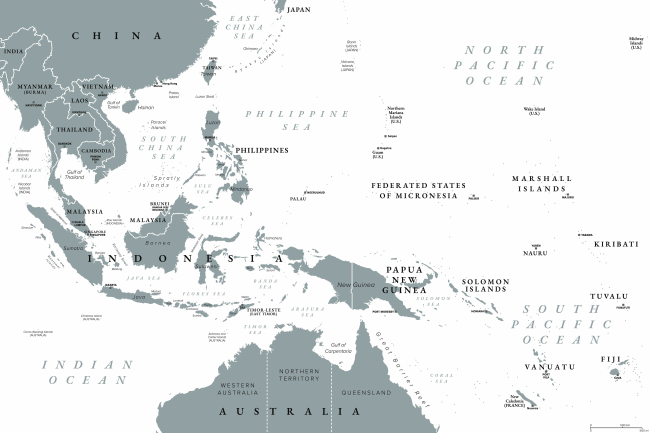
This paper examines the two-way relationship between France’s Indo-Pacific strategy and developments in Oceania. Oceania was not a priority in the initial years of France’s Indo-Pacific strategy, as the region was largely treated as secondary to major strategic hotspots and key partnerships, while overseas territories were primarily handled as domestic issues and recipients of a top-down strategy.

France’s View: From Diplomacy to Public-Private Action
France has emerged as the EU’s IMEC forerunner, combining port infrastructure, diplomatic alliances and public-private cooperation. With Marseille Fos at its core, the country brings a strategic hub for logistics, energy and digital connectivity to the corridor.
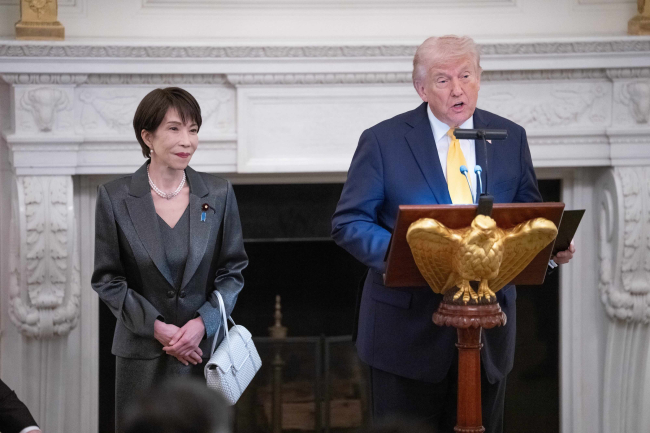
Trump II, the Crisis of the Rules-Based Order and Europe’s Indo-Pacific Strategy
This article examines the implications of Trump II for Europe’s engagement in the Indo-Pacific. The piece contends that Trump II is accelerating the erosion of the rules-based order and undermining the relevance of the Free and Open Indo-Pacific (FOIP) concept, while forcing Europe to refocus on its own continental security amid US retrenchment. Paradoxically, these very constraints create conditions for a more autonomous, pragmatic, and explicitly interest-driven European engagement in the Indo-Pacific, rather than outright withdrawal.
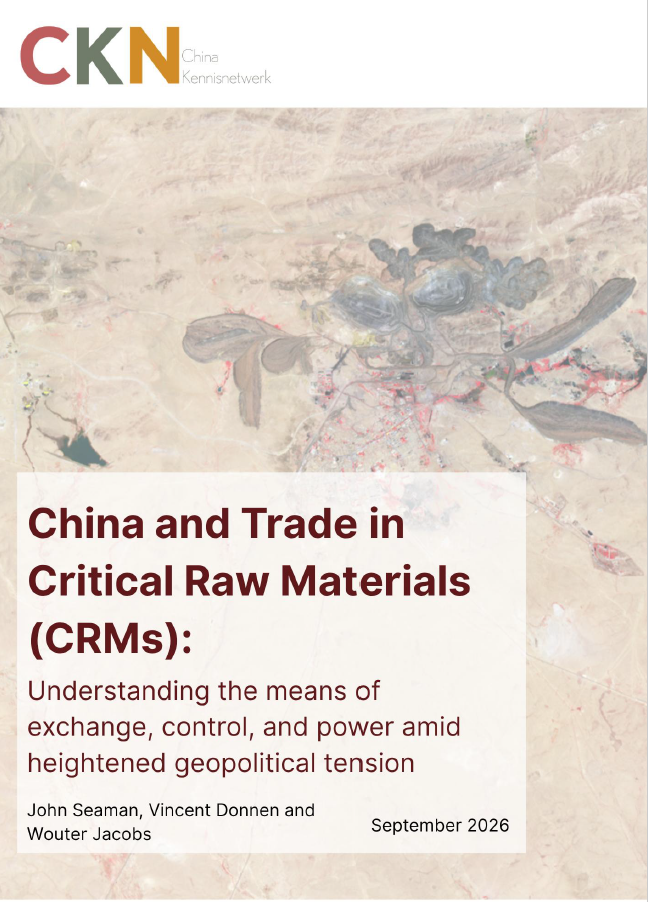
China and Trade in Critical Raw Materials (CRMs)
Critical raw materials (CRMs) have become central features of a new dynamic in global power politics, with China now wielding considerable leverage. Amid rising regional and global uncertainty, resource security is back in the spotlight as a key determinant of sovereignty and national security for Europe, its allies and its partners. The very survival of key, even vital industries, from automotive to aerospace to health to energy to defense, is at stake.