CETA: the Making of the Comprehensive Economic and Trade Agreement Between Canada and the EU
Once ratified, the Comprehensive and Economic Trade Agreement (CETA) could ultimately eliminate all tariff barriers between the European Union and Canada. CETA is also a new generation Free-Trade Agreement: it includes the opening of public procurement, the facilitation of cross investments and cooperation in the area of regulation. Its long negotiation process illustrated important changes that are happening in the way trade agreements are negotiated, both in Canada and in the EU.

The European Union in the Fog: Building Bridges between National Perspectives on the European Union
The Building Bridges project looks at the national perspectives on the European Union. This publication gathers contributions from across the EU. It sheds light on Member States’ motivations to participate in the EU and views on its future. Accessible and analytical, this volume is an ideal reference guide for practitioners, experts, students and European citizens.
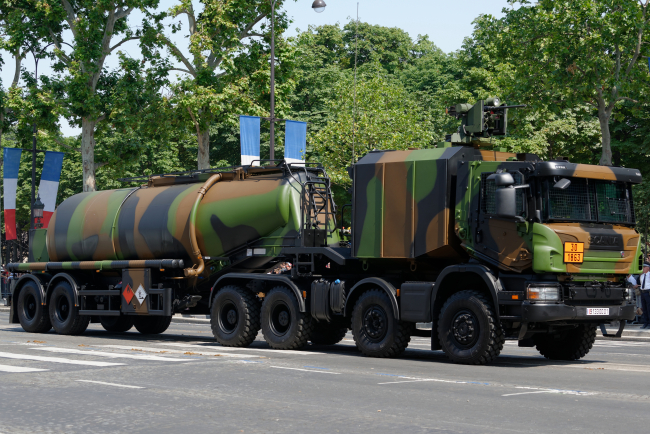
La sécurité énergétique des armées françaises. Le soutien pétrolier à l’heure de la transition
Ever since its inception on the eve of World War One, the concept of securing fuel supply has consistently proven its vitality to military operations.
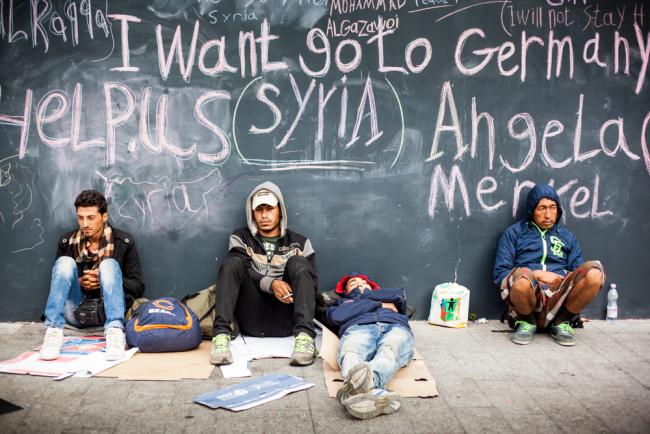
Humanitarian exploit or failure? The refugee crisis in Germany and Europe
From the German Question to the European Question
Are we returning to “The German Question”, which we thought had been dealt with at unification? Although “The German Question” has deep historical roots, its return is indicative of a European crisis: economic fractures, institutions in deadlock, relative withdrawal of France and the UK on serious Union debates. Only through increased European integration can we expect Germany to regain to a place which it can occupy comfortably.

France: Disenchantment in Slow Motion
In France, Europe basically expresses four objectives: peace, parity with Germany, economic development, and leveraging French power. But today, the feeling abounds that none of these objectives are really being achieved.
Rushing to a deal on the UK could be ill-thought-out for the EU

How the migrant crisis has brought Germany to a 'historical turning point'
As Germany agrees a plan with Turkey to ease the refugee crisis, political analyst Barbara Kunz says both migration and integration are the major issues for ordinary Germans, with the country at a "decisive turning point in its history". She spoke with RFI's Sarah Elzas.
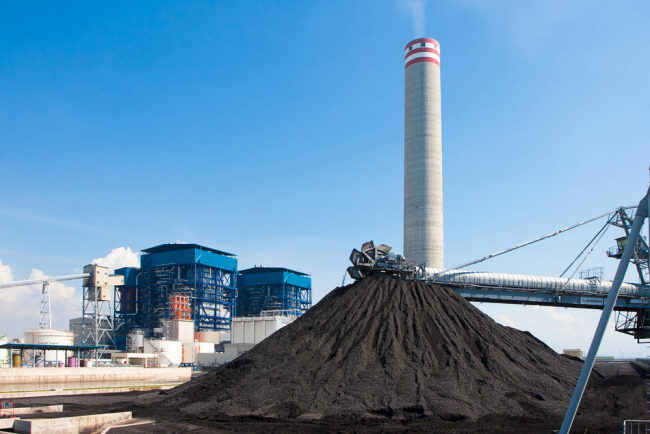
COP21 : Haro sur le charbon
Despite a landmark agreement on climate in December 2015, reducing the share of coal in the world energy mix will remain extremely difficult. This paper analyses five large consumers choices in terms of coal and clean coal technologies.
Building Bridges Conversation Series - Ireland & the Netherlands
This new episode of the Building Bridges Conversation Series is part of the "Building Bridges" project, which aims to foster debate on the future of the European Union and offer top quality analyses on how each member state perceives the EU. In this video, Vivien Pertusot, coordinator of the project, discusses with Marie Cross from the Institute of International and European Affairs (Ireland) and Adriaan Schout from Clingendael (the Netherlands).
Building Bridges Conversation Series - Luxembourg & Spain
This new episode of the Building Bridges Conversation Series is part of the "Building Bridges" project, which aims to foster debate on the future of the European Union and offer top quality analyses on how each member state perceives the EU. In this video, Vivien Pertusot, coordinator of the project, discusses with Guido Lessing from the Centre d’études et de recherches européennes (Luxembourg) and Charles Powell from Real Instituto Elcano (Spain).
Building Bridges Conversation Series - Bulgaria & Denmark
This new episode of the Building Bridges Conversation Series is part of the "Building Bridges" project, which aims to foster debate on the future of the European Union and offer top quality analyses on how each member state perceives the EU. In this video, Vivien Pertusot, coordinator of the project, discusses with Maja Kluger Rasmussen from Think Europa (Denmark) and Antoinette Primatarova from the Centre for Liberal Strategies (Bulgaria).
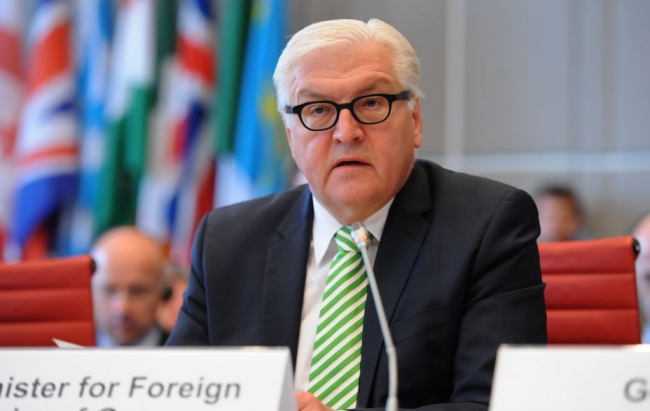
The German OSCE Chairmanship in 2016: Towards a renewed dialogue with Russia?
The Organization for Security and Cooperation in Europe (OSCE) represents the perfect framework for discussion of pan-European security issues thanks to its unique composition - fifty-seven member states of the Euro-Atlantic sphere, including the United States and Russia. The OSCE remains indeed one of the few forums of institutionalized dialogue between Western countries and Moscow and the only one to also include Washington.
Defending Europe? A stocktaking of French and German Visions for European Defense
The aim of this study consists of taking stock of strategic thinking in France and Germany. More concretely, it intends to identify compatible and incompatible aspects, as well as the potential for compromise, in these national considerations on the future of CSDP and NATO. In so doing, it concentrates on five issues: strategic visions, threat perception and military doctrine; the institutional framework for European defense; military interventions; capabilities as well as the industrial dimension.
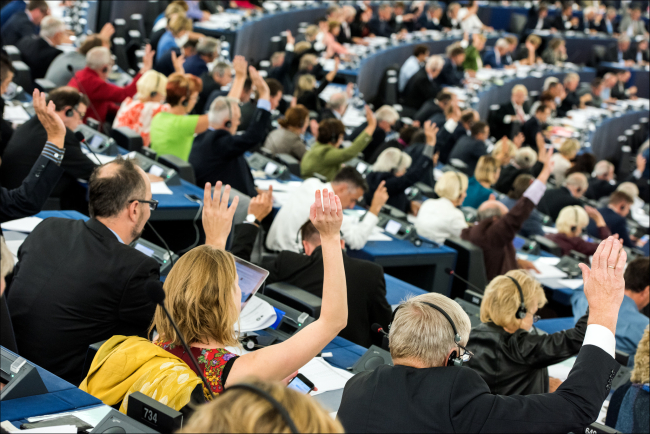
EU Reform: Mapping out a state of flux
“EU Reform” is widely discussed across Europe but rarely defined. This report analyses how the 28 member states of the European Union understand “EU reform” and provides an insight into how their views might play out in debates on the future of the EU as well as on day-to-day politics.
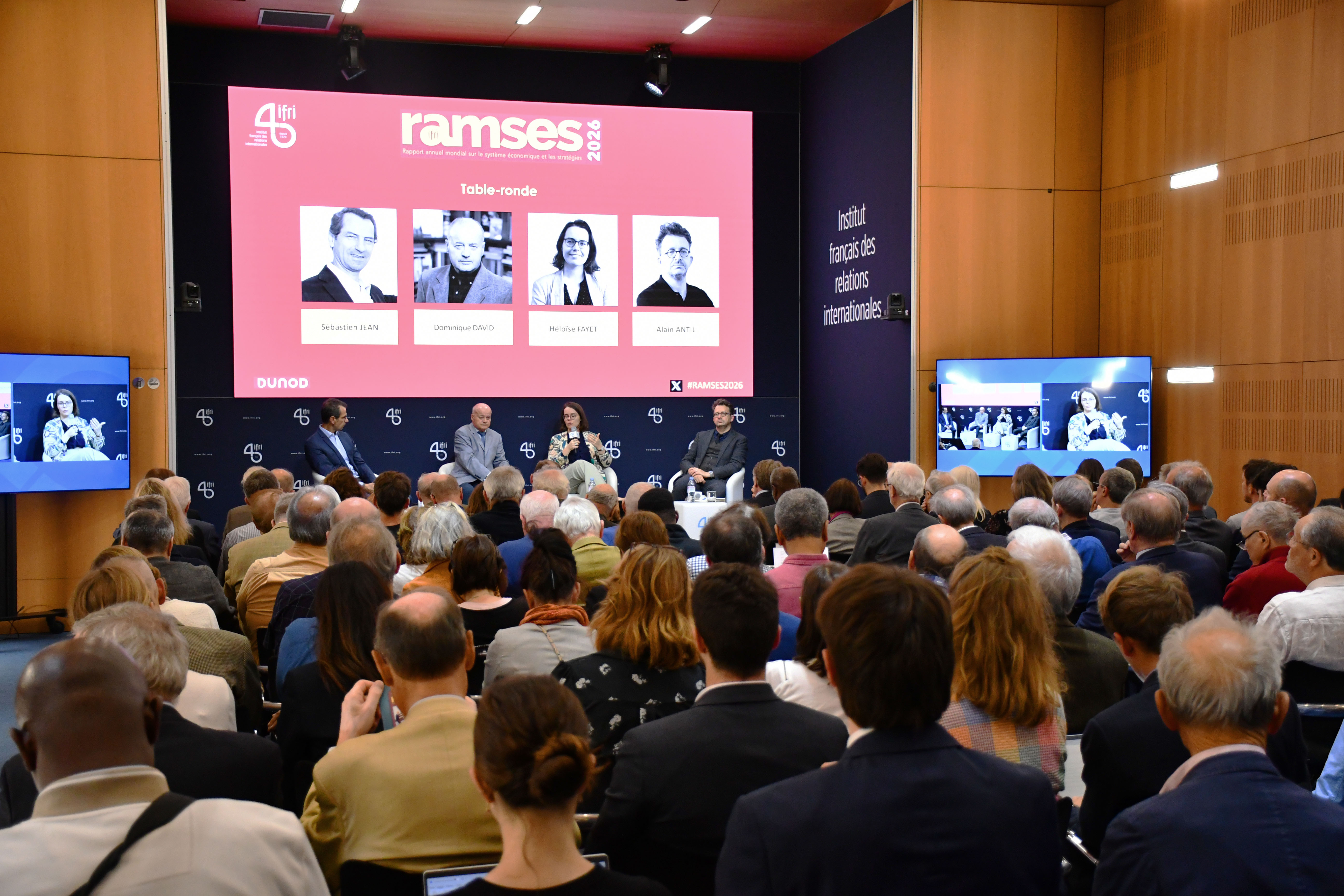
RAMSES 2016. Climat : une nouvelle chance ?
Written by Ifri's research team and its network of associates, the new RAMSES 2016 analyses geopolitics on a worldwide scale. The major theme of this 34th edition is Climate: A new chance? In addition, RAMSES 2016 tackles the insertion of Africa in globalization and the uncertainties of democracy today in post-industrial societies, but also in the South.
Building Bridges Conversation Series - Slovakia & Poland
This first episode of the Building Bridges Conversation Series is part of the "Building Bridges" project, which aims to foster debate on the future of the European Union and offer top quality analyses on how each member state perceives the EU. In this video, Vivien Pertusot, coordinator of the project discusses with Ana Benje from Comenius University (Slovakia) and Nathan Dufour from PISM (Poland).
Electric Networks and Energy Transition in Europe
After a century of close development between power generation facilities and networks, the liberalisation of the electricity sector has broken this link in Europe. Long-distance transmission networks now play a key role in stimulating competition between generators by giving consumers access to remote power generation facilities.
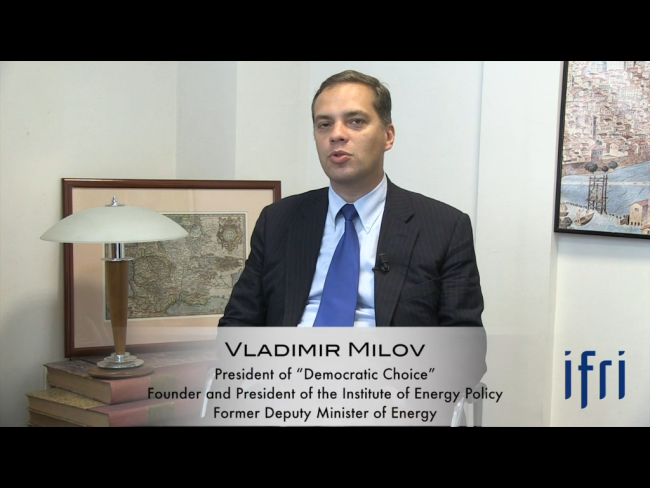
"Russia New Energy Alliances: Mythology versus Reality", Interview with Vladimir MILOV
"Past year has been marked not only with the Ukrainian crisis and unprecedented tensions in political relations between Russia and the West, but also with somewhat radical change of Moscow’s approach to international energy affairs. Widely promoted new energy partnerships with countries like China and Turkey were supposed to demonstrate that Russia has a choice of alternatives for mass-scale international energy cooperation, as compared to previous domination of European dimension, and if West wishes to cut ties with the Kremlin, Russia has somewhere else to go.
Does Russia really have an option of developing new international energy partnerships comparable in scale and significance to those with Europe as the consumer of energy, and with Western IOCs as key agents helping to secure further exploration and development of Russian oil & gas resources?"
European Defence: Minilateralism is not the enemy
To access the whole publication, please click on this link.
Ifri, a foundation recognized as being of public utility, relies largely on private donors – companies and individuals – to guarantee its sustainability and intellectual independence. Through their funding, donors help maintain the Institute's position among the world's leading think tanks. By benefiting from an internationally recognized network and expertise, donors refine their understanding of geopolitical risk and its consequences on global politics and the economy. In 2026, Ifri partners with over 90 French and international companies and organizations.