Macron, Diplomat: A New French Foreign Policy?
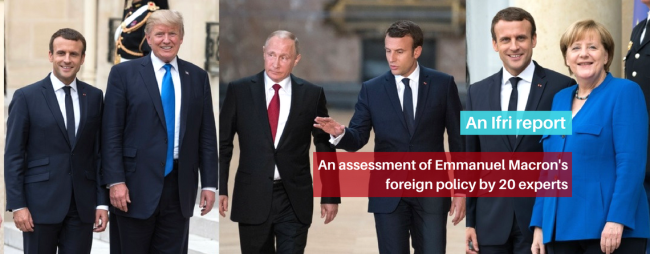
How can we define Emmanuel Macron’s foreign policy since he took office? After Nicolas Sarkozy’s brazen style of “gutsy diplomacy” and François Hollande’s “normal diplomacy”, the eighth president of the Fifth Republic seems to have opted for an agile classicism. In substance, he makes no claim to any radical break with the past, but sees his approach as being in line with historical tradition.
Washington Should Help Europe Achieve 'Strategic Autonomy', Not Fight It
In 2016, the European Union issued its Global Strategy, the Union’s latest foreign and security policy strategy document. The strategy “nurtures the ambition of strategic autonomy for the European Union”. American policymakers’ feelings about these aspirations are, to say the least, mixed. Several U.S. officials have expressed fear that a strategically autonomous Europe would be detrimental to the transatlantic alliance.
Bad cop, Bad cop : la nomination de Mike Pompeo et John Bolton
Benjamin Haddad, a Research Fellow at the Hudson Institute in Washington D.C., reviews Mike Pompeo's appointment as the new U.S. Secretary of State and John Bolton's recent nomination as National Security Advisor. According to Haddad, U.S. President Donald Trump has appointed two lawyers known for their hawkish and interventionist stands on foreign policy and security matters. He thus explains what official policies are to be expected on Iran, North Korea and Russia.
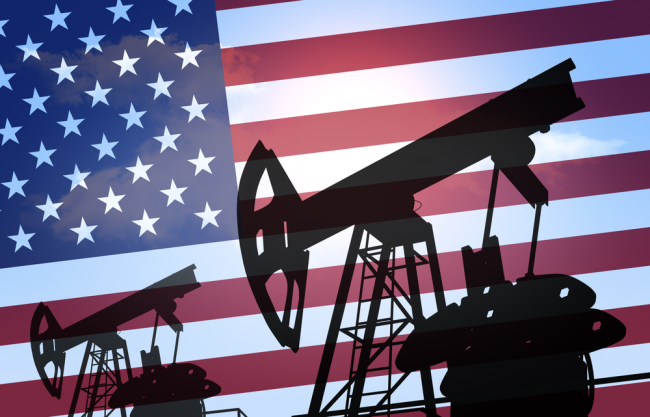
Trump's Tax Reform and Trade Policy: Renewables Spared, Oil Industry Wins
The energy sector is one where the break between the Trump and Obama administrations is the most pronounced. The three officials in charge, Rick Perry at the Department of Energy (DoE), Scott Pruitt at the Environmental Protection Agency (EPA) and Ryan Zinke at the head of the Department of the Interior (DoI), share the same indifference to the issue of climate change, the same will to encourage oil and gas production in the USA in order to bring an era of American “energy dominance”, the same desire to promote the extraction of “beautiful, clean coal”, to paraphrase President Trumps’s State of the Union address, and the same deep mistrust of renewable energies such as wind and solar.
Comply or die ? Les entreprises face à l’exigence de conformité venue des États-Unis
The United States has developed a vast body of legal regulations with extraterritorial application in order to tackle corruption on the international stage and to pursue companies that do not abide by the trade embargoes demanded by U.S. foreign policy.

US Foreign Policy: Mr. Trump's Foreboding Vision
Since Donald Trump’s rise to power, American foreign policy has become more unpredictable. Nonetheless, several coherent strategies stand out, in particular those that advocate a nationalist approach. An examination of Trump’s entourage also reveals some more conventional figures, who may exert some degree of influence. However, there may yet be surprises to come.
American primacy
There are two main reasons the United States will maintain its primacy on the world stage. The first is that, in a world of weak or broken identities, theirs remains strong, despite racial tensions and the growth of social inequality. The US is a land of immigrants, who swept the plate clean – almost – of its indigenous populations.
Saving Transatlantic Cooperation and the Iran Nuclear Deal. A View from Europe and the United States
Transatlantic differences over the future of the Iran nuclear deal – or the Joint Comprehensive Plan of Action (JCPOA) of July 2015 – are damaging a nuclear accord that all parties, except the United States, see as delivering on its purpose. They also increase the risk of Washington and European capitals working at cross-purposes vis-à-vis Iran and broader regional policies. To avoid such a scenario, the E3 (France, Germany, United Kingdom)/European Union (EU) and the United States need to set up new channels of communication to avoid a transatlantic rift, to attempt – if at all possible – to preserve the Iran deal, and to secure its benefits for regional and global security.
The legalization of cannabis in the United States, the examples of Colorado and Washington State
The use of recreational cannabis became legal in the States of Colorado and Washington in January and July 2014 respectively. The regulations, based on the examples of the tobacco and alcohol markets, intend to tackle the black market and to protect minors more efficiently. How do these two pioneering experiments inform the ongoing debate in France?

Cybersecurity in the Energy Sector: a Comparative Analysis between Europe and the United States
The acceleration of the digitization of energy infrastructure has brought many economic benefits, including greater efficiency in the rationalization of energy consumption. However, this has also increased the risk of cyberattacks, where malicious software is able to take advantage of the increasing digitization of energy equipment.
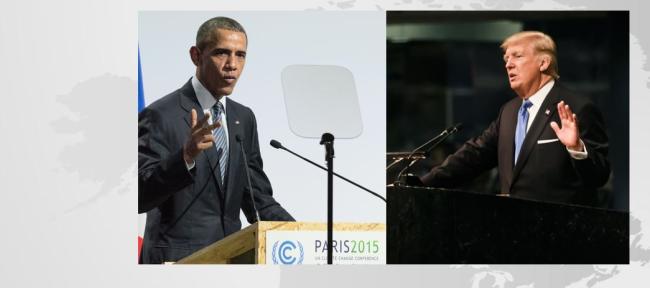
US Energy and Environmental Policies. From Obama to Trump. Continuities and Divergences
President Trump’s administration is characterized by its systematic denial and repealing of measures from his predecessor, be it in foreign policy or domestic policy. This is particularly the case for the energy and environmental policies. There is however a continuity from one administration to another: the steady rise of US hydrocarbon production and the development of the US as a global leader in oil and gas production and in the near future, their exports to global markets.
A Brave New World for Trade
The global environment for trade is undergoing significant changes. New emerging players such as China are aiming to adapt the rules and institutions inherited from the postwar Bretton Woods system.
Jeremy SHAPIRO - Trump: One Year After The Election
Has Trump changed his views of transatlantic relations? What should Europeans do? Is Trump's Russia policy dictated by the Russia probe?
Michala MARCUSSEN - Trump: One Year After The Election
Is the American economy doing well? Will the Tax Reform change this? How could the bond markets evolve in 2018?
Jeffrey GOLDBERG - Trump: One Year After The Election
3 questions to Jeffrey GOLDBERG, Editor in Chief, The Atlantic
Karlyn BOWMAN - Trump: One Year After The Election
3 questions to Karlyn BOWMAN, Senior Fellow, American Entreprise Institute
Russia's election interference has undermined American democracy
In January 2017, U.S. intelligence agencies confirmed that Russia had indeed attempted to interfere with the 2016 U.S. election campaign. This effort took two forms: on the one hand, beginning in the Summer of 2016, the hacking and publication of the Democratic National Committee (DNC) emails, in order to hurt the Democratic candidacy; and on the other hand, an aggressive communication campaign aimed at disrupting the electoral process in favor of Donald Trump.
Saving the Liberal Order from Itself
The election of Donald Trump is a symptom of a general crisis in international liberal order.

International Order and Trump’s America
Donald Trump is disrupting the established world order. But, despite his provocative declarations, is he really looking to challenge it?
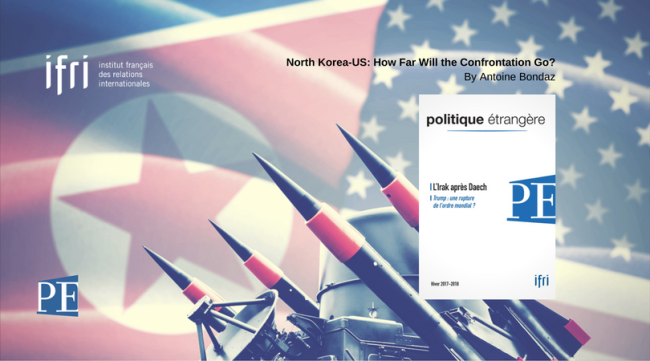
North Korea-US: How Far Will the Confrontation Go?
Since Kim Jong-Un came to power, the North Korean regime has significantly strengthened its nuclear and ballistic capabilities.
Ifri, a foundation recognized as being of public utility, relies largely on private donors – companies and individuals – to guarantee its sustainability and intellectual independence. Through their funding, donors help maintain the Institute's position among the world's leading think tanks. By benefiting from an internationally recognized network and expertise, donors refine their understanding of geopolitical risk and its consequences on global politics and the economy. In 2026, Ifri partners with over 90 French and international companies and organizations.