
Replay - The Future European Space Law: a New Model of Development?
Replay of the conference from Ifri's Space Program, December 16, 2024.

Taiwan’s Rising Space Program: Building Up Industry, Supporting National Security
Taiwan, known for its leadership in semiconductors and information and communications technology (ICT), is now making significant strides in the space industry. While historically modest, Taiwan’s space program has seen a transformation since 2020, driven by President Tsai Ing-wen’s commitment to expanding the country’s space capabilities. Key milestones include the passage of the Space Development Act and the creation of the Taiwan Space Agency (TASA), which has bolstered the resources and visibility of Taiwan’s space ambitions.

Sat-to-Cell: Towards Universal Connectivity?
Sat-to-Cell is a new type of service that connects smartphones directly to satellites. It has recently enabled innovative applications such as emergency text messaging via satellite. The technology is developing rapidly, and many questions are now being raised about its potential impact.


China seeks its own Apollo moment – and more
On April 25, a Long March 2F rocket briefly lit up the dark desert sky above Jiuquan Spaceport in northwest China, carrying three Shenzhou-18 astronauts to the Tiangong space station. Such missions, including crew handovers, have become remarkably routine for China.
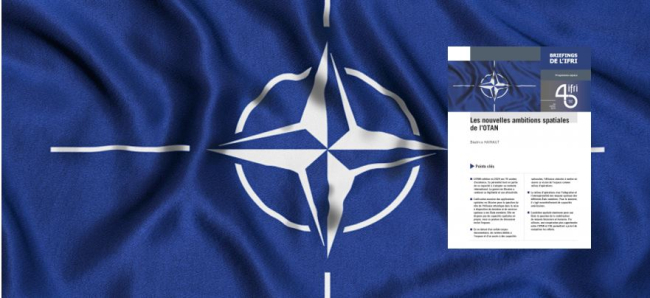
NATO's New Ambitions for Space
Ahead of Russia's invasion of Ukraine, a devastating cyber attack targets Ukrainian army communications, exposing Western dependence and vulnerability to space technologies, and calling NATO's defensive posture into question.
China adds new moon base project partners, but struggles to attract national-level participation
China continues to add new members to its International Lunar Research Station initiative, but many of these are subnational, suggesting issues attracting partners.

China in International Space Cooperation: Heading South
In only three decades, China has become one of the world’s top space powers. At the turn of the 2020s, almost suddenly, China became the main challenger to the US, although with a significant remaining gap to bridge.
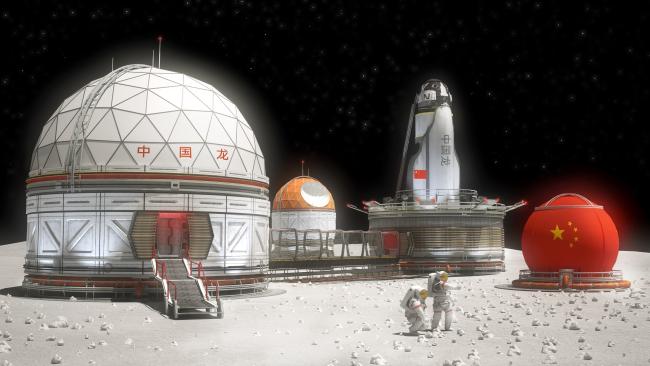
Racing to the Moon: China's Lunar exploration program in competition with the United States
A new Cold War-style race to the moon seems to be in the making. The People’s Republic of China and the United States are both investing in moon exploration with manned lunar scientific stations as the ultimate goal.

Ethics and Responsibility in Space Exploration: The Rise of Soft Law to Regulate New Practices
European Union: A Geopolitical Illusion?
The European Union (EU) is holding firm in the face of the war in Ukraine—perhaps better than expected. But what long-term effects will the war have on European institutions and policies? The institutions will need to be changed to cope with the forthcoming expansions. The EU has certainly made progress toward common industrial and technological policies. But will this dynamic do away with a conception of strategic autonomy, encompassing both diplomacy and strategy? The European Union, which will undoubtedly be a key mover of future changes for the continent, remains largely uncertain in terms of its future configurations.
Europe's Space Sector: Caught in a Strategic Stranglehold
Europe's space sector is currently faced with great difficulties, marked by the temporary loss of autonomous access to space, strong competition from the USA, and the transformation of the satellite market.
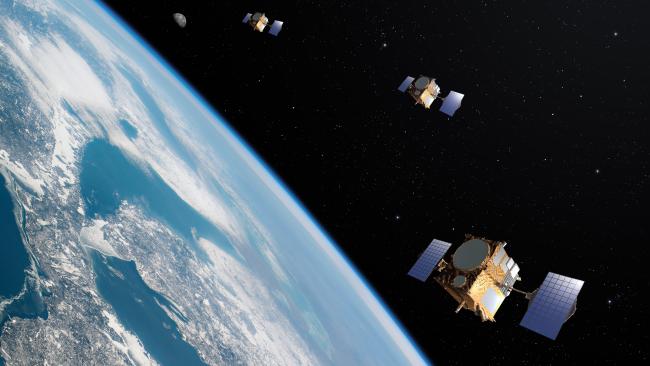
China in the Race to Low Earth Orbit: Perspectives on the Future Internet Constellation Guowang
In April 2021, the Chinese government officially, but rather quietly, established a new state-owned enterprise (SOE) named China SatNet. Its mission: build out China’s “mega-constellation” program for low Earth orbiting internet satellites, known as Guowang (“national network”).
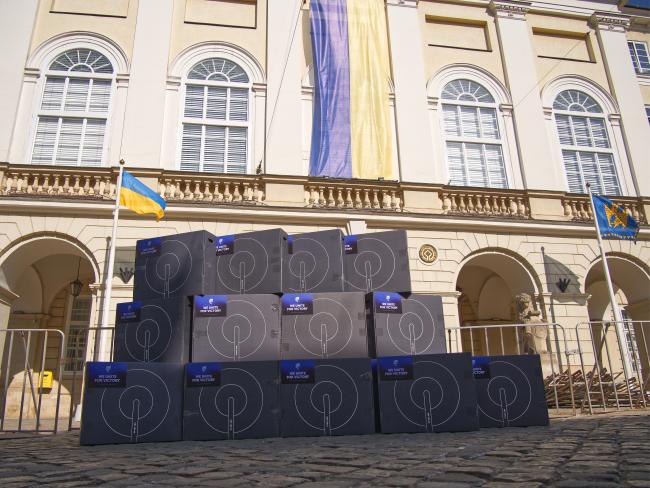
How the War in Ukraine is Changing the Space Game
The war in Ukraine has become a showcase for the new commercial paradigm emerging in the space sector (New Space). As such, it seems to confirm the relevance of adaptation efforts led by the United States – more specifically the Pentagon – since the mid-2010s.
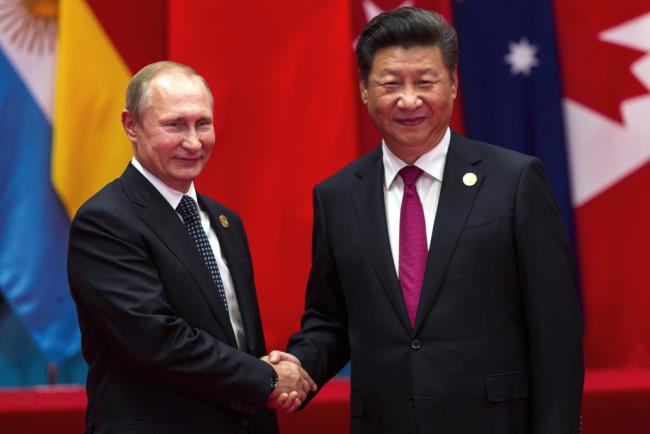
China-Russia Cooperation in Space: The Reality behind the Speeches
China-Russia cooperation in space has been increasing for the past two decades. This cooperation accelerated after the Crimea crisis in 2014 and culminated with the announcement in 2021 of the joint construction of the International Lunar Research Station (ILRS).

China's Quantum Dream: A Giant's Aspirations in the Infinitely Small
Quantum physics, a field little known to the general public and relatively difficult to grasp as its laws are counter-intuitive, constitutes nevertheless a critical field of international strategic competition.
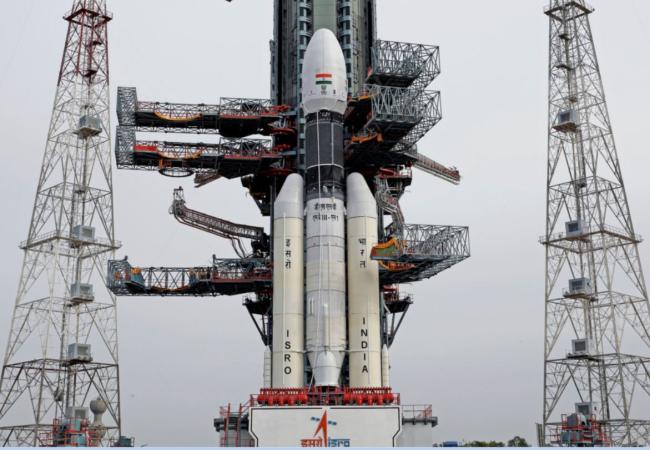
Indian Space Program and its Drivers: Possible Implications for the Global Space Market
India has one of the oldest space programs in the world with space playing a critical role in India’s national development and external power projection capability.
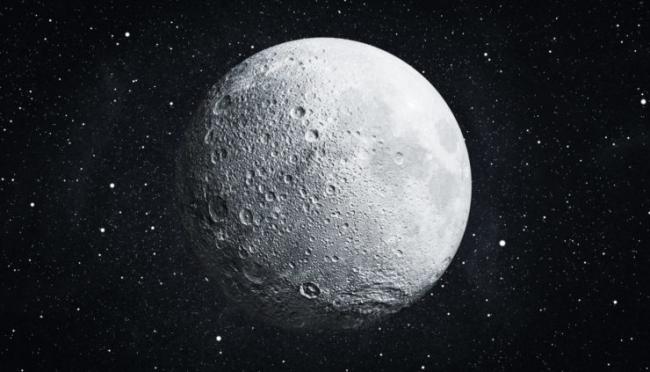
Helium‑3 from the lunar surface for nuclear fusion?
Since 1969, the return of a human mission to the Moon has never seemed so close. Although scientific interest continued to flourish, space programmes had for many decades abandoned it in favour of the International Space Station and missions to explore the solar system.

China Space Station First Step in Country's Plans to Colonize Space
China's far-reaching ambition for a permanent presence in outer space began in earnest on Thursday with the launch of its first crew bound for a new space station.
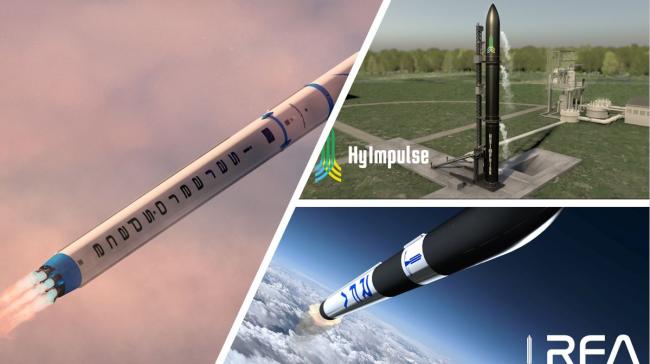
Commercial Space in Europe: A Balancing Act between Physics, Politics and Profession
Satellite constellations have become core elements of the digital transition. Over the next decade, several thousand satellites will have to be launched, to build these constellations. For positioning satellites, preferably in Low Earth Orbit (LEO), reliable and affordable launch services are essential.

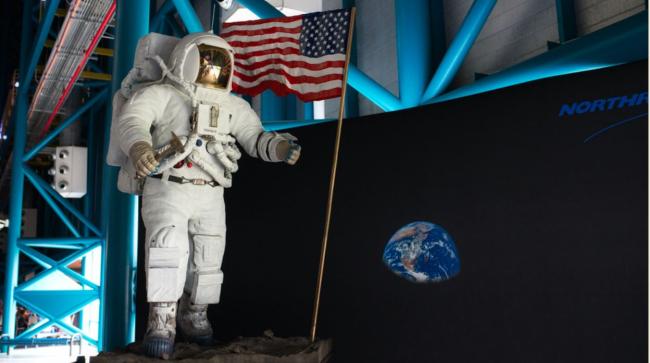
Destination Moon: is it time for us to send astronauts back?
The series For All Mankind (2019) is a fictional alternate history that imagines a world where the Soviet Union was the first power to send an astronaut to the moon. From that starting point, the two rival superpowers compete to establish their own lunar station.
Taiwan’s Rising Space Program: Building Up Industry, Supporting National Security
Taiwan, known for its leadership in semiconductors and information and communications technology (ICT), is now making significant strides in the space industry. While historically modest, Taiwan’s space program has seen a transformation since 2020, driven by President Tsai Ing-wen’s commitment to expanding the country’s space capabilities. Key milestones include the passage of the Space Development Act and the creation of the Taiwan Space Agency (TASA), which has bolstered the resources and visibility of Taiwan’s space ambitions.
Sat-to-Cell: Towards Universal Connectivity?
Sat-to-Cell is a new type of service that connects smartphones directly to satellites. It has recently enabled innovative applications such as emergency text messaging via satellite. The technology is developing rapidly, and many questions are now being raised about its potential impact.
China in International Space Cooperation: Heading South
In only three decades, China has become one of the world’s top space powers. At the turn of the 2020s, almost suddenly, China became the main challenger to the US, although with a significant remaining gap to bridge.
China-Russia Cooperation in Space: The Reality behind the Speeches
China-Russia cooperation in space has been increasing for the past two decades. This cooperation accelerated after the Crimea crisis in 2014 and culminated with the announcement in 2021 of the joint construction of the International Lunar Research Station (ILRS).
Indian Space Program and its Drivers: Possible Implications for the Global Space Market
India has one of the oldest space programs in the world with space playing a critical role in India’s national development and external power projection capability.
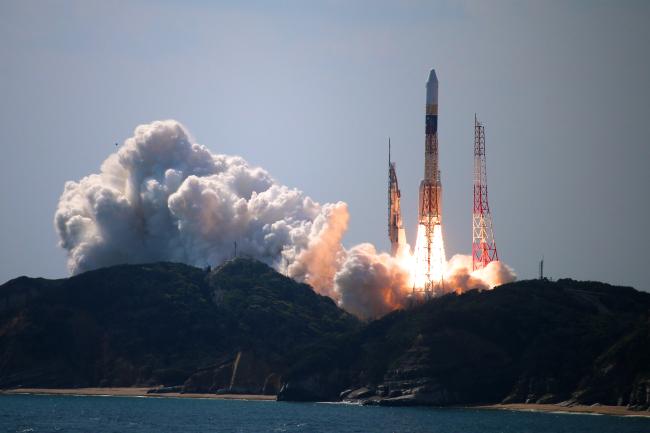
Japan’s Space Program: Shifting Away from “Non-Offensive” Purposes?
Japan’s space program has evolved greatly since the end of the Cold War, driven by a rapidly changing geopolitical environment and tailored by the emergence of an “intra-alliance hedging strategy”.
India’s Space Program - International Competition and Evolution
India’s space program has grown and evolved significantly in the last five decades. The program originally focused on developing space assets that provided direct developmental benefits, for example telecommunications and remote sensing satellites that helped both in improving communication facilities and giving direct assistance to India’s farmers. But over time, India has shifted a part of its focus towards space exploration and other high-profile missions that do not have as clear a developmental purpose as earlier. This includes, for example, India’s Mars and Moon exploratory missions. Overall, India has been fairly successful in these efforts and its space program has become a comprehensive one that includes not only a robust launch capacity and very large remote sensing satellite systems, but also a very well rounded scientific and deep space exploratory program.
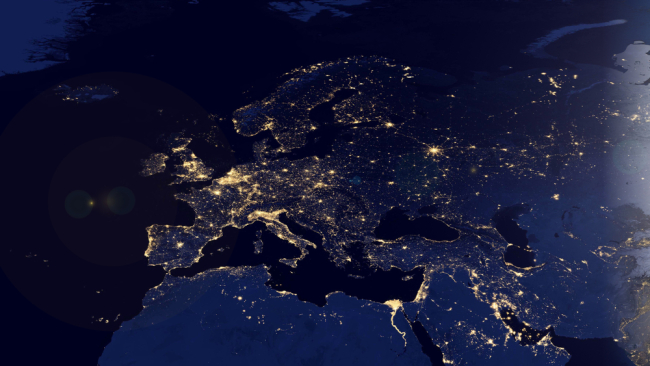
Assessing Europe's Space Dependency and Its Implications
It is a classic exercise to imagine what today’s world would be like if all satellites were shut down. The exact consequences of such a scenario, which is not unlikely given the inherent vulnerability of space systems to natural, accidental and deliberate interferences, are however difficult to appreciate, even for specialists.
Japan's New Dual-Use Space Policy: The Long Road to the 21st Century
Japan’s latest space policy is designed to support a more proactive US-Japan alliance role in containing China, and robustly defend Japan against North Korean ballistic missile threats.
Space Collaboration between India and France: Towards a New Era
In the sphere of space research, France-India collaboration began in the early 1960s, with France providing assistance to India’s Rohini sounding rockets programme. Over the years, France has played a constructive role in helping India to develop its ground and space infrastructure, as well as its launching platforms and human resources. In point of fact, France has emerged as one of India’s most dependable partner in the realm of space.
Space in a Changing Environment: a European Point of View
The development of European space activities has long been pursued under the framework of the European Space Agency and other national space agencies. More recently, the emergence of the European Union as a new actor for space has paved the way for a series of initiatives and opportunities.
Development of the Northern Sea Route: How great is the need for satellite observation?
The sea route between Europe and Asia is significantly shorter via Arctic waters than via the Suez Canal. Changes in global climate have resulted in a diminishing of ice in Arctic waters. This has resulted in the Northern Sea Route establishing itself as a viable commercial alternative, which is expected to expand in the years ahead. Satellite observation is one of the methods employed to gather information about ice conditions, weather and oil spills, and is a prerequisite for ensuring the continued development of the new traffic.
Governing the Geostationary Orbit: Orbital Slots and Spectrum Use in an Era of Interference
Outer space, particularly in the telecommunication sector, is benefiting and becoming accessible to more and more actors. But with this trend comes also a reality that is every day more compelling: no meaningful development can be achieved without a clear, stable and predictable interference-free environment for the use and control of all satellites that depend upon ready access to radio frequencies and appropriate geostationary orbital slots to function properly.
The Vegetation Programme
Under human pressure, many changes are taking place in the resources and the environment of Earth. An increasing global population fuels the need for food, natural resources and land. Consequently, the need for maintaining a capacity to observe and understand the Earth system and the biophysical processes has become a key element for the sustainable management of the planet’s natural resources. The SPOT-Vegetation instruments have significantly contributed to reach this goal.
The Lisbon Treaty and the Evolution of European Space Governance
Until the adoption of the Lisbon treaty in December 2007, there was no explicit reference to space in the EU’s constitutive documents. While the European Space Agency has been active in space since the mid-1970s, the Union’s policy remained without a legal basis for space activities. Parallel to the treaties’ evolution however, the EU’s competences never stopped expanding to new fields, bringing it ever closer to space and its various applications. Creativity and dynamic uses of these existing competences have allowed the EU to progressively interfere with the space sector and to get closer to ESA.
Launcher policy in Europe: from symbol to the market?
Launcher policy will be one of the major issues discussed at the upcoming ESA Council at Ministerial Level. Europe is at the crossroads, as it needs to find the adequate balance between political necessities (ensuring an autonomous access to space) and economic realities (reducing costs).
2012, a turning point for Europe in space
In 2012, several crucial decisions lie ahead, most notably at the ESA Ministerial Council next fall and regarding the status of space within the next MFF of the EU. These will reveal the degree of political will to pursue an ambitious ESP in times of economic and financial constraint.
Key Trends in the European Earth Observation Sector
An ambitious Earth Observation (EO) policy could bring significant benefits to Europe both regarding the fight against climate change and the competitiveness of its EO industry and service sectors.
Space Weather and NEOs in the European Space Policy
Although often overshadowed by a focus on security concerns, Space weather and NEOs are important elements of Europe’s SSA program.
The Use of Space for Maritime Security in Europe
The EU is currently developing a Maritime Security Strategy. Space should be integrated in that effort, given its potential for maritime surveillance.
China seeks its own Apollo moment – and more
On April 25, a Long March 2F rocket briefly lit up the dark desert sky above Jiuquan Spaceport in northwest China, carrying three Shenzhou-18 astronauts to the Tiangong space station. Such missions, including crew handovers, have become remarkably routine for China.
China adds new moon base project partners, but struggles to attract national-level participation
China continues to add new members to its International Lunar Research Station initiative, but many of these are subnational, suggesting issues attracting partners.
Helium‑3 from the lunar surface for nuclear fusion?
Since 1969, the return of a human mission to the Moon has never seemed so close. Although scientific interest continued to flourish, space programmes had for many decades abandoned it in favour of the International Space Station and missions to explore the solar system.
China Space Station First Step in Country's Plans to Colonize Space
China's far-reaching ambition for a permanent presence in outer space began in earnest on Thursday with the launch of its first crew bound for a new space station.
Destination Moon: is it time for us to send astronauts back?
The series For All Mankind (2019) is a fictional alternate history that imagines a world where the Soviet Union was the first power to send an astronaut to the moon. From that starting point, the two rival superpowers compete to establish their own lunar station.
Replay - The Future European Space Law: a New Model of Development?
Replay of the conference from Ifri's Space Program, December 16, 2024.
Ifri, a foundation recognized as being of public utility, relies largely on private donors – companies and individuals – to guarantee its sustainability and intellectual independence. Through their funding, donors help maintain the Institute's position among the world's leading think tanks. By benefiting from an internationally recognized network and expertise, donors refine their understanding of geopolitical risk and its consequences on global politics and the economy. In 2026, Ifri partners with over 90 French and international companies and organizations.