




Catching Up or Staying Ahead. Japanese Investment in the Mekong Region and the China Factor
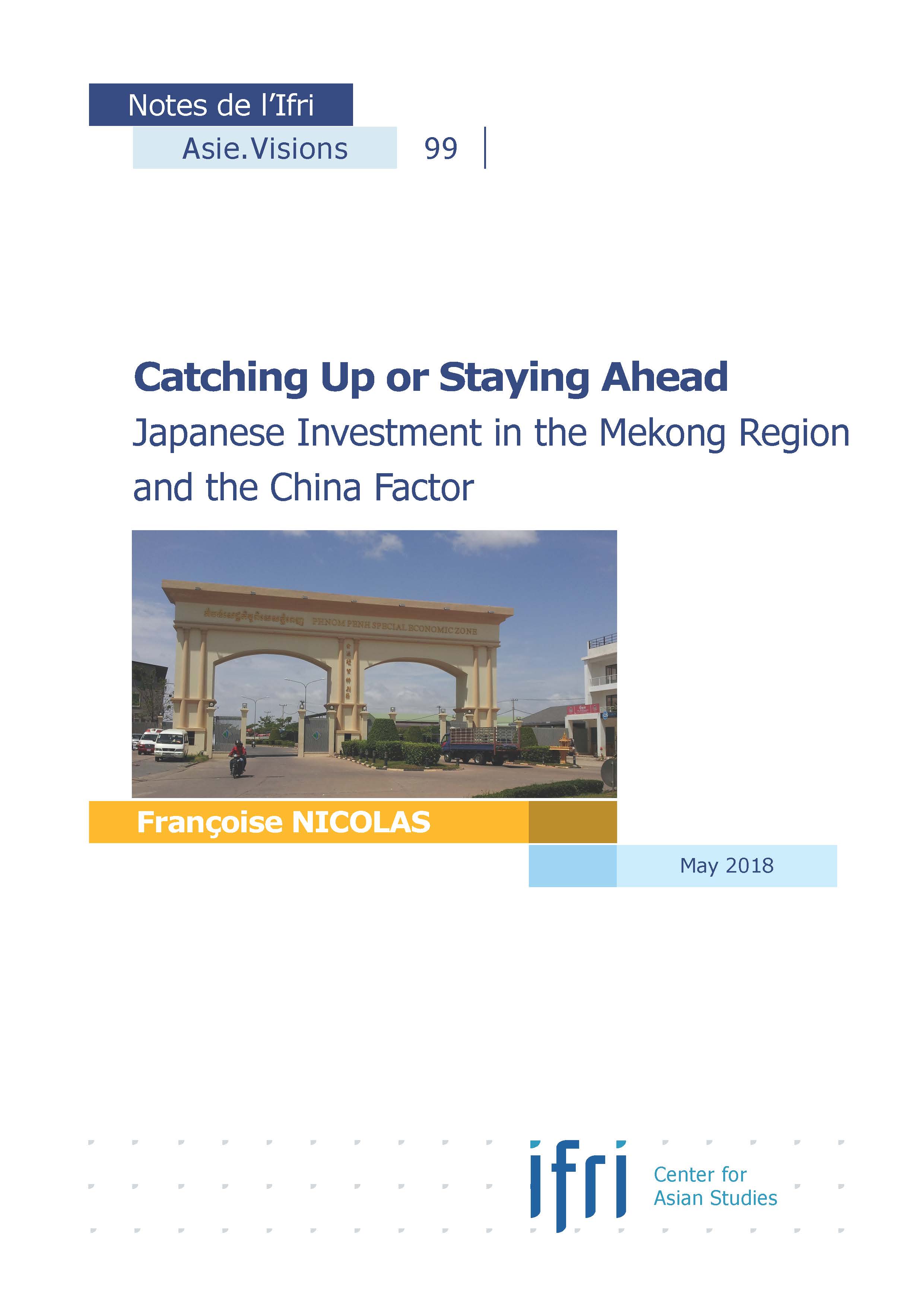
There is no denying that the Mekong region has become an economic battleground where Japan and China are competing to gain and sustain economic influence in the region.
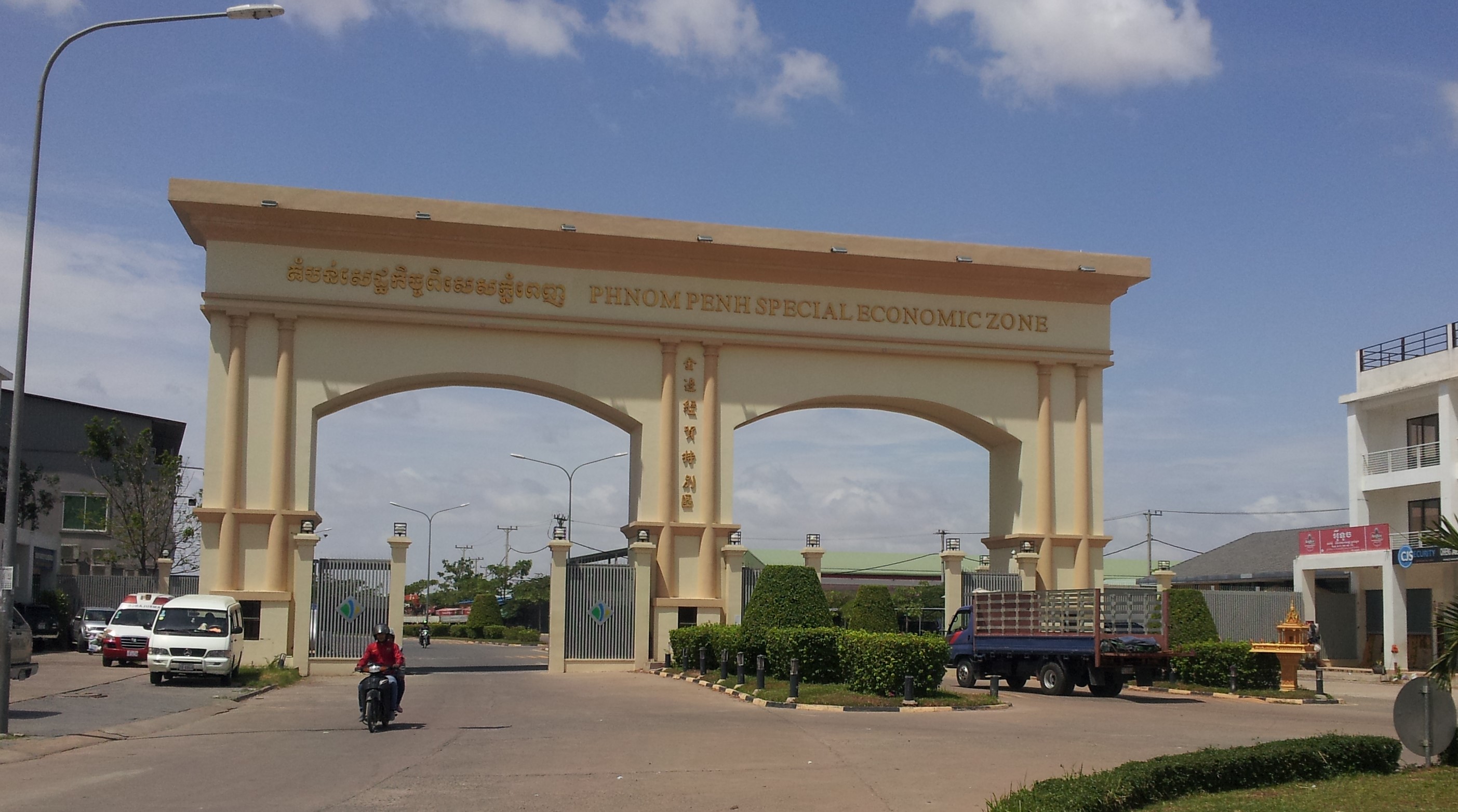
However, each country has managed overall to create or maintain its own sphere of influence in the so-called CLMV (Cambodia, Laos, Myanmar and Vietnam) thus reducing the risk of direct head-to-head competition. Even within one single country, Japan and China tend to be involved in different areas, in different types of activities and through different instruments, thus avoiding real confrontation. Japanese investment in the CLMV exhibit a number of characteristics that set it apart from Chinese investment.
First, a major feature of Japanese investment in the CLMV is its concentration in Special Economic Zones. Secondly, in addition to cheap labor, some Japanese firms also seek to make the best of Cambodia’s and Lao’s proximity to Thailand, following the so-called Thailand+1 strategy, and transferring the most labor-intensive part of their production process to countries where labor is much cheaper than in Thailand. Indeed, as the historical basis of production for Japanese companies, Thailand lies at the heart of vertically integrated regional production networks. Thirdly, Cambodia, Lao PDR, Myanmar and Vietnam are not exclusively perceived by Japanese investors as potential sources of cheap labor. Due to the rise in their GDP per head over the past few years, they are also increasingly perceived as potential markets.
Infrastructure development is arguably the area where competition, between Japan and China is most direct in the Mekong region. Japanese companies and government agencies have had a long head start in infrastructure investment in the region. In particular, ODA-backed infrastructure clearly helped Japanese manufacturing companies to construct production networks on the basis of division of labor among different countries.
In an effort to better connect its southern provinces to the Mekong region, which constitutes a natural backyard, China has also recently engaged in infrastructure investment, and even more so over the past few years in the context of the recently launched Belt and Road Initiative (BRI). As a result, the Mekong region has become a battleground between the two big regional powers.
Behind economics, however, the two countries are also competing for political influence, and their commitment to development promotion, and in particular to infrastructure development, may be instrumentalized with strategic objectives in mind. While Japan’s interest in assisting infrastructure development in the region is nothing new, the country’s approach has apparently changed under China’s pressure and has become more “strategic” and to a large extent “politicized”. This is perhaps where the impact of the China factor has been the largest on Japan’s stance vis-à-vis the region.
Web interactive version of the report (click here to access the whole presentation)
This page contains only a summary of our work. If you would like to have access to all the information from our research on the subject, you can download the full version in PDF format.
Catching Up or Staying Ahead. Japanese Investment in the Mekong Region and the China Factor




Center for Asian Studies
Asia is a nerve center for multiple global economic, political and security challenges. The Center for Asian Studies provides documented expertise and a platform for discussion on Asian issues to accompany decision makers and explain and contextualize developments in the region for the sake of a larger public dialogue.
The Center's research is organized along two major axes: relations between Asia's major powers and the rest of the world; and internal economic and social dynamics of Asian countries. The Center's research focuses primarily on China, Japan, India, Taiwan and the Indo-Pacific, but also covers Southeast Asia, the Korean peninsula and the Pacific Islands.
The Centre for Asian Studies maintains close institutional links with counterpart research institutes in Europe and Asia, and its researchers regularly carry out fieldwork in the region.
The Center organizes closed-door roundtables, expert-level seminars and a number of public events, including an Annual Conference, that welcome experts from Asia, Europe and the United States. The work of Center’s researchers, as well as that of their partners, is regularly published in the Center’s electronic journal Asie.Visions.
Japan’s Energy Policy after Hormuz. Security, Competitiveness, and Decarbonization
The 2026 Hormuz crisis has strengthened rather than weakened the rationale for Japan’s decarbonization strategy, contrary to what might have been expected. Rather than energy policy supplanting climate policy, the two should actually be viewed as inseparable.

Japan and Nuclear Weapons: Between Extended Deterrence and Normative Dilemmas
Since the late 1950s, Japan’s nuclear weapons policy has been based on the coexistence of two competing normative rationales: the rejection of nuclear weapons, rooted in the legacy of Hiroshima and Nagasaki, and the recognition of the central role of US extended nuclear deterrence for Japan’s security.
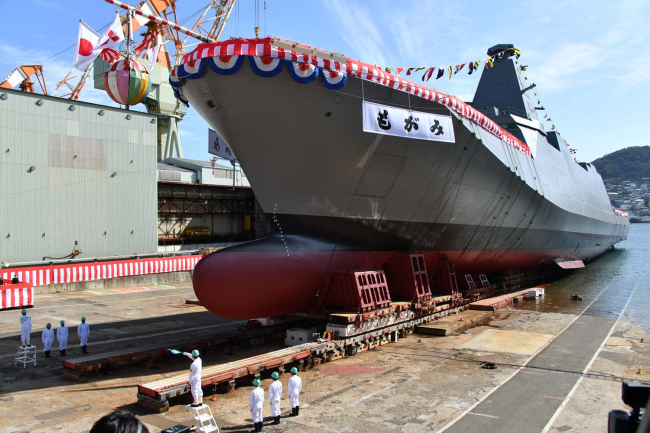
Japan’s Defense Industry Goes Global: Ambitions and Challenges

Fragmented Europe: Dealing with China as a technology and innovation power
How is Europe navigating China’s ascension as a technological power? The latest report by the European Think-tank Network on China (ETNC) provides a nuanced account of a converging, yet still fragmented approach across 22 countries.