




German Defense Policy
How does Germany translate the change of era in the defense sector through armament policies and the defense of a force system? What are the impacts on its positioning within NATO and the CSDP (Common Security and Defence Policy)?
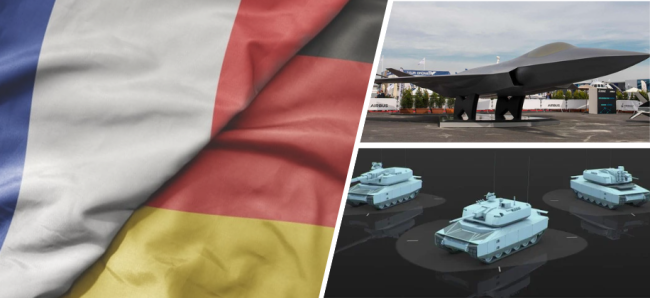
Troubled Twins: The FCAS and MGCS Weapon Systems and Franco-German Co-operation
The FCAS (Future Combat Air System) and the MGCS (Main Ground Combat System) represent the latest chapter in a more than seven decades-long history of Franco-German defense co-operation.
Zeitenwende: The Bundeswehr’s Paradigm Shift
Russia’s invasion of Ukraine on February 24, 2022, marked a turning point in German defense policy. After thirty years of military downsizing, the Bundeswehr found itself at an extremely low capability level just as a high-intensity war involving a great power was breaking out on Europe’s doorstep for the first time since 1945. Chancellor Olaf Scholz’s response was to embrace this “turning point” (Zeitenwende) by launching a major program to reequip Germany’s armed forces.
DOSSIER - 60th anniversary of the Elysée Treaty (1963) and implementation of the Treaty of Aachen (2019): where do Franco-German relations stand?
On January 23, 2023, France and Germany celebrated the 60th anniversary of the Élysée Treaty. This is an opportunity for us to analyze the state of relations between the two countries, and the contribution made by the Treaty of Aachen, which was added in 2019.
Attention to the Periphery? Germany and the Pacific Island States
In September 2020, Germany adopted policy guidelines for the Indo-Pacific that comprehensively set out its approach towards this increasingly important region, seeking to diversify partnerships beyond China.
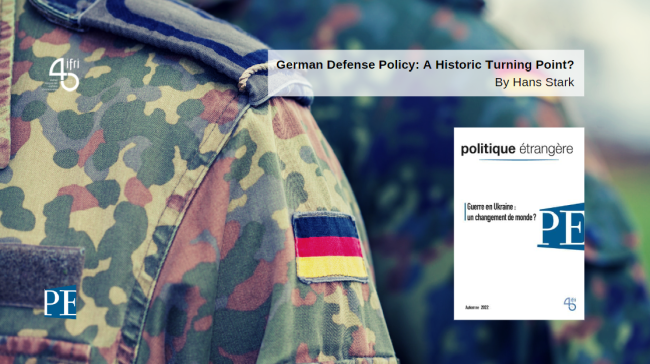
German Defense Policy: A Historic Turning Point?
The war in Ukraine has been a rude awakening for Berlin.
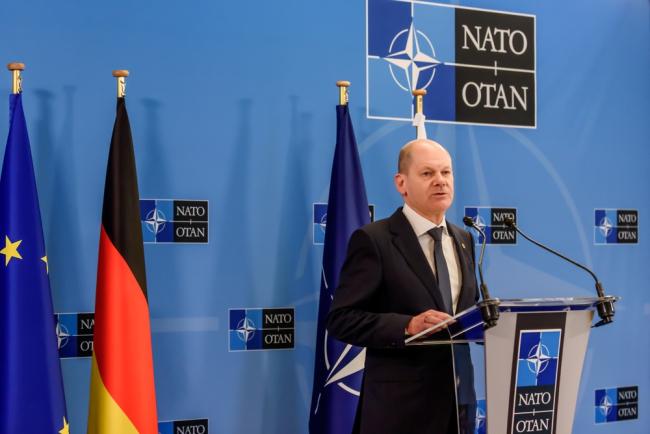
Germany, the “Zeitenwende” and the Future of NATO

An Engine Replacement Could Kill Europe’s Huge F-35 Plans
If the decision to replace the engine for the F-35A is implemented, countries flying F-35s will find themselves forced into unforeseen and overly complicated supply chains.
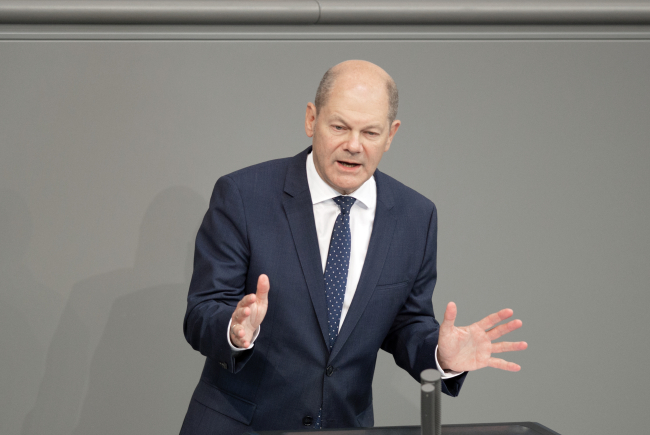
A “New Era”? Toward a Realignment of German Foreign Policy after the Russian Invasion of Ukraine
German Chancellor Olaf Scholz’s speech to the Bundestag on February 27, 2022, announced a new orientation in foreign policy and challenged the principles that had been the consensus in Germany for the past thirty years.
The State of Franco-German Relations and European Foreign Policy
The Franco-German relationship is more important than ever in order to deal with international crises and to develop a common European Foreign and Security Policy.
Advancing Europe: Green for Danger?
In France, the prospect of the Greens entering the German government this fall raises both hopes and fears.
French Complain of Germany's 'Political Infidelity'
"Thirty years of infidelity" is how France's current affairs magazine Marianne describes Germany's relationship with France. An issue this month was devoted to how Germany has been "fleecing France" for years.
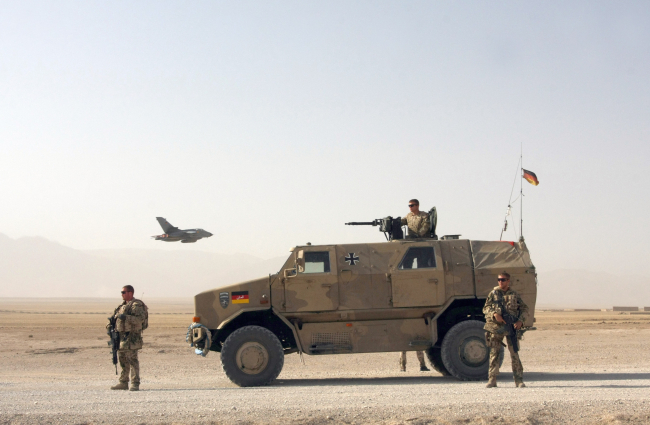
Circumstantial Pacifism: Political Parties and the Participation of the Bundeswehr in Foreign Operations
In Germany's parliamentary democracy, political parties play an important role in mandating Bundeswehr missions abroad and in overseeing their deployment. The political debate on these deployments is polarized between opponents, who are called “pacifists”, and supporters, who are called “militarists”.
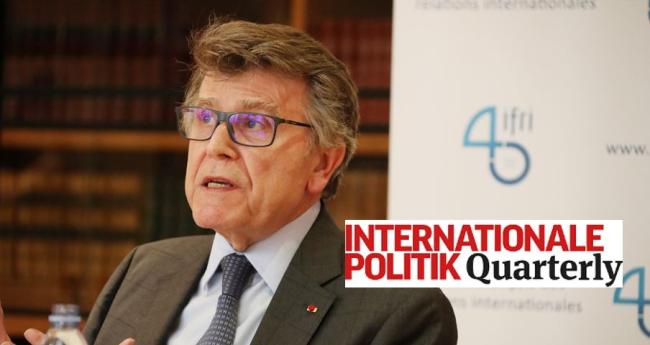
Toward a New German Foreign Policy. Stepping Into the 21st Century
To adapt its foreign policy to new challenges, Germany must overcome certain taboos inherited from its history.
Germany's Arms Export Ban Frustates European Partners
Germany's unilateral decision to halt all shipments of military equipment to Saudi Arabia has stopped 10's of billions of dollars worth of orders of joint European arms exports, bringing the question of deep arms export cooperation among European partners into high relief.
The Wider Context: Germany's Baltic Engagement, the ‘Munich Consensus’ and the Future of European Security
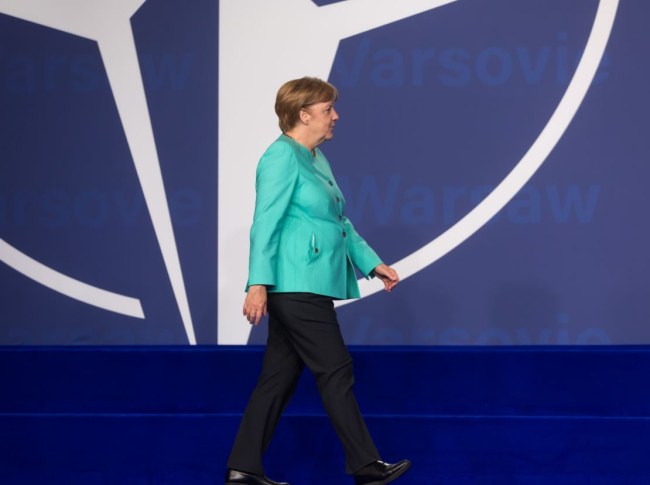
The 2016 German White Paper. The consolidation of the “Munich consensus” and persisting questions
The 2016 White Paper on security policy and the future of the Bundeswehr is testament to Berlin’s declared will to play a more active role internationally, to assume more responsibility and to provide leadership in close concertation with its partners in Europe and the world.
Between crisis and responsibility: a first assessment of the new German defense policy
Since the speeches delivered by President Joachim Gauck, Minister of Foreign Affairs Frank-Walter Steinmeier and Minister of Defence Ursula von der Leyen at the 2014 Munich Security Conference, Germany has seen a debate on new responsibilities in its foreign and security policy.

À Berlin de prouver que sa posture stratégique a vraiment changé
L'Allemagne a annoncé qu'elle allait publier en 2016 un nouveau Livre blanc sur la défense. Cet exercice pourrait illustrer que les signaux positifs, mais dispersés, lancés par l'Allemagne depuis un peu plus d'un an auguraient d'un réel changement de posture stratégique, gage d'une reprise sérieuse de la coopération franco-allemande en matière de sécurité et défense et d'un éventuel co-leadership franco-germano-polonais pour la défense européenne.
Germany: The Past that Does not Pass
Germany’s responsibility in the two global conflicts reflects, among other things, the German military’s desire to free itself from political control and the depth to which the Wehrmacht was immersed into Nazi ideology and a Nazi state whose orders it never really contested.
The German Questions in the 20th Century: Identity, Democracy ans European Equilibrium
Ifri, a foundation recognized as being of public utility, relies largely on private donors – companies and individuals – to guarantee its sustainability and intellectual independence. Through their funding, donors help maintain the Institute's position among the world's leading think tanks. By benefiting from an internationally recognized network and expertise, donors refine their understanding of geopolitical risk and its consequences on global politics and the economy. In 2026, Ifri partners with over 90 French and international companies and organizations.

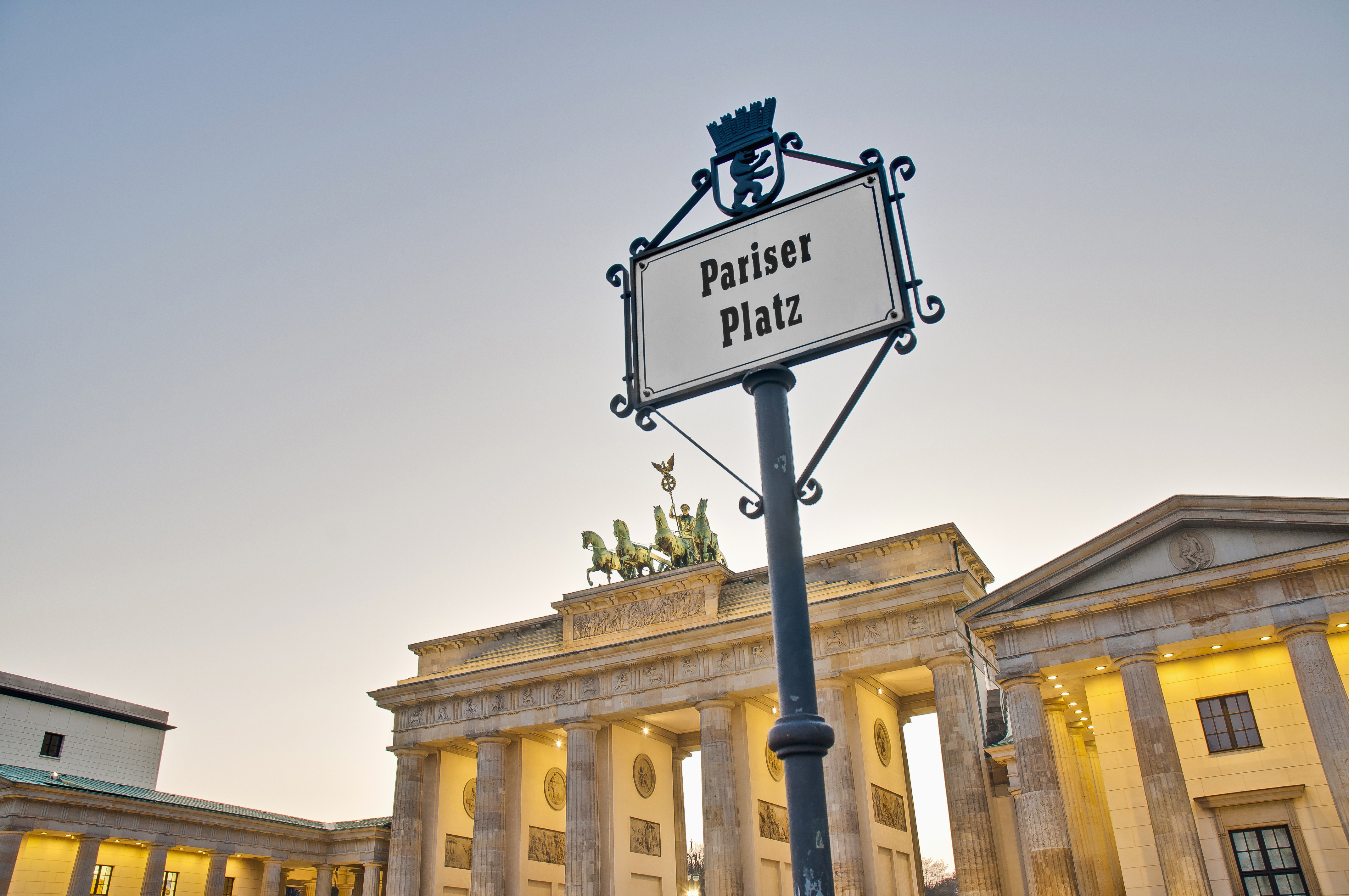
The Study Committee on Franco-German Relations (Cerfa)
The Study Committee on Franco-German Relations (Cerfa) was created in 1954 by an inter-governmental agreement between the Federal Republic of Germany and France, in order to raise awareness of Germany in France and analyze Franco-German relations, including in their European and international dimensions. In its conferences and seminars, which bring together experts, political leaders, senior decision-makers and representatives of civil society from both countries, Cerfa develops the Franco-German debate and stimulates political proposals. It regularly publishes studies through two collections: Cerfa notes and studies as well as Franco-German visions.
Cerfa maintains close relations with the network of German foundations and think tanks. In addition to its research and debate activities, Cerfa promotes the emergence of a new Franco-German generation through original cooperation programs. This is how in 2021-2022, Cerfa led a program on multilateralism with the Konrad Adenauer Foundation in Paris. This program is aimed at young professionals from both countries interested in the issues of multilateralism in the context of their activities. It covered a wide range of themes relating to multilateralism, such as international trade, health, human rights and migration, non-proliferation and disarmament. Previously, Cerfa had participated in the Franco-German future dialogue, co-led with the DGAP from 2007 to 2020, and supported by the Robert Bosch Foundation and the Daniel Vernet group (formerly the Franco-German Reflection Group) which was founded in 2014 upon the initiative of the Genshagen Foundation.