


German Foreign Policy
Faced with a fragmentation of the established order and an increasing number of crises, Germany is tending to reassess its position in a changing world.
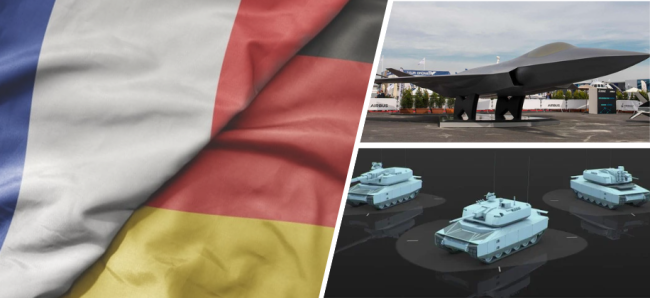
Troubled Twins: The FCAS and MGCS Weapon Systems and Franco-German Co-operation
The FCAS (Future Combat Air System) and the MGCS (Main Ground Combat System) represent the latest chapter in a more than seven decades-long history of Franco-German defense co-operation.
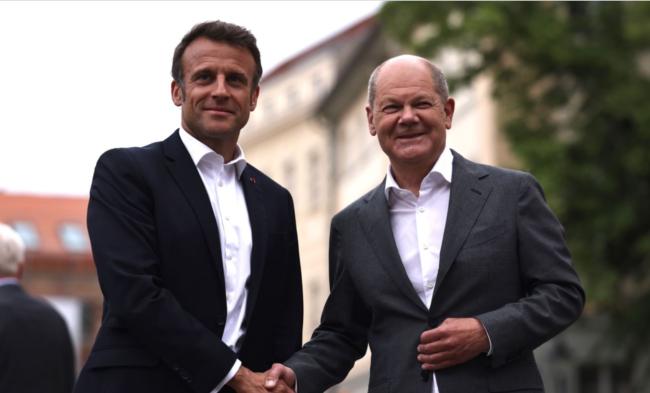
New Impulses for Stagnant Relationships - German-French Ministerial Council Meets in a New Format
As the doors of the illustrious Hôtel Beauharnais on Rue de Lille 78 swung open on the evening of 4 October, and the masses streamed into the German Embassy in Paris to celebrate German Unity Day, the reports of the currently strained state of Franco-German relations seemed almost surreal.
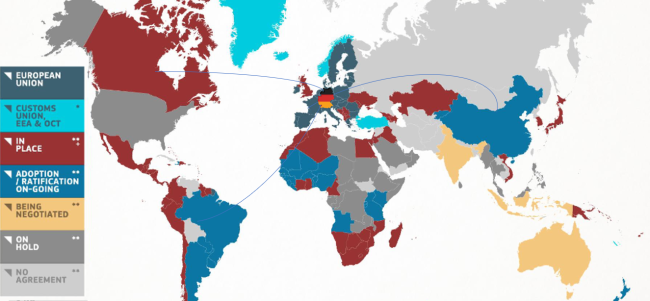
Towards a New European Trade Strategy in Times of Geopolitical Upheaval: The German Perspective
As one of the most successful trading blocs, the EU sees itself confronted with the erosion of the global rules-based trading system and trade becoming increasingly weaponized.
EU-Mercosur: An Unsolvable Trilemma Between Competition Rules, Normative Ambitions and Supply Chain Diversification
The EU-Mercosur trade deal was believed to be heading toward the finish. The election of Luiz Inácio Lula da Silva as the president of Brazil, as successor to the right-wing populist Jair Bolsonaro, and the Spanish presidency of the European Union (EU), raised hopes for its conclusion. But the reservations expressed by several EU member states and some Latin American countries have dashed hopes.
Zeitenwende: The Bundeswehr’s Paradigm Shift
Russia’s invasion of Ukraine on February 24, 2022, marked a turning point in German defense policy. After thirty years of military downsizing, the Bundeswehr found itself at an extremely low capability level just as a high-intensity war involving a great power was breaking out on Europe’s doorstep for the first time since 1945. Chancellor Olaf Scholz’s response was to embrace this “turning point” (Zeitenwende) by launching a major program to reequip Germany’s armed forces.
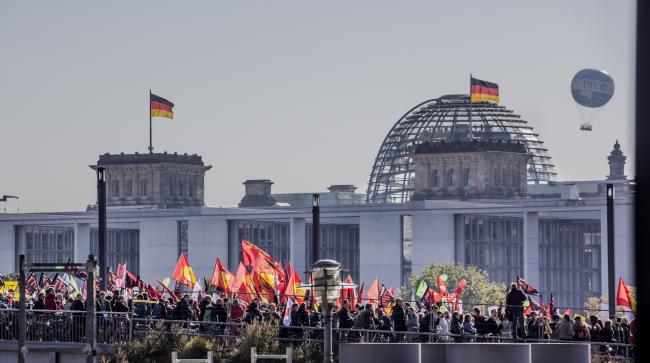
The End of a Happy Parenthesis. How the War in UkraineI Is Forcing Germany to Rethink Its Model
The period of peace, economic prosperity, and political stability that Germany has experienced since the end of the Cold War ends with the Ukrainian war. The shock wave of this conflict particularly hit its economy and thereby undermines the foundations on which Germany had based its power, its international influence and established its identity.
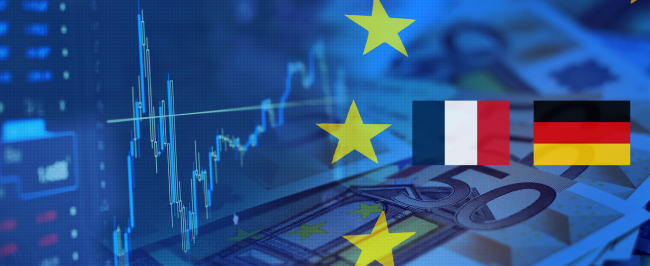
Fiscal Policy in France and Germany: Insurmountable Differences?
The state of public finances in France and Germany is often compared. Germany is considered a model of rigor, through its ability to contain its deficits and generate surpluses, particularly between 2012 and 2019, thanks to the introduction into its constitution of a debt brake mechanism.

Between Inertia and Openness. Germany Reforms Its Labor Immigration System
With its new Skilled Immigration Act (Fachkräfteeinwanderungsgesetz) of 23 June 2023, Germany aims to become the country with "the most modern immigration law in Europe". A new points system and new entry rules for experienced workers having a degree from their home country demonstrate the willingness of the German government to open up its labor market to third-country nationals. While immigration law was already the subject of a previous reform in 2020, the new law is a real paradigm shift in Germany’s migration policy.
DOSSIER - 60th anniversary of the Elysée Treaty (1963) and implementation of the Treaty of Aachen (2019): where do Franco-German relations stand?
On January 23, 2023, France and Germany celebrated the 60th anniversary of the Élysée Treaty. This is an opportunity for us to analyze the state of relations between the two countries, and the contribution made by the Treaty of Aachen, which was added in 2019.
Can Europe do Without a Geologistical Strategy to Face China?
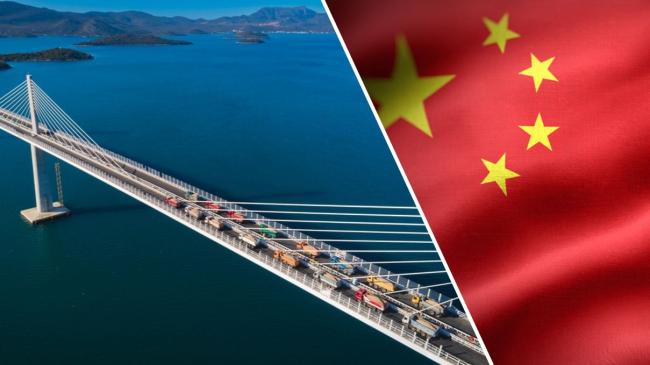
During the economic and financial crisis in 2008, during which the West was severely weakened, the ties between the Western Balkans and China were particularly close. For these countries, turning to China meant to secure new destination markets for their exports and to guarantee new investments.
DOSSIER - 60th anniversary of the Elysée Treaty (1963) and implementation of the Treaty of Aachen (2019): where do Franco-German relations stand?
On January 23, 2023, France and Germany celebrated the 60th anniversary of the Élysée Treaty. This is an opportunity for us to analyze the state of relations between the two countries, and the contribution made by the Treaty of Aachen, which was added in 2019.
Attention to the Periphery? Germany and the Pacific Island States
In September 2020, Germany adopted policy guidelines for the Indo-Pacific that comprehensively set out its approach towards this increasingly important region, seeking to diversify partnerships beyond China.
Conflicts in the EastMed: From Germany’s and France’s Conflicting Strategies to a Dual Approach

Germany's Unnecessary Hegemony
Based on the realist theory of international relations, this article analyses whether Germany has any incentives to seek (regional) hegemony. It concludes that under the current systemic circumstances – in which the country's survival is ensured by the United States – Germany has no reason to become a hegemon, which is normally a strategy to escape the perils of the anarchic international system.
Germany and the Arab Spring
Much of the analyses of German reactions to the Arab Spring uprisings have focused on Germany’s contentious decision relating to Libya. By siding with the critics of military intervention in abstaining from UNSC 1973, Germany vexed its allies and arguably displayed an astonishing lack of geostrategic foresight and moral rectitude.
German-Russian Relations: Balance Sheet since 2000 and Perspectives until 2025
The relationship between Germany and Russia, according to official portrayals in Berlin, is one of ‘strategic partnership’ supplemented by ‘modernisation partnership’. The closeness and at times demonstrative cordiality of the relations have given rise to suspicion about Germany being an advocate of Russian interests in Europe for the benefit of its economy but at the expense of Europe’s trans-Atlantic links.
Support independent French research
Ifri, a foundation recognized as being of public utility, relies largely on private donors – companies and individuals – to guarantee its sustainability and intellectual independence. Through their funding, donors help maintain the Institute's position among the world's leading think tanks. By benefiting from an internationally recognized network and expertise, donors refine their understanding of geopolitical risk and its consequences on global politics and the economy. In 2025, Ifri supports more than 80 French and foreign companies and organizations.
Related centers and programs
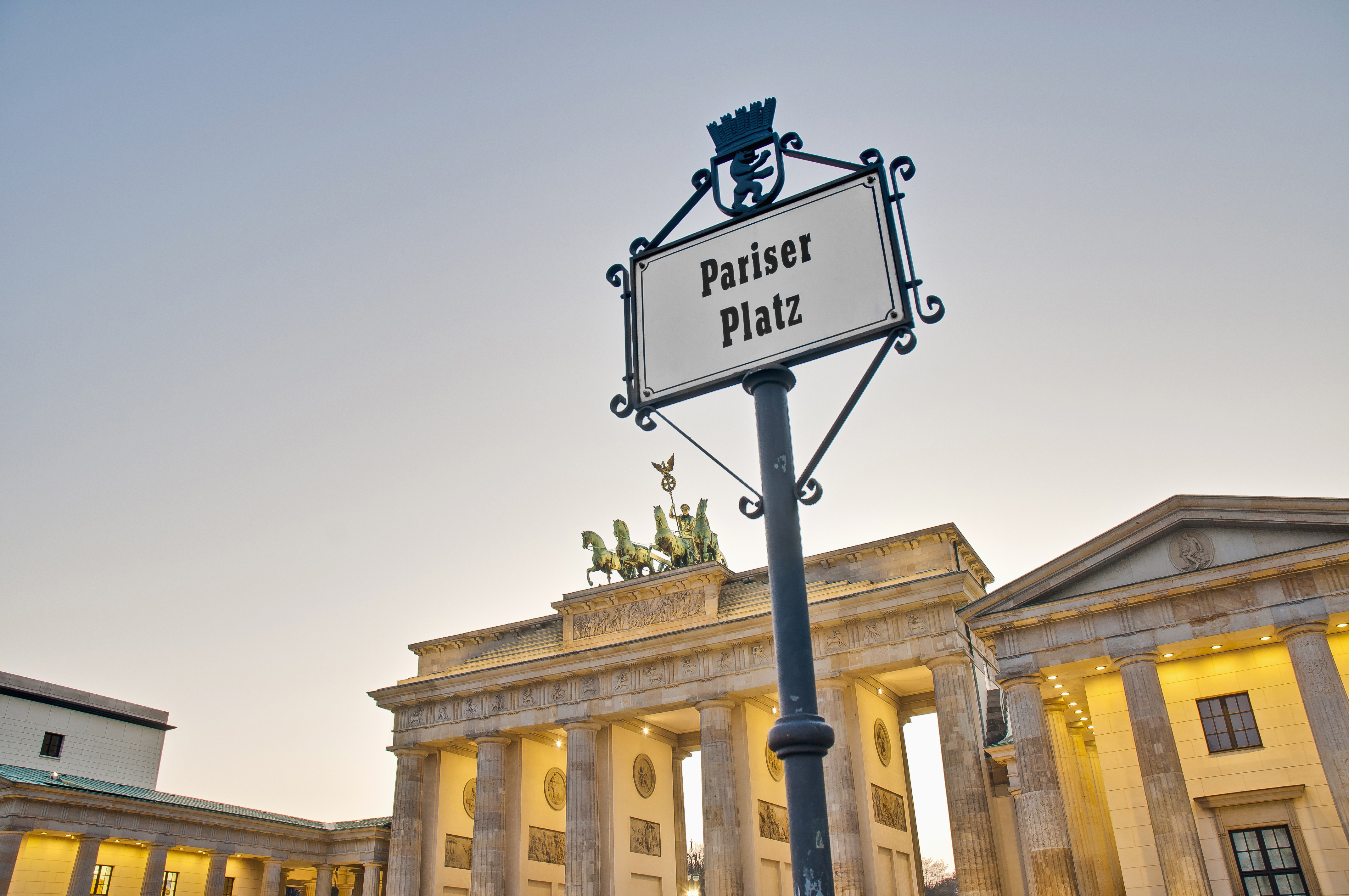
The Study Committee on Franco-German Relations (Cerfa)
The Study Committee on Franco-German Relations (Cerfa) was created in 1954 by an inter-governmental agreement between the Federal Republic of Germany and France, in order to raise awareness of Germany in France and analyze Franco-German relations, including in their European and international dimensions. In its conferences and seminars, which bring together experts, political leaders, senior decision-makers and representatives of civil society from both countries, Cerfa develops the Franco-German debate and stimulates political proposals. It regularly publishes studies through two collections: Cerfa notes and studies as well as Franco-German visions.
Cerfa maintains close relations with the network of German foundations and think tanks. In addition to its research and debate activities, Cerfa promotes the emergence of a new Franco-German generation through original cooperation programs. This is how in 2021-2022, Cerfa led a program on multilateralism with the Konrad Adenauer Foundation in Paris. This program is aimed at young professionals from both countries interested in the issues of multilateralism in the context of their activities. It covered a wide range of themes relating to multilateralism, such as international trade, health, human rights and migration, non-proliferation and disarmament. Previously, Cerfa had participated in the Franco-German future dialogue, co-led with the DGAP from 2007 to 2020, and supported by the Robert Bosch Foundation and the Daniel Vernet group (formerly the Franco-German Reflection Group) which was founded in 2014 upon the initiative of the Genshagen Foundation.