



Energy-Climate
In the face of the climate emergency and geopolitical confrontations, how can we reconcile security of supply, competitiveness, accessibility, decarbonization and acceptability? What policies are needed?
Related Subjects
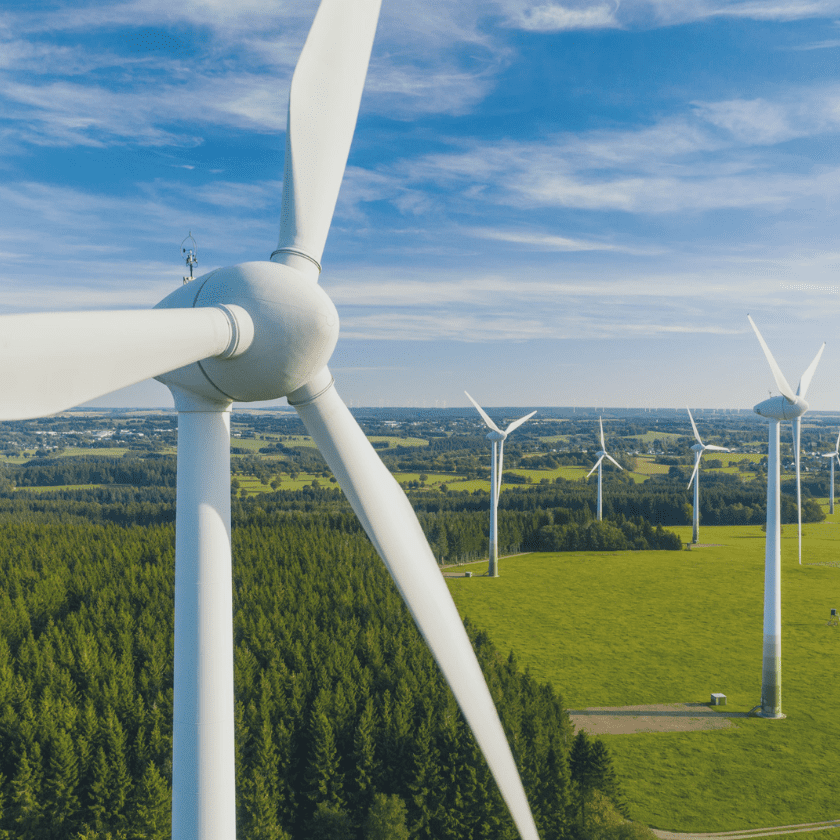
The US’s Critical Mineral Offensive Strategy: How Can Europe Step Up?

As Organization for Economic Co-operation and Development (OECD) economies are confronted with mounting threats to critical raw materials (CRM) supplies, resolute interventionist policies are needed to build resilient value chains.
IEA Crisis Management: Evolving with the Risks
Last week the IEA chose not to renew its June strategic stock release. It was the right decision. The volumes of strategic crude and product taken up by the market will be reaching refineries now and incremental volumes produced in the Arabian Gulf will be steaming towards markets.
A Look at the IEA 2011 Release of Strategic Oil Reserves
This paper examines the motivations and the potential consequences of the International Energy Agency’s coordinated action to release petroleum stocks on June 23, 2011.
Kanal Istanbul: Pipedream or Politics ?
This paper examines Kanal Istanbul, a plan proposed by recently re-elected Turkish Prime Minister Recep Tayyip Erdogan to bypass the Bosphorus Strait by creating a canal west of Istabul.
A Tragic Tale of Corn and Congress
Ever since Iowa landed the privilege of holding the first Presidential primary, no candidate has the political courage to confront the $11 billion subsidy price tag of US corn ethanol. Everyone agrees we need to dilute our supply and price vulnerability in transportation fuels and everyone agrees we need to decarbonize the transport sector. But surely not this way.
Unconventional Gas: A Game Changer for Transport Too?
A new technology trend, the development of natural gas vehicles, is emerging in the transport sector.
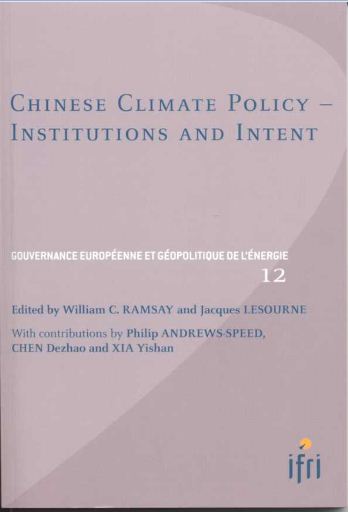
Chinese Climate Policy: Institutions and Intent
Until the late 1990s, the balance of Chinese energy production and consumption was treated by the rest of the world as a net figure. No one knew what was going on inside the Chinese economy - it was a black box. As far as anyone was concerned, the Chinese would not soon be a major factor in world energy markets.
The EU internal market - a stake or a tool in European-Russian gas relations. The case of new member states gas policy
Since 2010 we have observed a new quality in EU energy policy. It is related to the European Commission’s more or less direct engagement in the bilateral gas relations of a part of the new member states - Poland, Bulgaria and Lithuania - with Russia.
OPEC: It Is about More Oil - Not Quotas
OPEC has certainly gone out of its way to show how little relevance it has in today’s oil market. It has successfully imported all the political rhetoric and malaise of some of its most unstable members.
What's in a Name? Market-based Instruments for Biodiversity
The use of Market-based Instruments (MBIs) for the management of biodiversity and ecosystem services - carbon trading schemes, payment for ecosystem services, mitigation banking, etc. - is currently booming. But the definition and underpinning theory of these tools remain unsettled. It is therefore necessary to advance in the definition, theory and consistent classification of these instruments.
Protecting Nuclear Installations: The difference between industrial safety and national security
There is a gritty public debate going on in Europe about what threats should be considered in conducting stress tests on existing nuclear power plants or in establishing safety criteria for new build nuclear power.
German Nuclear: Green Is Good Politics
In polarized politics, the voter must take on faith the wisdom inherent in the principled political position. Who cannot be impressed by the nuclear catastrophe at Fukushima, especially after living through the fallout from Chernobyl? But is it reasonable to send the voter to the booth with only half the information? Does the German voter have any idea what it means to shut down its nuclear power in just ten years? Have German politicians made any effort to tell them?
Fukushima and Democracy
The double disaster of Fukushima, a natural disaster comprising an earthquake and a tsunami and a large-scale industrial nuclear disaster, behoves all countries to consider the lessons which they can draw from it.
Political Oil Prices: A Measured Response if Any
Oil prices are becoming an increasingly worrisome factor in today’s economies. They have risen dramatically over the past 6 or 7 months and are now driving inflation in many economies and acting as a drag on nearly all. They are not at these levels because markets are fundamentally out of balance.
Gas Pains: What to Do About France's Shales
Like other countries in Europe, France has the potential to produce both oil and gas from shale. In the Paris Basin, where oil has been exploited for decades, oil shale quite similar to the Bakken play in North America has considerable promise due to new drilling and exploitation techniques. The potential for shale gas in the South east is less well known and needs to be assessed.
Obama Remarks on Energy: Ball in Congressional Court
President Obama has made clear that in the 2012 election, he intends to defend his record on energy from the middle.
The Governance of Energy Poverty in Southeastern Europe
This report presents the outcomes of a recently-completed research project1 aimed at uncovering the different ways in which energy poverty – understood as a condition wherein the domestic energy services available to a household are below socially and materially necessitated levels – is produced by, and mitigated through, the interaction of relevant decision-making institutions in the energy, social welfare, health and housing domains. The project focused on conditions in Southeastern Europe, where energy prices have been recently on the rise despite falling incomes and poor access to efficient and adequate energy services.
The Water in a Cup of Tea - a Water and Energy Primer
Ever give a thought to how much water there is in your cup of tea? I know the volume in the cup is about 8 ounces - but it is hot - hopefully around 100 degrees Celsius or 212 Farenheit. So you had to heat it up one way or another to make tea.
European Energy Policy: Energy Savings Glass 2/3 Empty
Summing up Europe’s climate policies suggests we still haven’t grasped the full potential for energy savings. We act as if we were living in a system with infinite resources easily exploited by human innovation and ingenuity. We focus on the efficiencies we can gain from components of our system, but not on the system as a whole and we do not consider how the other billions of people on earth can achieve our level of comfort with a resource or carbon-constrained future and with aspirations that necessarily imply sharply growing energy consumption.
Japan's Nuclear Crisis: A Time for Support
These are terrifying moments. No one could ever have imagined that the Japanese nuclear sector could fall victim to such a seismic event.
Rising (Oil-linked) Gas Prices: A Message from Shale Gas
One benefit that should flow soon from large new sources of shale gas that have been and will be unleashed into world markets - is the realization that gas prices linked to oil prices don’t make sense any more.
Oil Markets Range-bound?
We have heard admonitions about peak oil and that we have already passed the geologic peak of world oil production capacity. On the other hand, the IEA warns that if we continue our present patterns of energy consumption, we will need the equivalent of four Saudi Arabia’s in new oil production capacity by 2030 - seemingly at ease that the oil is geologically out there.
Implementing the EU Climate and Energy Package with the Economic Crisis
Ukraine - A Transit Country in Deadlock? Four Scenarios
Should we consider Ukraine a transit country in deadlock, and reduce its energy role just to that of a transit country? Definitely not, because Ukraine is at once a large gas consumer and producer, and possesses massive storage capacity. But the economic and political situation of the country is alarming, even without considering the possibility of another gas crisis Without such a crisis, however, the event of Ukrainian bankruptcy would attract less broad international attention simply because it would not have direct impact on European gas consumers.
US, European and Chinese proposals for Copenhagen : looking behind the numbers
The Outlook for Nuclear Energy in the United States: Dark Ages, Renaissance, or Age of Enlightenment?

Ifri, a foundation recognized as being of public utility, relies largely on private donors – companies and individuals – to guarantee its sustainability and intellectual independence. Through their funding, donors help maintain the Institute's position among the world's leading think tanks. By benefiting from an internationally recognized network and expertise, donors refine their understanding of geopolitical risk and its consequences on global politics and the economy. In 2026, Ifri partners with over 90 French and international companies and organizations.

Ifri's Energy and Climate Center carries out activities and research on the geopolitical and geoeconomic issues of energy transitions such as energy security, competitiveness, control of value chains, and acceptability. Specialized in the study of European energy/climate policies as well as energy markets in Europe and around the world, its work also focuses on the energy and climate strategies of major powers such as the United States, China or India. It offers recognized expertise, enriched by international collaborations and events, particularly in Paris and Brussels.