




Political Systems
At the end of the Cold War, the idea spread that liberal democracy was going to take over the world. In reality, authoritarian regimes have resisted, and political systems remain varied.



Is Germany becoming just like the other European countries?
After the recent electoral setbacks for Angela Merkel which saw the party Alternative for Germany (AfD) enter yet another two regional parliaments (Berlin and Mecklenburg-Western Pomerania), is there a possiblity for Germany to become just like the other European countries?
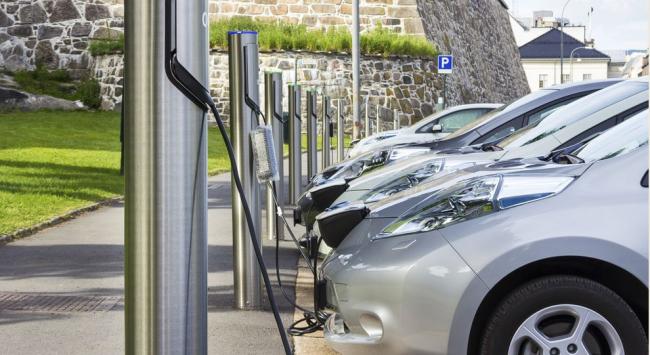
E-mobility: European Energy and Transport Policies at Crossroads
European clean transport policy envisages the development of charging infrastructures for electric vehicles within a European e-mobility framework. After the downturns of the Volkswagen scandal and the prevailing low European carbon price, the EU is bringing forward car passenger transport electrification. This requires new business models based on interoperability.


Juncker, the optimist
The president of the European Commission about security, investment and assistance in Africa. According to Hans Stark, Jean-Claude Juncker didn't beat around the bush and instead of going too far in self-chastisement he tried to give hope to European citizens.
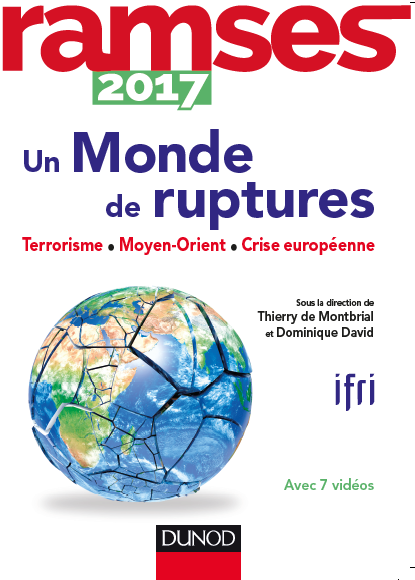
RAMSES 2017. A Fragmented World
RAMSES 2017. A Fragmented World, prepared by IFRI’s research team and selected external experts, offers an in-depth and up to date analysis of global geopolitics.
This 35th edition focuses on three key issues: the spread of jihadist terrorism, the Middle East’s disintegration, and doubts about the European project. With the world’s balance of power and economic foundations shifting, the next few months are likely to be decisive for our future. The growing diversity and complexity of our world is startling, which is why it is important to rethink our analyses and means of action.

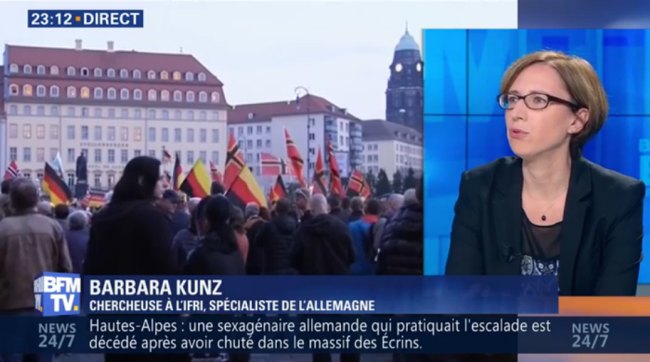
German elections: Angela Merkel's party beaten by populists (2/2)
The Chancelor's party listed third behind the new populist party AfD in the North East of Germany.
The Taboo of the Armenian Genocide, Part Two: The Politics of American Avoidance
The Armenian Genocide has been a topic of trials and tribulations in American politics for quite some time. It has been an issue in Presidential campaigns, like that of now-President Obama: when he promised to recognize it. It has been the topic of votes, such as the most recent 2010 vote which failed to recognize the genocide. It has been a funnel for interests, lobbying, and foreign investment. With Germany recently recognizing the genocide and an American Presidential election at hand, speculation of American recognition is once again at a high. As politicians debate the issue, or avoid it altogether, the American political system moves forward. There are various key players in American politics, but in specificity to the Armenian Genocide issue, there are the Armenian, Turkish, and Israeli lobbies, and the constituencies they represent.
War and Democratic Decision Making: How do Democracies Argue and Decide Whether or Not to Intervene in Distant Wars?
What is the proper place and forum for decisions about war and peace in a democracy? There is surprisingly little consensus on this matter, not in theory and not in practice. While in Iraq, Libya and Syria, all Western actions have ended in failure, it seems necessary to analyze the place and importance of this aspect of the democratic decision making.
États-Unis : les nominations à la Cour suprême, enjeu des élections de 2016
With the death of Justice Antonin Scalia on February 13, 2016, the Supreme Court of the United States lost a beacon of conservative thought and one of the most influential American jurists of the last thirty years. The question of his replacement immediately became an issue as the United States looks forward to the presidential election in November. While past nominations to the Supreme Court have been relatively uncontentious, nominations today are affected by the polarization of American politics.
Russia in the Middle East: Back to a “Grand Strategy” – or Enforcing Multilateralism?
Russian military intervention in Syria was not an attempt to exert dominance as a hegemonic power in the Middle East.
Middle East, the new "Great Game"
Will a divided Middle East become the center of a new “Great Game”? The world’s global powers are aligned in it: the United States, falsely tempted by retraction; Russia, establishing its position in an unexpected state of play, France, destabilized by the contradictions of its own policy… In addition are tussles for regional hegemony between Iran, Turkey, and Saudi Arabia.
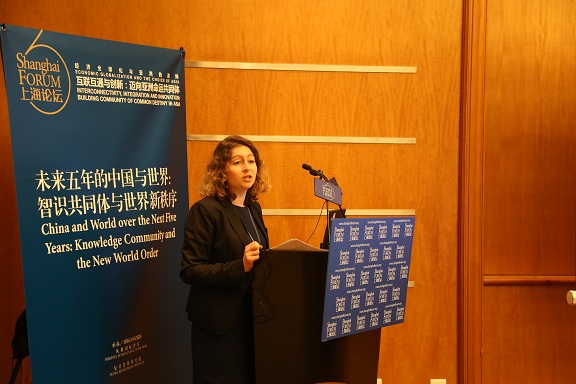
The International Development of Chinese Think Tanks
Alice Ekman gave her opinion on the international development of Chinese think tanks at a roundtable in Shanghai, organized by the Korea Foundation for Advanced Studies, Fudan University and Phoenix International Think Tank.
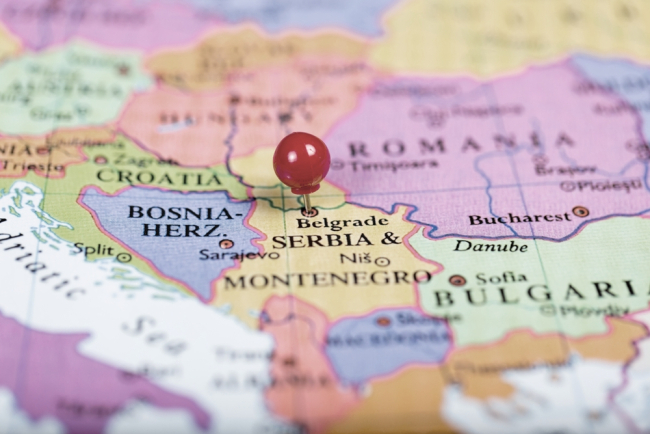
The Western Balkans : a touchstone for German and European foreign policy
China’s rise: the view from South Korea
Monitoring China-South Korea relations is key for the EU, as both countries have been designated strategic partners. Moreover, the Union has important economic ties to both, and signed a free trade agreement (FTA) with the Republic of Korea (ROK) in 2011.
Najib Razak’s Malaysia: A solid economy on a foundation of political tension
Najib Razak began his term as Prime Minister of Malaysia in 2009 amidst a severe global economic crisis, concern over spiraling public debt and fears the country would fall into the ominous “middle income trap”.

Citizenship in the French Tradition. Values and Realities
Citizenship is a major issue in public debates when it comes to immigration in France. Passionate talks illustrate the current disagreements on the meaning of value such as “laïcité”, “universalism”, “equality”, “community” and on the way these should apply in social and political life.
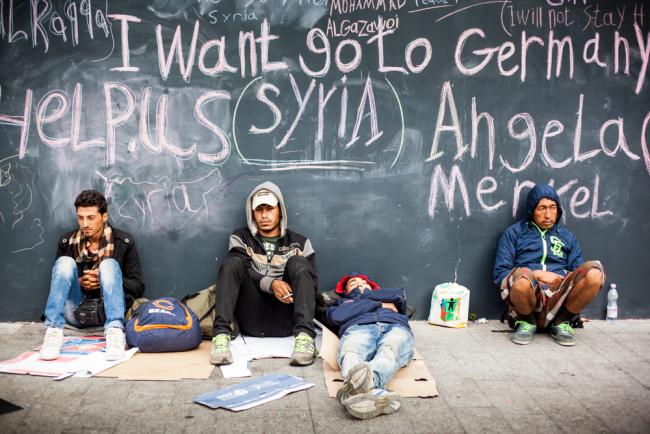
Humanitarian exploit or failure? The refugee crisis in Germany and Europe
Understanding African Migrations
Movements of African people, being within their countries, on the continent or heading Europe, have numerous and ancient causes. The term “migration” covers a plurality of situations with many internal as well as international implications. Therefore, reasons to migrate deserve a careful analysis. One cannot tackle such a phenomenon through mere border control policies or their externalization, as the European Union seems inclined to do.
Migrations in Africa: Another Look
Migration in Africa is a major concern, but largely for Africans alone. To adequately study the question of international migration, one must look beyond Europe’s current predicament. Through its dossier on “Migrations in Africa: Another Look”, this issue of Politique étrangère examines a number of factors that determine migration movements, how states in Africa attempt to manage the significant problem of internal migration, the difficulties of integrating migrant workers into their host societies, and the false pretenses of Euro-African agreements on readmission.

How the migrant crisis has brought Germany to a 'historical turning point'
As Germany agrees a plan with Turkey to ease the refugee crisis, political analyst Barbara Kunz says both migration and integration are the major issues for ordinary Germans, with the country at a "decisive turning point in its history". She spoke with RFI's Sarah Elzas.
Ifri, a foundation recognized as being of public utility, relies largely on private donors – companies and individuals – to guarantee its sustainability and intellectual independence. Through their funding, donors help maintain the Institute's position among the world's leading think tanks. By benefiting from an internationally recognized network and expertise, donors refine their understanding of geopolitical risk and its consequences on global politics and the economy. In 2026, Ifri partners with over 90 French and international companies and organizations.
