Political Systems
At the end of the Cold War, the idea spread that liberal democracy was going to take over the world. In reality, authoritarian regimes have resisted, and political systems remain varied.

Kind Words, Cruise Missiles, and Everything in Between. The Use of Power Resources in U.S. Policies towards Poland, Ukraine, and Belarus 1989–2008
According to realist premises, the United States has an interest in remaining the world's only superpower, thus creating the need to manage and maintain unipolarity. The pursuit of this grand strategy, however, required the U.S. to adapt its various strategies to individual states. Poland, Ukraine, and Belarus have played very different roles.
Cooperating with African Armed Forces
Nowadays, numerous actors are involved in military cooperation programs aiming to strengthen African armed forces and build special partnerships.
Migration in Eastern Africa: Regional Challenge, Global Issue
An interview with Jeffrey LABOVITZ, International Organization for Migration (IOM) Nairobi Regional Director
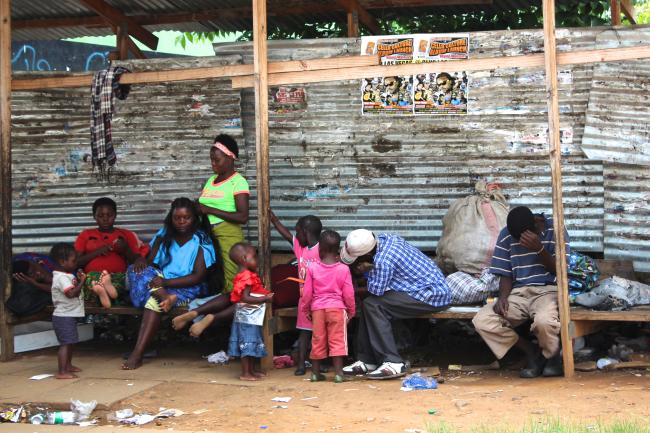
Zimbabwe in Dubious Battle: The Unexpected Consequences of Western Sanctions
The aim of this paper is to assess how an African country deals on the long run with the decline of international aid and foreign direct investment. This paper is a contribution to the debate about the effectiveness of the international sanctions system.
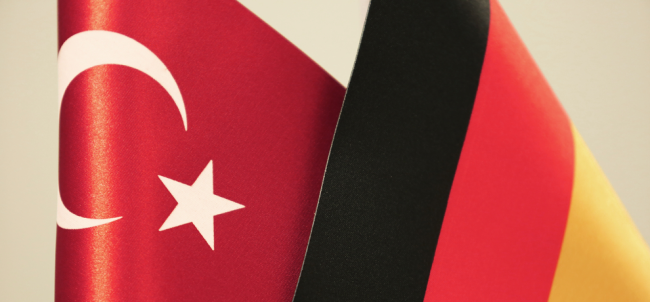
German Politics towards Turkey under Merkel: a Critical Assessment
Turkish President Erdoğan demanding blood tests for German MPs with Turkish origin or Nazi comparisons coming from Ankara: German-Turkish relations have reached rock bottom and bonds of trust between both countries are almost completely disrupted.
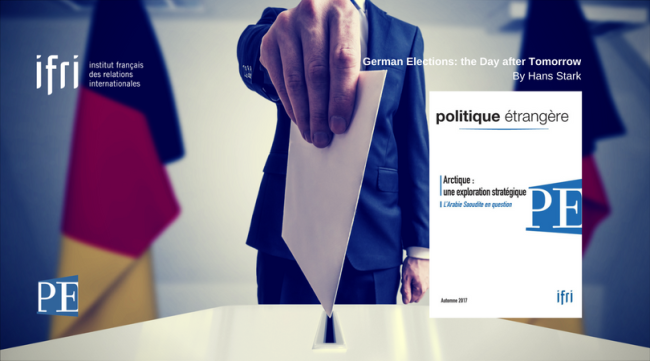
German Elections: the Day after Tomorrow
Angela Merkel is gaining thanks to her international standing and the weakness of her Social-Democrat opponent.
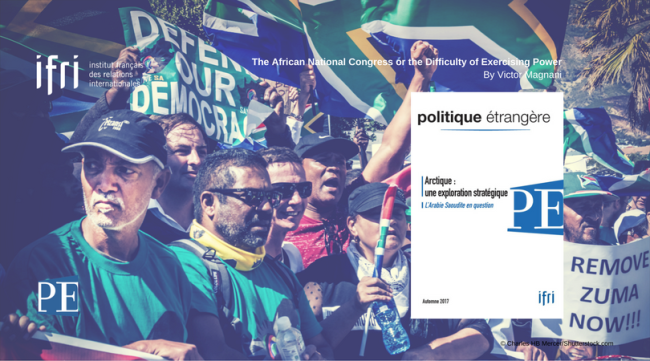
The African National Congress or the Difficulty of Exercising Power
The African National Congress (ANC), which has governed South Africa since the end of apartheid, is in decline.

RAMSES 2018. Will the Information War Take Place?
RAMSES 2018. Will the Information War Take Place?, written by Ifri's research team and external experts, offers an in-depth and up-to-date analysis of global geopolitics.
Japan and Russia’s Small Steps Strategy
On the eve of the Vladivostok Summit, should we expect any significant progress in the laborious rapprochement between Japan and Russia?
The German landscape of foundations and think tanks.
The number of crises we face is rising, due to failing states, wars and armed conflicts, poverty and lack of good governance in many countries. State and society are constantly confronted with new challenges. These crises occur simultaneously and at an ever faster pace.

Hong Kong, 20 ans years after the retrocession
20 years after its retrocession to China, the 1st July 1997, what are the political and institutionnal autonomy guaranties for Hong Kong, while Carrie Lam is about to take its lead? How long will Hong Kong youth claim its own identity? What challenges for the World City?
Between aging and migrations: the difficult German equation
The decision of German Chancellor Angela Merkel to welcome over one million refugees in the years 2015 and 2016 had been interpreted by some to be a strategic choice to cope with the demographic problems that Germany is facing: the expected decline in the population, especially in its work force, as well an ageing population.
South Africa : internal dissensions within the ANC
How to explain the decline of the ANC during the last election? Why 2017 is a decisive year for the ANC? How to explain the student protests during the past two years?
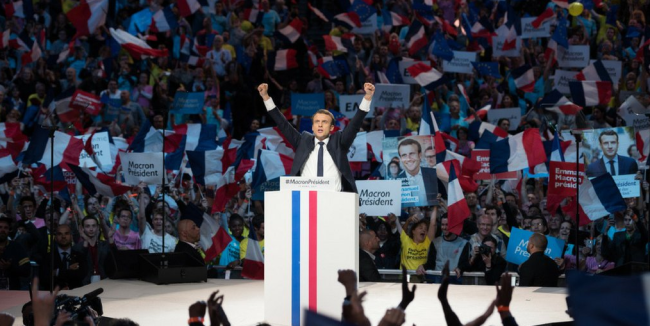
Meeting Macron in the Middle. How France and Germany Can Revive the EU
Macron's presidency offers a rare chance to revive the French-German relationship just when Europe needs it most.
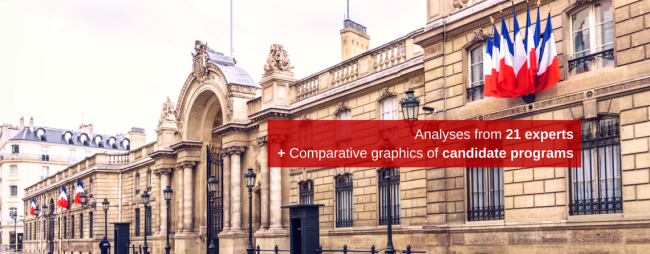
Foreign Policy Challenges for the Next French President
France’s current presidential campaign has created an unprecedented situation fuelled by revelations and a total absence of restraint, but it has not truly taken account of the disruptions of the last year: Brexit, the attempted coup in Turkey, the election of Donald Trump, the recapturing of Aleppo by Bashar al-Assad, Xi Jinping’s declarations about “economic globalization”, or the behavior of North Korea. The debate, or rather its absence, can be looked at in two ways.
Alternative für Deutschland: What risks for Germany?
The AfD - Alternative for Germany – founded in opposition to Angela Merkel’s policy line of supporting southern European countries, has quickly become part of the political family of "right-wing populism" in Europe, with whom it cultivates close ties.
Trade without Religion between Turkey and Syria
A saying claims that trade has no religion; it even adapts to a war situation, as demonstrated by the real-time reorganisation of trade channels at the Turkish-Syrian border.

Trump and the Crisis of American Democracy
Trump’s victory in the 2016 presidential election is an expression of the crisis of American democracy.
Democratic Deconstructions
Today’s democratic governments appear less legitimate and their longevity less assured than ever.

Does Merkel want to regain popularity at the expense of Europe?
Angela Merkel loosing the elections in Germany could be one of the many electoral suprises in 2017. Surveys on voting intentions for the legislative elections in September show that her opponent Martin Schulz (social-democrat) has started overtaking her.
Ifri, a foundation recognized as being of public utility, relies largely on private donors – companies and individuals – to guarantee its sustainability and intellectual independence. Through their funding, donors help maintain the Institute's position among the world's leading think tanks. By benefiting from an internationally recognized network and expertise, donors refine their understanding of geopolitical risk and its consequences on global politics and the economy. In 2026, Ifri partners with over 90 French and international companies and organizations.