


Technological Competition and Digital Sovereignty
Technologies are at the heart of international economic and geopolitical competition, particularly between China and the United States, and in the quest for European sovereignty.
Related Subjects

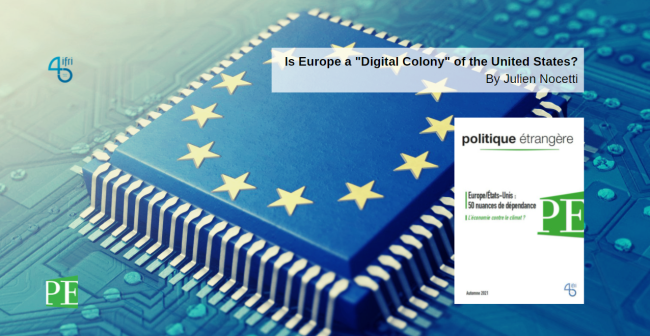
Is Europe a “Digital Colony” of the United States?
Edward Snowden’s revelations, the Cambridge Analytica affair and the digital transformation accelerated by the Covid-19 crisis have all shown Europe's technological dependence on foreign powers.

Europe/United States: 50 Shades of Dependence
Is Joe Biden’s United States (US) returning to multilateral, traditional diplomacy? This more open stance does not eliminate either its domestic problems or the divergence in interests separating the US from the Europeans: how will open diplomacy fit in with the priority of defending US interests? Will Washington organize a broad anti-Chinese coalition that the Europeans are opposed to? Will sanctions with their resulting effects remain at the heart of US strategy? Will the Europeans be able to assert their sovereignty in the key area of new technologies against the US giants?

The Changing Landscape of European Cloud Computing: Gaia-X, the French National Strategy, and EU Plans
Non-European cloud service providers host the vast majority of European data, which is viewed as an economic as well as a political problem. Gaia-X, European governments and the European Union aim to bolster the European cloud market while responding to data privacy and cybersecurity concerns.

GovTech, The New Frontier in Digital Sovereignty
The COVID-19 crisis has been a catalyst for a surge in the GovTech market, while triggering debate around the use of new technologies in the public health response to the pandemic. More broadly, the health crisis has shed a new light on the strategic importance of some domains relevant to GovTech such as HealthTech, smart cities and EdTech.
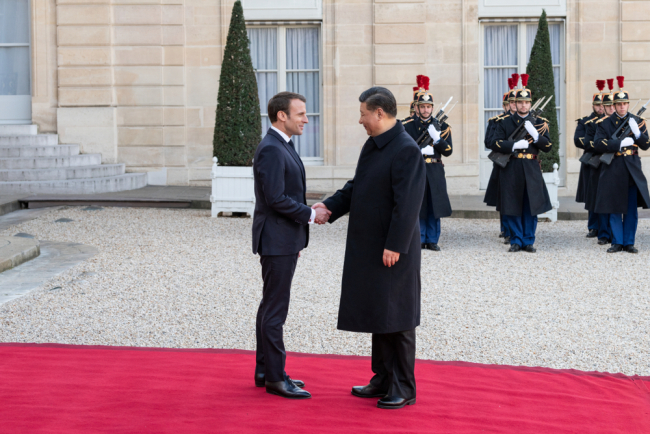
France’s incoherent China policy confuses partners
On 21 July 2020, French Minister of Economy and Finance Bruno Le Maire participated remotely in the High Level Economic and Financial Dialogue with Chinese Vice Premier Hu Chunhua.
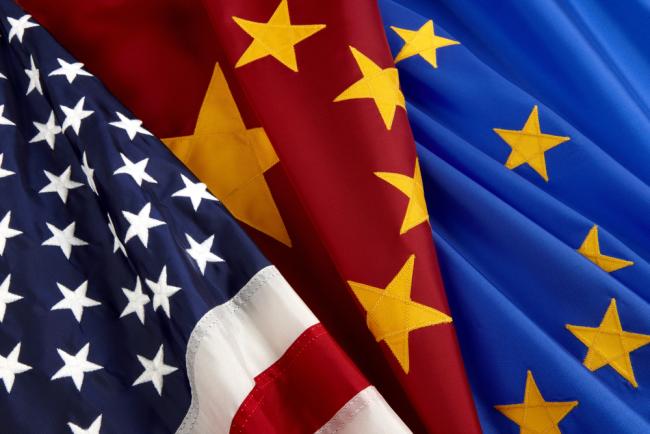
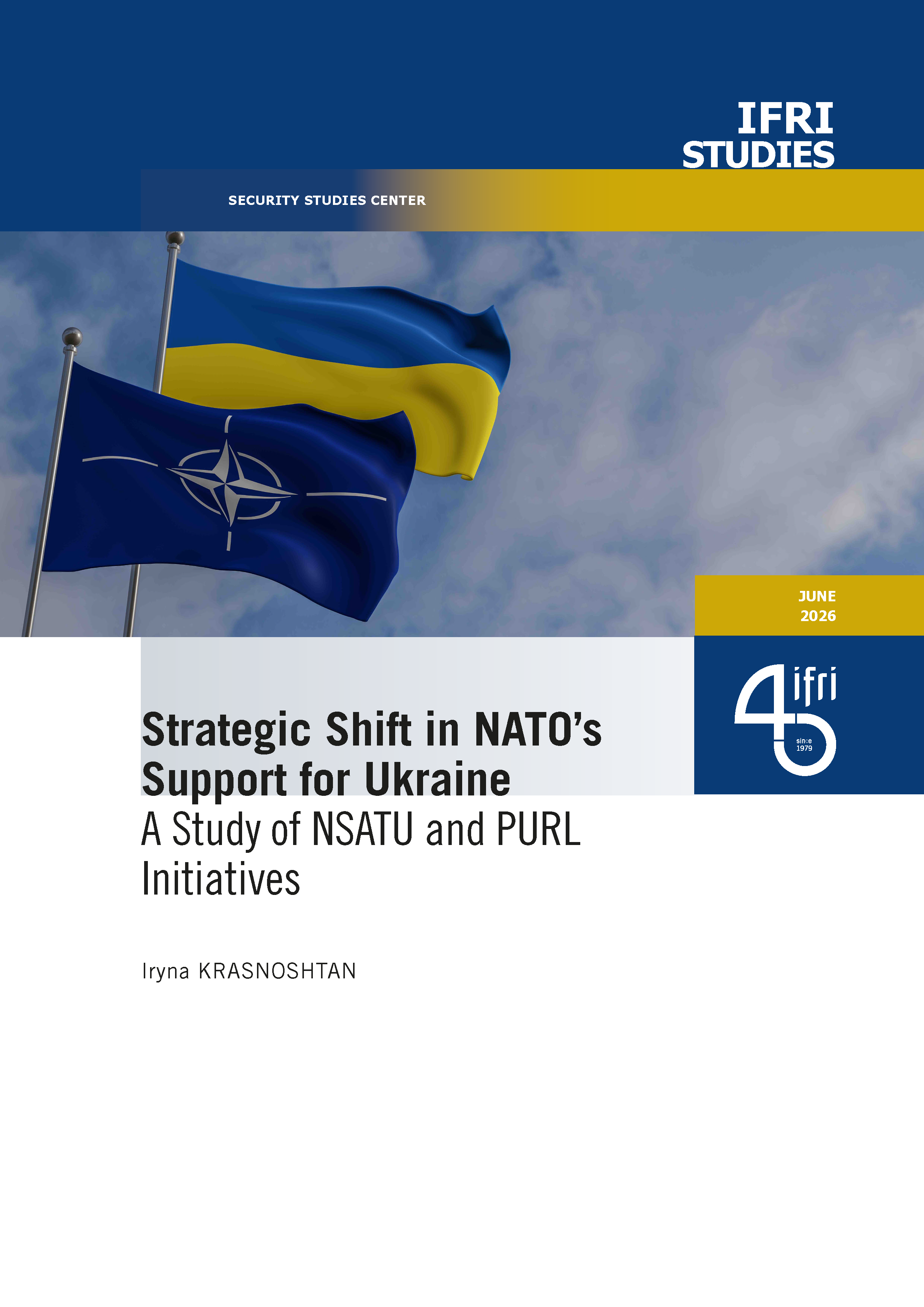
Technology Strategies in China and the United States, and the Challenges for European Companies
As international relations are increasingly reorganized around the US-China rivalry, the tensions between these two great powers are shaping a growing number of sectors, and the exchange of sensitive technologies in particular. This is a critical issue for European companies today.

COVID-19 and the End of Technological Innocence
COVID-19 acts as a catalyst in international relations.
The Crucial Challenge of Cyberthreats
In this special issue of Politique étrangère devoted to the proceedings of the conference organized by Ifri on April 10, 2019, in the Grand Amphitheater of the Sorbonne, on the occasion of its fortieth anniversary, discover the debate moderated by Marc Hecker between Thomas Gomart and Jean-Louis Gergorin.
Social Networks: The Fight Against Illegal Content in Germany
The German Legislation on Improving Law Enforcement in Social Networks (Netzwerkdurchsetzungsgesetz – NetzDG), which came into force on October 1, 2017, is the legislative response to how social networks handle complaints about illegal content.
When Technology Shapes the World
New technologies, particularly in cyberspace, have a strong impact on international relations and conflict. Malicious actors, be they lstates or non-state actors, have developed sophisticated means of influence. They tend to coordinate their physical and cyber activities with ever-greater precision. The security strategies of Western states need to change as a result and cease operating in silos.
Support independent French research
Ifri, a foundation recognized as being of public utility, relies largely on private donors – companies and individuals – to guarantee its sustainability and intellectual independence. Through their funding, donors help maintain the Institute's position among the world's leading think tanks. By benefiting from an internationally recognized network and expertise, donors refine their understanding of geopolitical risk and its consequences on global politics and the economy. In 2026, Ifri partners with over 90 French and international companies and organizations.
