



Technological Competition and Digital Sovereignty
Technologies are at the heart of international economic and geopolitical competition, particularly between China and the United States, and in the quest for European sovereignty.
Related Subjects


Balancing Security and Innovation: Opposition's View on Turkey's Digital Policies
The upcoming presidential and parliamentary elections in Turkey on May 14, 2023, are expected to be closely contested. Polls suggest that the ruling AK Party-led People’s Alliance will lose its majority in parliament, resulting in a hung lower house.
The Technology Policies of Digital Middle Powers
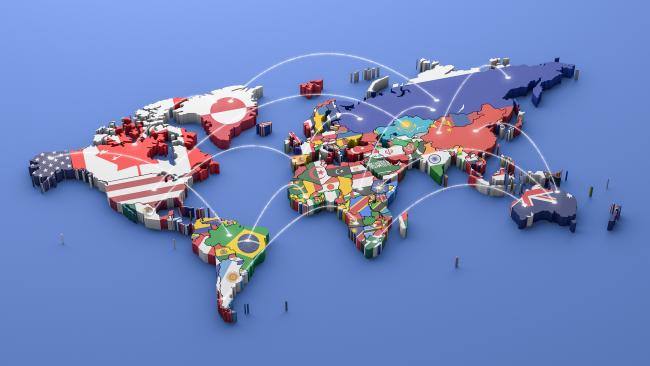
Digital technology is an element of power in the international system as well as an area for competition among countries. The study provides a qualitative comparison of the technology policies of nine of the digital middle powers: Brazil, India, Israel, Japan, Kenya, Nigeria, Russia, South Korea, and the United Kingdom. It seeks to reflect the diversity of national technology policies, as well as to identify those countries’ convergences and divergences with Europe, the United States and China.
Digital Sovereignty: European Policies, American Dilemmas
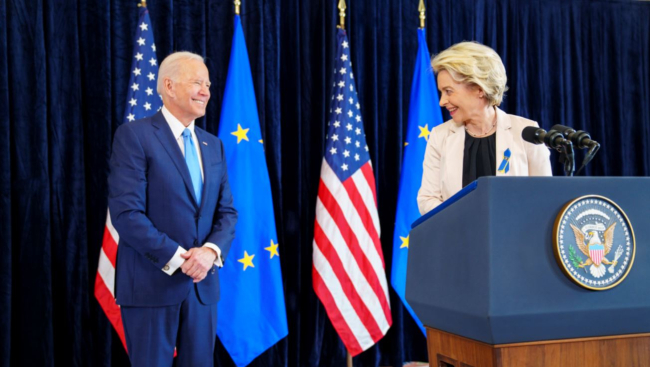
European digital sovereignty has been made a priority by Ursula von der Leyen’s European Commission. Due to the privileged position of American companies in the European market, Brussels’ efforts towards digital sovereignty (on privacy, antitrust, data sovereignty, etc.) are closely scrutinized by American policymakers.
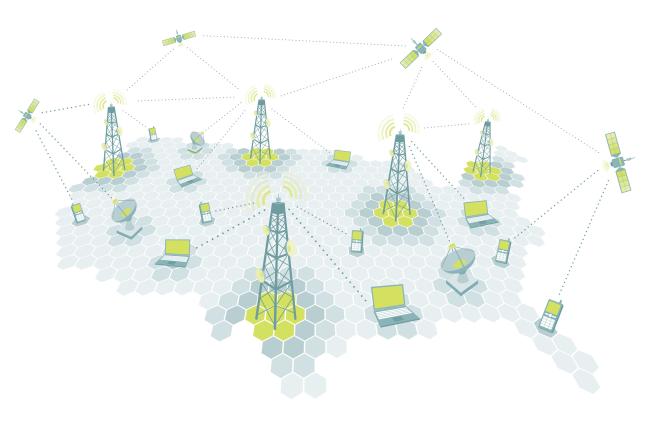
“Open” Telecom Networks (Open RAN): Towards a Reconfiguration of International Competition in 5G?
In line with the anti-Huawei diplomatic campaign of the Trump and Biden administrations, the United States has promoted an alternative: Open RAN, a concept defined by "open" network architectures. At the intersection of 5G geopolitics and standards, what risks and opportunities does Open RAN present for European technological sovereignty?

The Political Economy of the Metaverse
The "metaverse", at the heart of the strategy of large digital companies such as Facebook (Meta), does not yet exist and it will take decades to build it. This briefing provides an overview of the issues.

Digital Sovereignty Review of Macron’s Term and Debates in the 2022 Presidential Campaign
One month before the French presidential election, this briefing assesses the actions undertaken during Macron's term as well as the presidential candidates' proposals concerning France's digital sovereignty.

Convince and Coerce: U.S. Interference in Technology Exchanges Between its Allies and China
The tough-on-China policy adopted by the Trump and Biden administrations has – and will increasingly have – important consequences for Washington’s allies, both on their infrastructure choices (5G, submarine cables...) and on their technological exchanges with China.
Europe and the Geopolitics of 5G: Walking a Technological Tightrope
The acute Sino-American tensions which started in 2018 have been coupled with controversies around 5G technology, exemplified by the spotlight placed on Chinese equipment manufacturer Huawei and the security risks associated with its use. For Europe, the 5G challenge at the international level is drawing a very complex landscape.
Strengthening Sovereignty in the Era of Global Value Chains
How to reduce the vulnerabilities induced by these global value chains to be more independent, while taking into account the reality of these productive processes which precisely generate interdependencies?

Strategic Calculation: High-Performance Computing and Quantum Computing in Europe’s Quest for Technological Power
Computing power plays a key role in enabling machine learning, for scientific research, and in the military domain. Therefore, the race for computing power has become a key element of the US-China technological competition, and it is also a strategic priority for Europe.
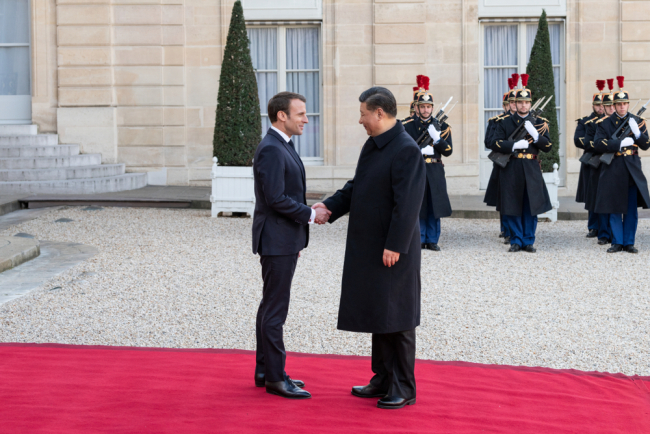
France’s incoherent China policy confuses partners
On 21 July 2020, French Minister of Economy and Finance Bruno Le Maire participated remotely in the High Level Economic and Financial Dialogue with Chinese Vice Premier Hu Chunhua.

The Crucial Challenge of Cyberthreats
In this special issue of Politique étrangère devoted to the proceedings of the conference organized by Ifri on April 10, 2019, in the Grand Amphitheater of the Sorbonne, on the occasion of its fortieth anniversary, discover the debate moderated by Marc Hecker between Thomas Gomart and Jean-Louis Gergorin.
Between Concentration and Dispersion: A Promising Future for Power Relations
The notion of power has long been a topic of study in international relations. In the coming decade, the evolution of power will be characterized by the dynamics of concentration and dispersion. On the one hand, the global system will be marked by the clash of two superpowers, the United States and China. On the other hand, capacity for individual action will proliferate through information and communication technologies.
When Technology Shapes the World
New technologies, particularly in cyberspace, have a strong impact on international relations and conflict. Malicious actors, be they lstates or non-state actors, have developed sophisticated means of influence. They tend to coordinate their physical and cyber activities with ever-greater precision. The security strategies of Western states need to change as a result and cease operating in silos.
Support independent French research
Ifri, a foundation recognized as being of public utility, relies largely on private donors – companies and individuals – to guarantee its sustainability and intellectual independence. Through their funding, donors help maintain the Institute's position among the world's leading think tanks. By benefiting from an internationally recognized network and expertise, donors refine their understanding of geopolitical risk and its consequences on global politics and the economy. In 2026, Ifri partners with over 90 French and international companies and organizations.
