



Towards a European Nuclear Deterrent
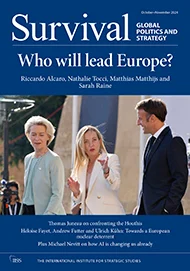
While major European powers may have to contemplate nuclear deterrence without America, the national flexibility and European financial support required to make it feasible is currently difficult to imagine.
For decades, the primordial fear of European NATO allies has been that America would retreat from Europe and leave them threatened by a powerful foe in close proximity – first the Soviet Union, now Russia – and dependent on their own limited ability to organise security. Not only did Europeans dread losing America’s military might, but some also felt that without its diplomatic heft to moderate internal European dynamics, the continent’s erstwhile power struggles could return. America did not retreat for almost 80 years, and it still might not. But strategic and domestic circumstances could also force US policymakers to choose between engagement or disengagement, Europe or Asia.
Were the United States to opt for disengagement, Europeans would be caught unprepared amid the ongoing Russia–Ukraine war – the largest on the continent since the Second World War – and ill-equipped to face Russia alone. In the most extreme scenario, the power vacuum would allow ambitious leaders to claim the lead, while a cacophony of divergent national calls would undermine any sense of European unity. Some could go their own way and balance against Russia, including by nuclear means. Others could bandwagon with Moscow. The end of NATO and the European Union could be nigh.
For purely self-interested reasons, of course, the US may never completely dissociate itself from European security. The Russia–Ukraine war, now in its third year, could come to an end sooner rather than later, with both sides having exhausted their military options. Given the current dynamism in world affairs, making bold and specific predictions about when and under what exact circumstances America might pivot away is a rash and futile endeavour. What matters for European security is that, due mainly to the rise of China, US imperial overstretch and rising populism in America, chances are higher today than at most points in recent European history that the continent will see some form of US pullback in the medium term. Depending on the details, Europeans might then have to reassess the role of nuclear weapons in European security.
The debate has already started, most prominently with French President Emmanuel Macron’s speeches on the European role of French nuclear forces and German politicians’ continued public musings about nuclear deterrence for Europe and Germany. If Donald Trump, who is openly disdainful of NATO and admiring of Russian President Vladimir Putin, wins the US presidential election, the issue could reach a head. Europe’s major powers – France, the United Kingdom and Germany – may be compelled to initiate formal discussions on nuclear deterrence in a post-American Europe. These anticipatory assessments of their national perceptions, policies and preferences, before the centrifugal forces of national self-interest gather, should help identify similarities and differences in their respective positions and facilitate a common European approach.
Read the full article on IISS website.

Available in:
Themes and regions
Share

Héloïse FAYET
Research Fellow and Head of the Deterrence and Proliferation program, Security Studies Center, Ifri

Deterrence and Proliferation
The conflicts in Europe, Asia and the Middle East demonstrate a return of nuclear power to the balance of power. Arsenals are being modernized and expanded, while arms control is collapsing. This research program aims to analyze these phenomena.
Security Studies Center
Heir to a tradition dating back to the founding of Ifri, the Security Studies Center provides public and private decision-makers as well as the general public with the keys to understanding power relations and contemporary modes of conflict as well as those to come. Through its positioning at the juncture of politics and operations, the credibility of its civil-military team and the wide distribution of its publications in French and English, the Center for Security Studies constitutes in the French landscape of think tanks a unique center of research and influence on the national and international defense debate.
Stability under Pressure. A Pakistani View on Nuclear Deterrence after Pahalgam
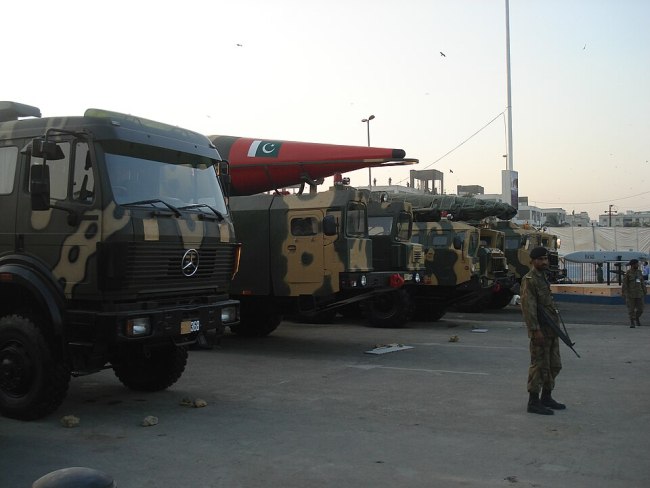
The May 2025 India-Pakistan crisis after the Pahalgam attack has generated a familiar but incomplete debate: did nuclear deterrence work, or did it merely allow both sides to fight a limited war under the nuclear shadow? The better answer is that deterrence worked at the level at which it was designed to work. It prevented a general war and an uncontrolled vertical escalation, and kept nuclear weapons in the background. But it did not prevent India from attempting to carve out space for conventional action, nor did it prevent Pakistan from responding conventionally to restore deterrence credibility.

French Forward Deterrence: What Is in It for the Baltic States?
For what may be its most significant stress test since the end of the Cold War, European deterrence is under strain. Russia’s war against Ukraine has demonstrated Moscow’s willingness to use force and its ability to combine conventional operations with nuclear signalling, coercive rhetoric, and hybrid actions. At the same time, the gradual deterioration of transatlantic relations has revived concerns about the reliability of extended deterrence.
Taking the Pulse: Is France’s New Nuclear Doctrine Ambitious Enough?
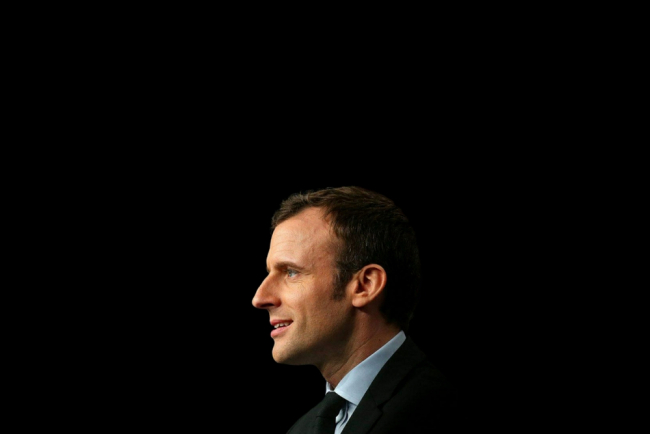
French President Emmanuel Macron has unveiled his country’s new nuclear doctrine. Are the changes he has made enough to reassure France’s European partners in the current geopolitical context?
Macron Offers a Promising Vision for Nuclear Deterrence in Europe
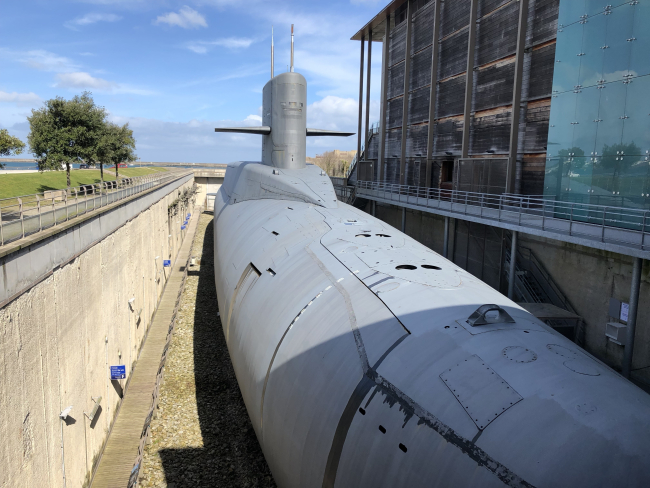
Macron’s concept of ‘forward deterrence’ offers a distinctly European approach to nuclear deterrence.