


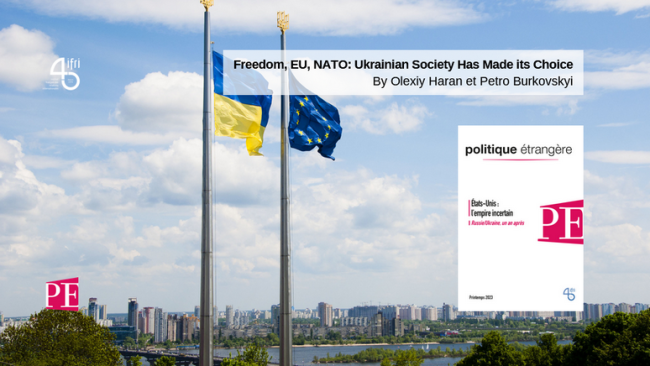
Freedom, EU, NATO: Ukrainian Society Has Made its Choice
The Ukrainian resistance should be seen in its long-term context, starting with independence in 1991, and confirmed by the events of 2014.
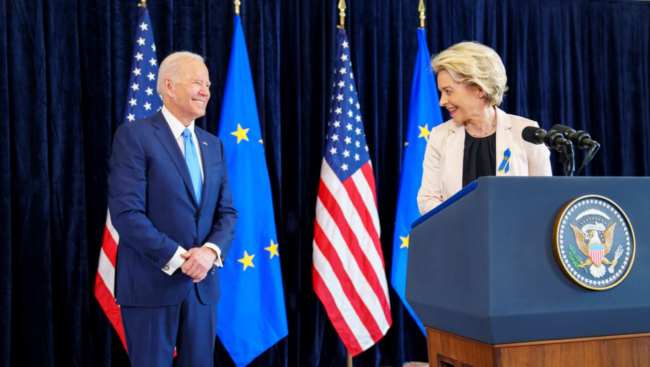
Digital Sovereignty: European Policies, American Dilemmas
European digital sovereignty has been made a priority by Ursula von der Leyen’s European Commission. Due to the privileged position of American companies in the European market, Brussels’ efforts towards digital sovereignty (on privacy, antitrust, data sovereignty, etc.) are closely scrutinized by American policymakers.
Higher Renewable Energy Targets in Germany: How Will the Industry Benefit?
“Deutschland – Einstieg in die Deindustrialisierung?” – “Germany, the beginning of deindustrialisation?” asked the German economic newspaper Handelsblatt in the context of the spike in energy prices that has put at risk thousands of companies across Germany in 2022. Whereas some sectors such as steel, glass and chemicals have been seriously hit, the manufacturing industries operating in the areas linked to the energy transition (such as renewable energies and hydrogen production) should benefit from decisions taken to reach climate neutrality.
Software Power: The Economic and Geopolitical Implications of Open Source Software
Open source is at the heart of the Internet infrastructure, of the software used by individuals or governments, and of the innovation processes of tech companies. Faced with threats to the security and sustainability of the open source model, governments are getting a hold of the topic, which is becoming increasingly geopolitical.
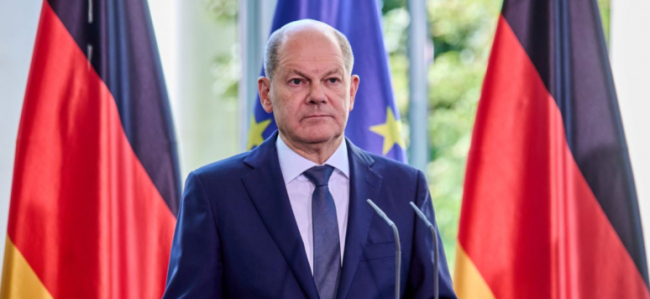
The German Government's Support Plan for Households and Businesses: How to Compensate for the Double Energy and Economic Shock?
In response to Russia's illegal attack on Ukraine, EU member states have issued a series of economic sanctions against Russia. This also includes moratoria on certain products, e.g., in the energy sector.


Europe-US resolve on China proves short-lived ahead of key meetings in Beijing and Washington
Strengthening the Dynamics of Renewable Electricity in Europe
We have made considerable progress in twelve years and the new European Union targets change the scale of renewables, facilitating the electrification of uses. Renewable energies must be pushed to the maximum regardless the future of nuclear power generation.
The European Green Deal Three Years On: Acceleration, Erosion, Fragmentation?
The European Green Deal (EGD) is the single most defining policy initiative of the von der Leyen Commission. Since its publication in December 2019, it has become the European Union’s (EU) new raison d’être: protecting the planet and Europeans from environmental degradation, through a holistic approach to the energy transition, while promoting sustainable growth and a just transition with no social group or territory left behind.
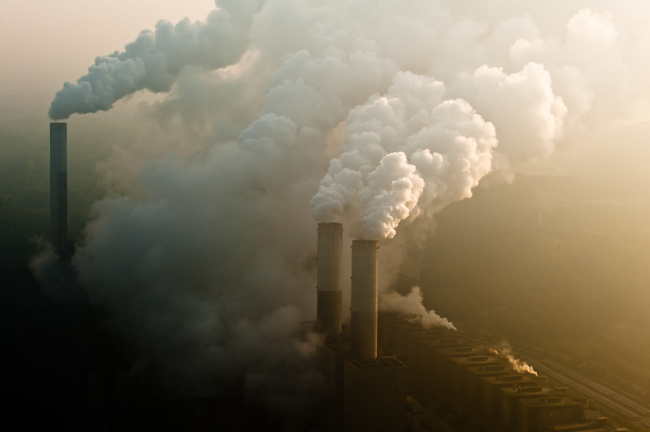
European Green Deal, Three Years Later
The European Green Deal (EGD) is the single most defining policy initiative of the Von der Leyen Commission. Since its publication in December 2019, it has become the European Union’s (EU) new raison d’être.

France accepts a migrant rescue ship as relations sour with Italy
As a ship carrying more than 200 migrants rescued at sea docked in a French port on Friday, a diplomatic crisis between France and Italy worsened, signaling further chaos in the European Union's already erratic handling of asylum seekers coming to Europe.

France accepts migrant rescue ship rejected by Italy as tensions flare
A weeks-long ordeal for asylum seekers who had been stranded at sea concluded on Friday, as the French government granted safe harbor for the Ocean Viking rescue ship in the southern city of Toulon.


Round Up Of New Reports On OpenRAN Security
Following assertions of OpenRAN solutions offering costs cuts and shortcuts to 5G and even claims of superior security, a series of reports from governments, scientific labs, security expert and think tanks investigate the technology. They showcase perspectives from the United State, the European Union, and emerging countries.
COP27: Will Egypt Bring New Life to Climate Conferences?
The COP26, held at the end of 2021 in Glasgow, was emphatically heralded as “the last best hope for the world to get its act together”.
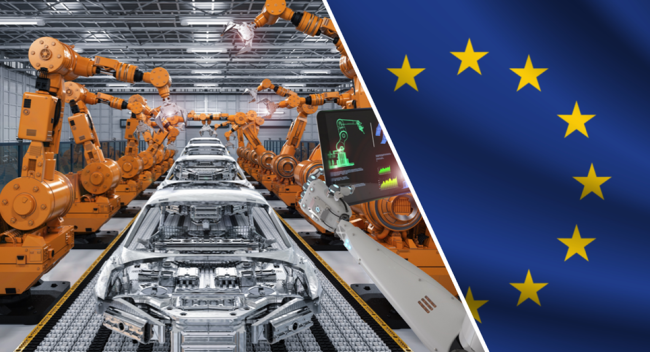
The European Union Industrial Strategy: Reconciling Competition and Geoeconomic Challenges
The EU’s basic assumptions, on which it grounds its economic and trade power, are being steadily cast into doubt. The EU’s main trade partners, the US and China, increasingly set their sights on securing their supply chains, which may further a potential decoupling.

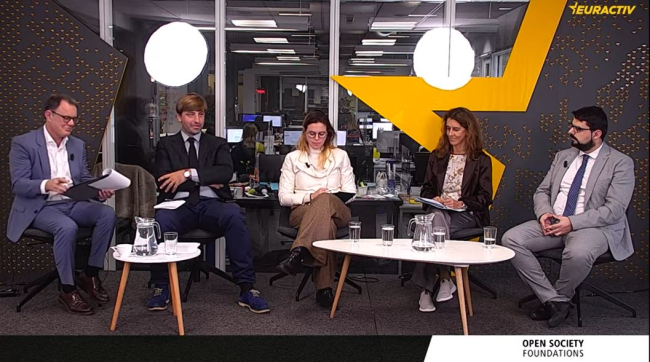
Winter is coming: How to shield the most vulnerable and preserve the consensus on the war
Some of Europe’s poorest countries and communities would be hardest hit by disruptions of Russian energy supplies. With a difficult winter ahead, Europe’s ability to redistribute costs equitably and to shield the most vulnerable will determine whether it can preserve social cohesion and the consensus on the war in Ukraine.
The EU’s Power System by 2030: Navigating the Crisis and Keeping the Decarbonization Cap (video)
Replay from Ifri's conference at the European Parliament in Brussels (October 11, 2022). The combination of the climate crisis and Russia’s war in Ukraine makes the case for a much faster transition to a fully decarbonized power system.
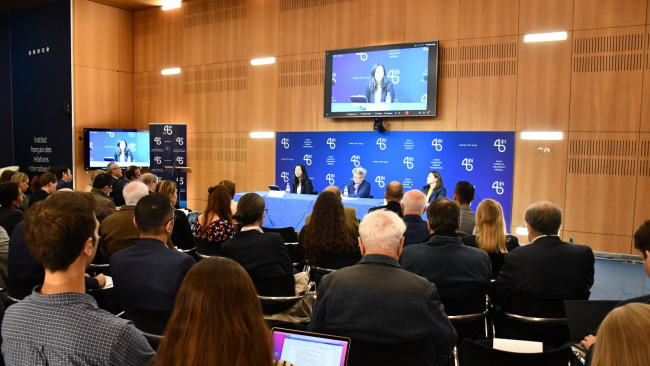
Asia after the War in Ukraine: Re-imagining multilateralism and the risk of high-intensity conflict (video replay)
Annual conference of Ifri's Center for Asian Studies. The war in Ukraine has marked the return of high-intensity conflict in Europe and represents a profound, structural shift in the region’s strategic environment. It also takes place against a backdrop of a decades-long rebalancing of global power and the increase of strategic competition between the United States and China, in particular.
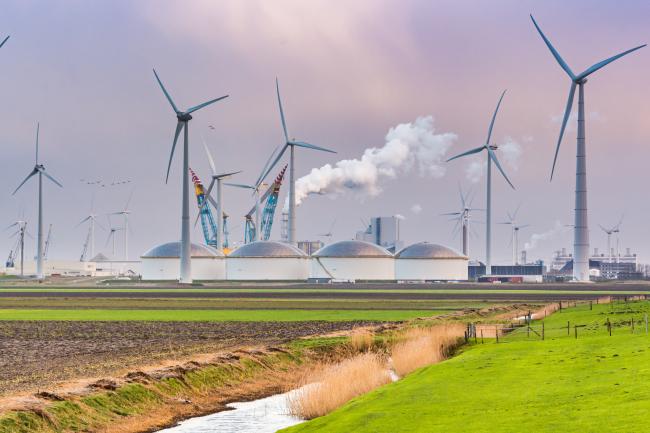
Redefining the Netherlands' Energy Future : Societal Implications of the Nearing End of Dutch Natural Gas
For decades, the large Groningen gas field has been a central pillar of the Dutch welfare state. The availability of gas was so self-evident that many generations still identify with the slogan “Nederland gasland” (“The Netherlands, a gas country”). The nearing end of Dutch gas now requires a mentality shift.
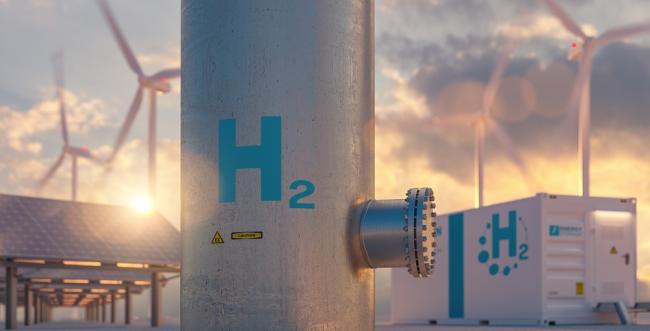
A Guide to Solve EU’s Hydrogen Dilemmas
Facing multiple crises, the European Commission (EC), backed by European Union (EU) Member States, has embarked on a pathway to accelerate the decarbonization of the EU energy system, while fostering its resilience and accelerating the roll out of hydrogen and derivative by-products.

Moving towards a metallic age: building industry resilience through a strategic storage mechanism for Rare Earth Metals
The decarbonisation of our economies, along with the challenges of strengthening the resilience of industrial value chains, reindustrialisation, notably through low-carbon and digital technologies, and the end of a period of cheap oil and gas, are accelerating the advent of an era of increased dependence on metals in a context of new and growing competition for access to resources.
Ifri, a foundation recognized as being of public utility, relies largely on private donors – companies and individuals – to guarantee its sustainability and intellectual independence. Through their funding, donors help maintain the Institute's position among the world's leading think tanks. By benefiting from an internationally recognized network and expertise, donors refine their understanding of geopolitical risk and its consequences on global politics and the economy. In 2026, Ifri partners with over 90 French and international companies and organizations.