



How does France’s nuclear deterrent contribute to the defense of Europe?
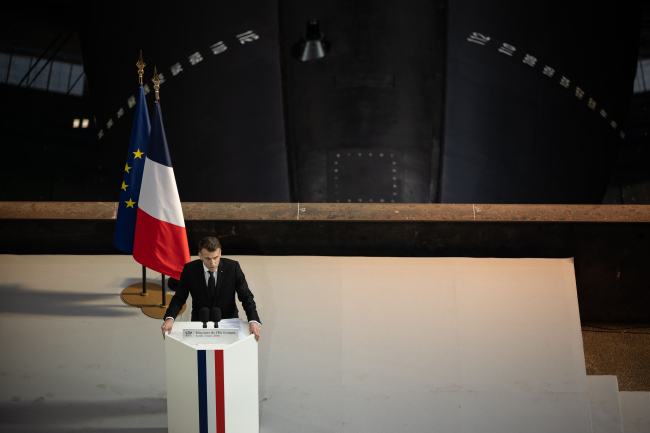
France’s nuclear deterrent, serving first and foremost to defend France’s vital interests, also contributes to the defense of Europe. This contribution has been recognized within the North Atlantic Alliance since 1974, but remains little known. In a speech closely followed by France’s European partners and its adversaries alike, President Emmanuel Macron announced a new concept for French nuclear deterrence: “forward deterrence” (dissuasion avancée). This article aims to explain the origins of this concept, outline its main pillars, and describe the partnerships that are sought. It then discusses the relationship with the U.S. doctrine of “extended deterrence”, and finally offers some ethical considerations.
Fragmented Europe: Dealing with China as a technology and innovation power
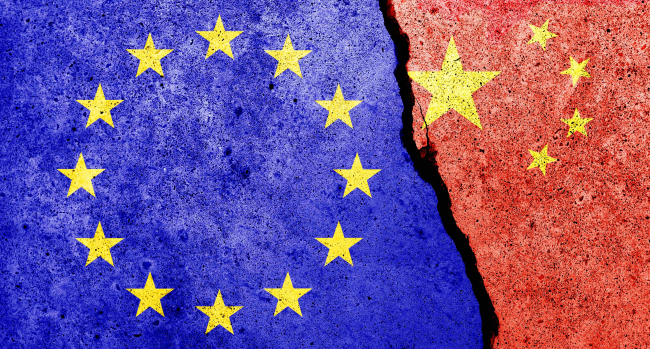
How is Europe navigating China’s ascension as a technological power? The latest report by the European Think-tank Network on China (ETNC) provides a nuanced account of a converging, yet still fragmented approach across 22 countries.
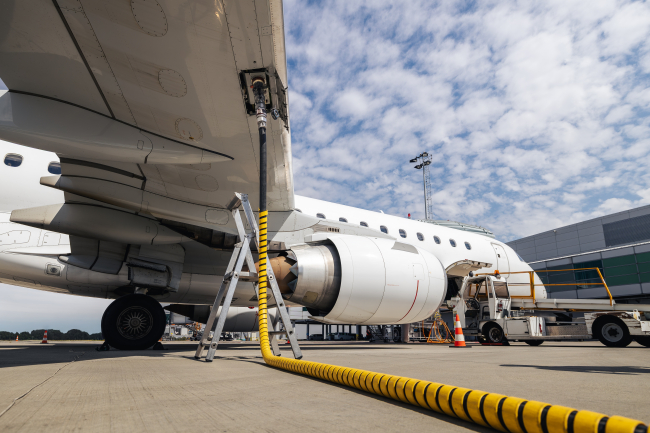
How to Make European e-SAF Production under RefuelEU Aviation Fly?
Three and a half years before the scheduled entry into force of the European regulation ReFuelEU Aviation (RFEUA), which requires aviation fuel suppliers at Union airports to offer a sustainable synthetic alternative (e-SAF), no sizeable commercial production unit (greater than 10,000 tons per year) is active within Europe yet, nor has it even passed the Final Investment Decision (FID). Is a major step in the European Union (EU) plans for decarbonizing air transport at risk of not happening, or at least being postponed for several years? Is Europe losing its bet to create a market for e-SAF? Under what conditions can this bet still be won? Could sovereignty and energy security preoccupations unlock necessary public support and help to overcome economic, financial, logistical or administrative obstacles?

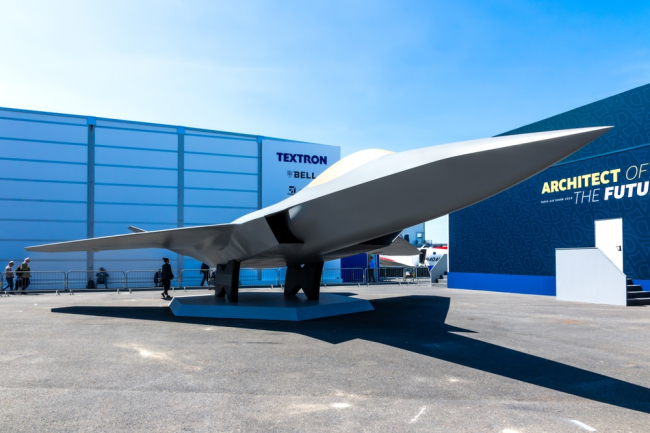
‘We told you so’: French far right responds to European fighter jet failure
The National Rally has long fought against defense industrial cooperation with Germany.
France and EU Enlargement: From Strategic Hesitation to a Geopolitical Shift
Paris has come a long way in its approach to enlarging the European Union. However, French support remains fragile, due in part to a lack of public support.
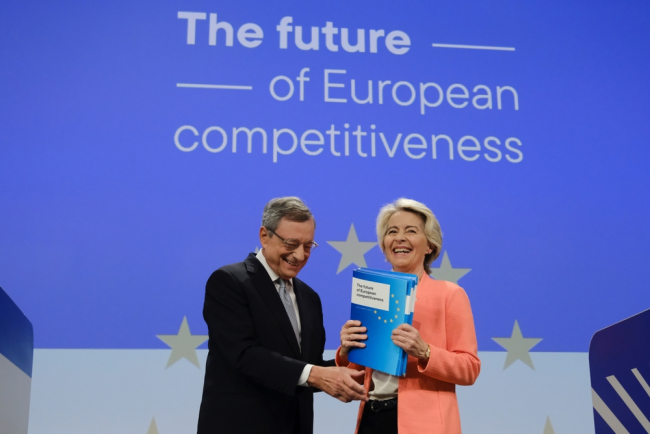
Under construction: Europe’s economic repositioning in a fragmented international order
„Under Destruction“– this was this year’s motto at the Munich Security Conference. A motto that applies both to security and economy in an increasingly fragile international system. In 2024, Mario Draghi’s report on the EU’s competitiveness rang the alarm bell: Europe is slipping behind the US and China, European companies struggle with Brussels' bureaucracy, and the internal market is too fragmented. However, two years later only about 15 % of his recommendations were implemented: the wake-up call was not heard.
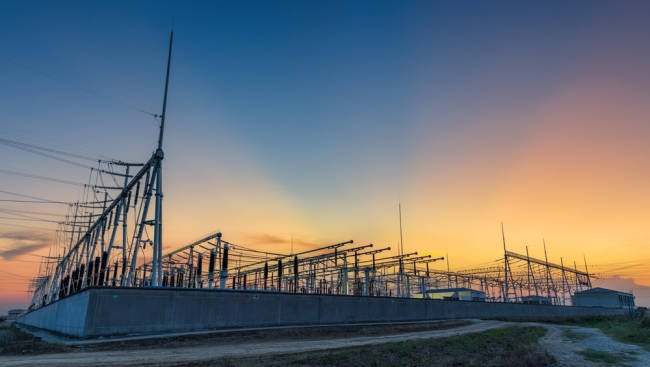
Europe’s Power Grid Challenge: A Make-or-Break for Accelerating Electrification
In April 2023, The Economist published an article pointing to the vast amounts of electricity infrastructure needed to reach energy transition goals.
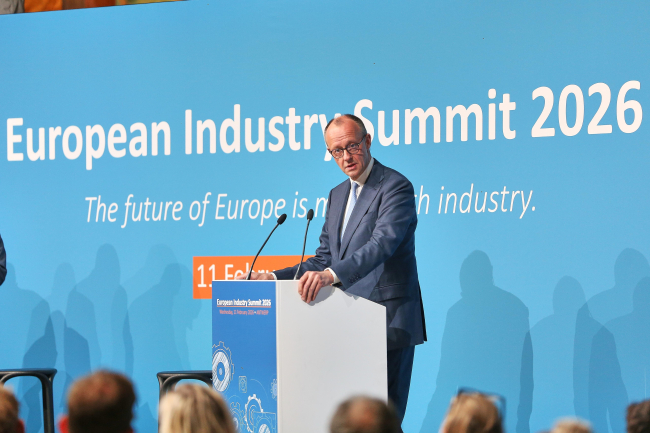
Reviving the German Economy: Balancing Economic, Social, and Defense Priorities
Germany is facing fundamental challenges to its economic and social model and is seeking a new course. The German post-war model was hugely successful, leading to economic strength and prosperity over many decades, but now it is steadily faltering. The previously latent fear of deindustrialization is becoming more concrete, particularly due to the weakening of a key sector: the automotive industry.
How smaller EU states are reshaping Europe’s power structure
Changing economic and trans-Atlantic conditions have led to power restructuring in the 27-nation European Union, opening doors for more negotiating power for many smaller central and former Eastern European nations such as Hungary.
Poking the bear? Armenia welcomes European leaders in Russia's backyard
Just as Europe frets over fresh Trump tariffs, a US troop drawdown announced for Germany and the message it sends to a hostile Russia, how about not one but two summits in former Soviet state Armenia. Before a first-ever gathering of EU leaders in Yerevan on Tuesday comes the European Political Community: a talk shop with regional players which also include Ukraine and NATO heavyweights like the UK, Norway and an outside guest who shares superpower proximity problems.
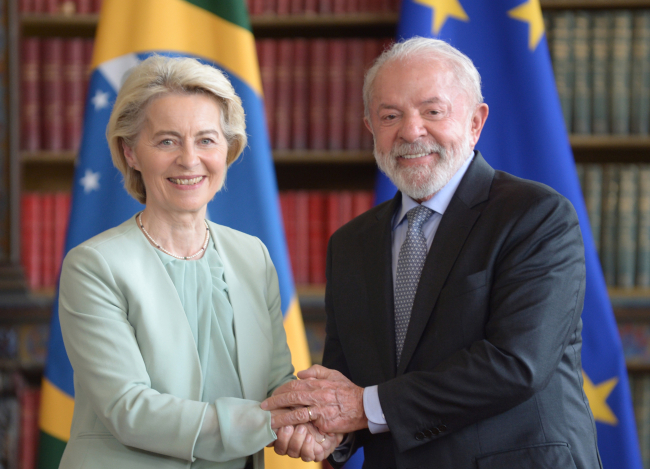
Entry into force of the EU-Mercosur agreement: last act of an endless drama for Germany?
At the World Economic Forum in Davos on January 20, 2026, Ursula von der Leyen, the President of the European Commission, stated that "geopolitical shocks can and must serve as opportunity for Europe".
Germany Maintains Its Single Electricity Price Zone: Implications
In December 2025, Germany refused to split its bidding zone despite recommendations from ENTSO-E, in order to preserve its federal unity, market liquidity, and the competitiveness of its industry, at the cost of persistent North-South imbalances.
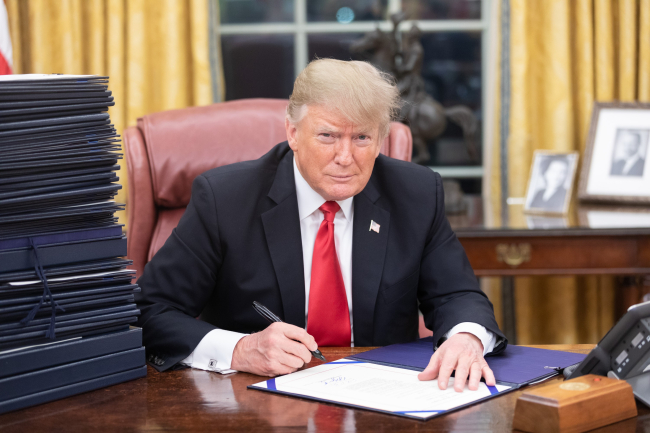
Trump II vs. Digital Governance: A Crusade in the United States and Europe
Since taking office, the Trump II administration has waged a systematic deregulation campaign targeting the tech sector in both the United States and Europe. How can Europe maintain dialogue while preserving its governance framework?
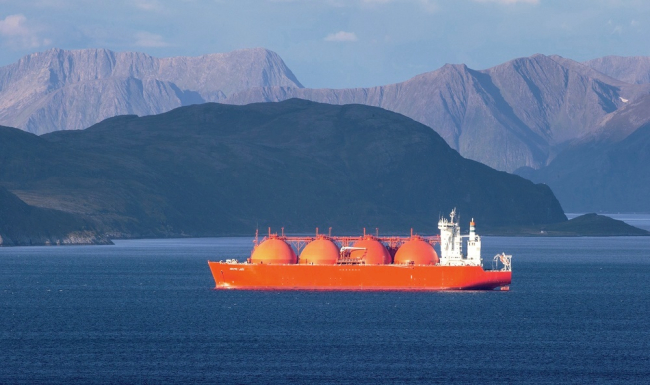
Norway’s Energy Policy Dilemmas and Debates: In or Out?
2026 may prove to be the end of the Norwegian exception. Norway has long prided itself on the successful combination of fossil fuel extraction with a strong social democracy.
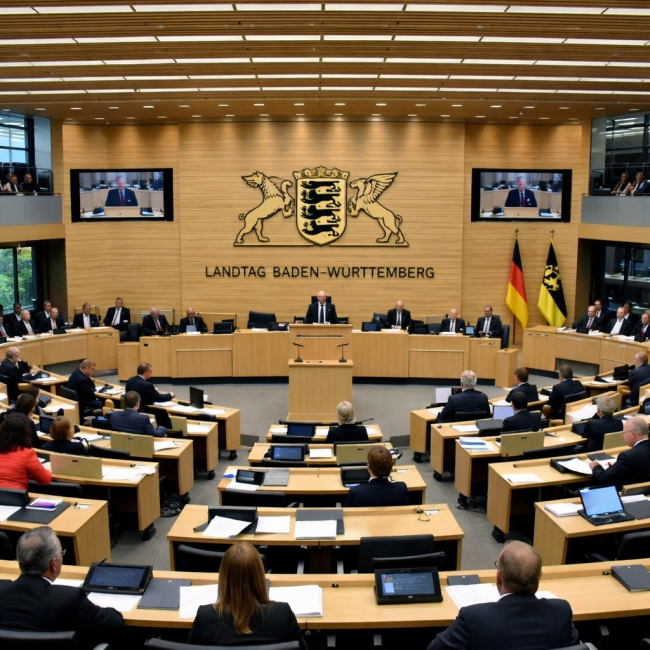
The 2026 State Elections in Baden-Württemberg: First Test For Chancellor Merz's Federal Government?
The state election in Baden-Wuerttemberg in March 2026 will be the first major test of public opinion for Chancellor Friedrich Merz's federal government. At the same time, Baden-Wuerttemberg is one of the federal states that—as an important location for the German automotive industry and its suppliers—is particularly affected by the transformation policy driven by climate change and the international conflict constellation.
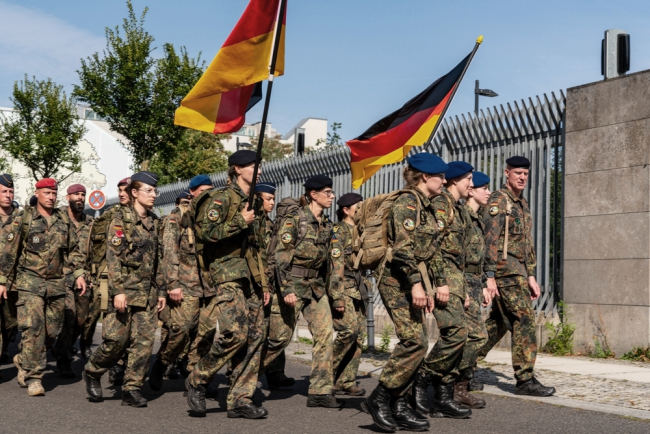
Bundeswehr: From Zeitenwende (historic turning point) to Epochenbruch (epochal shift)
The Zeitenwende (historic turning point) announced by Olaf Scholz on February 27, 2022, is shifting into high gear. Financially supported by the March 2025 reform of Germany’s “debt break” and backed by a broad political and societal consensus to strengthen and modernize the Bundeswehr, Germany's military capabilities are set to rapidly increase over the coming years. Expected to assume a central role in the defense of the European continent in the context of changing transatlantic relations, Berlin’s military-political position on the continent is being radically transformed.
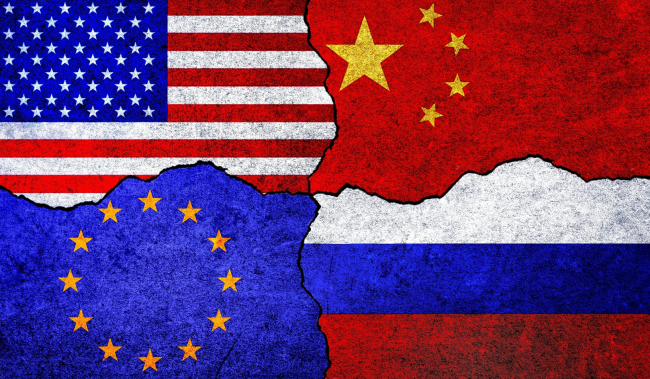
Placing the EU on a Warfare Footing: Energy and Raw Materials Priorities for 2026
The year 2025 has confirmed that one must prepare for much worse in the field of geopolitics and geoeconomics as the intensity and frequency of shocks increase and as the European Union (EU) has no more stable flanks now that crises with the United States (US) become so frequent and reveal a systemic rift. In the world, barriers to trade multiply and dependencies are weaponized.
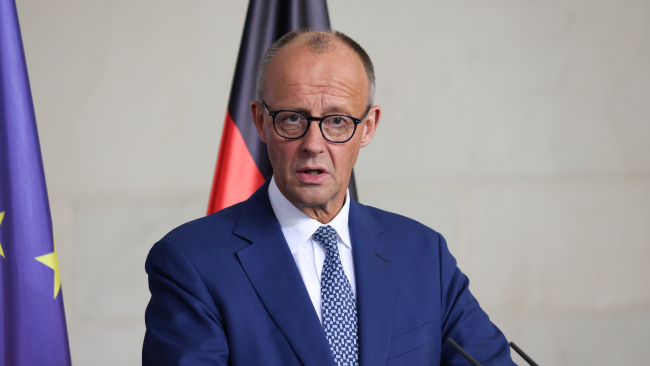
Merz’ European Policy-making: The End of the ‘German Vote’?
Friedrich Merz’s European ambition is to turn Germany, long seen as hesitant into a leading actor within the European Union (EU). To that end, he has pledged to end the “German vote,” a phenomenon that epitomizes the paradox of a country both indispensable and frequently absent from European decision-making.

Securing critical raw material (CRM) value chains – a prerequisite for Europe’s technological resilience
At the heart of economic security, technological resilience is a backbone of the European Union’s (EU) competitiveness. The EU’s energy and digital transitions depend on critical raw materials (CRM).

Reconciling competitiveness and demographic change: a Franco-German imperative
France and Germany are facing parallel demographic shifts that could reshape the future of their economies and their social models. These shifts reflect broader European patterns but are magnified by the central role both nations play in EU governance and competitiveness.
How does France’s nuclear deterrent contribute to the defense of Europe?
France’s nuclear deterrent, serving first and foremost to defend France’s vital interests, also contributes to the defense of Europe. This contribution has been recognized within the North Atlantic Alliance since 1974, but remains little known. In a speech closely followed by France’s European partners and its adversaries alike, President Emmanuel Macron announced a new concept for French nuclear deterrence: “forward deterrence” (dissuasion avancée). This article aims to explain the origins of this concept, outline its main pillars, and describe the partnerships that are sought. It then discusses the relationship with the U.S. doctrine of “extended deterrence”, and finally offers some ethical considerations.
Under construction: Europe’s economic repositioning in a fragmented international order
„Under Destruction“– this was this year’s motto at the Munich Security Conference. A motto that applies both to security and economy in an increasingly fragile international system. In 2024, Mario Draghi’s report on the EU’s competitiveness rang the alarm bell: Europe is slipping behind the US and China, European companies struggle with Brussels' bureaucracy, and the internal market is too fragmented. However, two years later only about 15 % of his recommendations were implemented: the wake-up call was not heard.
Fragmented Europe: Dealing with China as a technology and innovation power
How is Europe navigating China’s ascension as a technological power? The latest report by the European Think-tank Network on China (ETNC) provides a nuanced account of a converging, yet still fragmented approach across 22 countries.
How to Make European e-SAF Production under RefuelEU Aviation Fly?
Three and a half years before the scheduled entry into force of the European regulation ReFuelEU Aviation (RFEUA), which requires aviation fuel suppliers at Union airports to offer a sustainable synthetic alternative (e-SAF), no sizeable commercial production unit (greater than 10,000 tons per year) is active within Europe yet, nor has it even passed the Final Investment Decision (FID). Is a major step in the European Union (EU) plans for decarbonizing air transport at risk of not happening, or at least being postponed for several years? Is Europe losing its bet to create a market for e-SAF? Under what conditions can this bet still be won? Could sovereignty and energy security preoccupations unlock necessary public support and help to overcome economic, financial, logistical or administrative obstacles?
France and EU Enlargement: From Strategic Hesitation to a Geopolitical Shift
Paris has come a long way in its approach to enlarging the European Union. However, French support remains fragile, due in part to a lack of public support.
Reviving the German Economy: Balancing Economic, Social, and Defense Priorities
Germany is facing fundamental challenges to its economic and social model and is seeking a new course. The German post-war model was hugely successful, leading to economic strength and prosperity over many decades, but now it is steadily faltering. The previously latent fear of deindustrialization is becoming more concrete, particularly due to the weakening of a key sector: the automotive industry.
Europe’s Power Grid Challenge: A Make-or-Break for Accelerating Electrification
In April 2023, The Economist published an article pointing to the vast amounts of electricity infrastructure needed to reach energy transition goals.
Entry into force of the EU-Mercosur agreement: last act of an endless drama for Germany?
At the World Economic Forum in Davos on January 20, 2026, Ursula von der Leyen, the President of the European Commission, stated that "geopolitical shocks can and must serve as opportunity for Europe".
Germany Maintains Its Single Electricity Price Zone: Implications
In December 2025, Germany refused to split its bidding zone despite recommendations from ENTSO-E, in order to preserve its federal unity, market liquidity, and the competitiveness of its industry, at the cost of persistent North-South imbalances.
Trump II vs. Digital Governance: A Crusade in the United States and Europe
Since taking office, the Trump II administration has waged a systematic deregulation campaign targeting the tech sector in both the United States and Europe. How can Europe maintain dialogue while preserving its governance framework?
Norway’s Energy Policy Dilemmas and Debates: In or Out?
2026 may prove to be the end of the Norwegian exception. Norway has long prided itself on the successful combination of fossil fuel extraction with a strong social democracy.
The 2026 State Elections in Baden-Württemberg: First Test For Chancellor Merz's Federal Government?
The state election in Baden-Wuerttemberg in March 2026 will be the first major test of public opinion for Chancellor Friedrich Merz's federal government. At the same time, Baden-Wuerttemberg is one of the federal states that—as an important location for the German automotive industry and its suppliers—is particularly affected by the transformation policy driven by climate change and the international conflict constellation.
Europe and Africa
In this special issue of Politique étrangère devoted to the proceedings of the conference organized by Ifri on April 10, 2019, in the Grand Amphitheater of the Sorbonne, on the occasion of its fortieth anniversary, discover the conversation between Louise Mushikiwabo, Secretary General of La Francophonie and Thierrry de Montbrial, Founder and Executive Chairman of Ifri.
The Future of Think Tanks
In this special issue of Politique étrangère devoted to the proceedings of the conference organized by Ifri on April 10, 2019, in the Grand Amphitheater of the Sorbonne, on the occasion of its fortieth anniversary, discover the debate moderated by Bassma Kodmani between Thomas Bagger, Thomas Gomart, Robin Niblett, and Daniela Schwarzer.
The Future of Europe from the US and Asian Point of View
In this special issue of Politique étrangère devoted to the proceedings of the conference organized by Ifri on April 10, 2019, in the Grand Amphitheater of the Sorbonne, on the occasion of its fortieth anniversary, discover the debate moderated by Sylvie Kauffmann between John Allen and Kishore Mahbubani.
The World of Yesterday and Tomorrow
In this special issue of Politique étrangère devoted to the proceedings of the conference organized by Ifri on April 10, 2019, in the Grand Amphitheater of the Sorbonne, on the occasion of its fortieth anniversary, discover the speech by Thierry de Montbrial, Founder and Executive Chairman of Ifri.
The Future of Europe in the Context of Sino-American Competition - Foreword
In this special issue of Politique étrangère devoted to the proceedings of the conference organized by Ifri on April 10, 2019, in the Grand Amphitheater of the Sorbonne, on the occasion of its fortieth anniversary, discover the speech by Bruno Le Maire, Minister of Economy and Finance.
Bundeswehr: From Zeitenwende (historic turning point) to Epochenbruch (epochal shift)
The Zeitenwende (historic turning point) announced by Olaf Scholz on February 27, 2022, is shifting into high gear. Financially supported by the March 2025 reform of Germany’s “debt break” and backed by a broad political and societal consensus to strengthen and modernize the Bundeswehr, Germany's military capabilities are set to rapidly increase over the coming years. Expected to assume a central role in the defense of the European continent in the context of changing transatlantic relations, Berlin’s military-political position on the continent is being radically transformed.
The Future of Europe in the Context of Sino-American Competition - Conclusions
In this special issue of Politique étrangère devoted to the proceedings of the conference organized by Ifri on April 10, 2019, at the Grand Amphitheater of the Sorbonne, on the occasion of its 40th anniversary, read the speech by Jean-Yves Le Drian, French Minister of Europe and Foreign Affairs.
The Future of Europe in the Context of Sino-American Competition - Foreword
In this special issue of Politique étrangère devoted to the proceedings of the conference organized by Ifri on April 10, 2019, in the Grand Amphitheater of the Sorbonne, on the occasion of its fortieth anniversary, discover the speech by Bruno Le Maire, Minister of Economy and Finance.
‘We told you so’: French far right responds to European fighter jet failure
The National Rally has long fought against defense industrial cooperation with Germany.
How smaller EU states are reshaping Europe’s power structure
Changing economic and trans-Atlantic conditions have led to power restructuring in the 27-nation European Union, opening doors for more negotiating power for many smaller central and former Eastern European nations such as Hungary.

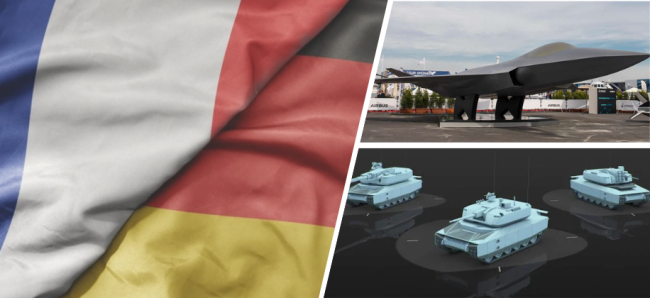
French-German future combat aircraft project on the brink of collapse
Eight years after Emmanuel Macron and Angela Merkel launched the SCAF, this symbol of European sovereignty in defense is on the verge of collapse. At issue are the demands of the project's main contractor, Dassault Aviation, which Berlin considers excessive, as well as political and strategic differences between France and Germany.
Energy sector: outlook and opportunities
The recent energy crisis has highlighted our economies' dependence on energy resources. With fossil fuels becoming less available, and a necessary transition to more decarbonised alternatives, could tomorrow's energy not become more expensive and less certain in availability?

The E.U. Offered to Embrace Ukraine, but Now What?
The European Union and NATO have promised a path to membership for the embattled country. But real partnership will hold risks and benefits for both sides.
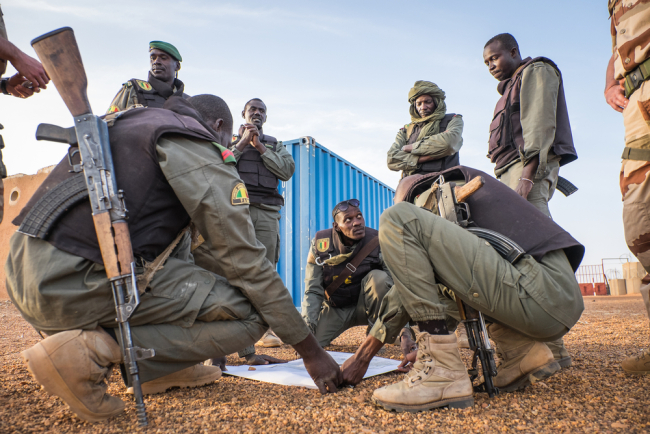
EU Winds Down Military Training Operations in Mali
The European bloc is involved in two training missions in Mali – the EUTM and the EUCAP – to coach soldiers and police.
Poking the bear? Armenia welcomes European leaders in Russia's backyard
Just as Europe frets over fresh Trump tariffs, a US troop drawdown announced for Germany and the message it sends to a hostile Russia, how about not one but two summits in former Soviet state Armenia. Before a first-ever gathering of EU leaders in Yerevan on Tuesday comes the European Political Community: a talk shop with regional players which also include Ukraine and NATO heavyweights like the UK, Norway and an outside guest who shares superpower proximity problems.
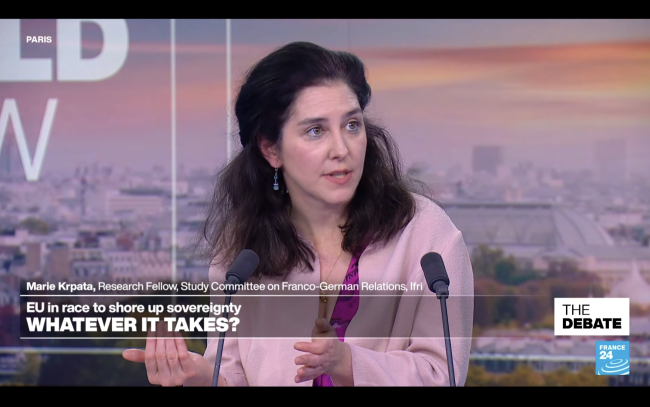
Whatever it takes? EU in race to shore up sovereignty
Can Europe man the ramparts on its own? As the US war secretary snubbed a NATO defence ministers' meeting in Brussels, EU leaders converged on the 16th-century Alden Biesen castle in Belgium's Limburg province to answer former Italian prime minister Mario Draghi's call for a "big bazooka" approach to reform and competitiveness.
Replay - Europe in turbulence: navigating a new world order without the United States?
A webinar organized by the Austro-French Centre for Rapprochement in Europe (ÖFZ) and the French Institute of International Relations (Ifri), on June 25, 2025. The foundations of the post-1945 international order, long anchored by U.S. leadership, are shifting. Amid intensifying geopolitical rivalry, democratic backsliding, and strategic fatigue in Washington, the question arises: what if the United States no longer plays its pivotal role in international security? Simultaneously, the Global South is asserting new political and economic agency, complicating the old binaries of West vs. Rest. For Europe, this landscape is both a challenge and an inflection point.
Better know a nuke: France
In this episode of The Arms Control Poseur, host Dr Alexander Bollfrass is joined by nuclear policy experts Héloïse Fayet, Emmanuelle Maitre and Dr Liviu Horovitz to discuss the history and the current trajectory of France's nuclear arsenal.

Gabrielius Landsbergis: "The Ukrainians have shown that they have the capacity to win this war"
On 8 June, Ifri welcomed the Lithuanian Foreign Minister, Gabrielius Landsbergis. Isabelle Lasserre, diplomatic correspondent at Le Figaro, conducted a video interview with the minister.
European Strategic Autonomy and the Green Transition: What Industrial and Technological Strategies? (Replay)
The invasion of Ukraine by the Russian Federation and consequent supply chain disruptions in the energy sector have exposed critical vulnerabilities in the European Union’s broader strategic autonomy agenda and bolstered efforts at lessening strategic dependency on third states in a variety of areas , from raw materials, batteries and active pharmaceutical ingredients to hydrogen, semiconductors, and cloud and edge technologies.
The EU’s Power System by 2030: Navigating the Crisis and Keeping the Decarbonization Cap (video)
Replay from Ifri's conference at the European Parliament in Brussels (October 11, 2022). The combination of the climate crisis and Russia’s war in Ukraine makes the case for a much faster transition to a fully decarbonized power system.
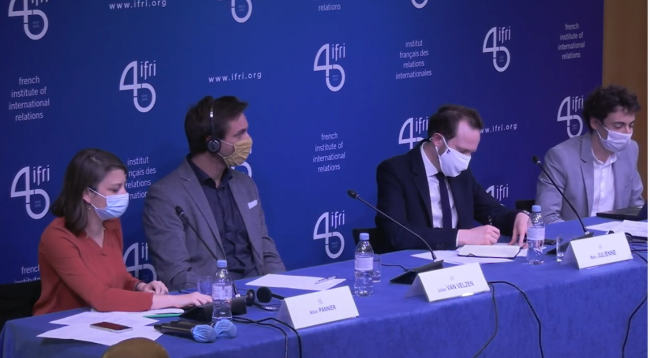
Video replay - Space and Quantum Technologies: What Strategies and Industrial Models for Europe?
Watch the video replay of the conference organized by Ifri's Geopolitics of Technology program on November 18, 2021.
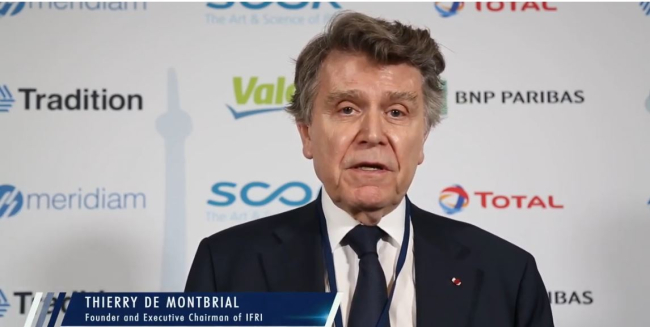
Does a European diplomacy exist?
An interview with Thierry de Montbrial, Founder and Executive Chairman of the Ifri, on the occasion of his participation in the Trilateral Commission.
ENTSO-E's views on the Clean Energy Package - An Interview with Laurent SCHMITT
Laurent Schmitt, Secretary General, ENTSO-E, explains how to improve cooperation between transmission system operators and strengthen security of electricity supply, and how the Clean Energy Package will enhance the design of electricity market as a continuation of the network codes.
Reforming the EU electricity markets - Florian ERMACORA
Florian Ermacora, Head of the Internal Energy Market Unit in DG Energy, explains how the Clean Energy Package will improve the functioning of the internal electricity market, and how the new market design will help integrating larger shares of renewables.
Ifri, a foundation recognized as being of public utility, relies largely on private donors – companies and individuals – to guarantee its sustainability and intellectual independence. Through their funding, donors help maintain the Institute's position among the world's leading think tanks. By benefiting from an internationally recognized network and expertise, donors refine their understanding of geopolitical risk and its consequences on global politics and the economy. In 2026, Ifri partners with over 90 French and international companies and organizations.


Our experts in the media
Discover all our services
I see some degree of — I don’t want to say panic — but really alarmed Europeans who realize they need to stick together as much as possible.
If the Europeans want to step up and make up for the loss of American aid to Ukraine, it needs to happen now, they need to put the money on the table; they need to pass on the orders to the defense industry.
Europe is lacking ammunition, we’re lacking replacement parts, we’re lacking readiness.
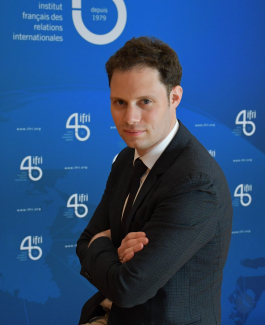
quoted by Lisa Bryant for Voice of America.
Merz's statement now needs to be followed up in the long term at political level, on both the French and German sides. It's been on the table for five years, and if we don't talk about it now, when Europe is in danger, we'll never talk about it.

cited by Politico.