The Green Deal’s External Dimension. Re-Engaging with Neighbors to Avoid Carbon Walls
The European Union (EU)’s Green Deal is a game changer with attention so far focused on forthcoming actions plans, the Climate Law, financial resources, the revision of the 2030 targets and of the emissions trading system (ETS).

France to spell out nuclear plan
A researcher said that ‘the balance is shifting, including in countries such as Germany’ on the role of nuclear weapons in Europe’s strategic ambitions.
France, the EU’s sole nuclear power since Britain’s exit from the bloc, was to unveil how it intends to use its atomic arsenal as a deterrent. French President Emmanuel Macron, in an address to military officers graduating in Paris yesterday, was expected to recommit to upgrading France’s capacity, at a time when NATO allies, who would ordinarily look to the US in a nuclear standoff, worry about Washington’s retreat from the multilateral stage.
European Identity/ies
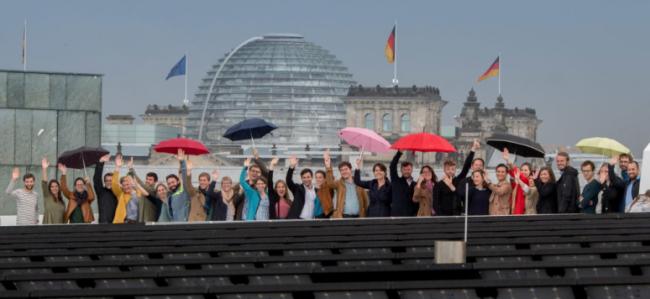
Europe is divided in many ways. Brexit and rising nationalism are striking examples of this existing fragmentation. But what unites us Europeans? The Franco-German Future Dialogue 2019 has met fellow Europeans in thirteen member states of the European Union to discuss questions of identity. Do farmers feel European? What role do languages play? Do European communities exist? Does the "Fridays for Future-Generation" feel European? How diverse are the institutions?
The World of Yesterday and Tomorrow
In this special issue of Politique étrangère devoted to the proceedings of the conference organized by Ifri on April 10, 2019, in the Grand Amphitheater of the Sorbonne, on the occasion of its fortieth anniversary, discover the speech by Thierry de Montbrial, Founder and Executive Chairman of Ifri.
The Future of Europe in the Context of Sino-American Competition - Foreword
In this special issue of Politique étrangère devoted to the proceedings of the conference organized by Ifri on April 10, 2019, in the Grand Amphitheater of the Sorbonne, on the occasion of its fortieth anniversary, discover the speech by Bruno Le Maire, Minister of Economy and Finance.
The Future of Europe in the Context of Sino-American Competition - Conclusions
In this special issue of Politique étrangère devoted to the proceedings of the conference organized by Ifri on April 10, 2019, at the Grand Amphitheater of the Sorbonne, on the occasion of its 40th anniversary, read the speech by Jean-Yves Le Drian, French Minister of Europe and Foreign Affairs.
The Future of Europe from the US and Asian Point of View
In this special issue of Politique étrangère devoted to the proceedings of the conference organized by Ifri on April 10, 2019, in the Grand Amphitheater of the Sorbonne, on the occasion of its fortieth anniversary, discover the debate moderated by Sylvie Kauffmann between John Allen and Kishore Mahbubani.
Europe and Africa
In this special issue of Politique étrangère devoted to the proceedings of the conference organized by Ifri on April 10, 2019, in the Grand Amphitheater of the Sorbonne, on the occasion of its fortieth anniversary, discover the conversation between Louise Mushikiwabo, Secretary General of La Francophonie and Thierrry de Montbrial, Founder and Executive Chairman of Ifri.
The Future of Europe in the Context of Sino-American Competition - Foreword
In this special issue of Politique étrangère devoted to the proceedings of the conference organized by Ifri on April 10, 2019, in the Grand Amphitheater of the Sorbonne, on the occasion of its fortieth anniversary, discover the speech by Bruno Le Maire, Minister of Economy and Finance.
The Future of Think Tanks
In this special issue of Politique étrangère devoted to the proceedings of the conference organized by Ifri on April 10, 2019, in the Grand Amphitheater of the Sorbonne, on the occasion of its fortieth anniversary, discover the debate moderated by Bassma Kodmani between Thomas Bagger, Thomas Gomart, Robin Niblett, and Daniela Schwarzer.

France vows sanctions if US goes ahead with planned EU tariffs
France and the European Union are ready to respond "with sanctions" if the United States rejects talks over the Airbus trade dispute, French Finance Minister Bruno Le Maire said on Thursday. "If the American administration rejects the hand that has been held out by France and the European Union, we are preparing ourselves to react with sanctions," said Le Maire.

(De)globalization of International Plastic Waste Trade: Stakes at Play and Perspectives
The world plastic production has been multiplied by 23 since 1964 to reach 348 million tonnes (mt) in 2017. This production level is expected to double in the next 20 years, largely because of the significant growth in plastic consumption in developing countries. Today, China is the largest producer of plastics (representing nearly 30% of global production) and the European Union (EU) comes second (18.5%) with 64 mt.
Prospects for the New EU Strategy on India: Game Changer or Business as Usual?
The new European Union (EU) strategy on India marks a major moment of departure in EU-India relations.
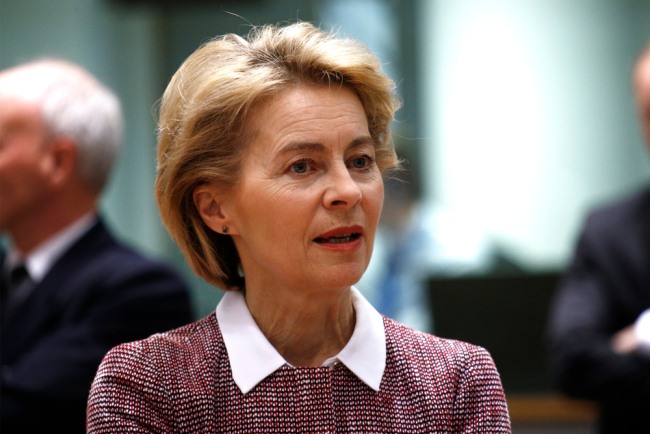
Ursula von der Leyen: betting on Franco-German unity in the European Commission
Germany's Ursula von der Leyen nominated to lead EU Commission.
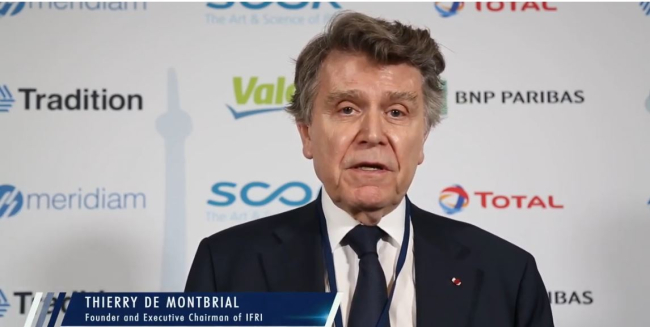
Does a European diplomacy exist?
An interview with Thierry de Montbrial, Founder and Executive Chairman of the Ifri, on the occasion of his participation in the Trilateral Commission.

Désinfox: no, Europe is not under Germany's rule
Since the financial crisis of 2008, has the balance of power between France and Germany shifted in favor of Berlin? Does Angela Merkel alone decide on the conduct of the European Union? The answer obviously deserves to be nuanced.
Migration and Cohesion in Europe: a Challenge, not a Contradiction
The eighth position paper of the Daniel Vernet Group addresses immigration, integration and cohesion in Europe where migration is often perceived as a threat to cohesion within societies and also among states. In the paper, the Daniel Vernet Group argues that migration and cohesion are not contradictory. However, Germany and France need to develop common approaches in order to encourage the finding of European answers to these challenges.
The European Battery Alliance is Moving up a Gear
French battery cell manufacturer Saft and Opel, the German subsidiary of automaker PSA Group, are finalising the details of a major investment project in battery cell manufacturing. Is the European Union (EU) finally challenging Asia’s dominance on battery cells production? What chances of success for the European Battery Alliance (EBA) and what implications for the EU industrial policy?
Russia-Ukraine Gas Relations: The Mother of All Crises or a New Start to 2030?
Ten years after the January 2009 gas crisis, Russian-Ukrainian gas relations are at another turning point: the then concluded contracts are terminating on 31 December 2019. While trilateral talks brokered by the European Commission (EC) have started in July 2018, the real negotiations about the future of this relationship can be expected to start no earlier than in December, that is in the midst of the winter and a second to midnight. Crucial months lie ahead.
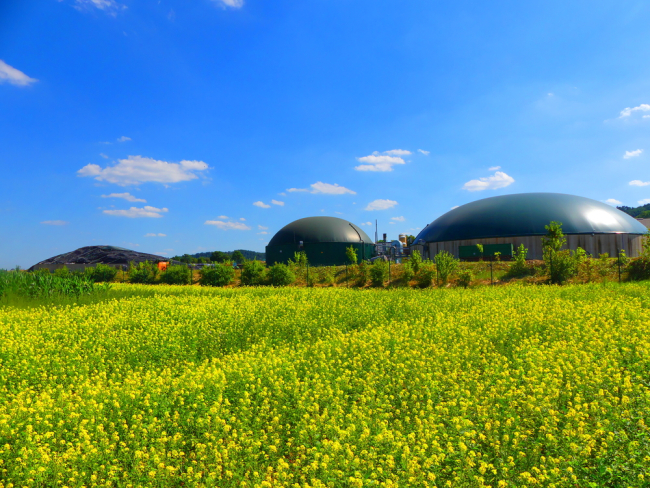
Biogas and Biomethane in Europe: Lessons from Denmark, Germany and Italy
At a time when the European Union (EU) is discussing its long-term climate strategy and drafting new legislation to foster the decarbonization of its gas sector, a close look at the experience of Denmark, Germany and Italy with renewable gas production can provide valuable lessons.
Ifri, a foundation recognized as being of public utility, relies largely on private donors – companies and individuals – to guarantee its sustainability and intellectual independence. Through their funding, donors help maintain the Institute's position among the world's leading think tanks. By benefiting from an internationally recognized network and expertise, donors refine their understanding of geopolitical risk and its consequences on global politics and the economy. In 2026, Ifri partners with over 90 French and international companies and organizations.