


213 publications for "geopolitical"
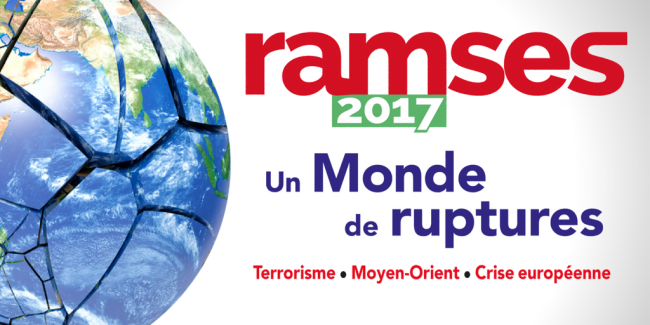
RAMSES 2017. A Fragmented World
RAMSES 2017. A Fragmented World, prepared by IFRI’s research team and selected external experts, offers an in-depth and up to date analysis of global geopolitics.
This 35th edition focuses on three key issues: the spread of jihadist terrorism, the Middle East’s disintegration, and doubts about the European project. With the world’s balance of power and economic foundations shifting, the next few months are likely to be decisive for our future. The growing diversity and complexity of our world is startling, which is why it is important to rethink our analyses and means of action.
Russia's Asia Strategy: Bolstering the Eagle's Eastern Wing
Among Russia’s strategic priorities, Asia traditionally played a secondary role compared to the West. In the mid-1990s, then Foreign Minister Yevgeny Primakov initiated a rapprochement with China and India. Then, in 2014, deteriorating relations between Russia and the West prompted Moscow to begin its “great pivot to the East”.
Russia’s Asia Strategy: Bolstering the Eagle’s Eastern Wing
Among Russia’s strategic priorities, Asia traditionally played a secondary role compared to the West. In the mid-1990s, then Foreign Minister Yevgeny Primakov initiated a rapprochement with China and India. Then, in 2014, deteriorating relations between Russia and the West prompted Moscow to begin its “great pivot to the East”.
Russia's Diplomacy in the Middle East: Back to Geopolitics
Moscow's approach to the Middle East has undergone real changes from Soviet times to the present day: it evolved from creating zones of influence against the background of confrontation with the West to seeing the region through the prism of mainly economic interests, and, finally, to Moscow’s current pragmatic view.
The Return of Geopolitical Risk - Russia, China and the United States
The year 2014 was defined by the conflict in Ukraine, the emergence of Daesh, and tensions between China and Japan. As for 2015, it has witnessed the spread of Daesh, the conflict in Yemen, the Greek crisis, revelations about the activity of the National Security Agency (NSA), the migrant crisis, and a ramping-up of terrorist attacks.
Netherlands: Hoping For Balance and Convergence
As a trading nation, the Netherlands has in particular valued the EU’s economic dimension. This also includes the EU’s geopolitical influence as it requires a major trading bloc to sway international negotiations. Moreover, it has always strived to balance powers in Europe and feels that the EU is a good vehicle through which to do so.
Austria: Two Sides of the Same Coin
Due to geopolitical constellations, Austria could be seen as “a rather late” comer to the European Union (it joined in 1995). The rationale to join remains relevant: protection of wealth and securing a prosperous future. Being very reliant on export, the access to the single market is fundamental to its economy. The enlargement has also helped Austria become a hub between Western and Eastern Europe.

Japan's Challenges in Public Diplomacy, An American Vision
Japan’s public diplomacy (PD) profile rests almost exclusively on the promotion of its cultural soft power. Today, in the complex geopolitical setting of Asia, in which national rivalries are reviving competing wartime history narratives and territorial disputes, this approach is no longer sufficient to advance Japan’s own national interests and gain favorable opinion abroad. Under the Prime Minister Abe, Japan has begun to transform and upgrade its public diplomacy. However, the country is still facing a number of challenges.