




3435 publications
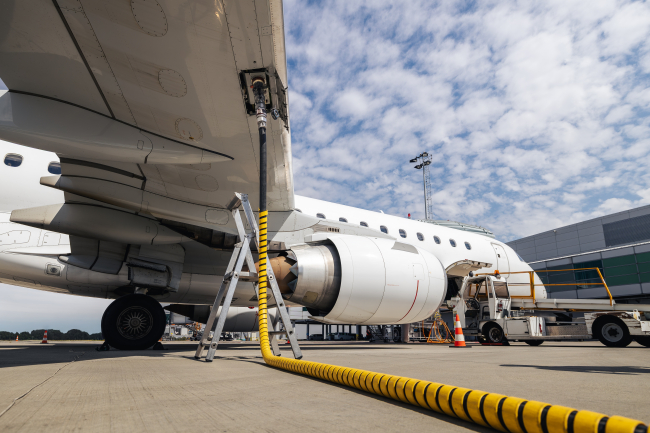
How to Make European e-SAF Production under RefuelEU Aviation Fly?
Three and a half years before the scheduled entry into force of the European regulation ReFuelEU Aviation (RFEUA), which requires aviation fuel suppliers at Union airports to offer a sustainable synthetic alternative (e-SAF), no sizeable commercial production unit (greater than 10,000 tons per year) is active within Europe yet, nor has it even passed the Final Investment Decision (FID). Is a major step in the European Union (EU) plans for decarbonizing air transport at risk of not happening, or at least being postponed for several years? Is Europe losing its bet to create a market for e-SAF? Under what conditions can this bet still be won? Could sovereignty and energy security preoccupations unlock necessary public support and help to overcome economic, financial, logistical or administrative obstacles?
France and EU Enlargement: From Strategic Hesitation to a Geopolitical Shift
Paris has come a long way in its approach to enlarging the European Union. However, French support remains fragile, due in part to a lack of public support.

Framework Nation: A European Challenge and French Ambition
First appearing in the early 2000s, the framework nation concept follows several distinct rationales, whether it refers to a country assuming the leadership of a military operation, directing a multinational capability project, or commanding a permanent force structure. In every case, the country that takes on this role fully intends to derive from it additional politico-military influence.

The European Biomethane Sector at a Critical Juncture: Stronger Policy Alignment Will Matter
The European biomethane sector is at a critical juncture.
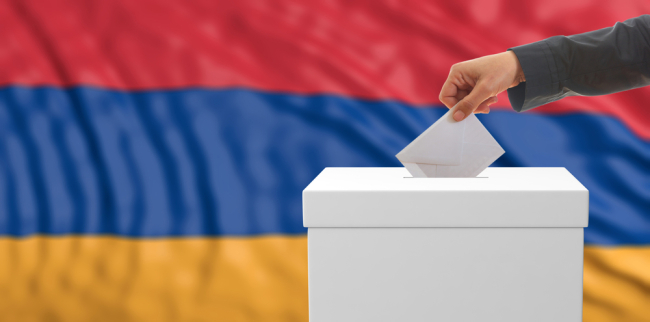
Between Russia and Europe, between War and Peace: What is at Stake in Armenia’s Upcoming Elections?
Armenia’s June 7, 2026, parliamentary election is shaping up less as a routine vote than as a referendum on Nikol Pashinyan’s post-2020 course, which includes peace with neighbors, reduced dependence on Russia, and a more explicit European orientation. The ruling Civil Contract party is still the frontrunner, but its position is fragile, as the campaign is being fought in a highly polarized environment shaped by the trauma of defeat in the war against Azerbaijan, the displacement of Karabakh Armenians, and the massive election interference from Russia.
Strategic Shift in NATO’s Support for Ukraine. A Study of NSATU and PURL Initiatives
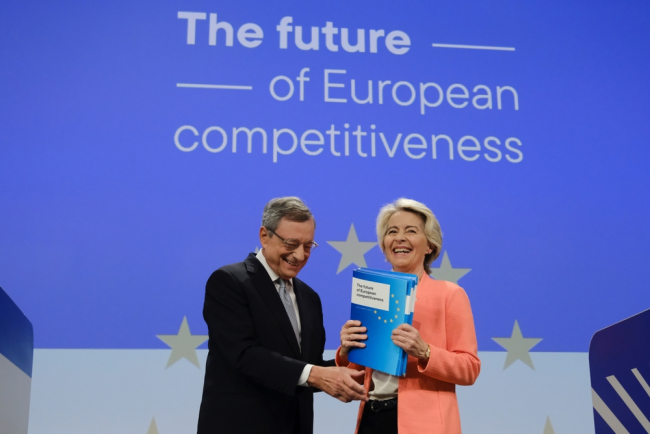
Under construction: Europe’s economic repositioning in a fragmented international order
„Under Destruction“– this was this year’s motto at the Munich Security Conference. A motto that applies both to security and economy in an increasingly fragile international system. In 2024, Mario Draghi’s report on the EU’s competitiveness rang the alarm bell: Europe is slipping behind the US and China, European companies struggle with Brussels' bureaucracy, and the internal market is too fragmented. However, two years later only about 15 % of his recommendations were implemented: the wake-up call was not heard.
Governability, Inequality, and the Welfare State
Economic insecurity and inequality make the governance of political societies and the international order more complex. Reallocating spending from the social commitments of the welfare state to the military budget is thus inadvisable over the long term. Instead, the welfare state should be oriented toward protecting production capacity, especially at a time when the means of production are potentially going to be revolutionized by the emergence of new technologies such as artificial intelligence.