




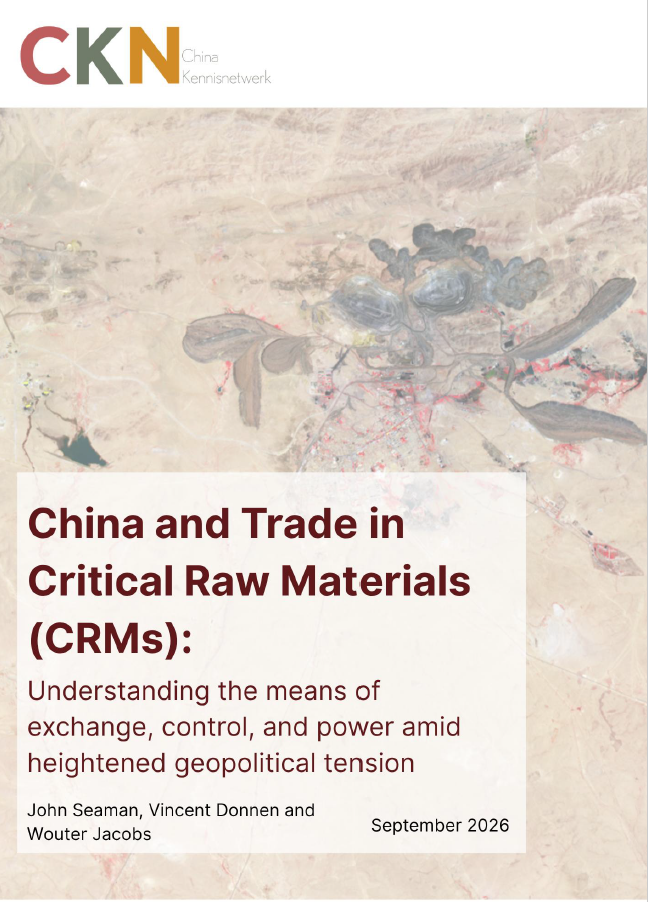
China and Trade in Critical Raw Materials (CRMs)
Critical raw materials (CRMs) have become central features of a new dynamic in global power politics, with China now wielding considerable leverage. Amid rising regional and global uncertainty, resource security is back in the spotlight as a key determinant of sovereignty and national security for Europe, its allies and its partners. The very survival of key, even vital industries, from automotive to aerospace to health to energy to defense, is at stake.

Key takeaways
- Critical Raw Materials (CRMs) are now a lever of geopolitical power — and a matter of sovereignty for Europe.
- China's dominance of production and processing, once about resource security, is now just as much about industrial strategy and geopolitical leverage. Beijing is increasingly looking to capitalize on and entrench its advantage.
- Diversification for Europe is key, but CRM markets are fundamentally different from classical commodity markets, vastly complicating the effort.
- Strong public-sector engagement is fundamental, but while the state must lead, it cannot succeed alone. Engagement and close coordination with the private sector is essential, as demonstrated in the case of Japan.
- Ultimately, the price of inaction far outweighs the cost of ensuring resilient CRM supply chains.
- The Netherlands, as a logistics, warehousing and trading hub, has an outsized role to play in bolstering European resilience, even without significant domestic mineral deposits or processing capacity of its own.
Executive Summary
Critical raw materials (CRMs) — from rare earths to gallium, germanium, tungsten or antimony — have become central instruments of power politics in an era of intensifying great-power competition. As the energy transition, digital transformation and modern defense industries drive demand for an ever-widening range of mineral resources, China's dominant position across mining, processing and trade has turned resource security into a defining question of sovereignty for Europe and its allies. Since 2023, Beijing has progressively deployed export controls and other tools to leverage this dominance, placing the survival of key European industries — automotive, energy, health, aerospace and defense — increasingly at risk. This paper argues that too little policy attention has been paid to the underlying mechanics of CRM markets themselves, a gap that has allowed severe market concentration to take hold and threatens to entrench further dependency. It sets out a framework for understanding how CRM trade functions, examines the sources and levers of Chinese power in this space, draws lessons from Japan's experience of supply chain diversification, and closes with concrete recommendations for the European Union and the Netherlands.
Understanding CRM markets
Before considering China's dominant role, it is essential to understand the structural specificities of CRM markets themselves, since these features — more than Chinese policy alone — explain why supply chains have become so concentrated and why diversification is not straightforward. In short, CRMs do not trade like conventional commodities. They differ from base metals such as iron, aluminum or zinc in two fundamental respects: their availability is exposed to multifactorial risk, and demand for them is set to grow considerably as they underpin high value-added applications in chemicals, electronics and defense. Because substitution is technically very difficult for most specialty metals, demand does not fall naturally even as supply tightens or prices spike — a rigidity that removes one of the normal shock absorbers of a functioning market.
On the supply side, most CRMs are obtained as by-products of base or precious metals, so their production levels are dictated by the market dynamics of an unrelated host metal rather than by their own price signals. When prices for a given CRM rise, producers typically have little ability to ramp up supply in response, since output is tied to decisions made about the host metal. This same dynamic starves the market of information: because most CRM output correlates with capital expenditure in the host metal rather than in the CRM itself, dedicated market intelligence is scarce. The combination of low price elasticity on both the demand and the supply side, together with this chronic information deficit (in addition to China’s own market maneuvers), produces significant price volatility — itself a direct symptom of underlying availability risk.
These features also block out the kind of market infrastructure taken for granted in other commodities. Because CRMs are produced in small volumes and trade at prices far below those of precious metals, trading volumes are too thin to support futures markets on exchanges such as the London Metal Exchange; a listing generally requires substantial liquidity, low concentration of supply and demand, and strong standardization of the material, none of which most CRMs offer to a sufficient degree. Matters are further complicated by the fact that each metal exists in multiple purities, chemical forms and countries of origin, effectively fragmenting a single metal into several distinct markets — and prices — at once. As a result, almost all CRMs are traded over the counter (OTC), with price discovery performed not by an exchange but by private Price Reporting Agencies, which compile OTC transactions reported by market participants into regional benchmark prices for the US, Europe and China. In the absence of exchange-listed futures or options, hedging is similarly confined to OTC instruments such as forward contracts.
This OTC structure also shapes how industrial buyers actually secure supply. Except during downturns, large industrial consumers favor forward contracts negotiated directly with producers — extending up to 15 years in sectors such as aerospace, where product cycles are long and visibility into future needs is clear. Spot markets, by contrast, are generally reserved for marginal demand, for small industrial purchasers, or for large buyers running tenders, and this spot segment is itself dominated by intermediary traders rather than direct producer-to-consumer transactions. Because CRM demand — and with it, market volumes — is set to grow substantially in the years ahead, and given ongoing innovation in fintech, new quotation and price-discovery mechanisms tailored to these metals may yet emerge, but for now these structural features leave CRM markets thin, opaque and highly exposed to concentrated control by whichever actor dominates production and processing — a vulnerability that China has been best positioned to exploit.
The sources and levers of China's power
China's dominance is the product of decades of deliberate policy choice rather than geological advantage. Three priorities have shaped this trajectory over time: resource security, industrial competitiveness, and international power politics — and each has left a distinct imprint on how CRM trade functions today. Resource security has dominated the policy mindset in Beijing since the foundations of the People’s Republic and China has systematically built the capacity to mine and refine ores — including those imported from overseas — even where it lacks a natural endowment. There is ultimately a distinction in Chinese strategic debates between "advantageous" minerals where the country holds genuine production dominance and "shortage" minerals where it remains structurally dependent, particularly on mine production overseas. The result is striking: China accounts for over half of global production or processing for 19 of the 34 raw materials the EU deems critical, exceeding 90% for magnesium, gallium and heavy rare earths, and it still processes the overwhelming majority of the world's heavy rare earths, 79% of cobalt refining and 95% of manganese chemical production, despite mining only a small fraction of the primary ore itself. Aggressive overseas investment has extended this refining dominance well beyond China's own geology, while state stockpiling has provided a further tool to smooth supply, support upstream investment, and adjust flows to foreign markets at will. At its core, Beijing has thus been driven by a sense of vulnerability that has led it to seek out a degree of self-sufficiency which would develop into market dominance and ultimately strategic strength while mining and processing in Europe, the United States and elsewhere was abandoned to purely cost-maximizing, market logics.
China has moved to translate its position of strength into strategic gains in two areas: industrial competitiveness and, more recently, geopolitical leverage. On industrial competitiveness, cheap and secure upstream inputs have underwritten China's dominance in downstream industries such as batteries, solar panels and electric vehicles — China accounts for roughly three-quarters of global battery production and over 80% of global solar PV manufacturing capacity — with the scale of domestic demand in turn reinforcing upstream leverage over global pricing. Industry estimates suggest the cost advantage afforded to downstream manufacturers is highly significant – even up to ten times greater than the cost of building the upstream overcapacity that enables it – illustrating how tightly the two ends of the value chain reinforce one another. On power politics, President Xi Jinping's 2020 call to "strengthen the dependence of international industrial chains on China" as a deterrent against foreign pressure has been operationalized through a rapidly expanding legal and regulatory toolkit — the 2020 Export Control Law, the Unreliable Entities List, the Anti-Foreign Sanctions Law, and a widening catalogue of export-controlled materials and technologies — all explicitly designed to convert market dominance into a source of deterrence and geopolitical leverage. Regulations adopted by the State Council from April 2026 on supply chain security and countering extraterritoriality are meanwhile positioned to complicate or undermine foreign (including European) efforts to diversify supply chains and reduce dependence on China.
Export controls have been the most significant lever of power at Beijing’s disposal. Operationalized since July 2023, a dual-use export licensing regime complemented in some cases by specific product or technology bans have expanded to cover not only raw materials, but chemical intermediates and downstream goods such as rare earth magnets. These controls generate two distinct effects. The chokepoint effect allows Beijing to restrict access to vital materials in pursuit of political and strategic goals, as has been visible in its standoff with Washington, while simultaneously bolstering the relative competitiveness of Chinese downstream firms. The panopticon effect operates through the licensing process itself: exporters seeking authorization must disclose detailed information on end uses, downstream buyers and supply chain structure, effectively requiring foreign firms to hand over sensitive commercial intelligence in exchange for continued access. It essentially provides Beijing with a detailed map of global supply chains. This map allows the Chinese authorities the ability to more surgically target specific sectors, industries or firms to achieve various policy goals, such as undermining foreign technological development or specific competitors, without the diplomatic blowback or destructive economic impact of a general restriction or a blanket ban. Significantly, Beijing has extended these controls extraterritorially — mirroring the US Foreign Direct Product Rule by asserting jurisdiction over any product containing more than 0.1% Chinese-origin rare earth value — and has increasingly applied them punitively and selectively: against Japan over its stance on Taiwan, against American firms central to rebuilding a domestic rare earth industry, and against 14 European entities in July 2026 in response to sanctions tied to Russia's war in Ukraine.
The IEA estimates that full application of rare earth controls announced in October 2025 and suspended until 10 November 2026 could cost OECD economies as much as USD 6.5 trillion annually — a figure that underscores both the scale of exposure and the seriousness of the threat. On the other hand, Beijing has shown that it can just as readily inundate markets to undercut diversification efforts when that better serves its interests, as was the case after 2010.
Lessons from Japan
Because China's dominance rests on policy rather than geology, it is in principle reversible — and Japan offers the most instructive model of partial success to date. Since the 2010 rare earth disruption tied to the Senkaku/Diaoyu dispute, Tokyo has pursued a five-pillar strategy combining substitution, efficiency, recycling, stockpiling and overseas investment, more recently folded into a broader Economic Security Promotion Act. This has cut Japan's reliance on China for rare earths from over 90% to below 60%, though acute vulnerabilities persist, as shown by Beijing's 2026 embargo on dysprosium, terbium, yttrium, gallium and tungsten exports to Japan over Tokyo's stance on Taiwan. The paper highlights an under-appreciated dimension of Japan's success: the close, structured partnership between state agencies — notably JOGMEC, which provides patient, risk-tolerant capital for early-stage projects — and private trading houses (sogo shosha) such as Sojitz, Sumitomo and Mitsui, which bring commercial intelligence, capital and market access that government alone cannot replicate. Landmark investments, from the JOGMEC-Sojitz backing of Lynas Corporation in Australia to the more recent JOGMEC-Iwatani investment in the Carester rare earth refining project in France, illustrate how blended public-private vehicles can sustain diversification efforts through price cycles that would otherwise sink them. The core lesson for Europe is not simply that state support matters, but that it must be structured to complement, rather than substitute for, private-sector market knowledge and risk appetite.
Recommendations for the EU and the Netherlands
The Netherlands, and Rotterdam in particular, occupies a distinctive position in any European response: the port's LME- and MMTA-certified bonded warehouse system, its role as a pricing benchmark, and its base of trade-finance expertise make it a natural logistics and price-discovery hub for CRMs, even though the country lacks significant deposits or industrial offtake of its own comparable to France or Germany, and faces persistently high energy costs that constrain new processing investment. Building on this position, the Dutch government appointed a Special Envoy for critical raw materials in 2024, tasked with mobilizing public and private actors around four exposed sectors — defense, aerospace, digitalization and the energy transition — across short, medium and long-term timelines. The paper's broader recommendations for Europe are organized around a three-pronged strategy: facing up to China, strengthening European resilience, and deepening complementary partnerships.
On facing up to China, the paper calls for stronger diplomatic and legal protection for European firms against coercive information-sharing requirements, more rigorous scrutiny of anti-competitive behavior by Chinese trading firms, and a more deliberate use of access to the EU's common market as leverage — including through the Anti-Coercion Instrument — to push back against both strategic-level export bans and quieter, firm-level restrictions that erode European competitiveness beneath the threshold of political attention.
On strengthening European resilience, CRM security must be embedded as an explicit, decades-long objective across energy, digital and defense policy, rather than treated as a byproduct of environmental or industrial policy. This requires market-shaping tools — price floors, contracts for difference, and physically settled, exchange-listed futures anchored in Rotterdam's warehouse infrastructure — to reduce capital costs and volatility for CRM investment; renewed support for base-metal processing capacity (zinc, copper, aluminum) on which much CRM production depends; a centralized European purchasing agency to improve collective buying power; and urgent rebuilding of strategic stockpiles, an effort in which the Netherlands, given Rotterdam's role as a price benchmarking, trade and logistics hub, should take an active part at the European level alongside other national-level initiatives such as France's COMESTRAN.
On deepening partnerships, the paper urges Europe to move beyond declaratory strategic partnerships toward substantive, mutually beneficial cooperation with resource-rich countries across the Global South, where China and increasingly the United States have been more proactive. It also calls for a standards-based, multilateral market architecture — potentially a buyers' club with Japan, South Korea, Taiwan, Australia, the UK and Canada — to counterbalance China's market weight, and for Europe to engage constructively with a more transactional United States without trading Chinese dependency for a new dependency on Washington.
China Knowledge Network (CKN) Report, No. 50, 2026 , September 2026, The Netherlands
(The China Knowledge Network (CKN) was established to develop knowledge and awareness in support of Dutch government policy).

Available in:
Themes and regions
Share
This page contains only a summary of our work. If you would like to have access to all the information from our research on the subject, you can download the full version in PDF format.
China and Trade in Critical Raw Materials (CRMs)



Center for Asian Studies
Asia is a nerve center for multiple global economic, political and security challenges. The Center for Asian Studies provides documented expertise and a platform for discussion on Asian issues to accompany decision makers and explain and contextualize developments in the region for the sake of a larger public dialogue.
The Center's research is organized along two major axes: relations between Asia's major powers and the rest of the world; and internal economic and social dynamics of Asian countries. The Center's research focuses primarily on China, Japan, India, Taiwan and the Indo-Pacific, but also covers Southeast Asia, the Korean peninsula and the Pacific Islands.
The Centre for Asian Studies maintains close institutional links with counterpart research institutes in Europe and Asia, and its researchers regularly carry out fieldwork in the region.
The Center organizes closed-door roundtables, expert-level seminars and a number of public events, including an Annual Conference, that welcome experts from Asia, Europe and the United States. The work of Center’s researchers, as well as that of their partners, is regularly published in the Center’s electronic journal Asie.Visions.
The Oceania Factor in France’s Evolving Indo-Pacific Strategy
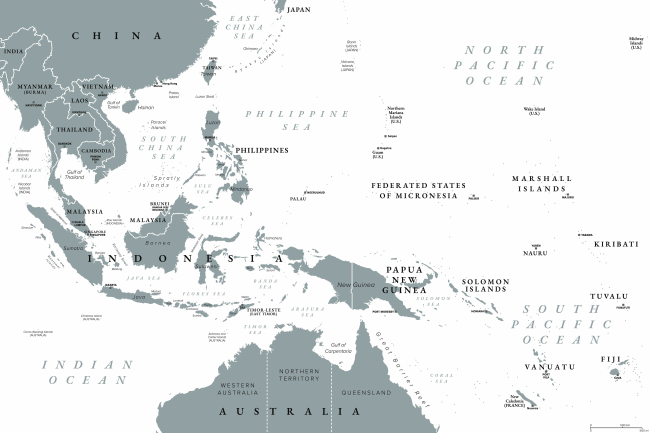
This paper examines the two-way relationship between France’s Indo-Pacific strategy and developments in Oceania. Oceania was not a priority in the initial years of France’s Indo-Pacific strategy, as the region was largely treated as secondary to major strategic hotspots and key partnerships, while overseas territories were primarily handled as domestic issues and recipients of a top-down strategy.

France’s View: From Diplomacy to Public-Private Action
France has emerged as the EU’s IMEC forerunner, combining port infrastructure, diplomatic alliances and public-private cooperation. With Marseille Fos at its core, the country brings a strategic hub for logistics, energy and digital connectivity to the corridor.
Trump II, the Crisis of the Rules-Based Order and Europe’s Indo-Pacific Strategy
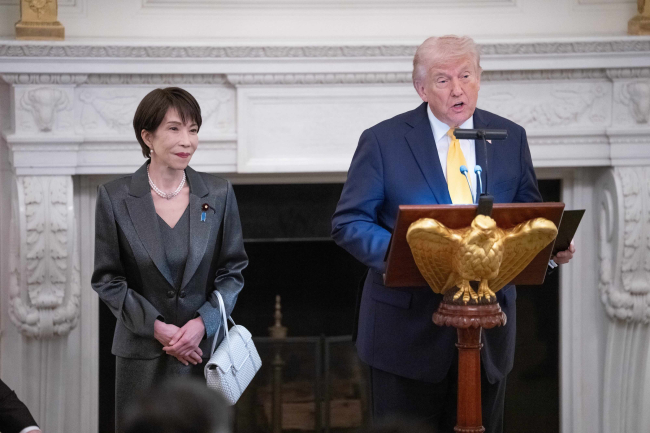
This article examines the implications of Trump II for Europe’s engagement in the Indo-Pacific. The piece contends that Trump II is accelerating the erosion of the rules-based order and undermining the relevance of the Free and Open Indo-Pacific (FOIP) concept, while forcing Europe to refocus on its own continental security amid US retrenchment. Paradoxically, these very constraints create conditions for a more autonomous, pragmatic, and explicitly interest-driven European engagement in the Indo-Pacific, rather than outright withdrawal.
Japan’s Energy Policy after Hormuz. Security, Competitiveness, and Decarbonization
The 2026 Hormuz crisis has strengthened rather than weakened the rationale for Japan’s decarbonization strategy, contrary to what might have been expected. Rather than energy policy supplanting climate policy, the two should actually be viewed as inseparable.