3391 publications
The New Geopolitics of Energy
Following the dramatic floods in Valencia, and as COP29 opens in Baku, climate change is forcing us to closely reexamine the pace—and the stumbling blocks—of the energy transition.
International Criminal Justice: A Decisive Moment
Can international criminal justice be a factor in bringing about peace?
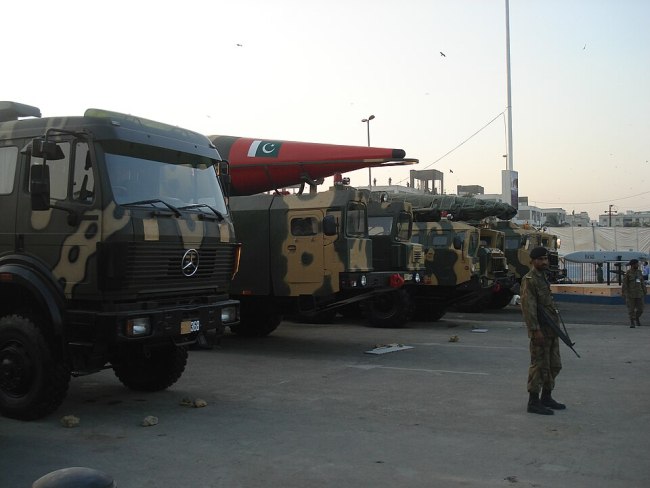
From Cuba to Ukraine: Strategic Signaling and Nuclear Deterrence
Strategic signaling—the range of signs and maneuvers intended, in peace time, to lend credibility to any threat to use nuclear weapons—is back.
The Axis of Resistance: Iran's Proxies since October 7, 2023
The term “Axis of Resistance” refers to the coalition of Iranian proxies in the Middle East. Since Hamas's attack on Israel on October 7, 2023, there has been noticeably greater coordination among these groups, at times without the direct involvement of Tehran. Iraq and Syria are important hubs where members of the Axis meet, exchange ideas, and plan actions. Russia, as part of its continuing struggle against the West, has moved closer to Iran and also to its proxies.
Europe’s Black Mass Evasion: From Black Box to Strategic Recycling
EV batteries recycling is a building block for boosting the European Union (EU)’s strategic autonomy in the field of critical raw minerals (CRM) value chains. Yet, recent evolutions in the European EV value chain, marked by cancellations or postponements of projects, are raising the alarm on the prospects of the battery recycling industry in Europe.
City Diplomacy and Human Mobility in Africa. Protecting Refugees and Migrants along the Central Mediterranean Route from the East and the Horn of Africa
Cities face constraints to work on migration and refugee issues, often due to a lack of decentralisation and resource constraints. Adopting an inclusive city approach can safeguard local authorities’ commitment towards providing protection to residents regardless of status, while not overstepping legal mandates.
Rebooting Italy's Africa Policy: Making the Mattei Plan Work
Against the backdrop of increasing anti-French rhetoric across parts of Francophone Africa, the relative failure of the counterinsurgency operation in the central Sahel (Operation Barkhane) and diplomatic rifts with several Sahelian countries, Paris has been rethinking its relationship with the continent for several years now. As a former imperial power that has seen its colonial domain in Africa gain independence between 1956 (Morocco-Tunisia) and 1977 (Djibouti), France has invented two successive roles for itself in Africa since 1960, particularly in French-speaking sub-Saharan Africa.
Russian Military Manpower After Two and a Half Years of War in Ukraine
In addition to a military victory in Ukraine, the Russian leadership is planning to build up sizable troop formations for a possible conflict with NATO in the Baltic region and the Kola Peninsula. In particular, current plans aim for the military manpower to grow by about 350,000, reaching a total of 1.5 million soldiers and commanders. In the context of the current conflict in Ukraine, this cannot be accomplished without a new wave of mass mobilization.
From Crisis Hotspots to Convening Powers. African Cities Launch Diplomacy to Create Climate Mobility Partnerships
African local governments cannot afford to turn into climate mobility hotspots without taking proactive action – drawing on local knowledge, convening power and access to affected communities.
Deep Precision Strikes: A New Tool for Strategic Competition?
Reaching deep into the enemy’s system to weaken it and facilitate the achievement of operational or strategic objectives is a key goal for armed forces. What capabilities are required to conduct deep strikes in the dual context of high-intensity conflict and strengthened enemy defenses?
The dilemma of the Franco-African military relationship: reinvent or turn the page?
The origins of military presence and cooperation in Africa can be traced back to the tacit decolonization pact between the countries of French-speaking Africa. This cooperation led to the creation of African armies in the former colonies, as part of a project to prevent the spread of communism and maintain France's influence in the newly independent countries.
The Evolution of City Diplomacy in Africa: Impact, Potential, and Ongoing Challenges of African Cities’ International Activities.
Over the past decades, African cities have ranked among the leading players in the evolution of city diplomacy. Indeed, municipalities across the continent have gone beyond simply adapting to shifting trends in international cooperation. They have been shaping the current partnership approach that sees local authorities worldwide working together to pursue shared goals and address common urban challenges such as climate change, migration, and social justice.
Taiwan’s Rising Space Program: Building Up Industry, Supporting National Security
Taiwan, known for its leadership in semiconductors and information and communications technology (ICT), is now making significant strides in the space industry. While historically modest, Taiwan’s space program has seen a transformation since 2020, driven by President Tsai Ing-wen’s commitment to expanding the country’s space capabilities. Key milestones include the passage of the Space Development Act and the creation of the Taiwan Space Agency (TASA), which has bolstered the resources and visibility of Taiwan’s space ambitions.
Thirty-five years after the fall of the Berlin Wall: what’s new in the East?
As we celebrate the 35th anniversary of the fall of the Berlin Wall on November 9, 2024, let’s start from the premise that the Berlin Wall did not “fall” on the night of November 9, 1989.
The High Authority for Peacebuilding (HACP) in Niger 2011-2023. Placing the State at the heart of conflict prevention and management.
Like other Sahelian countries, Niger has been affected by terrorism for almost two decades now. This issue has highlighted both the limits of these countries’ security systems and, more profoundly, their inability to offer stability to the populations of certain parts of the country. In a way, these “jihadized insurgencies” are a continuity of groups that regularly take up arms against central states.
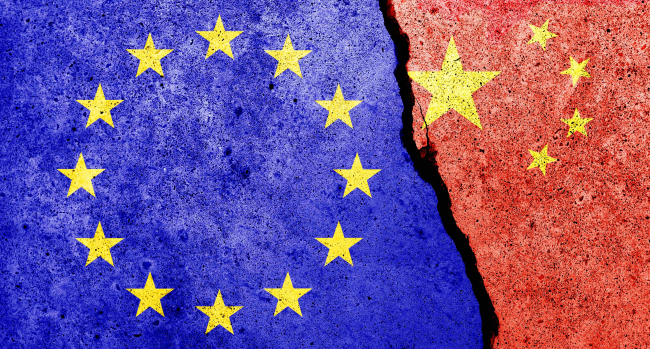
AI and Technical Standardization in China and the EU: Diverging priorities and the need for common ground
Given the highly disruptive potential of AI, global cooperation on AI safety and governance is imperative, and yet the deeply transformational potential of AI also ensures that a high level of competition and systemic rivalry is likely unavoidable. How can the EU best manage its complex relationship with China in the field of AI so as to ensure a necessary level of cooperation in spite of competition and rivalry?
Multi-alignment and De-risking: The Global South Response to World Fragmentation
Turbulences and conflicts threaten the stability of the global order. What is the Global South’s response to these risks?
Can carbon markets make a breakthrough at COP29?
Voluntary carbon markets (VCMs) have a strong potential, notably to help bridge the climate finance gap, especially for Africa.
Kenya’s Spiritual President and The Making of a Born-Again Republic: William-Ruto, Kenya’s Evangelicals and Religious Mobilizations in African Electoral Politics
Over the last two decade, the growing influence of Evangelicals and their leaders in electoral politics is one of the most significant developments in the East African region and the Horn of Africa. Their numerical and demographic growth seems to go together with their growing influence in these countries’ political scenes, especially in the spheres of electoral politics, society, and governance.
Taiwan's Energy Supply: The Achilles Heel of National Security
Making Taiwan a “dead island” through “a blockade” and “disruption of energy supplies” leading to an “economic collapse.” This is how Colonel Zhang Chi of the People’s Liberation Army and professor at the National Defense University in Beijing described the objective of the Chinese military exercises in May 2024, following the inauguration of Taiwan’s new president, Lai Ching-te. Similar to the exercises that took place after Nancy Pelosi’s visit to Taipei in August 2022, China designated exercise zones facing Taiwan’s main ports, effectively simulating a military embargo on Taiwan. These maneuvers illustrate Beijing’s growing pressure on the island, which it aims to conquer, and push Taiwan to question its resilience capacity.
China’s Quest for a Quantum Leap
The global race to harness quantum science is intensifying. Recognizing the strategic potential of quantum technology for economic, military, and scientific advancement, China is focusing on quantum breakthroughs as a way to shift the balance of power, especially in its competition with the United States. President Xi Jinping has emphasized the importance of scientific innovation, particularly in quantum fields, to fuel national development and ensure security.
Moldova’s Foreign Policy after 2024 Presidential Elections: Staying on the EU Path, Moving Eastwards or Becoming Multi-vector?
The future of Moldova’s foreign agenda will undergo a stress test during the upcoming presidential elections on October 20, 2024.
India’s Broken Power Economics : Addressing DISCOM Challenges
India’s electricity demand is rising at an impressive annual rate of 9%. From 2014 to 2023, the country’s gross domestic product (GDP) surged from 1.95 trillion dollars ($) to $3.2 trillion (constant 2015 US$), and the nation is poised to maintain this upward trajectory, with projected growth rates exceeding 7% in 2024 and 2025. Correspondingly, peak power demand has soared from 136 gigawatts (GW) in 2014 to 243 GW in 2024, positioning India as the world’s third-largest energy consumer. In the past decade, the country has increased its power generation capacity by a remarkable 190 GW, pushing its total installed capacity beyond 400 GW.
Japan: Deciphering Prime Minister Ishiba’s Strategic Vision. Toward an Asian version of NATO?
On Tuesday, October 1, Shigeru Ishiba was sworn in as Prime Minister of Japan. His proposal to revise the security alliance with the United States and create an Asian version of the North Atlantic Treaty Organization (NATO) attracted attention and sparked lively debate.
Kamala Harris's Economic Program
Since receiving the Democratic nomination in the wake of President Joe Biden’s decision to step aside in the 2024 American presidential race, Vice-President Kamala Harris has been striving to define her own policy platform to attract voters in the limited time remaining before the November 5th election. Since the economy is a central issue for American voters, Harris developed several propositions in that area.
China’s Mature Node Overcapacity: Unfounded Fears
China is decoupling from, not flooding, the global mature-node semiconductor market. As China increasingly pursues industrial policies encouraging domestic chip production, its own growing chip demand will prevent a direct flood of cheap Chinese chips on foreign shores. However, as Beijing achieves its goal of decreasing the reliance of domestic downstream manufacturers on foreign chips, European and American mature-node semiconductor companies will feel the ripple effects of an increasingly “involuted” Chinese chip ecosystem.
Chad: from Deby to Deby. Recipes for a successful succession (2021-2024)
As in Togo and Gabon, the transition that took place in Chad from 2021 to
2024 resulted in a dynastic succession. Mahamat Idriss Deby succeeded his
father, Idriss Deby Itno, who was President of Chad from 1996 to 2021. While
the majority of Chadians were hoping for a change of government, the “Deby
system” has managed to hold on.
Critical Raw Materials, Economic Statecraft and Europe's Dependence on China
As China tightens export controls on critical minerals, it is important to put Beijing's policies in perspective and analyse how Europe can respond.
The Troubled Reorganization of Critical Raw Materials Value Chains: An Assessment of European De-risking Policies
With the demand for critical raw materials set to, at a minimum, double by 2030 in the context of the current energy transition policies, the concentration of critical raw materials (CRM) supplies and, even more, of refining capacities in a handful of countries has become one of the paramount issues in international, bilateral and national discussions. China’s dominant position and successive export controls on critical raw materials (lately, germanium, gallium, rare earths processing technology, graphite, antimony) point to a trend of weaponizing critical dependencies.
Russian Strategic Thinking and Culture Before and After February 24, 2022: Political-Strategic Aspects
Written by Dimitri Minic, the scientific article "Russian Strategic Thinking and Culture Before and After February 24, 2022: Political-Strategic Aspects" in Russia’s war against Ukraine: Complexity of Contemporary Clausewitzian War by the National Defence University Department of Warfare, Helsinki 2024.
Sat-to-Cell: Towards Universal Connectivity?
Sat-to-Cell is a new type of service that connects smartphones directly to satellites. It has recently enabled innovative applications such as emergency text messaging via satellite. The technology is developing rapidly, and many questions are now being raised about its potential impact.
EUDIS, HEDI, DIANA: What's behind Three Defense Innovation Acronyms?
In Europe, with Russia’s war of aggression against Ukraine showing little sign of abating, a persistent gap remains between security needs and defense spending. According to a 2006 commitment enshrined at the 2014 Wales NATO summit, the North Atlantic Treaty Organization (NATO) members should disburse no less than 2% of their national gross domestic product (GDP) on defense, out of which 20% is to be spent on equipment and research and development. In 2024, only 23 Allies out of 32 are expected to meet or exceed this target, though a significant improvement from only three in 2014. This total includes the United States (US) devoting 3.38% of its GDP to defense, constituting almost 70% of all NATO member defense spending combined.
Is the Republican People’s Party (CHP) Rising from the Ashes?
The victory of the CHP [Cumhuriyet Halk Partisi, Republican People’s Party] in the Turkish municipal elections of March 2024 firmly established it as the leading party of opposition to the Islamic-conservative AKP [Adalet ve Kalkınma Partisi, Justice and Development Party], which has been in power since 2002.
State Elections in Thuringia, Saxony and Brandenburg - Extreme Parties on the Rise?
The Alternative for Germany (AfD) became Germany's strongest political force in the regional elections in Thuringia and Saxony.
Russia and the New BRICS Countries: Potentials and Limitations of a Scientific and Technological Cooperation
At the fifteenth BRICS summit, held in Johannesburg, South Africa, from August 22 to 24, 2023, a resolution was adopted to extend an invitation to six new countries to join the organization: Argentina, Egypt, Ethiopia, Iran, Saudi Arabia, and the United Arab Emirates (UAE). All of these countries except Argentina duly became members of BRICS in 2024, with the expanded group known as BRICS+. In addition to the political and economic advantages, it is assumed that the incorporation of these new countries could potentially facilitate their scientific and technological development.
Towards a European Nuclear Deterrent
While major European powers may have to contemplate nuclear deterrence without America, the national flexibility and European financial support required to make it feasible is currently difficult to imagine.
The Influence of Strategic Subnational Diplomacy in International Relations
The international engagement of cities and local governments has increased and diversified recently. Mainly understood by the public as the cultural and academic ties cultivated within the sister-city framework, these connections now bear deeper and more strategic implications.
Between „Strategic Autonomy” and „Zeitenwende”: The Importance of Trade Between The EU and Mercosur
This policy paper analyses the geopolitical and economic significance of the EU-Mercosur agreement for the European Union (EU) in the context of the EU’s new European Economic Security Strategy.
Artificial Intelligence, or The Race for Power
Artificial intelligence (AI) is here to stay, and its use is spreading at a rate that is difficult to comprehend.
From Ukraine to Gaza: Military Uses of Artificial Intelligence
The wars in Ukraine and Gaza show us the extent to which artificial intelligence (AI) has become integral to battlefield operations.