

The China-Russia Partnership and the Ukraine War: Aligned but not allied
China and Russia maintain a strategic partnership rooted in shared opposition to the U.S. and liberal democracies, but their relationship is shaped more by pragmatism than trust.
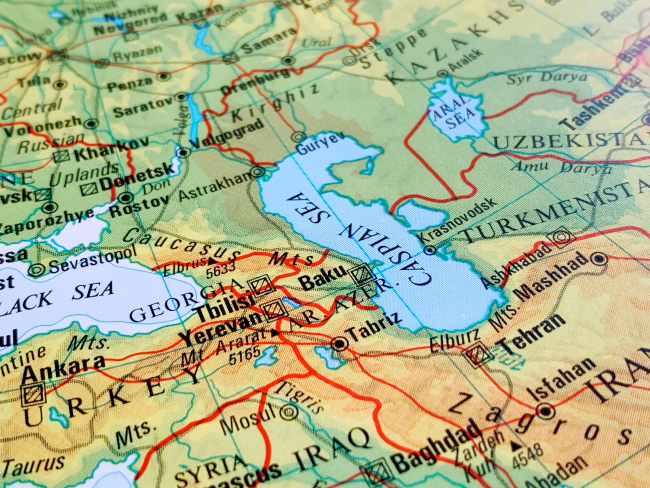
The Caspian Sea as an Emerging Energy Hub : Potentials and Limitations
This report analyzes the prospects of the Caspian Sea region — and its key actors except for Russia and Iran — becoming an important energy hub serving the needs of the European Union (EU).
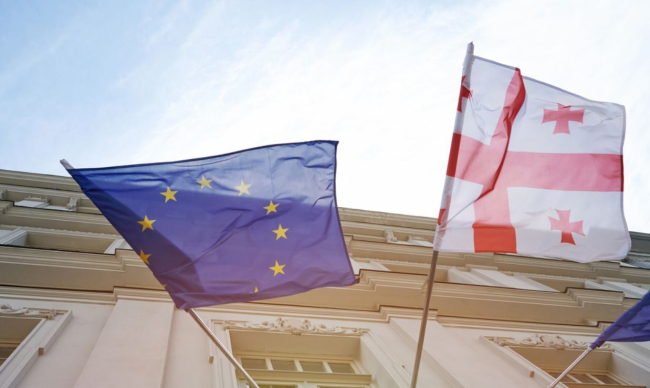
The European Union's Strategic Test in Georgia
The political crisis brewing in Georgia is of an existential nature for the country. What is at stake is Georgia's future as a democratic and sovereign European nation (EU).
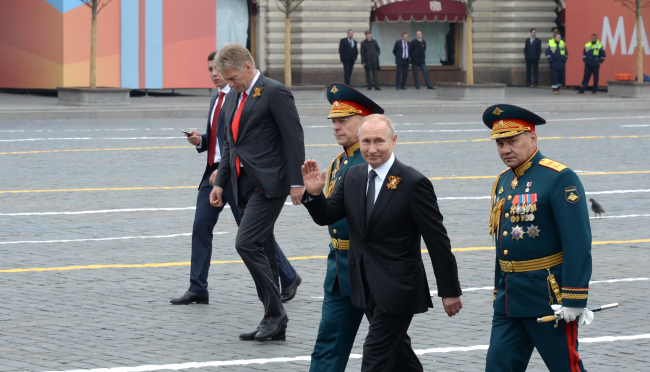
Commanders of Putin's Long War: Purged, Reshuffled and Disgruntled
The trend of reshuffling the Russian top military command in the course of a fast-evolving and far from successful war has progressed unevenly both across the Armed Forces’ structures and in time. The rationale for and timing of the abrupt cadre decisions made by Commander-in-Chief Putin often defy logical explanation, and the rare official clarifications are no more informative than the usual information blackout.
Russia-North Korea Alliance: A New Threat to Global Security and Korean Stability?
An interview with Wooyeal PAIK, Professor, Department of Political Science and International Studies, Yonsei University. He analyses why North Korea's support for Russia could escalate global tensions, strain the EU-NATO security ties, and destabilize the Korean Peninsula.
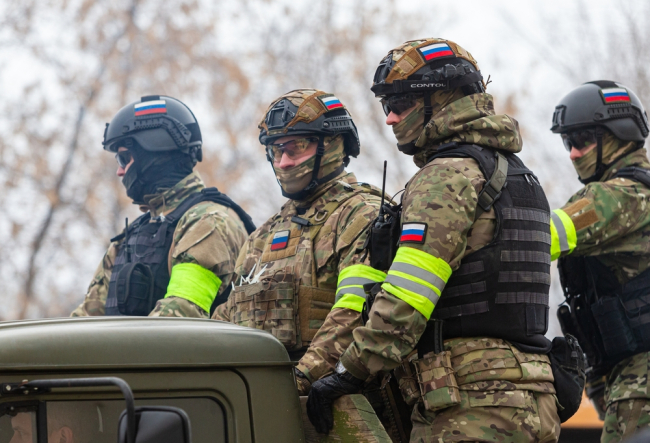
Russian Military Manpower After Two and a Half Years of War in Ukraine
In addition to a military victory in Ukraine, the Russian leadership is planning to build up sizable troop formations for a possible conflict with NATO in the Baltic region and the Kola Peninsula. In particular, current plans aim for the military manpower to grow by about 350,000, reaching a total of 1.5 million soldiers and commanders. In the context of the current conflict in Ukraine, this cannot be accomplished without a new wave of mass mobilization.
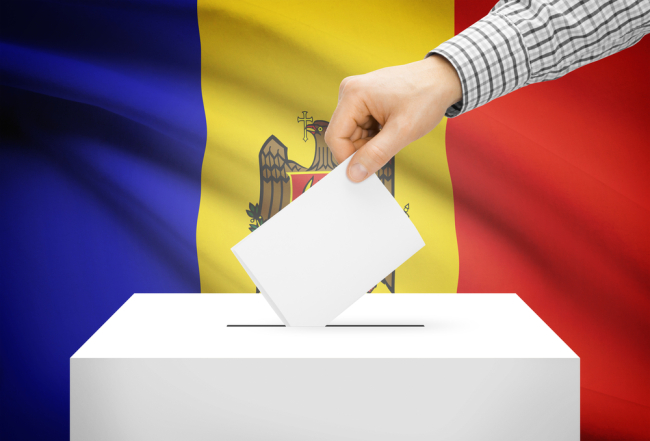
Moldova’s Foreign Policy after 2024 Presidential Elections: Staying on the EU Path, Moving Eastwards or Becoming Multi-vector?
The future of Moldova’s foreign agenda will undergo a stress test during the upcoming presidential elections on October 20, 2024.
Global Financial Shifts: The Impact of Dollar Sanctions and Frozen Russian Assets
An interview with Brad Setser, Whitney Shepardson Senior Fellow (Council on Foreign Relations) led at Ifri on September 24, 2024.
Dollar-based financial sanctions have been increasing, particularly since the beginning of the century. Is this phenomenon likely to significantly alter the international role of the dollar?
There is a lot of controversy about the in which way frozen assets from Russia’s central bank should be treated, regarding both the assets themselves and the associated revenues. What consequences do you foresee for the international financial system?
Towards a European Nuclear Deterrent
While major European powers may have to contemplate nuclear deterrence without America, the national flexibility and European financial support required to make it feasible is currently difficult to imagine.

Russian Strategic Thinking and Culture Before and After February 24, 2022: Political-Strategic Aspects
Written by Dimitri Minic, the scientific article "Russian Strategic Thinking and Culture Before and After February 24, 2022: Political-Strategic Aspects" in Russia’s war against Ukraine: Complexity of Contemporary Clausewitzian War by the National Defence University Department of Warfare, Helsinki 2024.
Commanders of Putin's Long War: Purged, Reshuffled and Disgruntled
The trend of reshuffling the Russian top military command in the course of a fast-evolving and far from successful war has progressed unevenly both across the Armed Forces’ structures and in time. The rationale for and timing of the abrupt cadre decisions made by Commander-in-Chief Putin often defy logical explanation, and the rare official clarifications are no more informative than the usual information blackout.
Russian Military Manpower After Two and a Half Years of War in Ukraine
In addition to a military victory in Ukraine, the Russian leadership is planning to build up sizable troop formations for a possible conflict with NATO in the Baltic region and the Kola Peninsula. In particular, current plans aim for the military manpower to grow by about 350,000, reaching a total of 1.5 million soldiers and commanders. In the context of the current conflict in Ukraine, this cannot be accomplished without a new wave of mass mobilization.
Moldova’s Foreign Policy after 2024 Presidential Elections: Staying on the EU Path, Moving Eastwards or Becoming Multi-vector?
The future of Moldova’s foreign agenda will undergo a stress test during the upcoming presidential elections on October 20, 2024.
Towards a European Nuclear Deterrent
While major European powers may have to contemplate nuclear deterrence without America, the national flexibility and European financial support required to make it feasible is currently difficult to imagine.
Russian Strategic Thinking and Culture Before and After February 24, 2022: Political-Strategic Aspects
Written by Dimitri Minic, the scientific article "Russian Strategic Thinking and Culture Before and After February 24, 2022: Political-Strategic Aspects" in Russia’s war against Ukraine: Complexity of Contemporary Clausewitzian War by the National Defence University Department of Warfare, Helsinki 2024.
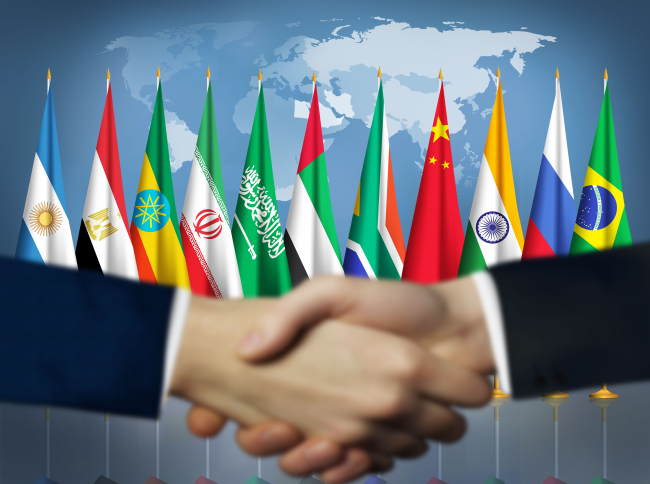
Russia and the New BRICS Countries: Potentials and Limitations of a Scientific and Technological Cooperation
At the fifteenth BRICS summit, held in Johannesburg, South Africa, from August 22 to 24, 2023, a resolution was adopted to extend an invitation to six new countries to join the organization: Argentina, Egypt, Ethiopia, Iran, Saudi Arabia, and the United Arab Emirates (UAE). All of these countries except Argentina duly became members of BRICS in 2024, with the expanded group known as BRICS+. In addition to the political and economic advantages, it is assumed that the incorporation of these new countries could potentially facilitate their scientific and technological development.
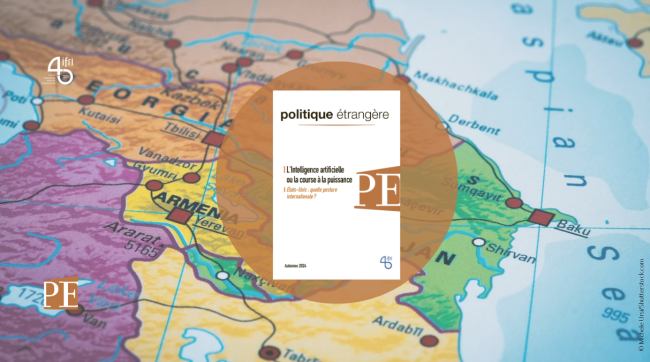
The South Caucasus: A New Strategic Space?
The states of the South Caucasus are trying to find their footing in an increasingly fragmented international landscape.
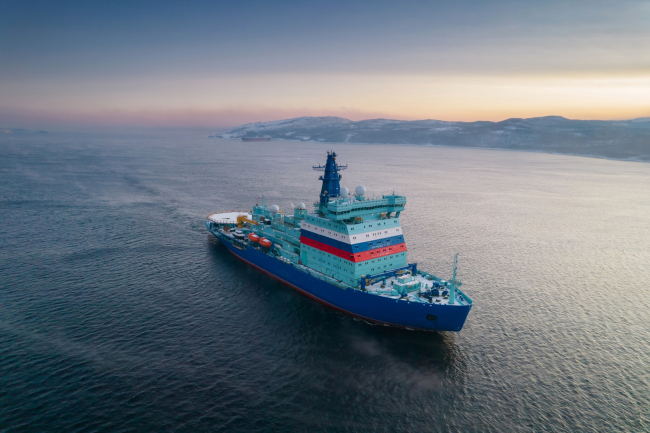
Russia in the Arctic: The End of Illusions and the Emergence of Strategic Realignments
Russia’s full-scale invasion of Ukraine has triggered profound changes in the Arctic region, the consequences of which remain uncertain in the long term.
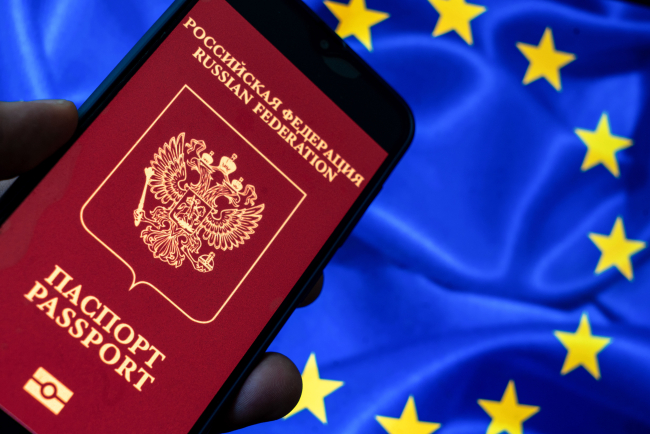
The New Russian Diaspora: Europe’s Challenge and Opportunity
This report assesses both the scale and the roots of the outward migration from the Russian Federation coinciding with Putin’s turning of Russia into an aggressive authoritarian state.
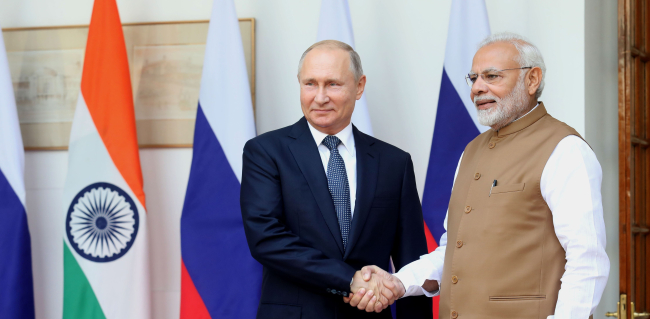
India-Russia Relations in Troubled Times: Steady but Stagnating
This paper examines the trajectory of India-Russia relations post-February 2022. The war in Ukraine emerged as a significant challenge for bilateral ties, presenting new obstacles to political and diplomatic relations and intensifying the previous difficulties in developing economic cooperation.

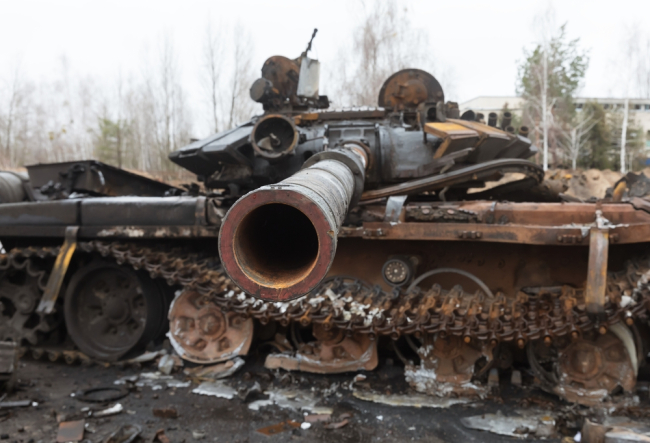
Russian army hobbled by shortage of soldiers
Following the last Ukrainian victories over the Russian Army in the Kharkiv oblast, Russian administration currently faces controversies. As a matter of fact, many question the degree of intensity Russian general staff has decided, avoiding for now general mobilization. According to Dimitri Minic, researcher attached to the Russia / NIS center at the French Institutes of International Relations and expert in russian armed forces, the current russian army not only lacks men but also modern equipment.
C.Africa's Leap Into Bitcoin Leaves Its People Bemused
In the Central African Republic (CAR), nine out of 10 people do not have internet, and only one in seven has electricity -- that is, when there are no power cuts.
Yet the CAR has just followed El Salvador in adopting bitcoin as legal tender, a currency that requires access to the net to be bought, sold or used.

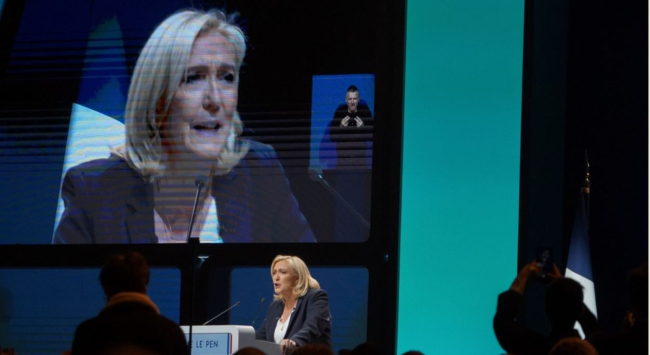
Le Pen Closer Than Ever to the French Presidency (and to Putin)
As elections approach Sunday, the far-right candidate is linked to the Russian president by a web of financial ties and a history of support that has hardly dimmed despite the war in Ukraine.
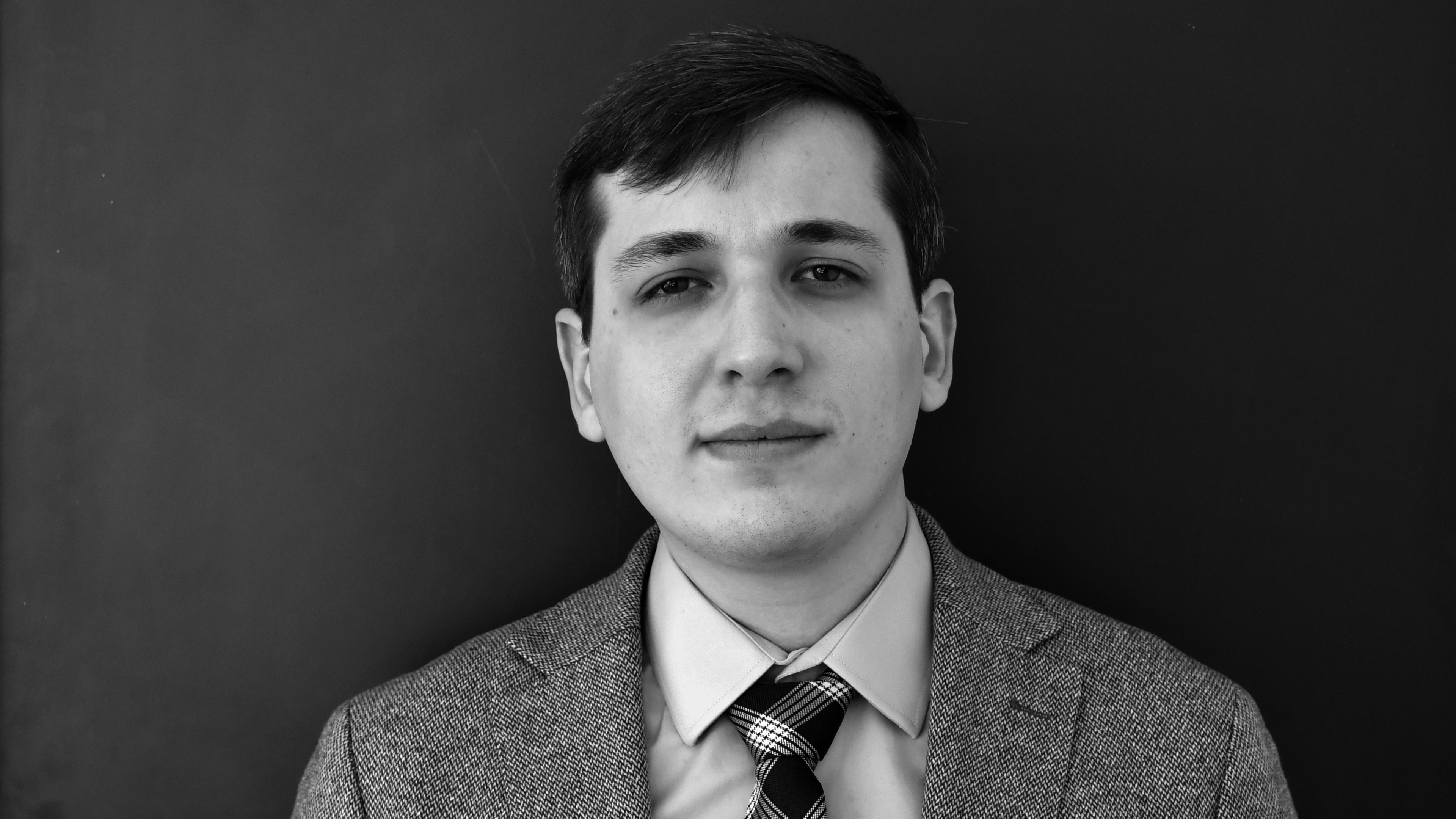
Russian Elite Divided on Strategy in Ukraine but Not on Kremlin Goals There, Minic Says
Vladimir Putin is not a military strategist, and the decision to shift Russian forces from around Kyiv to the southeast in order to be in a position to defeat the Ukrainian army rather than go all out to achieve regime change now in Ukraine shows that, Dmitri Minic of the Paris Institute for International Relations says.

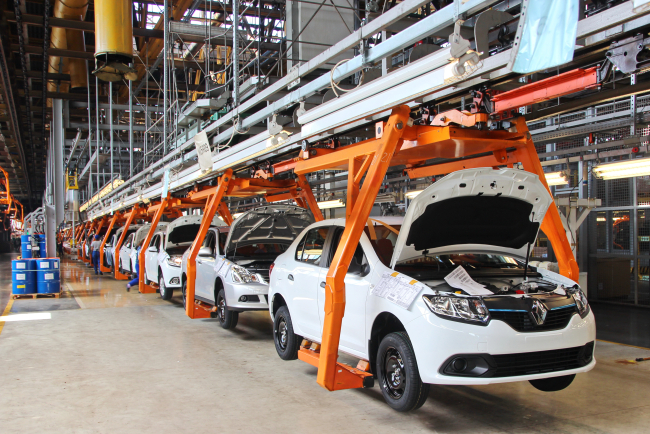
Renault’s Russia dilemma
Renault had for months been plotting to export a newfangled version of the Lada to the reste of the world. although realising that ambition remained some way off, it would have capped the revival of a brand arguably more synonymous with the Soviet Union than any other and which Renault first took a punt on in 2007 after then chief Carlos Ghosn identified Russia as a promising market.

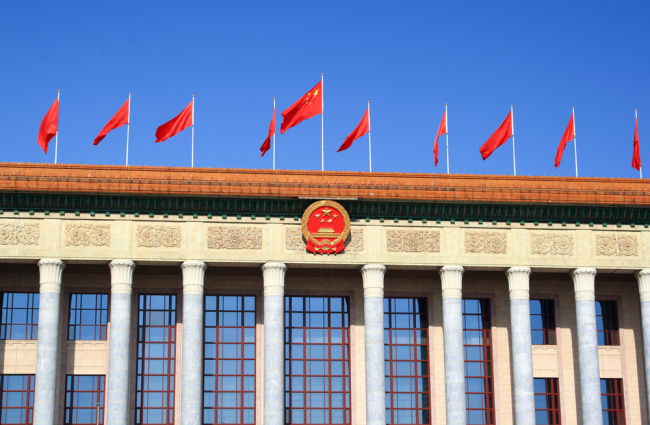
China sees at least one winner emerging from Ukraine war: China
Officials in Beijing believe it can take advantage of a distracted US and weakened Russia. The war in Ukraine is far from over, but a consensus is forming in Chinese policy circles that one country stands to emerge victorious from the turmoil: China.

After the riots, a new era in Kazakhstan?
In January 2022 Kazakhstan underwent its most serious political crisis since its independence, proclaimed on December 16, 1991. The increase in the price of fuel has set ablaze the west of the country in the grip of socio-economic marginalization, then the southern regions, traditionally more resistant to central power. What actually happened, and what consequences did these troubles have at the national and regional levels?
Putin’s War is Stuck, Beware The Rising Risks
Data on the concentration of Russian troops was solid; the diplomatic offensive executed by Moscow was deliberately disagreeable; yet, many experts (myself including) refused to accept the proposition on the coming war as “inevitable”.

What can we expect from Russia at COP26?
We ask experts whether the Kremlin’s latest moves on climate, including its 2060 net-zero target, heralds genuine change or more greenwash.
Russia has been seen as a climate pariah by the international community for some years. It was one of the last counties to ratify the 2015 Paris Agreement – not until September 2019, at the UN’s Climate Action Summit.
HIV/AIDS in Russia, the epidemic too long ignored
With more than one million HIV-positive people, Russia is one of the countries most affected by HIV/AIDS. The first cases appeared in the USSR in 1987 in the south of Ukraine (port of Odessa). Since then, the number of HIV-positive people has steadily increased.
Support independent French research
Ifri, a foundation recognized as being of public utility, relies largely on private donors – companies and individuals – to guarantee its sustainability and intellectual independence. Through their funding, donors help maintain the Institute's position among the world's leading think tanks. By benefiting from an internationally recognized network and expertise, donors refine their understanding of geopolitical risk and its consequences on global politics and the economy. In 2025, Ifri supports more than 80 French and foreign companies and organizations.