



The Return of High-Intensity Conflict in Ukraine: Lessons for Land Forces
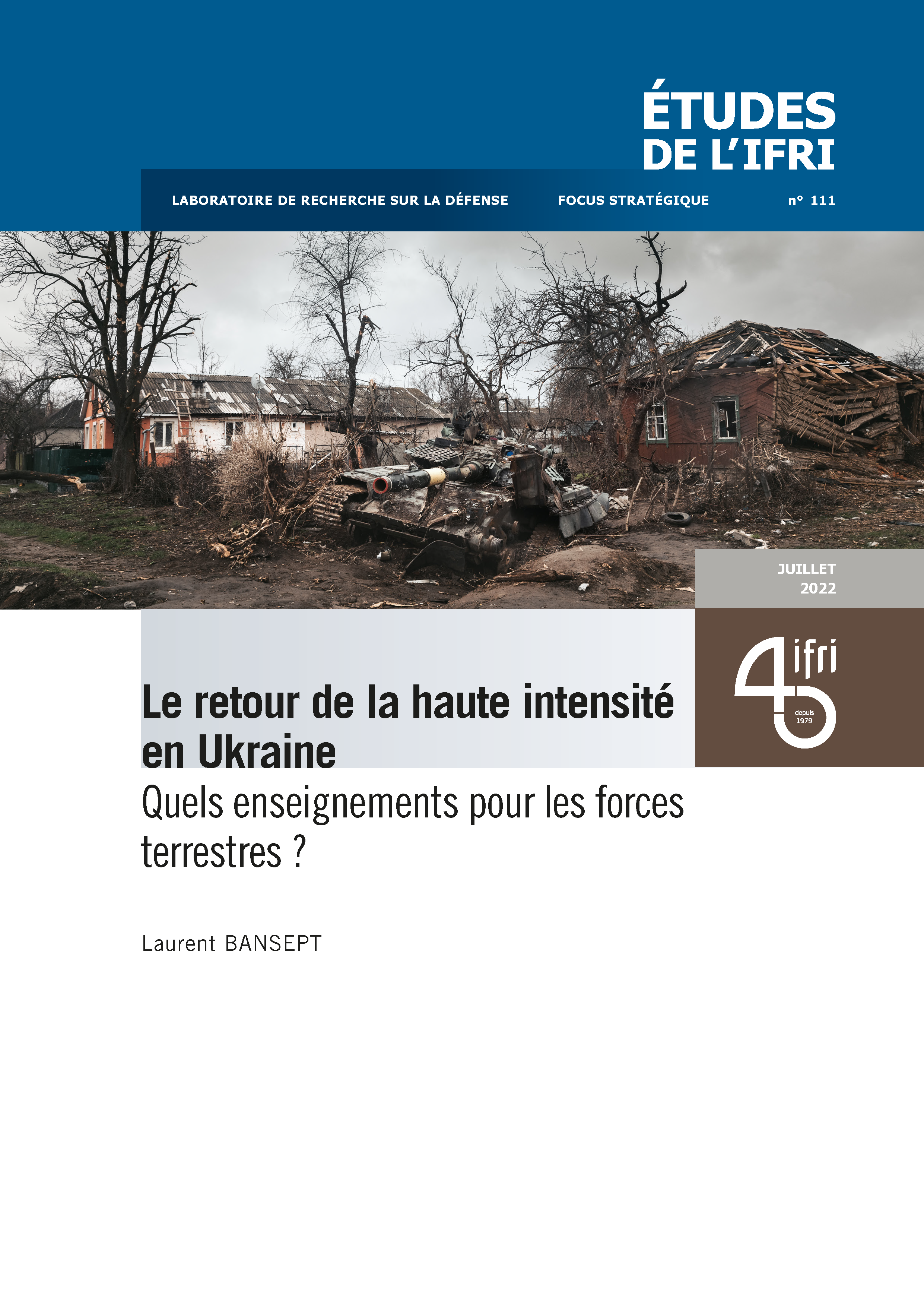
After twenty years of counter-terrorism, the Ukrainian battlefield marks the renewal of so-called “high-intensity” warfare. It constitutes a major strategic turning point, reversing the contemporary model of wars involving the West.
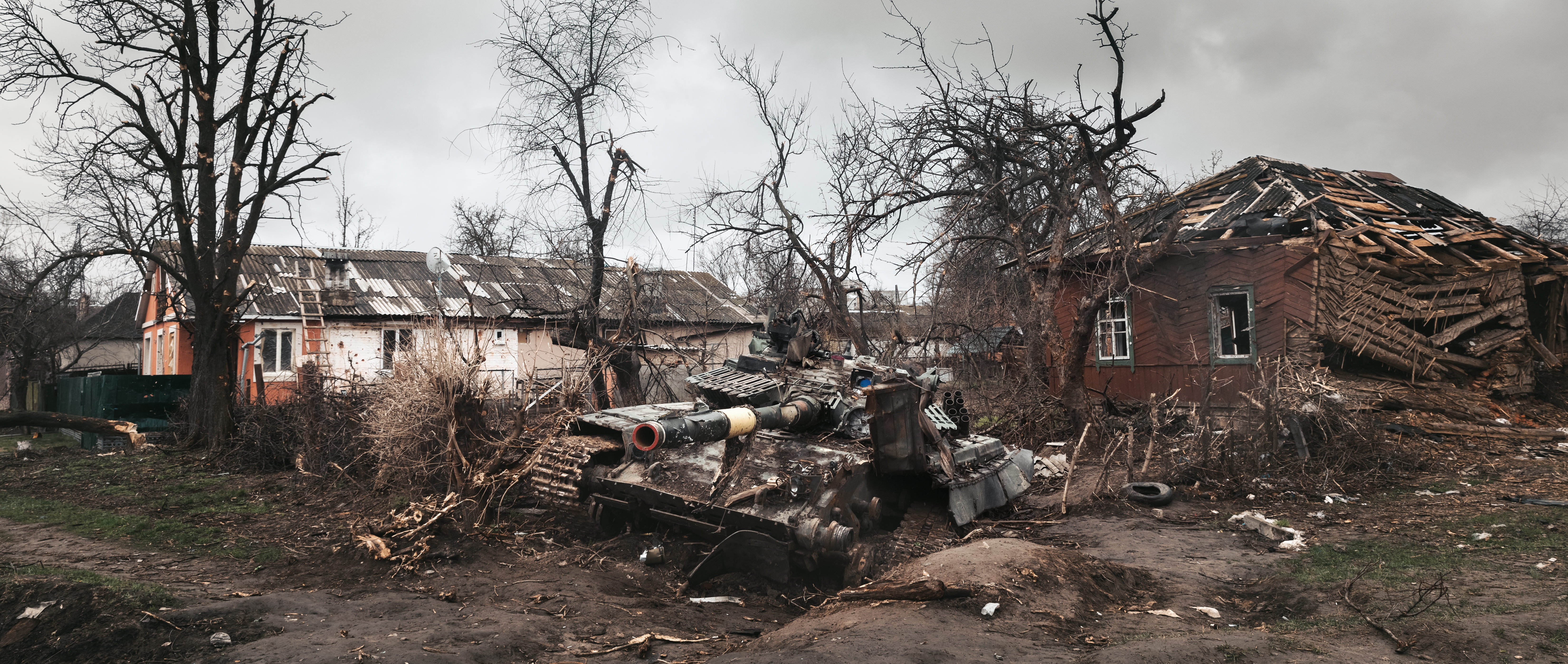
This massive invasion of a country by a powerful conventional army is largely played out on the ground. It sheds light on the preparation of ground forces for a major engagement hypothesis. For the Ukrainians, the war corresponds to a high-intensity conflict, both political, because it involves their vital interests, and capability-based, mobilizing all of their military means. For Russia, on the other hand, the high intensity is more about capabilities than politics.
This conflict is taking place in the form of a linear war characterized by a reemergence of the front, a phenomenon that has become rare, although it has already resurfaced in Syria and Iraq. As in these theaters, the war in Ukraine confirms that cities remain the priority areas, justifying the efforts made by the French Army to train in this environment. Urban warfare requires high material capabilities in terms of fire, manpower and logistics, but also moral strength. In this respect, the Ukrainian conflict reminds us of the role played by the population, mobilized in support of the defense apparatus. The high attrition rate raises the question of human losses and the “tolerance threshold” if France were to be engaged on battlefields with a similar lethality.
High intensity characteristics have an impact on all operational functions.
- The first issue is military intelligence. The dissemination and exploitation of OSINT (Open Source Intelligence) information, the use of video surveillance cameras and civilian mini-drones are all innovations that have been adapted to the military field.
- Mastering the combined arms maneuver is decisive in this engagement, with the heavy segment at its center, which has become the symbol of high intensity. Faced with the return of a significant adversary in the air and the wide spectrum of threats evolving in the low layer (UAVs, helicopters, missiles, rogue munitions, indirect fires), the reduction of the French Army’s ground-to-air defense capabilities represents a vulnerability.
- To succeed in the maneuver, an efficient and agile C2 is essential. The Ukrainian experience shows that the resilience of the C2 of an air-land component depends on an organization designed to delegate execution at the operational and tactical levels as much as possible. Therefore, integrating effects of other environments and fields must be possible until the lowest levels.
- Finally, the Ukrainian example is a timely reminder of the place of immaterial fields in high intensity. Permanent access to a mobile Internet as close as possible to the battlefield and in all its depths has proven to be an essential asset in terms of informational warfare.
The Ukrainian conflict and its repercussions on strategic stability in Europe highlight the role played by ground forces in “winning the war before the war”. It implies a reinvestment in the functions of “deterrence” but also “prevention” through strategic signals such as participation in the reassurance of North Atlantic Treaty Organization (NATO)’s eastern flank. Each military exercise must be thought of as a display of will. For greater credibility, it is necessary to maintain a high level of training of armed forces. Having a unique operational experience among European armies in this field, France must invest fully in the military structures of NATO and the European Union.
This signaling is also embodied in the readiness actions of foreign forces through Partnered Military Operations (PMOs). In certain politically sensitive contexts, special forces can play a unique role in implementing this type of partnership in a discreet manner.
It is essential to guarantee freedom of action through sufficient mass. From this perspective, weapons deliveries to Ukraine raise three questions: the impact of sending in-service equipment such as Caesars on the French order of battle; possible technology transfers linked to the delivery of modern equipment; and the ex-post control and monitoring of these weapons deliveries.
Finally, the triple surprise of the Russian offensive, the Ukrainian resistance and the scale of the international reaction testify the need to appropriate the adversary’s rationality and the difficulty of anticipating his reactions. Acting as a strategist in the face of systemic competitors requires sustained efforts in the field of “knowledge and anticipation”.
This content is available in French: "Le retour de la haute intensité en Ukraine : quels enseignements pour les forces terrestres ?".

Available in:
Regions and themes
Share


Security Studies Center
Heir to a tradition dating back to the founding of Ifri, the Security Studies Center provides public and private decision-makers as well as the general public with the keys to understanding power relations and contemporary modes of conflict as well as those to come. Through its positioning at the juncture of politics and operations, the credibility of its civil-military team and the wide distribution of its publications in French and English, the Center for Security Studies constitutes in the French landscape of think tanks a unique center of research and influence on the national and international defense debate.
Defense Research Unit
The Defense Research Unit is a program that aims at stimulating the strategic debate by dealing with subjects at the junction of the “technico-operational” and the “political-strategic”. A unique structure in France, it brings together civilian researchers and “military fellows” from each of the three armies to produce work on defense policies, the capability and strategic adaptation of armies, and foresight on tomorrow's conflicts.
Toward Space-Based Intelligence for All? The Case of the Spring 2026 Iranian Strikes
The conflict in the Middle East has highlighted the effectiveness of Iranian strikes in identifying targets and conducting precision strikes. This raises the question: which capabilities enabled the Islamic Revolutionary Guard Corps (IRGC) to achieve these results?

Confronting Russia’s High-Velocity Arsenal: European Challenges and Solutions
Since February 2022, Russian missile and long-range drone strikes against Ukraine have served as near-daily reminders of what European states could face in a war with Russia. The same weapon systems battering Ukrainian infrastructure and population centers would be directed against European military and civilian targets in any confrontation between Russia and NATO. As Russian missile production expands and its arsenal diversifies, Europe must confront an uncomfortable question: how to deter, and if push comes to shove, fight Russia's long-range strike arsenal?
The War on Terrorism: Global Experts Reflect on Lessons Learned Twenty-Five Years After 9/11
Twenty-five years ago, the September 11 attacks prompted the invention of new security architectures that shaped the war on terrorism. Sixteen think tank experts from fifteen countries reflect on the successes, failures, and missed opportunities in the fight against terrorism—a fight that is still ongoing.
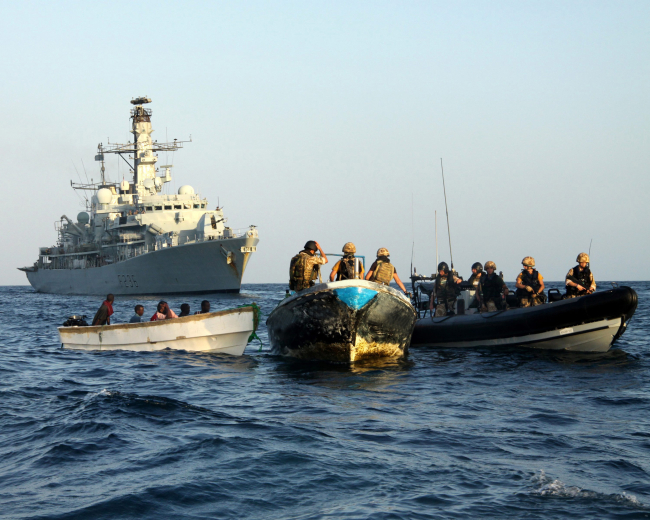
From Corsairs to Private Military Contractors. Nonmilitary Maritime Actors and the Historical Continuities of Naval Warfare
Since late 2023, several Houthi attacks on commercial shipping have involved privately contracted armed teams conducting defensive engagements and coordinating immediate response efforts, often in the relative absence of regular naval forces during the immediate hostilities at sea. These cases highlight a strategic tension that increasingly confronts modern navies. On the one hand, they are expected to conduct persistent, low-intensity maritime security tasks such as counterpiracy, maritime policing, and the protection of commercial shipping. On the other hand, they face renewed pressure to prepare for high-intensity conflict against peer and near-peer adversaries amid the return of great power competition.