Environment
Combating environmental degradation and preserving forests and oceans are among the prerequisites for achieving climate neutrality, and have become major governance issues.
Related Subjects


Brexit, Electricity and the No-Deal Scenario: Perspectives from Continental Europe, Ireland and the UK
When it comes to energy and electricity in particular, there can be no winner in the Brexit negotiations. The only reasonable objective should be to minimise losses and avoid trade friction.
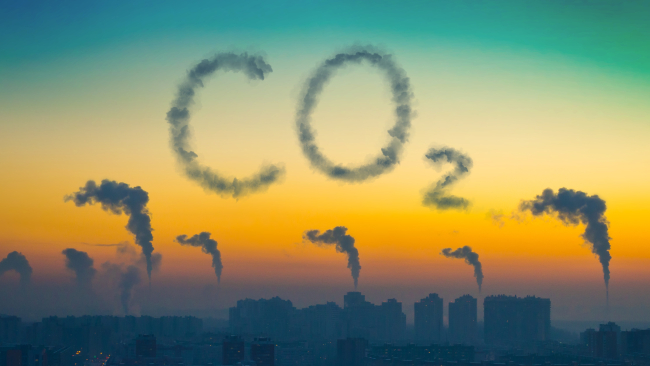
Booming Prices on the European Emission Trading System: From Market Oversupply to Carbon Bubble?
Since its creation in 2005, the European emission trading system (EU ETS) has been through several periods of turmoil. With emission allowances (EUA) averaging around 7 euros per ton from 2012 to 2017, European Member States have been trying to remedy the depressed price signals successively through market design reforms at both European level (backloading, market stability reserve) and national level, with the UK introducing a carbon price floor for its domestic power sector in 2013.
Xi Jinping’s Institutional Reforms: Environment over Energy?
During its two sessions (lianghui) in March 2018, the National People’s Congress (NPC) announced China’s most important institutional reforms in the last 30 years. These changes occurred right after Xi Jinping consolidated his power and at a time when stakeholders working in the energy field were expecting more clarity on policy orientations.
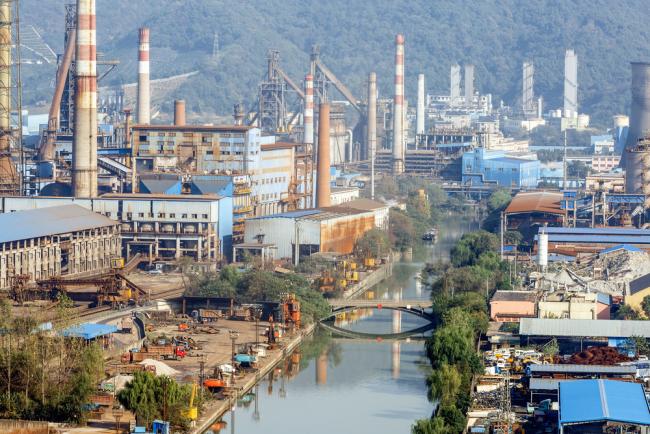
The Power of China’s Energy Efficiency Policies
In just a few years, China has gained the status of an energy efficiency champion.

RAMSES 2019. The Clashes of the Future
RAMSES 2019. The Clashes of the Future, written by Ifri's research team and external experts, offers an in-depth and up-to-date analysis of global geopolitics.
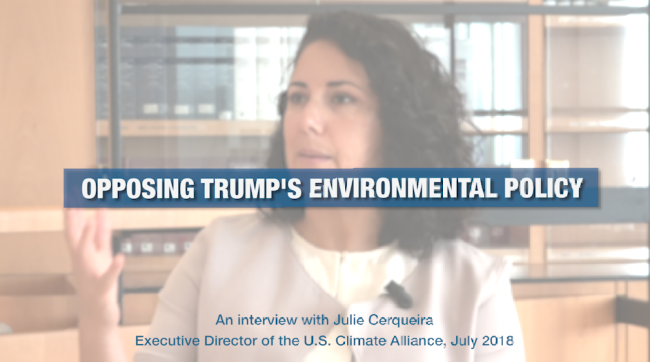
Opposing Trump's Environmental Policy
An interview with Julie CERQUEIRA, Executive Director of the U.S. Climate Alliance.
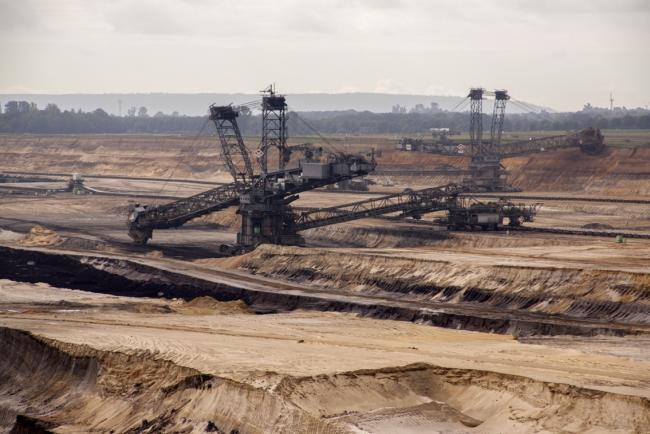
Coal Exit or Coal Expansion? A Review of Coal Market Trends and Policies in 2017
Coal in the power sector is the principal focus of climate-related policies due to its high carbon intensity, making CO2 emissions from coal a leading contributor to climate change.
China’s National Carbon Market: a Game Changer in the Making?
As 2017 drew to close, China officially approved plans for its long-awaited national Emission Trading Scheme (ETS) and the National Development and Reform Commission (NDRC) outlined some of the implementation details[1]. Though it will be limited to the power sector (and combined heat and power, or CHP) at first, it will nevertheless be the world’s largest carbon market. It is expected to cover 1,700 companies representing approximately 30% of China’s total greenhouse gas (GHG) emissions. China’s CO2 emissions from fuel combustion amounted to approximately 8,796 metric tonnes of CO2 equivalent (MtCO2Eq.) in 2016, and seem to remain stable since 2014, though they appear to increase again in 2017[2]. Shanghai should host the national market exchange, which will be jointly owned by the governments of other provinces while Hubei should host the registry[3].
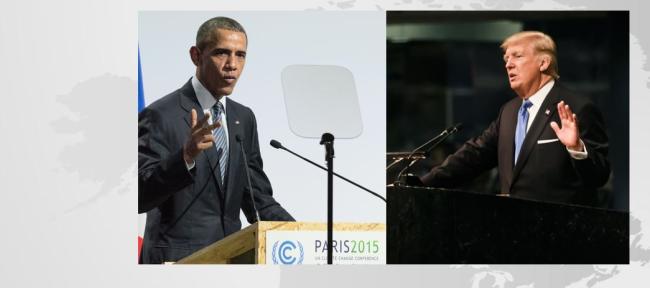
US Energy and Environmental Policies. From Obama to Trump. Continuities and Divergences
President Trump’s administration is characterized by its systematic denial and repealing of measures from his predecessor, be it in foreign policy or domestic policy. This is particularly the case for the energy and environmental policies. There is however a continuity from one administration to another: the steady rise of US hydrocarbon production and the development of the US as a global leader in oil and gas production and in the near future, their exports to global markets.
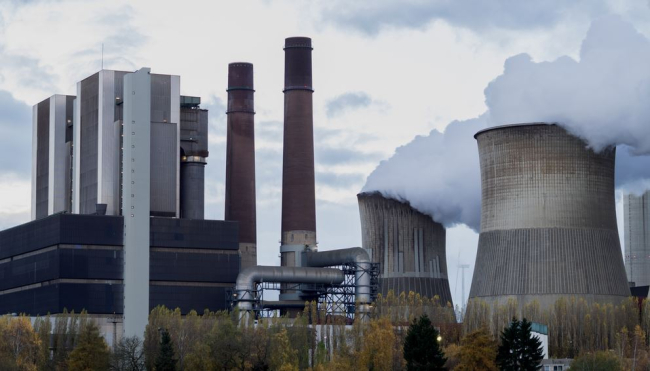
Decarbonizing Germany’s Power Sector: Ending Coal with a Carbon Floor Price?
Germany has a long tradition of climate policy programmes with ambitious greenhouse gas emission reduction targets and comprehensive climate and energy policy packages.
This target-driven policy approach is, however, increasingly facing challenges due to the lack of progress on greenhouse gas emission reductions in key sectors, i.e. the power, the transport and the building sector.


France’s Macron takes lead in climate change battle, with the U.S. absent
PARIS — The United States may have withdrawn from the Paris climate change accord, but on Tuesday dozens of world leaders and philanthropists met to find solutions to the swiftly warming planet — and send a message of resolve to the White House. More symbolic than policy-driven, Tuesday’s summit comes two years after the landmark COP21 conference in Paris, when 196 participating countries — including the United States — vowed to keep this century’s global temperature increase below 3.6 degrees Fahrenheit. In one of the most controversial moments of his young presidency, President Trump announced in June that the United States would leave the Paris accord.
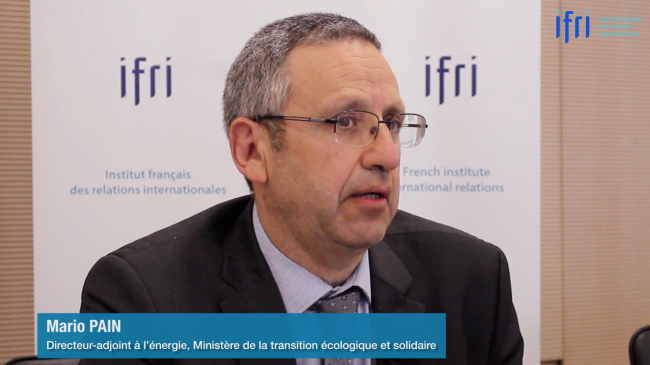
The Transformation of the Electricity French System in 2030 - Mario Pain
Deputy Director, Ministère de la transition écologique et solidaire, describes the main challenges for the French energy system at the 2030 horizon and highlights the need to find the right balance between EU harmonization and national measures to achieve energy transition at the lowest cost.
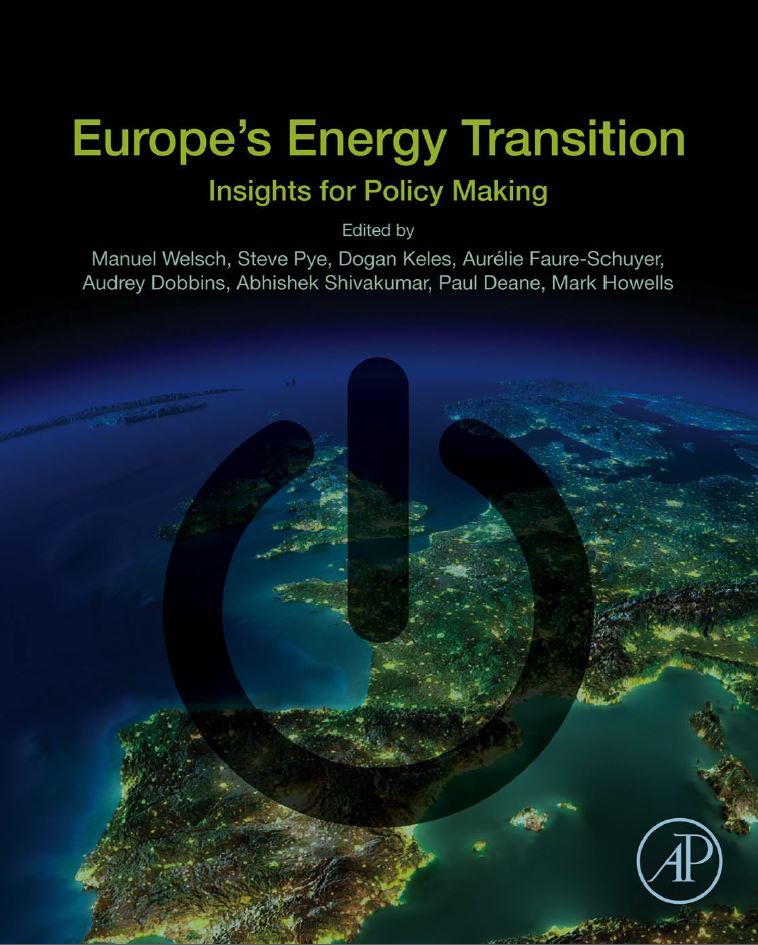
Europe's Energy Transition - Insights for Policy Making
This book was authored by the Insight_e European consortium, in which the Ifri Center for Energy was involved between 2014 and 2017. It is based on the key research projects carried out over the last three years on the Energy Union, greenhouse gas emissions reduction policies, security of gas and electricity supplies and the societal dimensions of the energy transition.

Challenge of Making Smart Cities in India
The Indian government has launched the Smart Cities Mission in June 2015 with the aim of providing a better quality of life to the citizens in 100 cities of the country. This paper describes the main features of the Mission and attempts to explain the challenges in the way forward.

From COP21 to COP22: Keeping up the Momentum
In December 2015, a new international climate agreement was adopted, paving the way for increased mitigation and adaptation efforts.

The Role of Sub-National Actors in Climate Change Policy. The Case of Tokyo
Tokyo is known as a pioneer throughout the history of Japan’s environmental policy, often being compared to California in the United States or Paris in France. Following the global trend of growing local initiatives tackling climate change, Tokyo introduced a cap-and-trade scheme in 2010 ahead of a national implementation.

Tokyo face aux désastres naturels : leçons, enjeux et défis
While Tokyo prepares to welcome the 2020 Summer Olympic Games, the likelihood that a massive earthquake will occur in the capital city within the next thirty years is estimated at 70 %. This fact alone reflects the challenges that Japan must face in managing the risk of natural disasters.
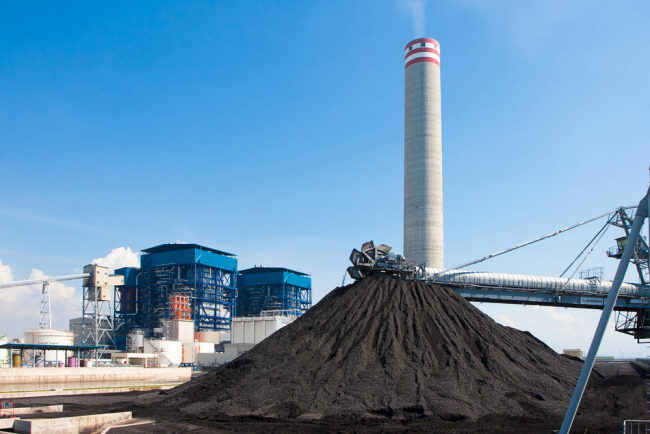
COP21 : Haro sur le charbon
Despite a landmark agreement on climate in December 2015, reducing the share of coal in the world energy mix will remain extremely difficult. This paper analyses five large consumers choices in terms of coal and clean coal technologies.

Innovation: a New Mode of Climate Action
A range of announcements of energy and climate coalitions have been made during COP21. Beyond their important diplomatic objectives, these new forms of coalitions bring scientists and industry leaders towards new long term visions of energy consumption modes.
Climate Action beyond COP21 - Conference Brief
On November 4th 2015, the Ifri Center for Energy held an international conference on the future of Climate Action beyond the COP21. The conference brought together key experts to outline reasonable expectations for the Paris Climate Summit, in terms of binding commitments from the parties and, more broadly, in terms of the profound transformation that an agreement could trigger.
Ifri, a foundation recognized as being of public utility, relies largely on private donors – companies and individuals – to guarantee its sustainability and intellectual independence. Through their funding, donors help maintain the Institute's position among the world's leading think tanks. By benefiting from an internationally recognized network and expertise, donors refine their understanding of geopolitical risk and its consequences on global politics and the economy. In 2026, Ifri partners with over 90 French and international companies and organizations.