
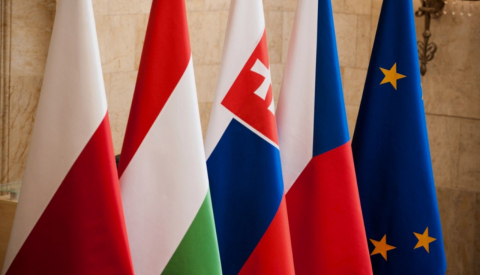


Business as Usual for Next Franco-German Couple, Despite Sticking Points
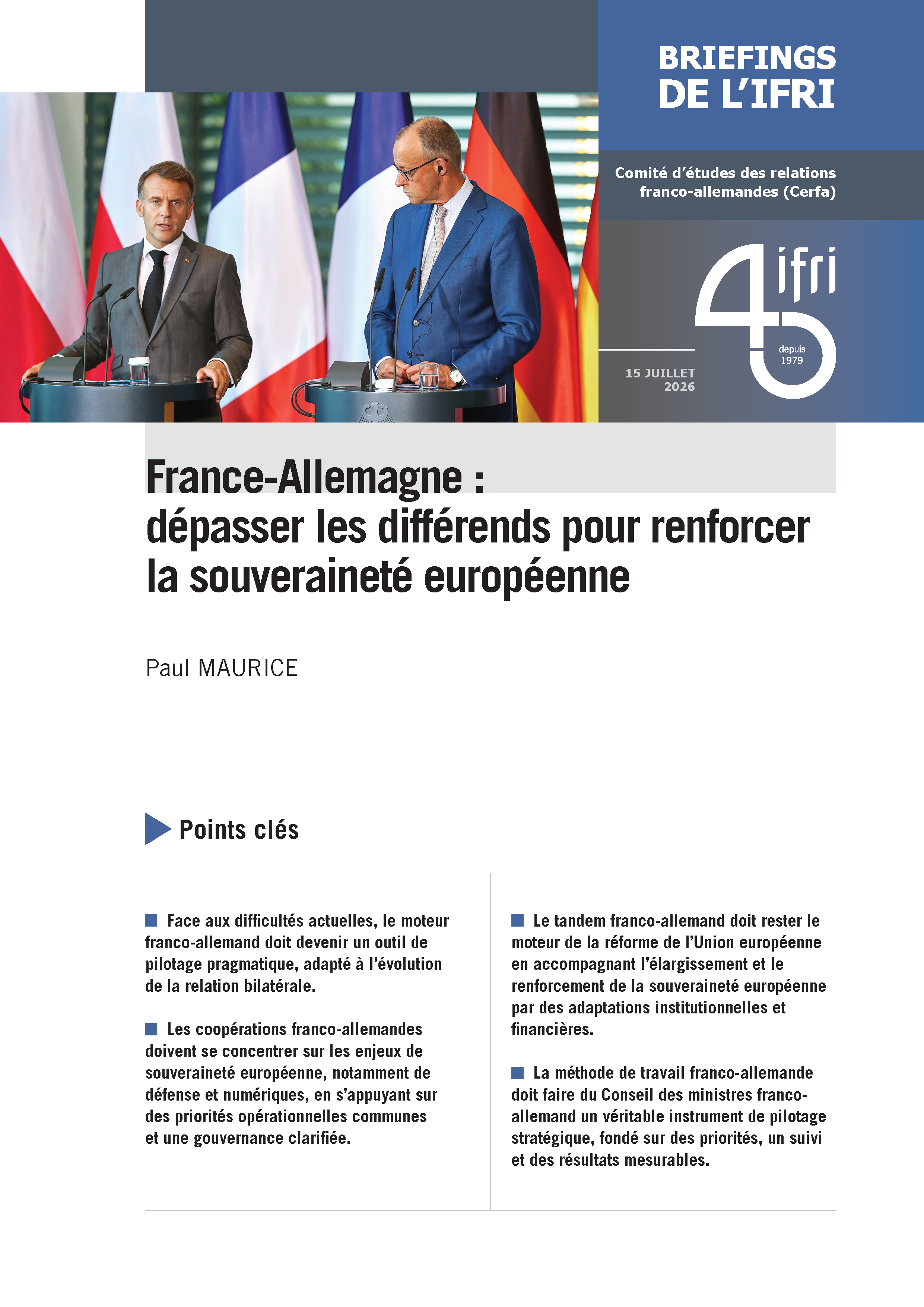
While some argue that the next Franco-German power couple could be business as usual, there are some potential sticking points ahead.
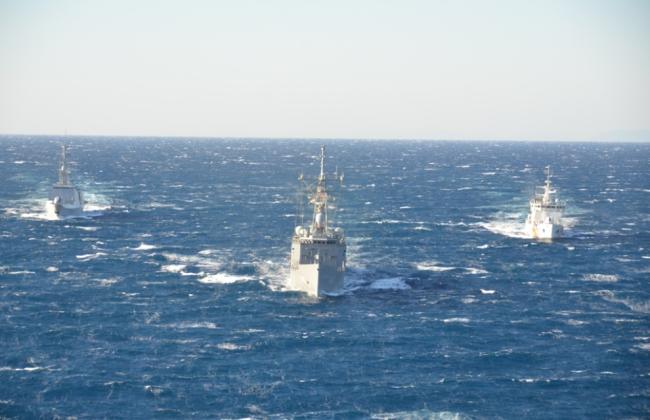
The French Military's Perception of the Turkish Military and Turkey's Expansion in the Eastern Mediterranean
In the summer of 2020, the Central and Eastern Mediterranean became the center of unusual tensions between France and Turkey. Given that these tensions were also military, which is uncommon for the two countries, the perception that the French military has of Turkey’s army and its doctrine is particularly relevant to address.
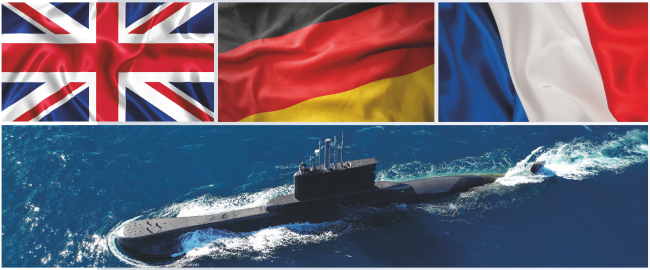
The Dilemma of Middle Powers: How AUKUS Has Reshaped the Potential for E3 Cooperation in the Indo-Pacific
The Indo-Pacific region is increasingly becoming the center of gravity of economy and geopolitics. It covers 60% of the world’s population, triggers 30% of international trade and drains 60% of global gross domestic product (GDP).
New Africa France Summit : the Concealed Continuation of Emmanuel Macron's Africa Policy
A “New Africa-France Summit” was held on October, 8 at Arena Sud de France in Montpellier.
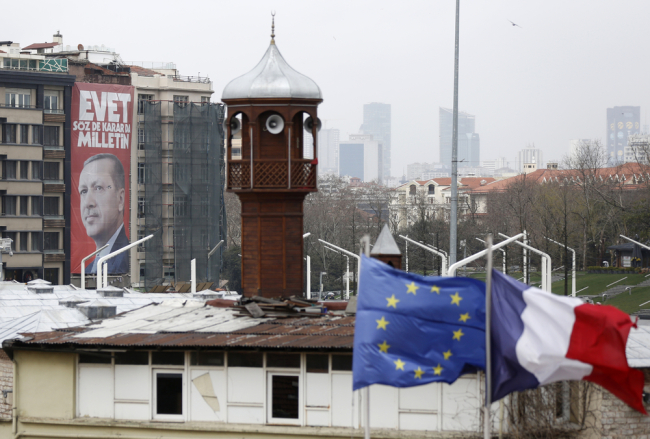
Building European Strategic Autonomy vs. Turkish Strategic Depth: Macron's Diplomatic Gamble
Since coming into office in 2017, Emmanuel Macron has been the loudest advocate for the development of European ‘strategic autonomy’, which aims at reinforcing the European Union’s geo-strategic independence. Asserting the EU’s role on the international stage, starting with its immediate neighborhood, directly clashes with Recep Tayyip Erdogan's long-term expansion strategy in several key areas.
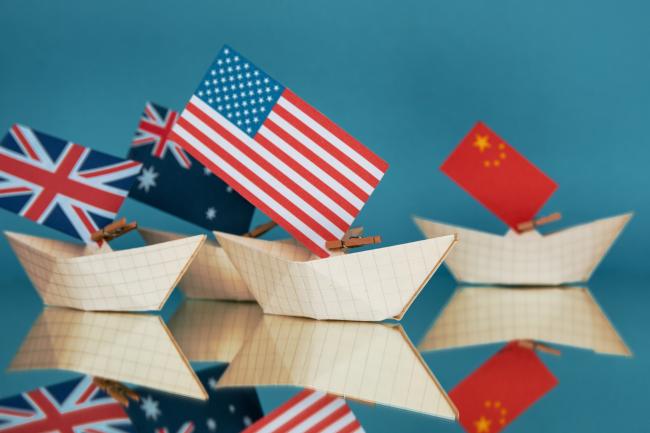
AUKUS Rocks the Boat in the Indo-Pacific, And It’s Not Good News
For anyone who still harbored doubts, Washington made crystal clear from the announcement of the new trilateral alliance with Australia and the UK (AUKUS) that countering China is its number one priority, and that it will do whatever it takes to succeed. Much has been said about the consequences of AUKUS on the French-US relations, but the strategic implications for the Indo-Pacific nations (including France), and for China especially, are also critical to consider.
Human Machine Teaming and the Future of Air Operations
The increasing autonomy and digitization of battlefields implies a re-examination of Man Machine Teaming (MMT). While Artificial Intelligence (AI) has significant benefits, the human cognitive system remains unique until this day. Nonetheless, as demonstrated by the “centaur” approach, man-machine teaming offers even greater potentials than the two working separately.
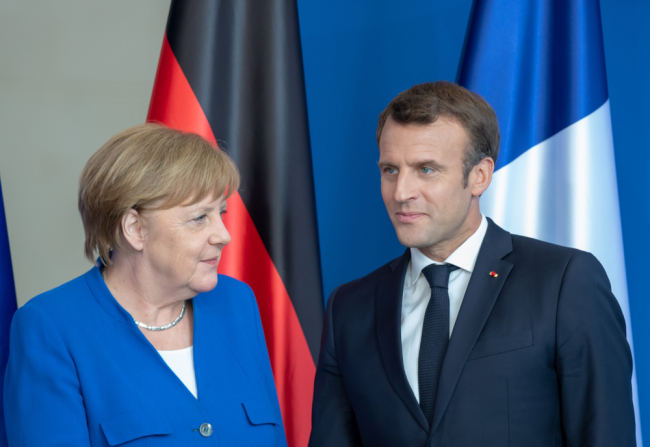
The Future of the Franco-German Tandem
At the heart of the European project, the Franco-German tandem provides impetus for further integration within the EU. However, Brussels is yet to decide which direction it wants to take, and the French and Germans still have to agree on their position with regards to economics, foreign affairs, and enlargement.
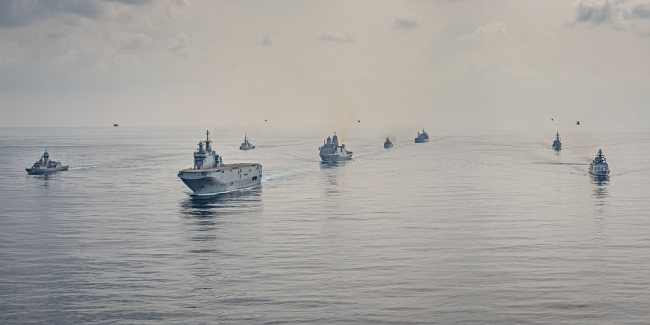
AUKUS, the Indo-Pacific, and France’s Role: Fluctuat Nec Mergitur
The announcement of the new AUKUS alliance between Australia, the UK and the U.S. came as a shock for France.

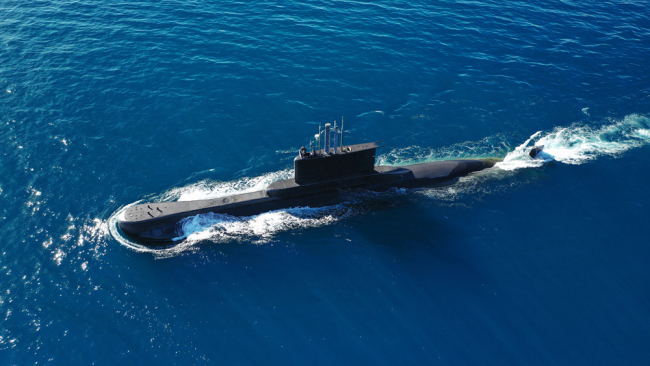
France’s submarine trouble highlights its precarious status as a great power
French admiral says US has broken a pact among nuclear powers on the UN Security Council by agreeing to sell nuclear submarines.

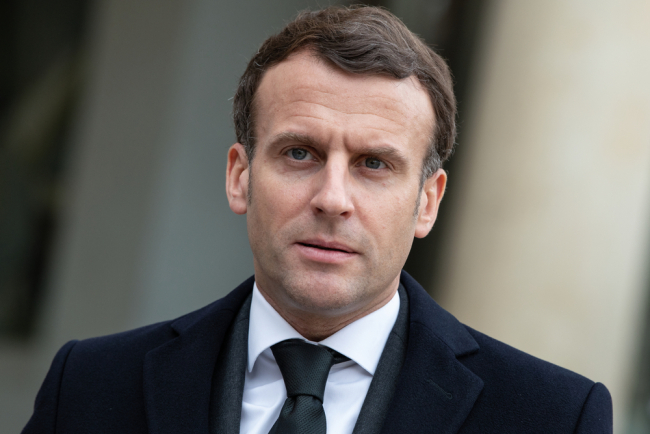
America's Defense Pact with Australia and the U.K. Has Humiliated France's Macron. But It Might Also Help Him
For years, French President Emmanuel Macron butted heads, bit his tongue in frustration, and lashed out at former President Donald Trump, who refused to yield an inch to his entreaties about global cooperation. Trump pulled the U.S. out of the Iran nuclear deal and the Paris Agreement on climate change—cherished projects for Macron—and trashed the NATO military alliance as “obsolete.”
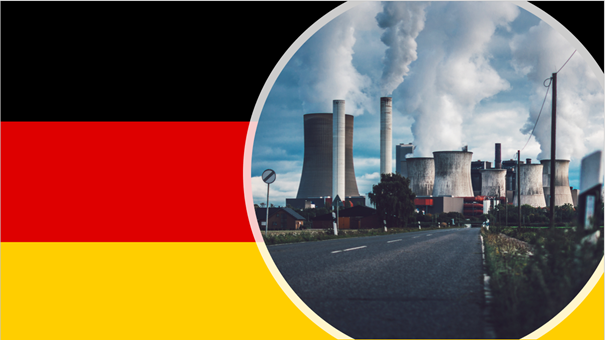
Facing a Wall: Climate in the German Elections and Perspectives for France
All key candidates have climate neutrality by 2045 in sight, yet Germany is preparing to embark on a high-speed decarbonization train that has neither enough power nor rails to lead to its final destination. Beyond slogans and principles, effective strategies have often been missing.
France: the leading European power in the Indo-Pacific
In May 2018, French President Emmanuel Macron delivered a speech at the Garden Island Naval Base in Sydney, Australia, where he outlined a French strategy for the Indo-Pacific. With this speech, France formally positioned itself as an ‘Indo-Pacific power’ and became the first European country to adopt the concept as a regional framework. France’s approach to the region reflects unique sensitivities. It has also been the driving force for broader European engagement with the Indo-Pacific.

The end of the Merkel-Macron era — a mediocre legacy?
German Chancellor Merkel has met with French President Macron in what could be her final working visit to France. Some analysts say their cooperation should have produced more results.

Paris attacks: Survivors hope for justice as France's biggest criminal trial in history begins
"Still now I have the images of the corpses next to my feet": Olivier Laplaud and his wife were in the Bataclan enjoying themselves amongst a crowd of 1,500 people when everything changed in an instant.
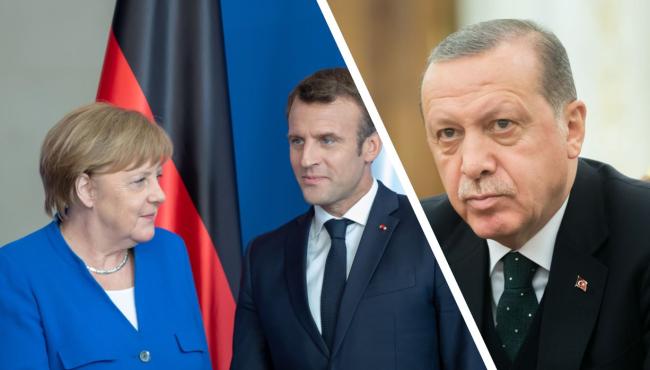
Conflicts in the EastMed: From Germany’s and France’s Conflicting Strategies to a Dual Approach
The State of Franco-German Relations and European Foreign Policy
The Franco-German relationship is more important than ever in order to deal with international crises and to develop a common European Foreign and Security Policy.
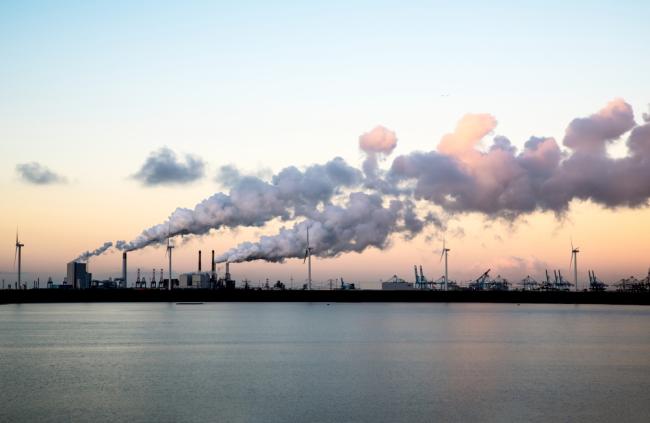
CCUS in Europe: A New Role and Implications for France and Germany
A second wave of carbon capture, utilization and storage (CCUS) projects is under development, and it is much different from the 2000 wave. While Norway, the United Kingdom and the Netherlands are at its forefront, France and Germany have major competencies, and many projects could be carried out in these countries.
France prepares for Departure of Sometimes Reluctant Partner and Rival Merkel
Macron set to become the uncontested leader of Europe with German chancellor’s exit. Chancellor Angela Merkel was not naturally inclined to focus on Franco-German relations. “She comes from the former East Germany, and her experience was of east bloc countries, especially Russia, ” says Sabine Rau, Paris bureau chief for the German public television network WRD.

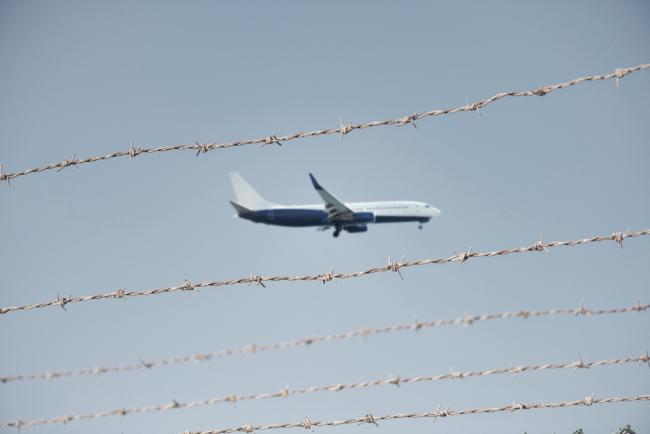
France hopes deporting more alleged radicals will bring security
France has repatriated more than half the people it defined as radical Islamists living in the country without a residence permit since 2018. Now it wants to extend the penalty and deport even more.
From the German Question to the European Question
Are we returning to “The German Question”, which we thought had been dealt with at unification? Although “The German Question” has deep historical roots, its return is indicative of a European crisis: economic fractures, institutions in deadlock, relative withdrawal of France and the UK on serious Union debates. Only through increased European integration can we expect Germany to regain to a place which it can occupy comfortably.

From COP21 to COP22: Keeping up the Momentum
In December 2015, a new international climate agreement was adopted, paving the way for increased mitigation and adaptation efforts.
France and Germany - pictures, stereotypes, reflections and the perception of the neighbour in times of crises
Pictures are an integral part of the process of conveying the state and character of French-German relations. Such pictures highlight not only justified criticisms but also prejudices and clichés. The use of these pictures has intensified since 2008 because the financial and EU crises heightened resentment between the two countries.
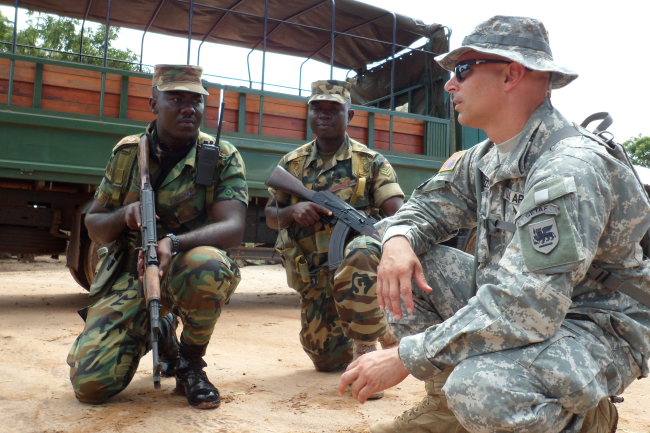
Robust Containment: French and US Security Policies in Africa
Although the United States is less active in Africa than France, their security policies on the continent often have shared objectives and are sometimes pursued jointly. While the urgency of humanitarian crises has been at the centre of foreign interventions for a long time, now it tends to give way to the terrorist threat.
Middle East, the new "Great Game"
Will a divided Middle East become the center of a new “Great Game”? The world’s global powers are aligned in it: the United States, falsely tempted by retraction; Russia, establishing its position in an unexpected state of play, France, destabilized by the contradictions of its own policy… In addition are tussles for regional hegemony between Iran, Turkey, and Saudi Arabia.
La Sentinelle égarée ? L’armée de Terre face au terrorisme
The 2015 terror attacks in France and the ensuing activation by the Ministry of Defense of its homeland protection plan opened a new phase in the long history of the French Army’s involvement in internal security.

France: Disenchantment in Slow Motion
In France, Europe basically expresses four objectives: peace, parity with Germany, economic development, and leveraging French power. But today, the feeling abounds that none of these objectives are really being achieved.
Retours sur Sangaris. Entre stabilisation et protection des civils
In December 2013, France launched its operation Sangaris in the Central African Republic. What conclusions can be drawn for the stabilization of the country and the protection of civilians?
Forces terrestres et réassurance : Quelles options pour l'Alliance ?
Born into the Cold War, the very notion of ‘reassurance’ was revived in the wake of the 2014 Ukraine crisis as NATO had to label the measures destined to reassert the lasting relevance of collective defense towards its member states.
Defending Europe? A stocktaking of French and German Visions for European Defense
The aim of this study consists of taking stock of strategic thinking in France and Germany. More concretely, it intends to identify compatible and incompatible aspects, as well as the potential for compromise, in these national considerations on the future of CSDP and NATO. In so doing, it concentrates on five issues: strategic visions, threat perception and military doctrine; the institutional framework for European defense; military interventions; capabilities as well as the industrial dimension.
Muslim States’ Influence on Islam in France
Successive attempts to institutionalise Islam in France have not resulted in an entirely satisfactory outcome.
Space Collaboration between India and France: Towards a New Era
In the sphere of space research, France-India collaboration began in the early 1960s, with France providing assistance to India’s Rohini sounding rockets programme. Over the years, France has played a constructive role in helping India to develop its ground and space infrastructure, as well as its launching platforms and human resources. In point of fact, France has emerged as one of India’s most dependable partner in the realm of space.
The French Army and the Military Revolution of the First World War
In 1914 the firepower of modern weaponry produced a massacre. To limit losses, the warring parties dug themselves into trenches. The French army was forced to innovate.
Judicialization of the Battleground
The increasing judicialization of external military action is encouraging military law to fall into line with common law.
France, Germany, Turkey: A New Triangle of Powers
Relations between Germany, France and Turkey have been strictly bilateral for a long time, with varying intensity, styles and areas of cooperation. The European perspective that is now part of these relations has introduced a three-way dynamic.
France and the Fight against Terrorism in the Sahel: The History of a Difficult Leadership Role
Except for its extreme poverty and the disastrous effects of a series of droughts, the Sahel region has been largely out of the spotlight of international attention in the past. Yet the rise of terrorism and especially the creation of Al-Qaida in the Islamic Maghreb (AQIM) in 2007 brought the region into the focus of world politics. Initially, AQIM"s activities in the Sahel mainly posed a threat to the stability of the Sahelian states themselves. In an effort to internationalize its agenda, however, AQIM also started targeting Western countries.
The Defense Budget in France: Between Denial and Decline
Although defense spending is the fourth budget item in France, it is rarely a matter of public debate. During the past three decades, defense has been affected in turn by the desire to rip the benefit of the post-Cold War “peace dividend”, the professionalization of 1997, and the increase of overseas operations after September 11, 2001.
France and the EEAS: A give-and-take relationship
Based on interviews with diplomats from a representative cross-section of nine member states and members of the EEAS (European External Action Service) itself, the research findings of this EPIN Working Paper confirm long-standing traditions and member state perceptions of cooperation with European institutions.
Defence and Foreign Policy Under President-elect François Hollande
We know little about François Hollande's stance on wider foreign and defence policy issues. Though we are unlikely to see major changes from his predecessor, some clues from his successful campaign suggest that President-elect Hollande will adopt a more European and Gaullist approach.
Digital Hoplites: Infantry Combat in the Information Age
FELIN, the world's first "integrated soldier system", will enter service in the French Army this year. Throughout history, infantrymen have sought to capitalize on technology while seeking the best compromise between three basic requirements: mobility, firepower and protection of combatants.
Ifri, a foundation recognized as being of public utility, relies largely on private donors – companies and individuals – to guarantee its sustainability and intellectual independence. Through their funding, donors help maintain the Institute's position among the world's leading think tanks. By benefiting from an internationally recognized network and expertise, donors refine their understanding of geopolitical risk and its consequences on global politics and the economy. In 2026, Ifri partners with over 90 French and international companies and organizations.