





GovTech, The New Frontier in Digital Sovereignty
The COVID-19 crisis has been a catalyst for a surge in the GovTech market, while triggering debate around the use of new technologies in the public health response to the pandemic. More broadly, the health crisis has shed a new light on the strategic importance of some domains relevant to GovTech such as HealthTech, smart cities and EdTech.
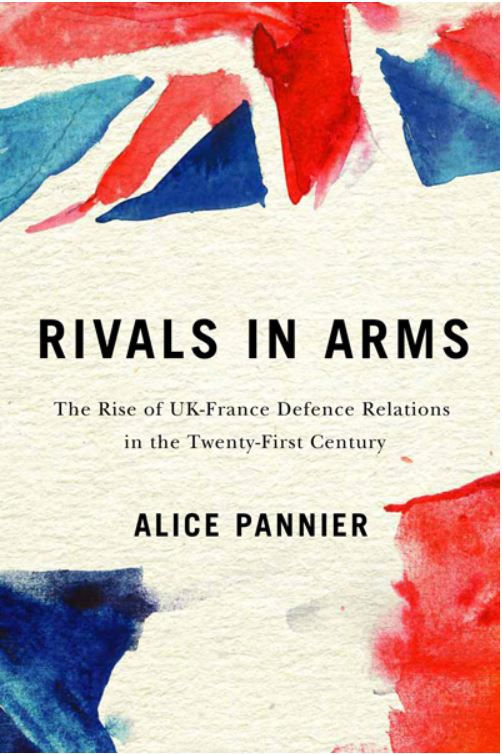
Rivals in Arms: The Rise of UK-France Defence Relations in the Twenty-First Century
The untold story of the thriving yet complicated defense relationship of two countries caught between strategic decline and global ambitions. As the UK leaves the European Union and as the multilateral international order is increasingly under stress, bilateral security links are more important than ever. Among such relationships, the UK-France partnership has become particularly critical in the past decades.
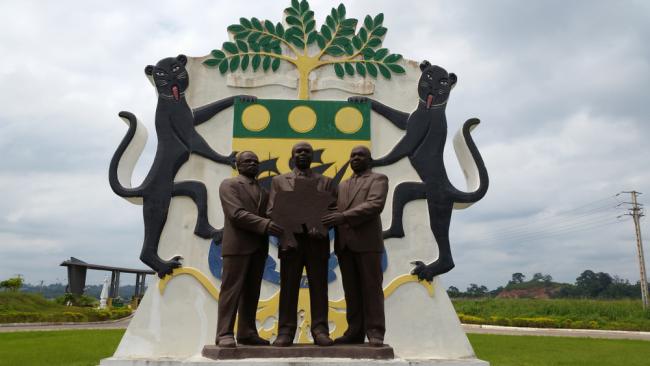
The Gabonese Opposition Diaspora in France: A Political Mobilisation in the Context of the 2016 Post-electoral Crisis
The Gabonese opposition diaspora in France has become politically influential. Diasporic actors criticize the Ali Bongo regime and the weak organisation of the Gabonese opposition. They could change the political destiny of the country.
The Karlsruhe Court Judgment: A Thunderclap from a Clear Sky?
In its judgment of 5 May 2020, the German Federal Constitutional Court in Karlsruhe questioned the conditions under which the European Central Bank (ECB) had adopted a Public Sector Purchase Programme (PSPP), thus contradicting the position taken by the Court of Justice of the European Union in the same case.

Belarus opposition leader takes risky diplomatic path
Once a political novice, Belarusian opposition leader Svetlana Tikhanovskaya is joining Europe's diplomatic big leagues but risks undermining her own cause in the process, experts said.
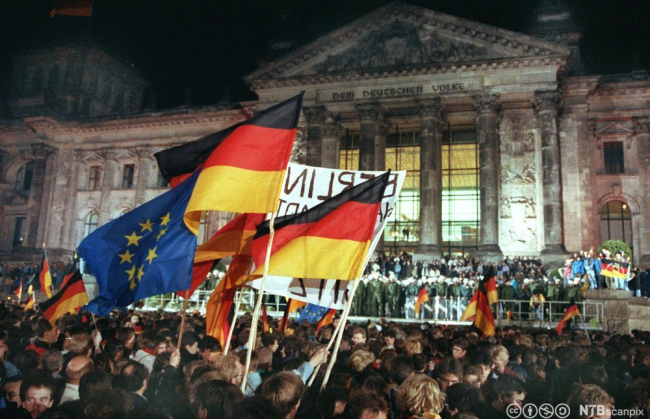
Thirty Years after its Reunification, Germany's “European Moment”?
On October 3, 1990, after forty years of division, Germany once again became one state. Less than a year after the fall of the Berlin Wall, on November 9, 1989, the territories of the German Democratic Republic (GDR) became part of the Federal Republic of Germany (FRG) under Article 23 of its Basic Law.

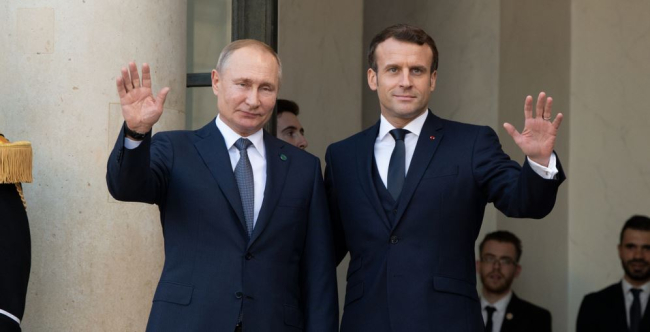
Macron’s rapprochement with Putin is not worth it
French president’s ‘trust-building’ with Russian leader has failed

Why do migrants still leave northern France to head to UK?
Migrants who head to the United Kingdom often see it less as a panacea than a last-ditch means-to-an-end, according to Matthieu Tardis, an expert in migration policy at the French Institute of International Relations (IFRI).
Bavaria and France. Preparing the Future together
France and Bavaria have a longstanding close and solid partnership. However, the relationship between France and Bavaria is not only marked by a common history and by the structures created over the decades.
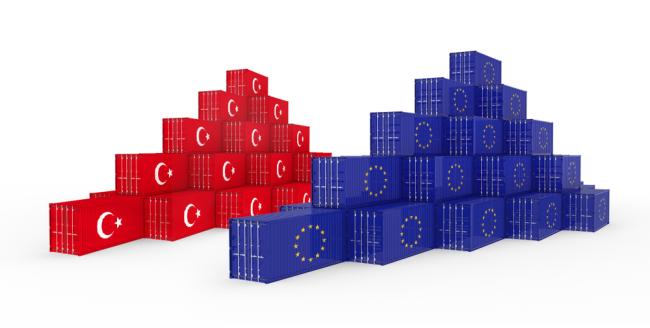
France and the Modernization of the EU-Turkey Customs Union: Interests and Obstacles
This report is part of a joint endeavor of the Centre for Applied Turkey Studies (CATS) at Stiftung Wissenschaft und Politik (SWP), along with Elcano Royal Institute (ELCANO, Madrid), The Polish Institute of International Affairs (PISM, Warsaw), Istituto Affari Internazionali (IAI, Rome) and the Hellenic Foundation for European and Foreign Policy (ELIAMEP, Athens), to open perspectives for the modernization of the European Union-Turkey Customs Union (EU-Turkey CU).

Turkey fuels regional power game over Mediterranean gas reserves
Competing claims have left Ankara isolated. Its efforts to stall projects threaten billions of dollars in investment. Europe’s top diplomat smiled for the camera as he took a helicopter flight over the disputed waters of the island of Cyprus at the end of June.

Les ressources humaines, un enjeu stratégique pour les armées
The French Military Planning Act for the years 2019-2025, is “dedicated” to men and women in the services, showing how crucial the human factor is for the armed forces.
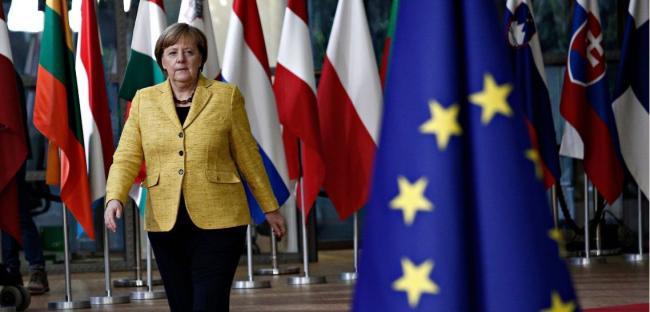
Captain in the Storm: Challenges and Opportunities for the German EU Council Presidency
The German Presidency of the Council of the European Union begins on July 1, 2020 at a time of acute crisis. It is facing unprecedented challenges and organizational constraints in a context marked by high expectations from its European partners.
Breakthrough for Decentralized Franco-German cooperation? Perspectives after the Aachen Treaty
The development of Franco-German cooperation can be described as an intergovernmental process. Depending on the perspective, the capacity for innovation of the relationship lies either with central decision-makers at the state level or with decentralized actors at the local level.
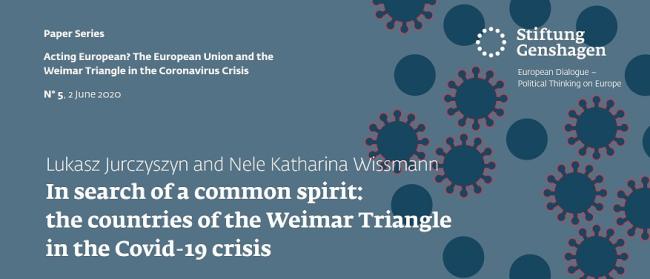
In search of a common spirit: the countries of the Weimar Triangle in the Covid-19 crisis
The coronavirus crisis has affected the countries of the Weimar Triangle to varying degrees. Bilateral relations between Germany and Poland as well as Germany and France have been strongly influenced by border closures, which have led to tensions between the countries.
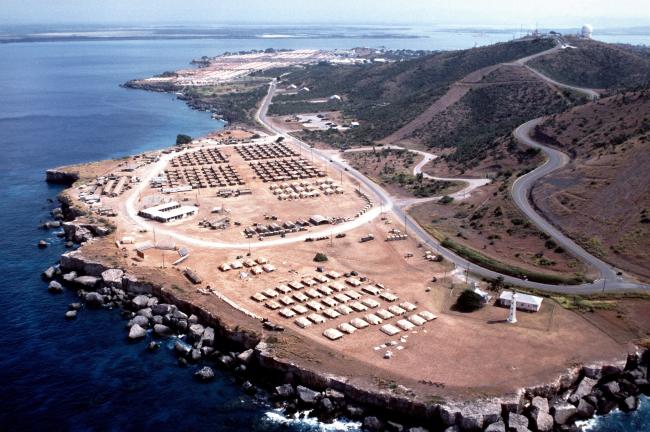
Les bases de la puissance. Enjeux géopolitiques et stratégiques des bases militaires avancées
Throughout history, great powers have relied upon forward military bases, either to support their interventions in areas of interest, to re-assure allies or to control a territory.
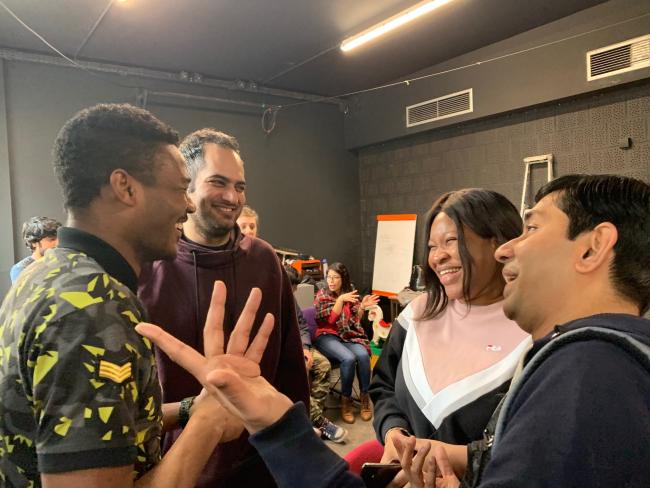
Migrant and Refugee Participation: Approaches to Rethinking Integration Policies
In France, people participating in policies and programs that affect them is not a new concept. It has been widely studied in the field of social work and the fight against poverty, and is at the heart of many experiments. How can this concept of participation, as is outlined for people experiencing poverty, be applied to refugees and migrants? Does the participation of refugees and migrants present specific characteristics?

[Webinar] German and French responses to COVID-19
Thierry de Montbrial, Ifri's founder and executive chairman, participated in a webinar organized by the Harvard Kennedy School, alongside Daniela Schwarzer, Director, German Council on Foreign Relations (DGAP).
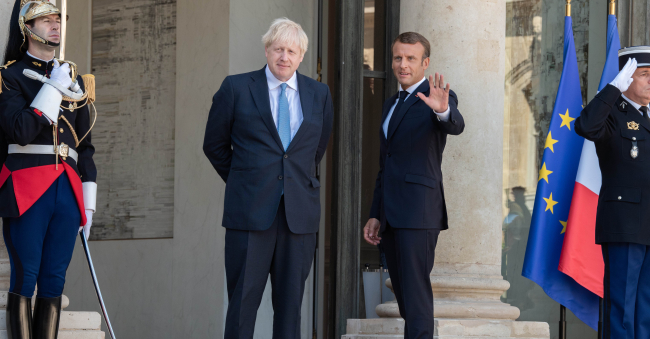
Complementarity or Competition? Franco-British Cooperation and the European Horizon of French Defense Policy
What does future hold for the Franco-British defense partnership after Brexit?
Coronavirus: Franco-German solidarity put to the test
While the coronavirus health crisis is currently intensifying in Europe, it does not seem to be affecting France and Germany at the same pace or with the same intensity. The crisis is putting both countries' respective hospital systems to the test in different ways. France and Germany's economies are being mobilized, and social cohesion is enhanced. The crisis also impacting Franco-German and European solidarity.
Ifri, a foundation recognized as being of public utility, relies largely on private donors – companies and individuals – to guarantee its sustainability and intellectual independence. Through their funding, donors help maintain the Institute's position among the world's leading think tanks. By benefiting from an internationally recognized network and expertise, donors refine their understanding of geopolitical risk and its consequences on global politics and the economy. In 2026, Ifri partners with over 90 French and international companies and organizations.
