




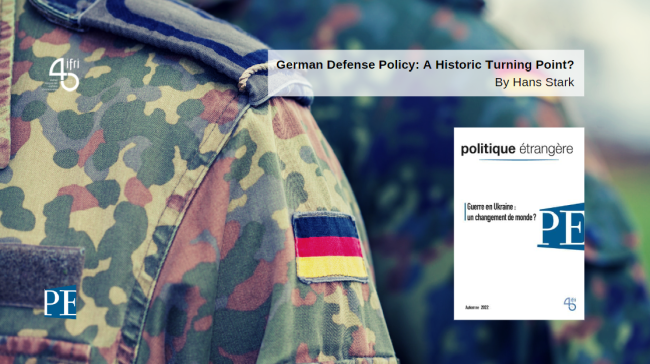
German Defense Policy: A Historic Turning Point?
The war in Ukraine has been a rude awakening for Berlin.
Interview with David Miliband, President and CEO of the International Rescue Committee
Can you describe the humanitarian impact of the war in Ukraine, in Europe, including with regards to displacement, and beyond the outside of Europe?

War in Ukraine: A New World?
Beyond the tactical sphere, the conflict in Ukraine has already had numerous repercussions, and its conclusion will provoke many more in the global system. In this special issue, Politique étrangère explores some potential outcomes.

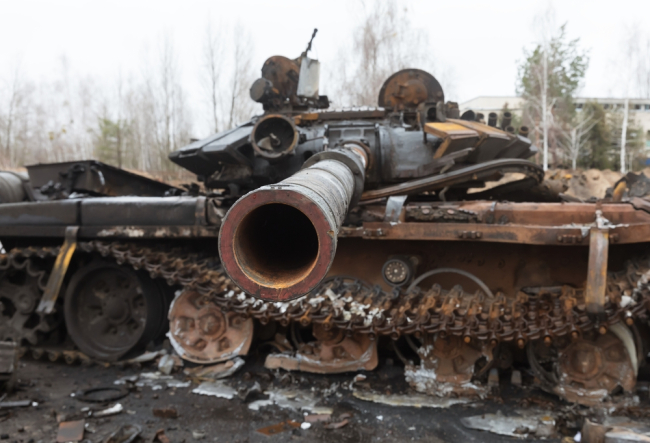
Russian army hobbled by shortage of soldiers
Following the last Ukrainian victories over the Russian Army in the Kharkiv oblast, Russian administration currently faces controversies. As a matter of fact, many question the degree of intensity Russian general staff has decided, avoiding for now general mobilization. According to Dimitri Minic, researcher attached to the Russia / NIS center at the French Institutes of International Relations and expert in russian armed forces, the current russian army not only lacks men but also modern equipment.
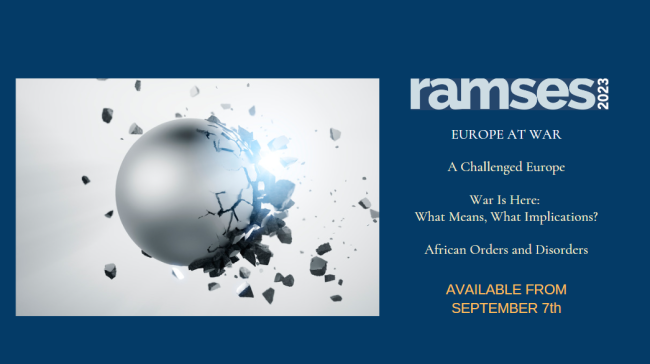
RAMSES 2023. Europe at War
For its 41st edition, RAMSES 2023. Europe at War, written by Ifri's research team and external experts, offers an in-depth and up-to-date analysis of geopolitics in today’s world.
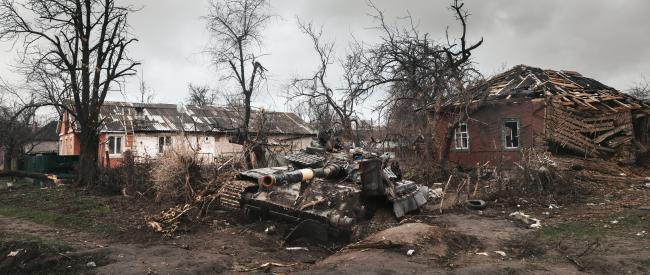
The Return of High-Intensity Conflict in Ukraine: Lessons for Land Forces
After twenty years of counter-terrorism, the Ukrainian battlefield marks the renewal of so-called “high-intensity” warfare. It constitutes a major strategic turning point, reversing the contemporary model of wars involving the West.
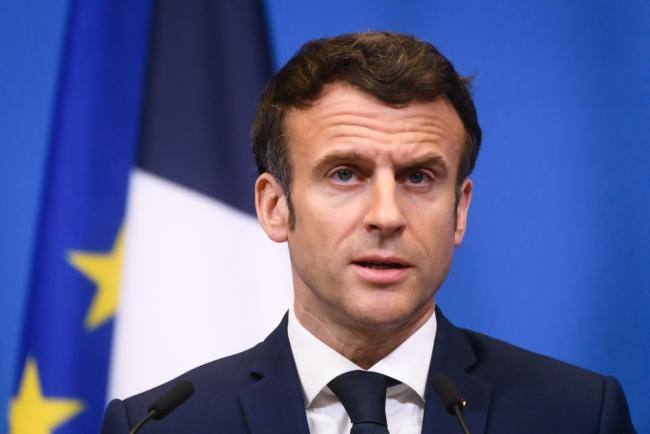
Is Macron’s ‘European Political Community’ a realistic prospect?
France’s presidency of the EU ends on June 30 with Emmanuel Macron’s new big idea, a “European Political Community”, hanging in the balance. This community would encompass EU membership candidates like Ukraine and possibly ex-member Britain. For some observers, the French president’s idea offers a way to bring countries into the European project while the long accession process takes its course. Others argue that Macron’s plan offers few clear objectives.
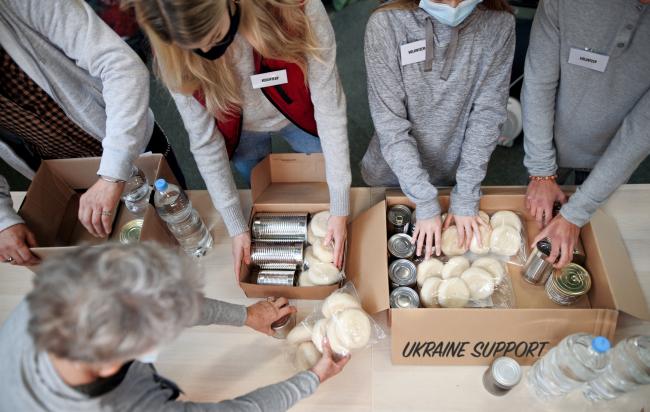
Quelle stratégie pour l’aide civile en Ukraine ?
Ukrainian institutions have overall withstood the shock of the war: the central government and local authorities benefit from a real legitimacy and a solid ability to govern.
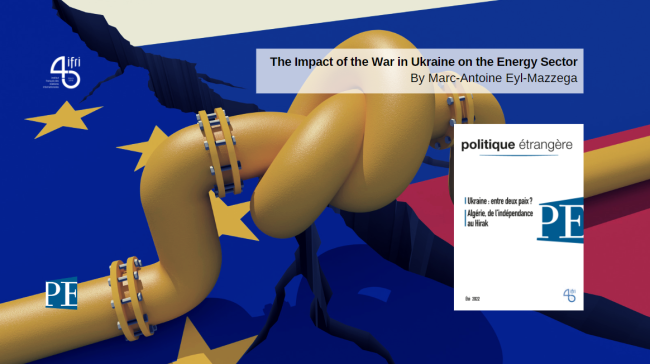
The Impact of the War in Ukraine on the Energy Sector
The outbreak of war in Ukraine dealt a shock to energy markets.
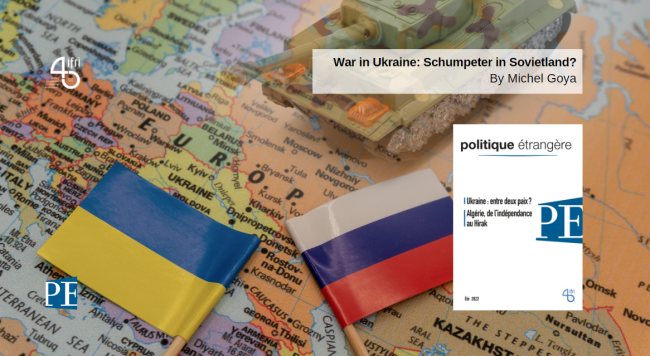
War in Ukraine: Schumpeter in Sovietland ?
On 24 February 2022, Russia invaded Ukraine. Moscow’s initial plan was to use a “shock and awe” approach to conquer Kyiv quickly.
Ukraine: Between Two Peaces?
We have reentered the world of war. In its first special report, Politique étrangère offers a range of in-depth analyses of the military and political dynamics at work in a Europe that has just woken up from its dream of enduring peace. The direct confrontation between Ukraine and Russia has pitted two military and defense systems against each other, whose asymmetrical logics, strengths, and weaknesses we are discovering as the conflict unfolds.

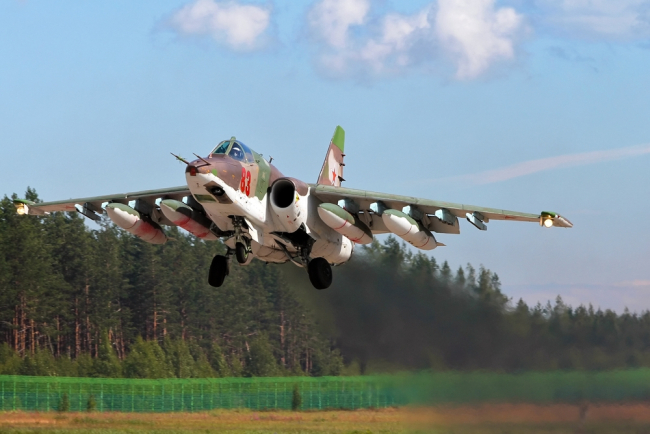
Russia's air force makes the difference in Donbas breakthrough
The frantic rate of attacks from the air seems to have contributed to the recent retreat of Ukrainian forces on the Donbas front.
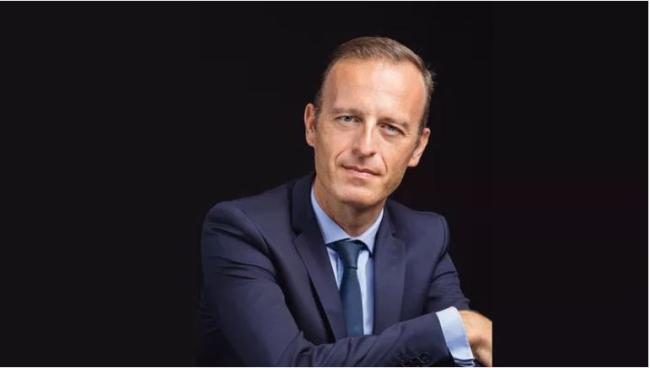
Thomas Gomart 'Russia is waging a colonial war in Ukraine under nuclear protection'
Thomas Gomart is a French historian and director of the French Institute of International Relations (Ifri). In an interview with Le Monde, he analyzed the new global strategic situation and gave a first assessment of the disruption caused by the Russian aggression in Ukraine.

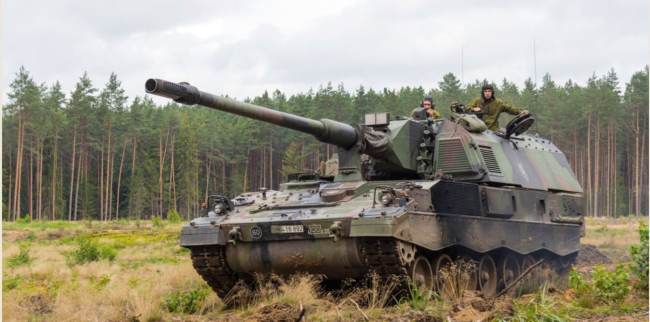
The West shares tanks, rocket launchers and artillery with Ukraine in new war phase
Western countries are supplying Kyiv with heavy weapons, abandoning the caution shown at the start of the conflict. The aim is to restore the Ukrainian army's strength and block the Russian war effort in the Donbas.


War In Ukraine: Why Mariupol Is A Priority Target For Russia
Since the beginning of the Russian invasion, the port city of Mariupol, located on the Sea of Azov, has been of great strategic interest to Moscow. Vladimir Putin has made it a symbolic objective.

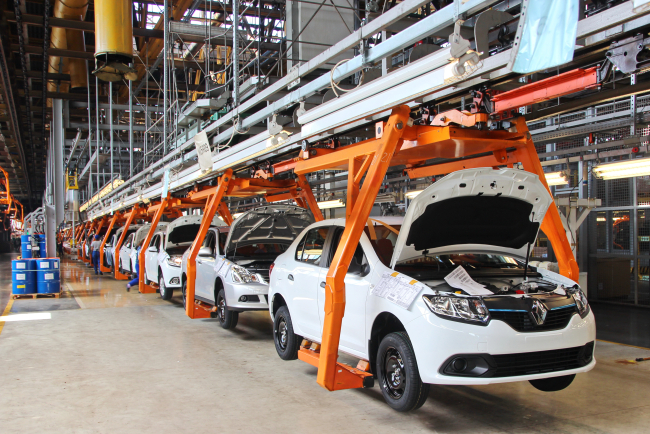
Renault’s Russia dilemma
Renault had for months been plotting to export a newfangled version of the Lada to the reste of the world. although realising that ambition remained some way off, it would have capped the revival of a brand arguably more synonymous with the Soviet Union than any other and which Renault first took a punt on in 2007 after then chief Carlos Ghosn identified Russia as a promising market.

The Paradigm Shift in German Security and Defence Policy After the Russian Invasion of Ukraine
The German government has long hesitated to take a position on the crisis between Russia and Ukraine. It has refused to question the planned commissioning of Nord Stream 2 and to supply Ukraine with weapons.
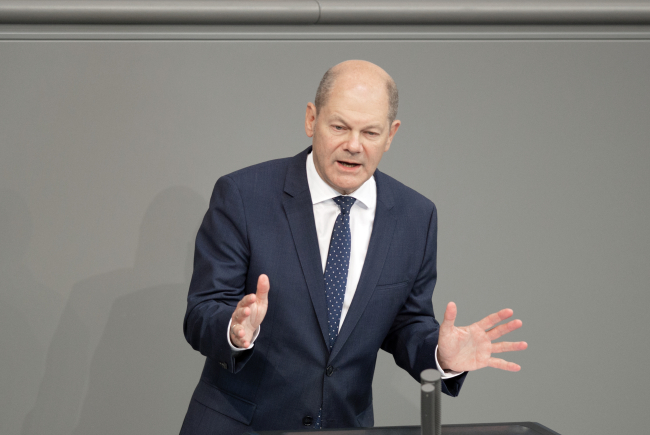
A “New Era”? Toward a Realignment of German Foreign Policy after the Russian Invasion of Ukraine
German Chancellor Olaf Scholz’s speech to the Bundestag on February 27, 2022, announced a new orientation in foreign policy and challenged the principles that had been the consensus in Germany for the past thirty years.
Putin’s War is Stuck, Beware The Rising Risks
Data on the concentration of Russian troops was solid; the diplomatic offensive executed by Moscow was deliberately disagreeable; yet, many experts (myself including) refused to accept the proposition on the coming war as “inevitable”.
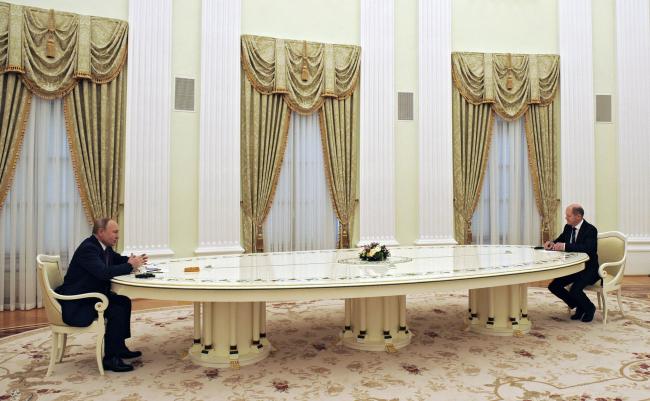
The Shock of Reality: The Traffic Light Coalition in the Russian-Ukrainian Crisis
The Russian-Ukrainian crisis puts to the test the cohesion of the new traffic light coalition, the authority of Chancellor Scholz and the ambition to adapt the post-Merkel German foreign policy.
Crimea: The Contradictions of Russia’s Line
After denying Russian intervention in Crimea, President Putin ultimately recognized that it indeed happened and then used fallacious arguments to justify it.
The European Union to Ukraine’s Rescue
Recent events have provided the opportunity for the rekindling of relations between Ukraine and the European Union.
Why Russia and the EU Should Cooperate in Ukraine
Ukraine is divided along historical, ideological, economic, religious and linguistic lines, which it has failed to unite in its brief history.
The Russian-Ukrainian Conflict Seen from Kiev
Moscow has every intention of including Ukraine in its Eurasian Union, with one major playing card: the exchange of Kiev’s sovereignty for economic and financial advantages.
The Ukrainian Crisis or the European Misunderstanding
The crisis in Ukraine seems at first to be the result of the impact of two misunderstandings of Russian and Western approaches.
Ifri, a foundation recognized as being of public utility, relies largely on private donors – companies and individuals – to guarantee its sustainability and intellectual independence. Through their funding, donors help maintain the Institute's position among the world's leading think tanks. By benefiting from an internationally recognized network and expertise, donors refine their understanding of geopolitical risk and its consequences on global politics and the economy. In 2026, Ifri partners with over 90 French and international companies and organizations.
