
France's Macron is sending China the wrong signals
More realistic posture would strengthen Paris' role in Indo-Pacific region


France’s Macron Renews Call for a Sovereign Europe Less Reliant on Foreign Powers
French president’s remarks follow criticism over his warning that Europe should steer clear of U.S.-China tensions over Taiwan

Does Macron's stance on Taiwan weaken G7 deterrence against China?
One of Prime Minister Fumio Kishida’s top goals for next month’s Group of Seven summit in Hiroshima is to create a united front on issues like China and Ukraine. But finding a unified approach to dealing with Beijing’s assertiveness might have just become harder.

Europe is ‘counting on China’ to end Russia’s war in Ukraine, leaders tell Xi Jinping in Beijing
European Commission chief Ursula von der Leyen and French President Emmanuel Macron deliver united message to Chinese president during visit ; but as French leader signed over 20 business deals on China trip, EU chief took sterner line with Xi on economic grievances, human rights and Taiwan
In China, Macron appeals to Xi to help end Ukraine conflict
French President Emmanuel Macron called on Chinese President Xi Jinping to help convince Russia to hold negotiations toward ending the war in Ukraine as the two leaders met in Beijing on Thursday.

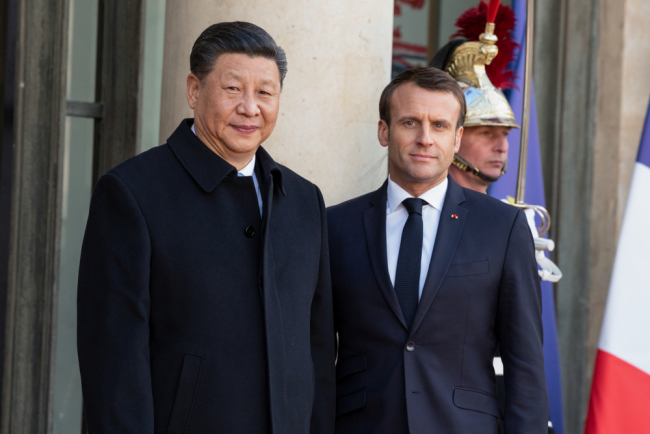
France’s Emmanuel Macron to Press Xi Jinping on China’s Support of Russia
French President Emmanuel Macron is expected to press Chinese leader Xi Jinping during a trip to China this week to limit support for Russia in its war against Ukraine, according to French officials, amid growing Western concerns over Beijing’s deepening economic and political ties with Moscow.
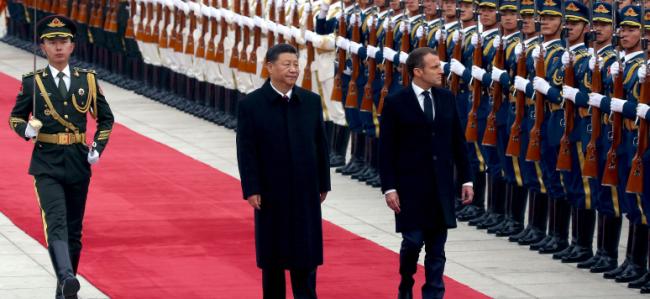
Emmanuel Macron Visits China: Stability in the Taiwan Strait Should be a Priority for France
President Emmanuel Macron will visit China from April 4 to 8 for the first time since 2019 and five months after his meeting with Chinese President Xi Jinping, on the sidelines of the G20 summit in Bali.
The Cumbersome Legacy of the SPD’s Policy Towards Vladimir Putin’s Russia
The Social Democratic Party of Germany (SPD) looks back with pride on the history of its Ostpolitik, which it sees as having paved the way for German reunification. With the firm will to continue this Ostpolitik after the end of the Cold War, SPD politicians of the last 20 years have, within the framework of their government responsibility, focused on a partnership with Russia, which had the goal of contributing to the democratization of Russia through bilateral trade and mutual interdependence.

Xi's Moscow Visit Risks Further Emboldening Putin: Analysts
There is no sign the visit of Chinese President Xi Jinping to Moscow will rein in President Vladimir Putin in his war in Ukraine, even if it again highlights a lopsided relationship where Russia is clearly the junior partner, analysts say.

France is already sending an armored ‘oddity’ to Ukraine. Now this can send a little odd.
France may send Ukraine its AMX-10Ps, an amphibious infantry fighting vehicle that was phased out of service by the French army nearly a decade ago.
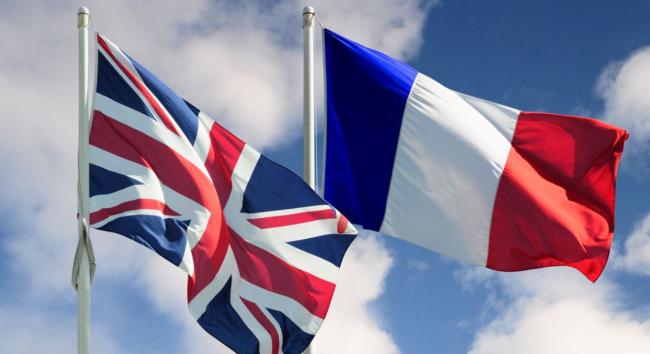
Rebooting the Entente: An Agenda for Renewed UK-France Defense Cooperation
The Franco-British Summit on March 10th, 2023, will mark a much-needed reset in bilateral cooperation, following years of strained relations. With a recently re-elected French president and a new British Prime minister, both sides are committed to making this summit a success and re-launching a positive agenda for bilateral cooperation. The summit, the first since Sandhurst in 2018, will focus on three key topics: migration, energy, and foreign policy. Defense cooperation will also be addressed, as it remains the cornerstone of the bilateral relationship, though it may take a less prominent part than on previous occasions.
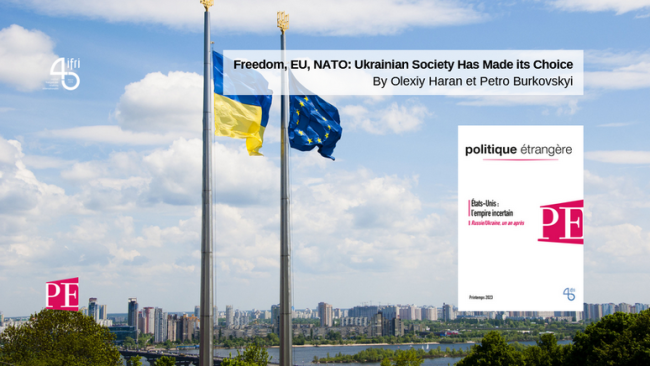
Freedom, EU, NATO: Ukrainian Society Has Made its Choice
The Ukrainian resistance should be seen in its long-term context, starting with independence in 1991, and confirmed by the events of 2014.
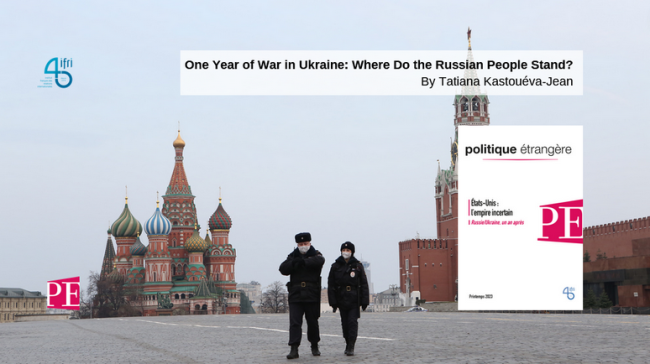
One Year of War in Ukraine: Where Do the Russian People Stand?
The overwhelming majority of the Russian population, having been fed Kremlin propaganda for years, approves of the war in Ukraine.
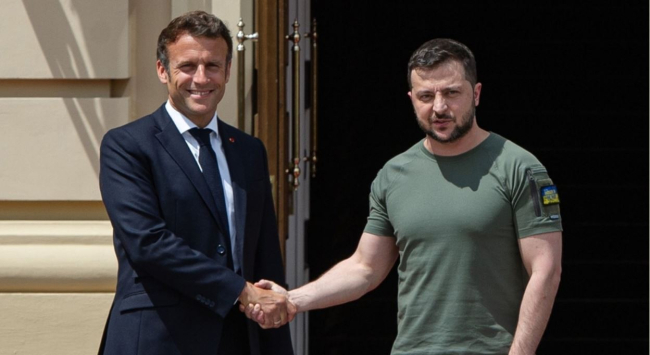
How will it end? No easy answers over Russia's war on Ukraine
The Kremlin wanted Russia's invasion of Ukraine to yield a lightning victory, but 12 months on the war is dragging into a stalemate with neither side achieving military breakthrough nor prepared to agree a settlement based on the status quo.
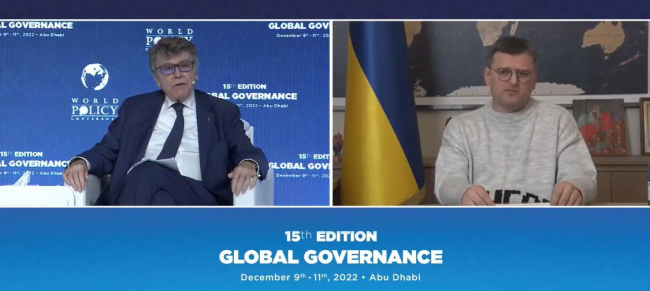
A conversation between Dmytro Kuleba and Thierry de Montbrial, World Policy Conference 2022, Abu Dhabi
Dialogue between Dmytro Kuleba, Minister of Foreign Affairs of Ukraine, and Thierry de Montbrial, founder and president of Ifri and the World Policy Conference, held in Abu Dhabi (Dec. 11), on the occasion of the 15th edition of the World Policy Conference.
The Balkans: A New Great Game?
What political spaces make up the Old Continent? This question is at the heart of the Ukrainian conflict.
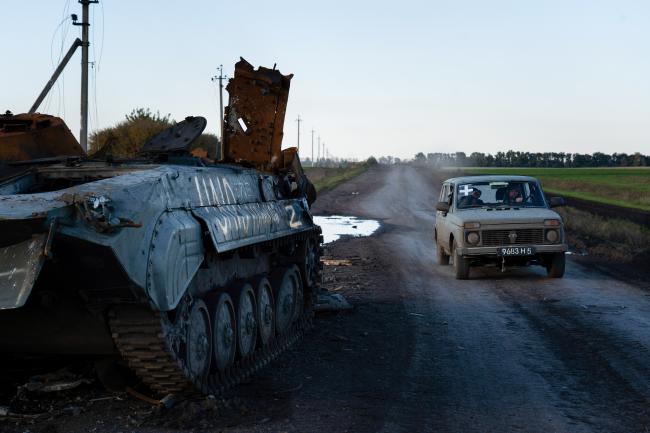
Russia’s War in Ukraine: Misleading Doctrine, Misguided Strategy
The blame for committing the blunder of starting the war with Ukraine is deservedly placed on President Vladimir Putin, but a single-explanation interpretation of the unfolding disaster is unsatisfactory.

Global Focus: Has the War in Ukraine United Europe?
Does the war in Ukraine change the prospect of European Union enlargement? What is the possibility and future of Europe's common foreign and security policy? Does russian aggression unite or unify Europe and what is the role of the European political community? What is Russia's ultimate strategic goal?

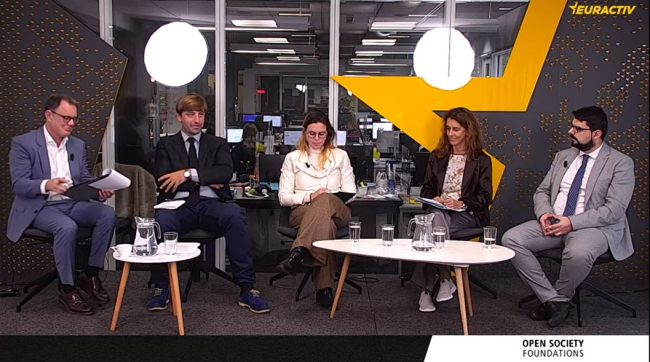
Winter is coming: How to shield the most vulnerable and preserve the consensus on the war
Some of Europe’s poorest countries and communities would be hardest hit by disruptions of Russian energy supplies. With a difficult winter ahead, Europe’s ability to redistribute costs equitably and to shield the most vulnerable will determine whether it can preserve social cohesion and the consensus on the war in Ukraine.


Military briefing: How will Russia’s mobilisation affect the war in Ukraine?
Kyiv expects new recruits to appear within two months but Moscow struggles with training and logistical obstacles.
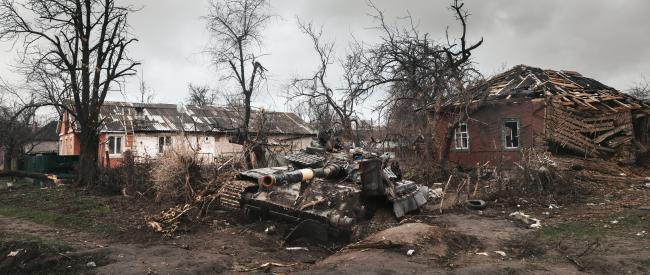
The Return of High-Intensity Conflict in Ukraine: Lessons for Land Forces
After twenty years of counter-terrorism, the Ukrainian battlefield marks the renewal of so-called “high-intensity” warfare. It constitutes a major strategic turning point, reversing the contemporary model of wars involving the West.
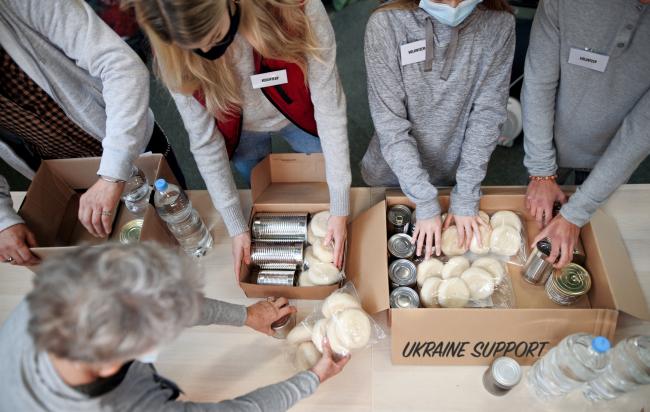
Quelle stratégie pour l’aide civile en Ukraine ?
Ukrainian institutions have overall withstood the shock of the war: the central government and local authorities benefit from a real legitimacy and a solid ability to govern.
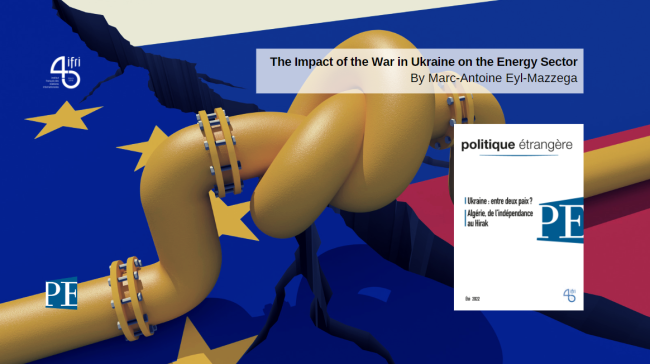
The Impact of the War in Ukraine on the Energy Sector
The outbreak of war in Ukraine dealt a shock to energy markets.
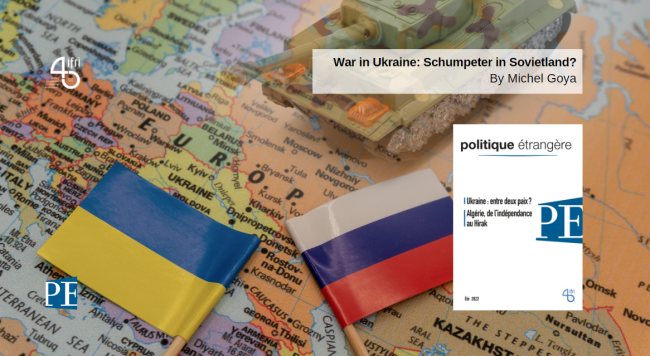
War in Ukraine: Schumpeter in Sovietland ?
On 24 February 2022, Russia invaded Ukraine. Moscow’s initial plan was to use a “shock and awe” approach to conquer Kyiv quickly.
Ukraine: Between Two Peaces?
We have reentered the world of war. In its first special report, Politique étrangère offers a range of in-depth analyses of the military and political dynamics at work in a Europe that has just woken up from its dream of enduring peace. The direct confrontation between Ukraine and Russia has pitted two military and defense systems against each other, whose asymmetrical logics, strengths, and weaknesses we are discovering as the conflict unfolds.
One Year of Zelensky’s Presidency: One Step Forward, One Step Back
The election of Volodymyr Zelensky as president of Ukraine created very high expectations in the society.
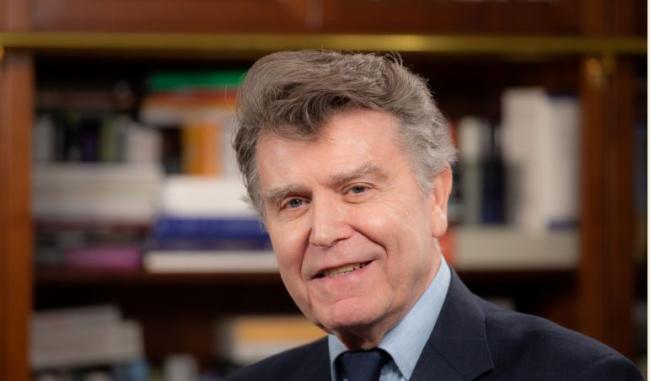
Justice and Might
Looking back on the last few weeks, a famous quote by Goethe (from his report on the siege of Mainz in 1793) came to mind: “Better to commit an injustice than to countenance disorder.” In other words, disorder engenders more injustice than it eradicates. But, if one word characterizes the world at the end of summer 2020, it is disorder.
Russia-Ukraine Gas Relations: The Mother of All Crises or a New Start to 2030?
Ten years after the January 2009 gas crisis, Russian-Ukrainian gas relations are at another turning point: the then concluded contracts are terminating on 31 December 2019. While trilateral talks brokered by the European Commission (EC) have started in July 2018, the real negotiations about the future of this relationship can be expected to start no earlier than in December, that is in the midst of the winter and a second to midnight. Crucial months lie ahead.
Rival public diplomacies in the Ukrainian crisis : RT and Ukraine Today
The Ukrainian crisis has brought to light the key role played by new international networks as instruments of public diplomacy in time of war. Focusing on RT and Ukraine Today in the asymmetrical conflict between Russia and Ukraine, this article analyzes the operation and strategies of diffusion of these two media, and inquires into their antagonistic narratives and political rationales. This case study focuses on this conflict’s two dimensions of storytelling and news that several actors and observers have described as a “war of information”.
The Gazprom-Naftogaz Stockholm Arbitration Awards: Time for Settlements and Responsible Behaviour
The signing in January 2009 of the gas supply and transit contracts between Gazprom and Naftogaz marked a turning point in Russian-Ukrainian gas relations: yearly intergovernmental, last minute and non-transparent winter deals were replaced by a predictable, long term commercial relationship.
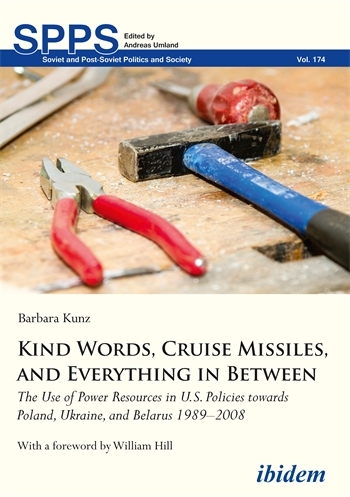
Kind Words, Cruise Missiles, and Everything in Between. The Use of Power Resources in U.S. Policies towards Poland, Ukraine, and Belarus 1989–2008
According to realist premises, the United States has an interest in remaining the world's only superpower, thus creating the need to manage and maintain unipolarity. The pursuit of this grand strategy, however, required the U.S. to adapt its various strategies to individual states. Poland, Ukraine, and Belarus have played very different roles.
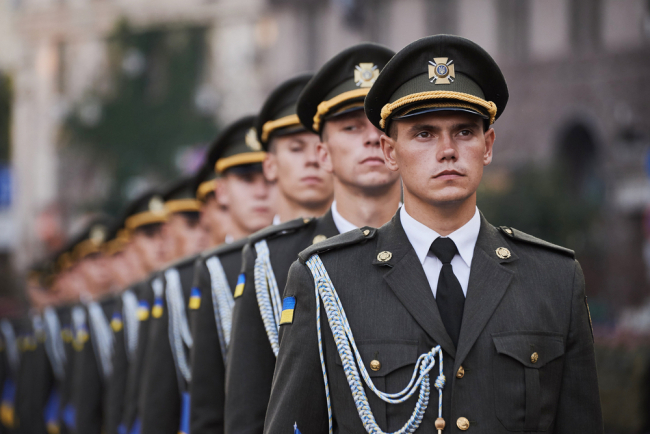
Reforming Ukrainian Defense: No Shortage of Challenges
Ukraine’s conflict with Russia has highlighted the catastrophic state of Ukraine’s defense apparatus.

Cyber Attacks and Energy Infrastructures: Anticipating Risks
This study analyses the likelihood of cyber attacks against European energy infrastructures and their potential consequences, particularly on the electricity grid. It also delivers a comparative analysis of measures taken by different European countries to protect their industries and collaborate within the European Union.
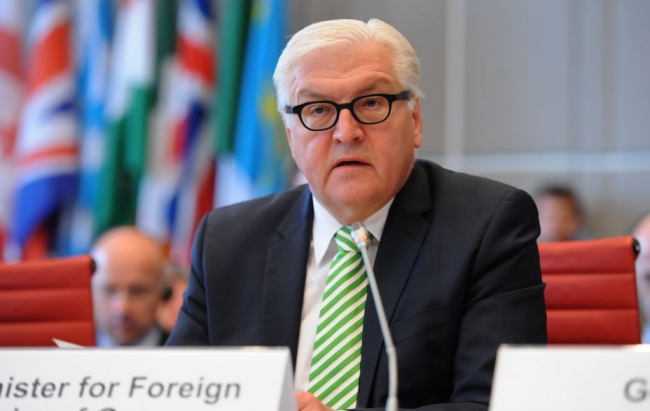
The German OSCE Chairmanship in 2016: Towards a renewed dialogue with Russia?
The Organization for Security and Cooperation in Europe (OSCE) represents the perfect framework for discussion of pan-European security issues thanks to its unique composition - fifty-seven member states of the Euro-Atlantic sphere, including the United States and Russia. The OSCE remains indeed one of the few forums of institutionalized dialogue between Western countries and Moscow and the only one to also include Washington.
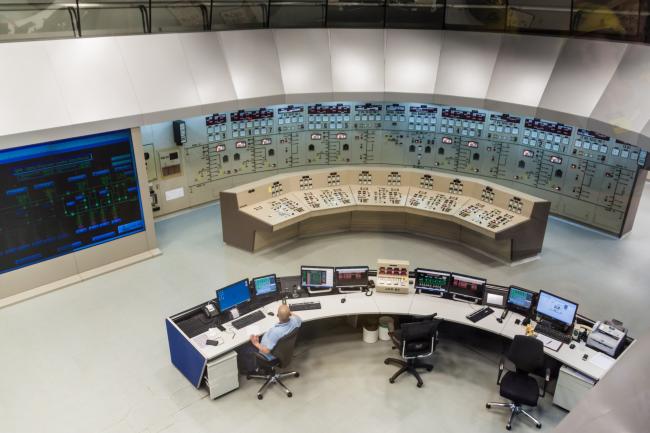
Cyber Attacks: A New Threat to the Energy Industry
The Network and Information Security (NIS) Directive has been adopted on July 6th, 2016 by the European Parliament, three years after the initial proposal by the European Commission. It paves the way for a much needed common cyber security strategy within the EU. This Edito explains the reasons why the energy industry is particularly vulnerable to cyber attacks, and what tools this new directive brings about to protect European critical infrastructures.
Forces terrestres et réassurance : Quelles options pour l'Alliance ?
Born into the Cold War, the very notion of ‘reassurance’ was revived in the wake of the 2014 Ukraine crisis as NATO had to label the measures destined to reassert the lasting relevance of collective defense towards its member states.
Can Washington move beyond "Ukraine fatigue"?
For the past two years, the United States has been at grips with an increasingly revisionist Russia in continental Europe. The crisis in Ukraine deteriorated the state of the bilateral relationship with Moscow [1] to what could be an all-time low since the end of the Cold War [2].

RAMSES 2016. Climat : une nouvelle chance ?
Written by Ifri's research team and its network of associates, the new RAMSES 2016 analyses geopolitics on a worldwide scale. The major theme of this 34th edition is Climate: A new chance? In addition, RAMSES 2016 tackles the insertion of Africa in globalization and the uncertainties of democracy today in post-industrial societies, but also in the South.
Vladimir Putin’s Non-Economic Logic
Russia’s economic crisis was not caused by decisions taken by the West following the Russia-Ukraine conflict. It was predicted and widely mediatized.
Russia, a Revisionist Power?
From the incident at Pristina airport (1999) to the seizure of Crimea (2014), Moscow is trying to demonstrate that it will not abide by rules set by others, nor resign itself to the place of a second-tier power.
Ifri, a foundation recognized as being of public utility, relies largely on private donors – companies and individuals – to guarantee its sustainability and intellectual independence. Through their funding, donors help maintain the Institute's position among the world's leading think tanks. By benefiting from an internationally recognized network and expertise, donors refine their understanding of geopolitical risk and its consequences on global politics and the economy. In 2026, Ifri partners with over 90 French and international companies and organizations.