




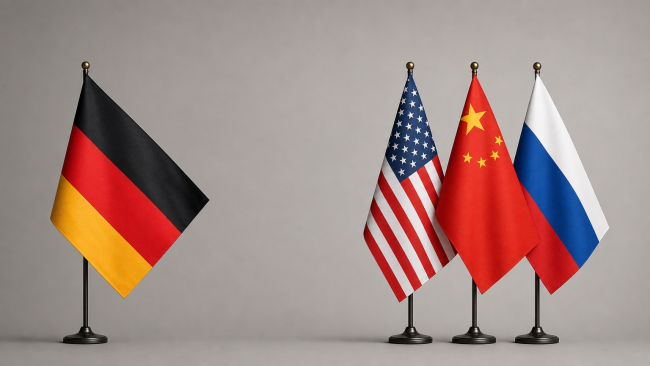
Germany in the Shadow of the United States, Russia, and China – Systemic Paradigm Shifts
Since reunification, Germany has built its prosperity on an international order based on free trade, multilateralism, and geopolitical stability. This model relied on three relationships considered complementary: U.S. military protection, Russian energy supplies, and economic integration with China. For several decades, Berlin viewed these interdependencies as factors contributing to peace, growth, and security.
Multilateralisms: Survival or Revival?
The organized multilateralism born out of the Second World War and the Cold War, and revived in the 1990s with the dream of a world of peaceful “global governance,” has fizzled out. The erosion of the large universal frameworks (United Nations, World Trade Organization, arms control and disarmament, international criminal justice, and so on) did not give way to a void but to an excess: a multitude of agreements and schemes that bore witness to the accelerated rebuilding of international relationships. Will institutional anarchy and the open competition of interests visible in uninhibited struggles for power be able to organize themselves around common fundamental interests in the future?
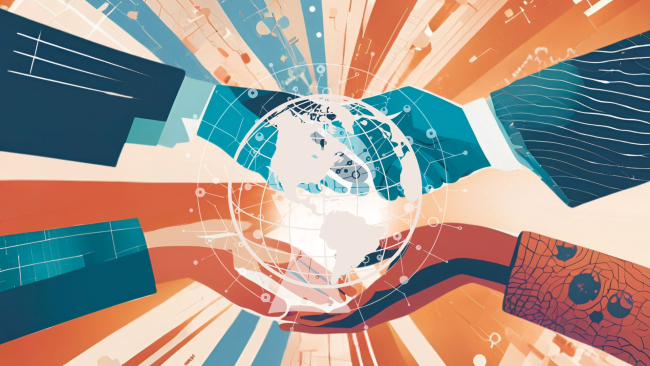
Artificial Promises or Real Regulation? Inventing Global AI Governance
The risks inherent to the unregulated use of AI, a key technology and vector of profound transformations within societies underline the pressing need to harmonize governance efforts at the international level. The Summit for Action on Artificial Intelligence to be held in Paris in mid-February could be an unprecedented timely occasion to agree on a global governance framework of AI for the public good.

The Influence of Strategic Subnational Diplomacy in International Relations
The international engagement of cities and local governments has increased and diversified recently. Mainly understood by the public as the cultural and academic ties cultivated within the sister-city framework, these connections now bear deeper and more strategic implications.
France's Indo-Pacific strategy
This article has been extracted from the magazine Question internationales - n°118 - Avril-mai 2023.
The Indo-Pacific, a new theater of strategic rivalry between China and the United States, is of growing interest to France, where it defends its interests related to its vast maritime territory by promoting multilateralism and forging multiple partnerships in the region.

Ethics and Responsibility in Space Exploration: The Rise of Soft Law to Regulate New Practices

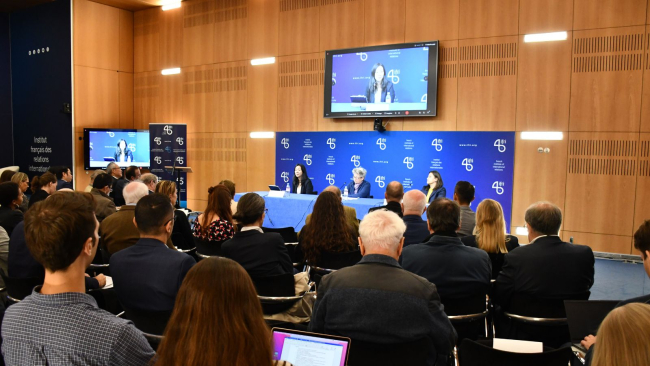
Asia after the War in Ukraine: Re-imagining multilateralism and the risk of high-intensity conflict (video replay)
Annual conference of Ifri's Center for Asian Studies. The war in Ukraine has marked the return of high-intensity conflict in Europe and represents a profound, structural shift in the region’s strategic environment. It also takes place against a backdrop of a decades-long rebalancing of global power and the increase of strategic competition between the United States and China, in particular.
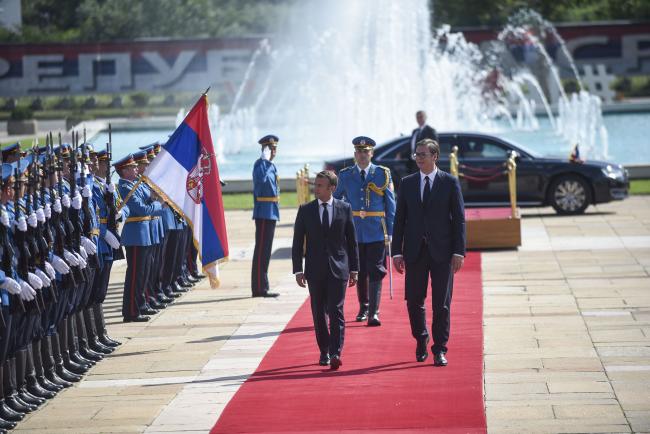
French Engagement in the Western Balkans: Boosting Strategic, Political, Economic, and Societal Cooperation
After years of lower interest, France has signaled its ambition to re-engage in the Western Balkans. It is not starting from scratch. Historical affinities with the countries of the region abound, in culture, sciences, politics, and economy.
Towards the Second Crusade?
Europeans first grew aware of a possible pandemic exactly one year ago. The wave is here. It has submerged the world, claiming many lives and causing tremendous collateral damage.
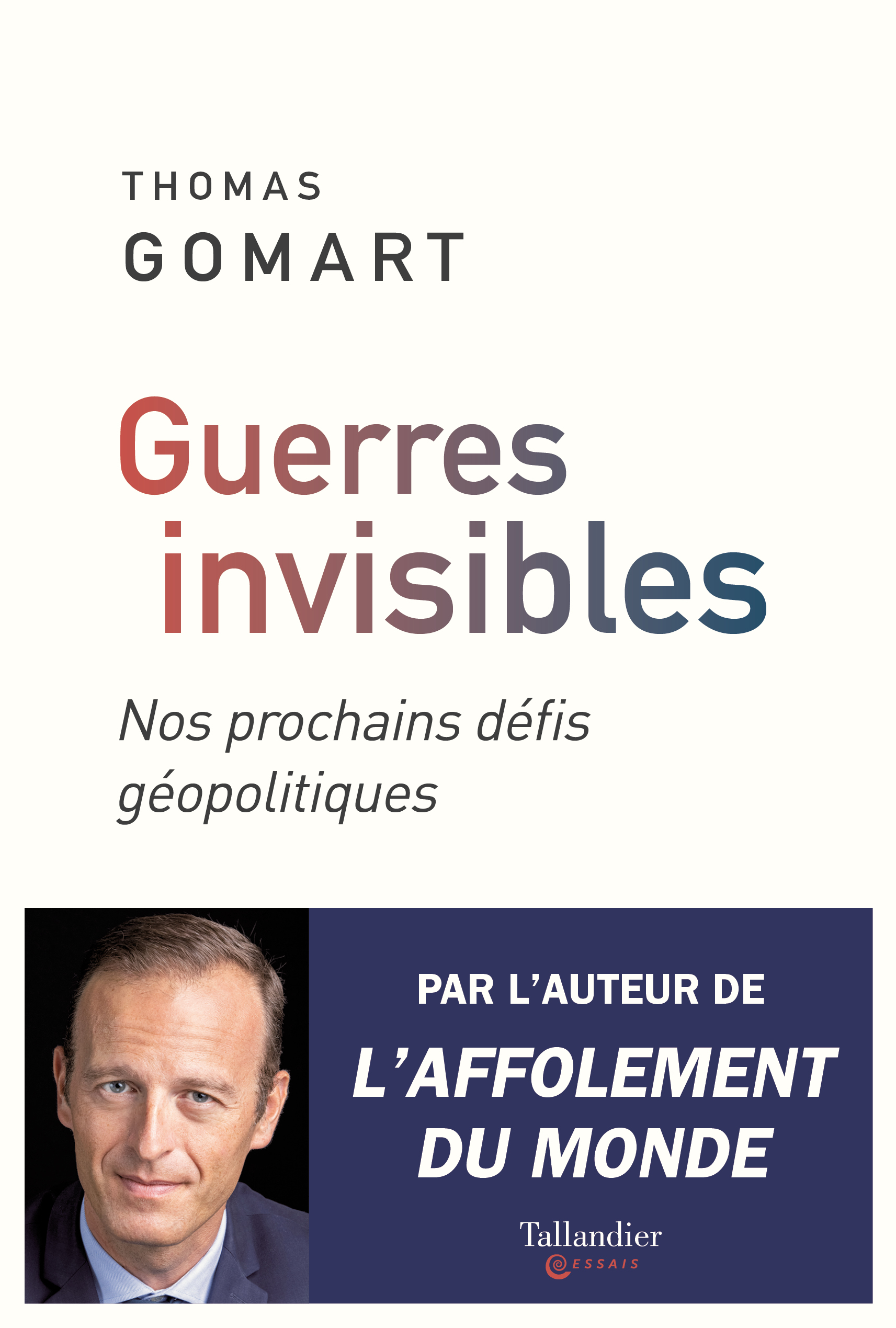
Guerres invisibles - Nos prochains défis géopolitiques
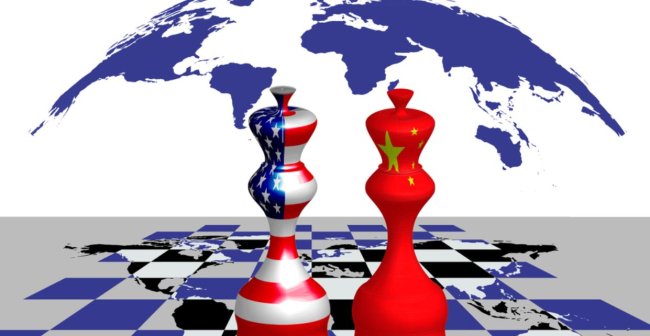
What are the next geopolitical challenges of the century? The global pandemic has altered the equilibrium between Asia and the West and sealed the rift between China and the United States, accentuating the world’s shift towards the East. On this polarized chessboard, two fault lines converge: environmental degradation and technological propagation where the main strategic and economic rivalries are now being played out.
COVID-19 Reveals Europe’s Strategic Loneliness
The COVID-19 crisis has not only revealed a world that has moved into an age of interdependence and competition, it has also laid bare Europe’s strategic loneliness and vulnerability.

World’s Rich Nations Jostle to Lead Globalization Clubhouse
The race to fill a role at the heart of world economic policy making is turning into a new battleground for the future of globalization.
Global Public Goods: Beyond Empty Words
As I write these lines, the COVID-19 pandemic seems to be following the pathway forecast by those epidemiologists and virologists, who have been telling us for weeks that the wave is past its peak. If it is, this does not mean that we are safe from a second wave some time later, but only that the first surge is over.
China and the New Geopolitics of Technical Standardization
China is rapidly emerging as a formidable power in the development of technical standards, transforming the international standard-setting landscape and reintroducing an element of geopolitics into what are too often considered as benign, technical processes.
The Future of Europe in the Context of Sino-American Competition - Conclusions
In this special issue of Politique étrangère devoted to the proceedings of the conference organized by Ifri on April 10, 2019, at the Grand Amphitheater of the Sorbonne, on the occasion of its 40th anniversary, read the speech by Jean-Yves Le Drian, French Minister of Europe and Foreign Affairs.
New Global Challenges and European Security
In this special issue of Politique étrangère devoted to the proceedings of the conference organized by Ifri on April 10, 2019, in the Grand Amphitheater of the Sorbonne, on the occasion of its fortieth anniversary, discover the debate moderated by Nicole Gnesotto between Julian King, Jean-Marie Guéhenno, Wolfgang Ischinger, Nathalie Tocci, Hubert Védrine.
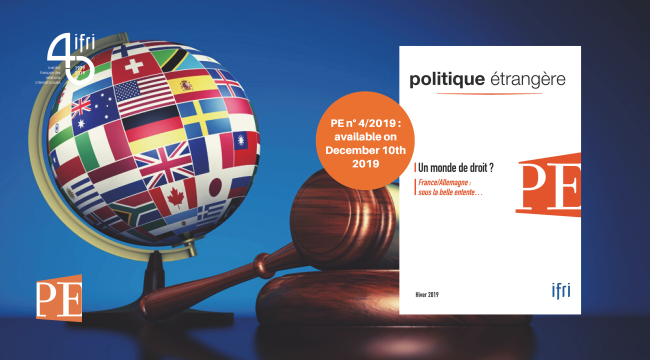
A World of Law? / France and Germany: What's Behind the Mask
What is the role of law in international relations today that increasingly seem to favour assertions of power?
The Sanctions Policy of the European Union: Multilateral Ambitions Versus Power Politics
Restrictive measures are a major instrument of the European Union (EU)’s external action, which has emerged as one of the world’s leading sanctions emitters. The EU has thus leveraged the size of its market and its economic and financial clout (trade relations, aid policy and bilateral agreements).
Is the EU Better Prepared for the Next Migration Challenges?
The European Union did respond to the massive influx of migrants in 2015, but with short-term measures, which have widened the divisions between member states.
Germany in the Shadow of the United States, Russia, and China – Systemic Paradigm Shifts
Since reunification, Germany has built its prosperity on an international order based on free trade, multilateralism, and geopolitical stability. This model relied on three relationships considered complementary: U.S. military protection, Russian energy supplies, and economic integration with China. For several decades, Berlin viewed these interdependencies as factors contributing to peace, growth, and security.
Multilateralisms: Survival or Revival?
The organized multilateralism born out of the Second World War and the Cold War, and revived in the 1990s with the dream of a world of peaceful “global governance,” has fizzled out. The erosion of the large universal frameworks (United Nations, World Trade Organization, arms control and disarmament, international criminal justice, and so on) did not give way to a void but to an excess: a multitude of agreements and schemes that bore witness to the accelerated rebuilding of international relationships. Will institutional anarchy and the open competition of interests visible in uninhibited struggles for power be able to organize themselves around common fundamental interests in the future?
Artificial Promises or Real Regulation? Inventing Global AI Governance
The risks inherent to the unregulated use of AI, a key technology and vector of profound transformations within societies underline the pressing need to harmonize governance efforts at the international level. The Summit for Action on Artificial Intelligence to be held in Paris in mid-February could be an unprecedented timely occasion to agree on a global governance framework of AI for the public good.
The Influence of Strategic Subnational Diplomacy in International Relations
The international engagement of cities and local governments has increased and diversified recently. Mainly understood by the public as the cultural and academic ties cultivated within the sister-city framework, these connections now bear deeper and more strategic implications.
France's Indo-Pacific strategy
This article has been extracted from the magazine Question internationales - n°118 - Avril-mai 2023.
The Indo-Pacific, a new theater of strategic rivalry between China and the United States, is of growing interest to France, where it defends its interests related to its vast maritime territory by promoting multilateralism and forging multiple partnerships in the region.
New Global Challenges and European Security
In this special issue of Politique étrangère devoted to the proceedings of the conference organized by Ifri on April 10, 2019, in the Grand Amphitheater of the Sorbonne, on the occasion of its fortieth anniversary, discover the debate moderated by Nicole Gnesotto between Julian King, Jean-Marie Guéhenno, Wolfgang Ischinger, Nathalie Tocci, Hubert Védrine.
The Future of Europe in the Context of Sino-American Competition - Conclusions
In this special issue of Politique étrangère devoted to the proceedings of the conference organized by Ifri on April 10, 2019, at the Grand Amphitheater of the Sorbonne, on the occasion of its 40th anniversary, read the speech by Jean-Yves Le Drian, French Minister of Europe and Foreign Affairs.
Sustaining Multilateralism in a Multipolar World. What France and Germany Can Do to Preserve the Multilateral Order
While international multilateralism is under strain, it is vital for France and Germany to defend it, since it is the most appropriate system for preserving their interests – particularly in terms of welfare, security, prosperity and environmental protection. Against this backdrop, three political fields offer opportunities for joint initiatives: trade, conventional arms control and climate change.
Seven Years of The 16+1: An Assessment of China’s ‘Multilateral Bilateralism’ in Central Europe
Since mid-2012, in the wake of the global financial crisis, China has sought to reinvigorate relations with Central and Eastern Europe (CEE), notably through the creation of the 16+1 formula.
International trade disagreements: Beyond Trump
The trade war between the United States and China is not only due to Donald Trump’s impulsiveness. Its roots are in fact profound and follow three structural changes in the multilateral trading system: the reversal of comparative advantages, the now central role of certain developing countries, and the re-balancing of power that makes coordination between states difficult. In this context, the future of world trade has yet to be written.
What Role for the EU in Doha?
Historical leader of the fight against climate change, the European Union’s influence declined in Copenhagen. This opened the way to the so-called BASIC countries to show their willingness to become a driving force in the international climate agenda. Interestingly enough, the Copenhagen conference also introduced a welcome shift in the traditional UN separation between developed and non-developed countries.
World’s Rich Nations Jostle to Lead Globalization Clubhouse
The race to fill a role at the heart of world economic policy making is turning into a new battleground for the future of globalization.
Ifri, a foundation recognized as being of public utility, relies largely on private donors – companies and individuals – to guarantee its sustainability and intellectual independence. Through their funding, donors help maintain the Institute's position among the world's leading think tanks. By benefiting from an internationally recognized network and expertise, donors refine their understanding of geopolitical risk and its consequences on global politics and the economy. In 2026, Ifri partners with over 90 French and international companies and organizations.
